In “Geodaehan” Roman De Giuli’s macro fluid art mimics massive landscapes. The film takes us over deltas, rivers, glaciers, and landslides. Some look like earthbound locations, others look like something from Mars or Titan. All are, in fact, paint, ink, and glitter on paper! It’s truly incredible how artists capture large-scale fluid physics on such a tiny canvas. (Image and video credit: R. De Giuli)
Month: April 2021

A Macro View of Weathering
Water constantly weathers sedimentary rock, both physically — through abrasion — and chemically — through dissolution and recrystallization. Now researchers have gotten their first view of this weathering at the Ångstrom level by observing porous rocks with environmental transmission electron microscopy as they interact with both water vapor and liquid water.
As expected, the experiments with liquid water showed that water dissolved the rocks and substantially changed the geometry of the rock’s pores. But the experiments also showed significant weathering from water vapor alone. The researchers found that water vapor formed a film on the surface of the rock’s pores in a process known as adsorption. This film substantially decreased the size of each pore and created strain in the rock. Once the water vapor was removed, the rock’s pores were notably altered, supporting the idea that this adsorption was, itself, a form of weathering. (Image credit: M. Kosloski; research credit: E. Barsotti et al.; via AGU EOS; submitted by Kam-Yung Soh)

An Oasis Among Dunes
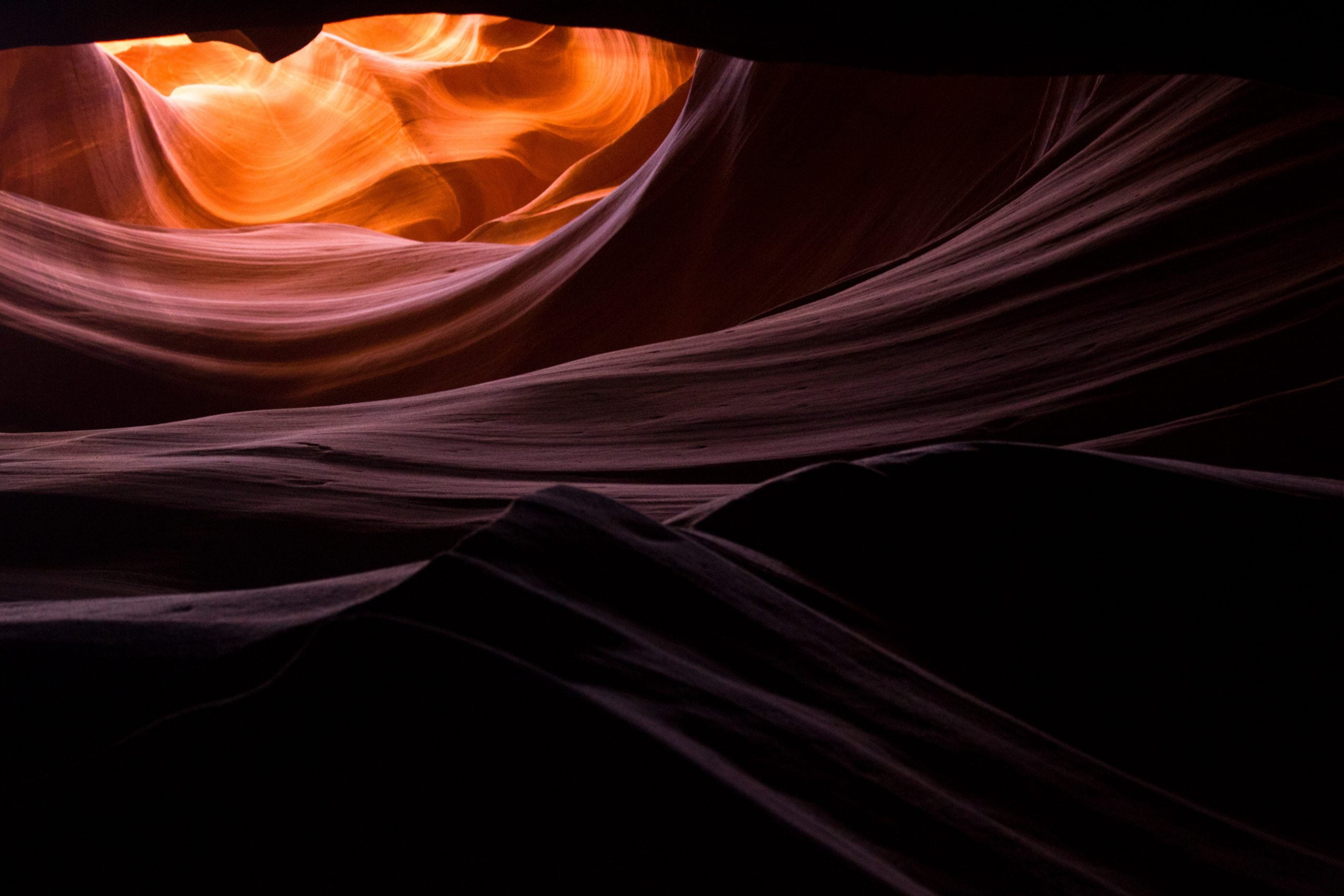
The Saudi Arabian oasis of Jubbah sits in the bed of an ancient lake. It’s protected from the westerly winds that sculpt the surrounding dunes by the wind shadow of the mountain Jabel Umm Sinman. The long, skinny shape of the settlement reveals the shape of the mountain’s wake! (Image credit: NASA; via NASA Earth Observatory)

Swapping Emulsions
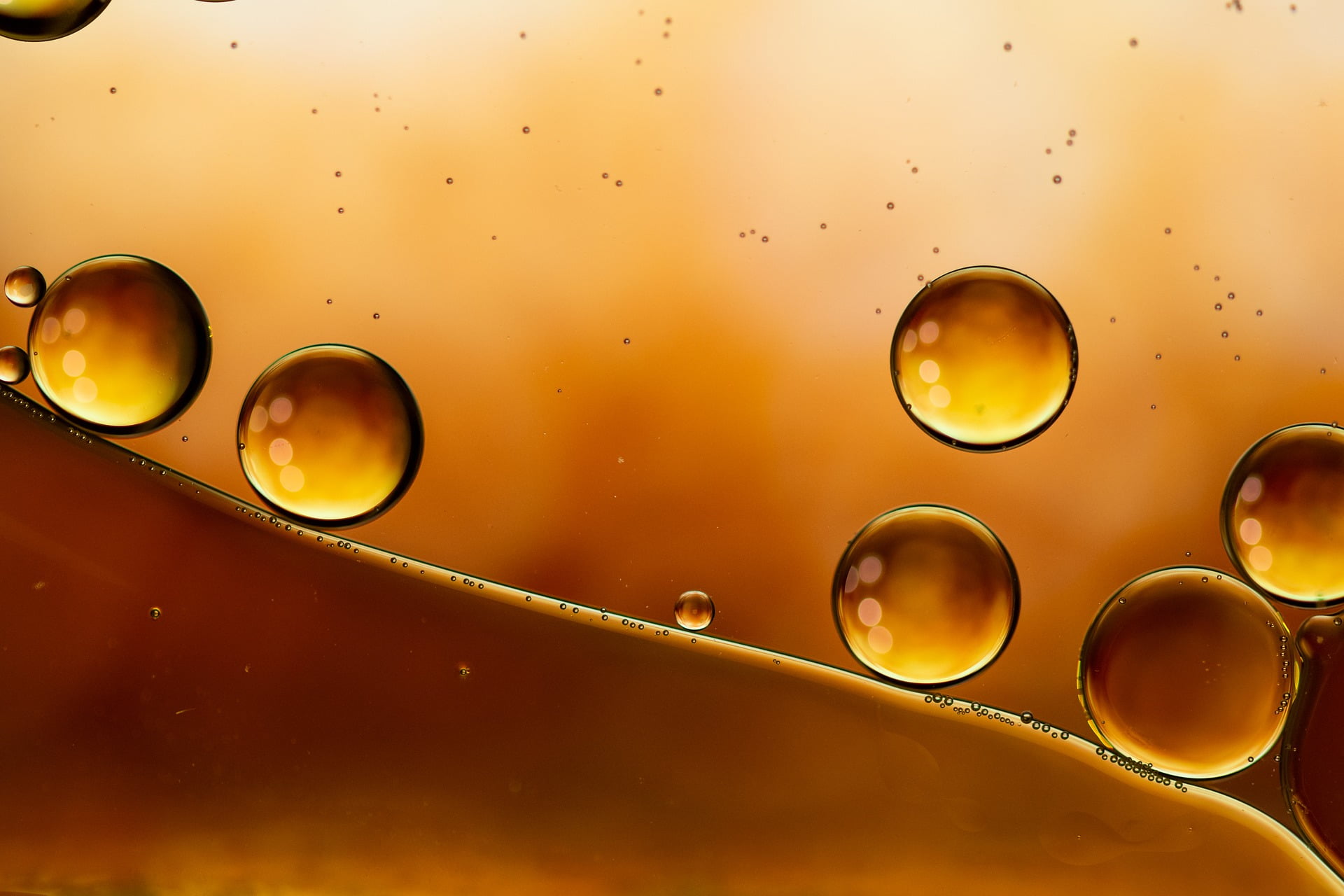
Chemically speaking, oil and water don’t mix. But with a little fluid mechanical effort, it’s possible to make them an emulsion — a mixture of oil droplets in water or water droplets in oil. Researchers in the Netherlands discovered that the viscosity of these emulsions depends critically on which of those mixtures you have.
To create their emulsions, the team used a tank consisting of two concentric cylinders. When the inner cylinder spins, it creates a well-understood flow field between the inner and outer cylinder. By varying the ratio of oil to water in the tank, they could explore a wide range of emulsions. They found that the emulsion’s viscosity changed dramatically when the emulsion shifted from oil droplets in water to water droplets in oil, something known as a catastrophic phase inversion. During this switch the viscosity dropped from 3 times higher than pure water to 2 times lower! (Image credit: A_Different_Perspective; research credit: D. Bakhuis et al.; via APS Physics; submitted by Kam-Yung Soh)

Protecting From Storm Surge
The most dangerous and destructive part of a tropical cyclone isn’t the wind or rain; it’s the storm surge of water moving inland. This landward shift of ocean takes place because of a cyclone’s strong winds, which drive the water via shear. The depth storm surges reach depends on the wind speed and direction, shape of the shoreline, and many other factors, making exact predictions difficult.
Fortunately, engineers can — with enough foresight and investment — build structures and networks to help protect developed land from storm surge flooding. (Image and video credit: Practical Engineering)

Lava at Night
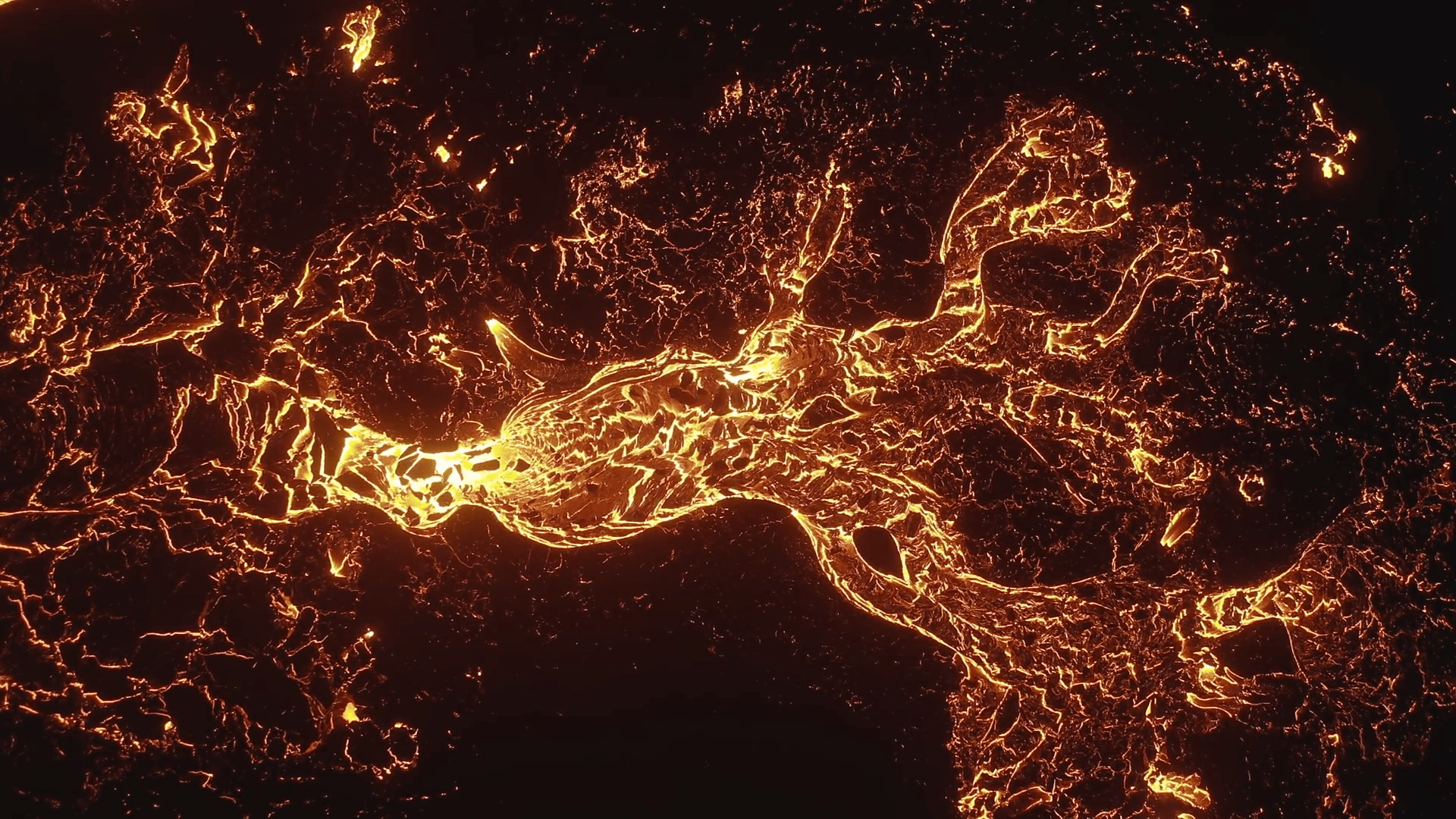
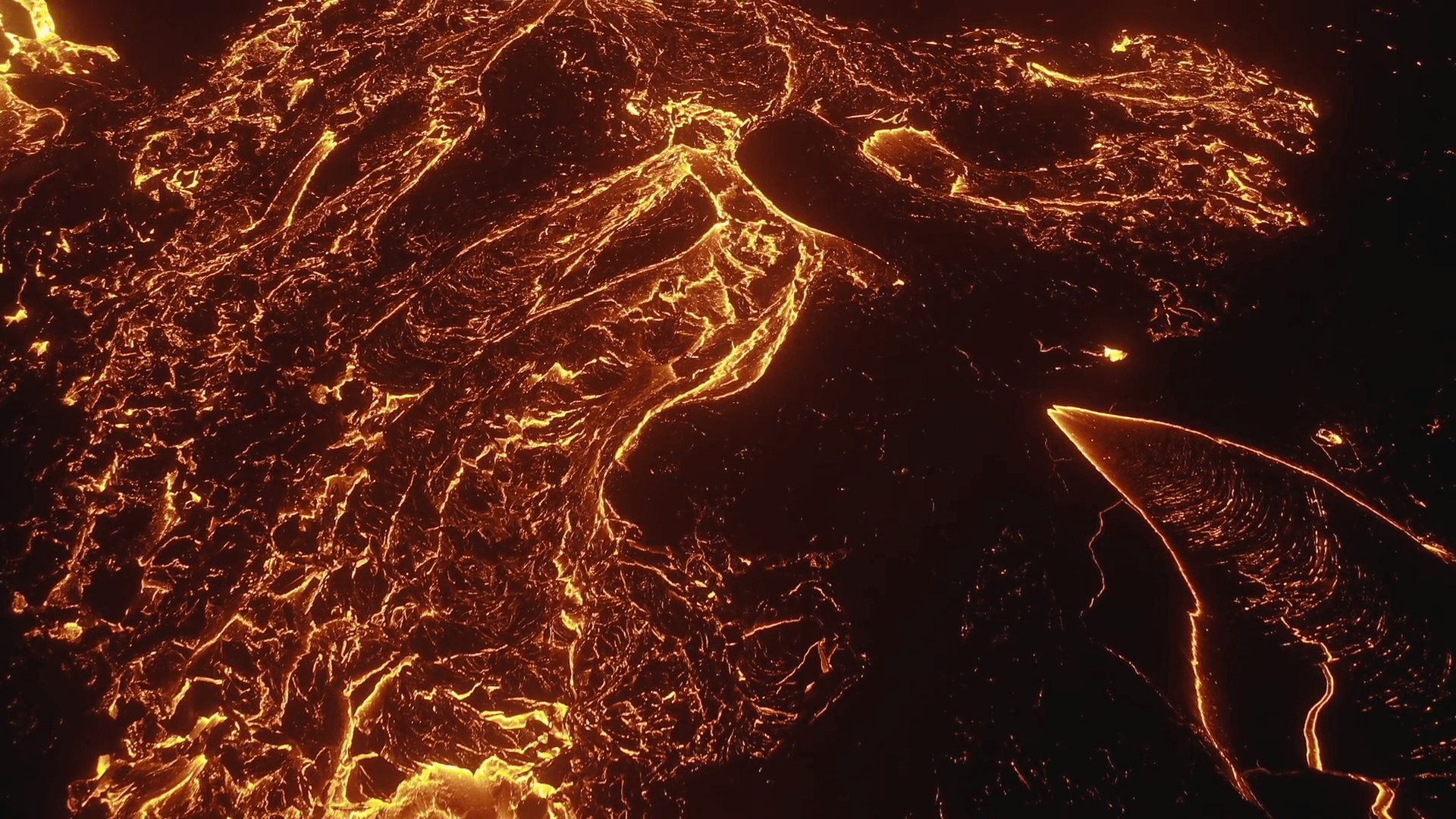
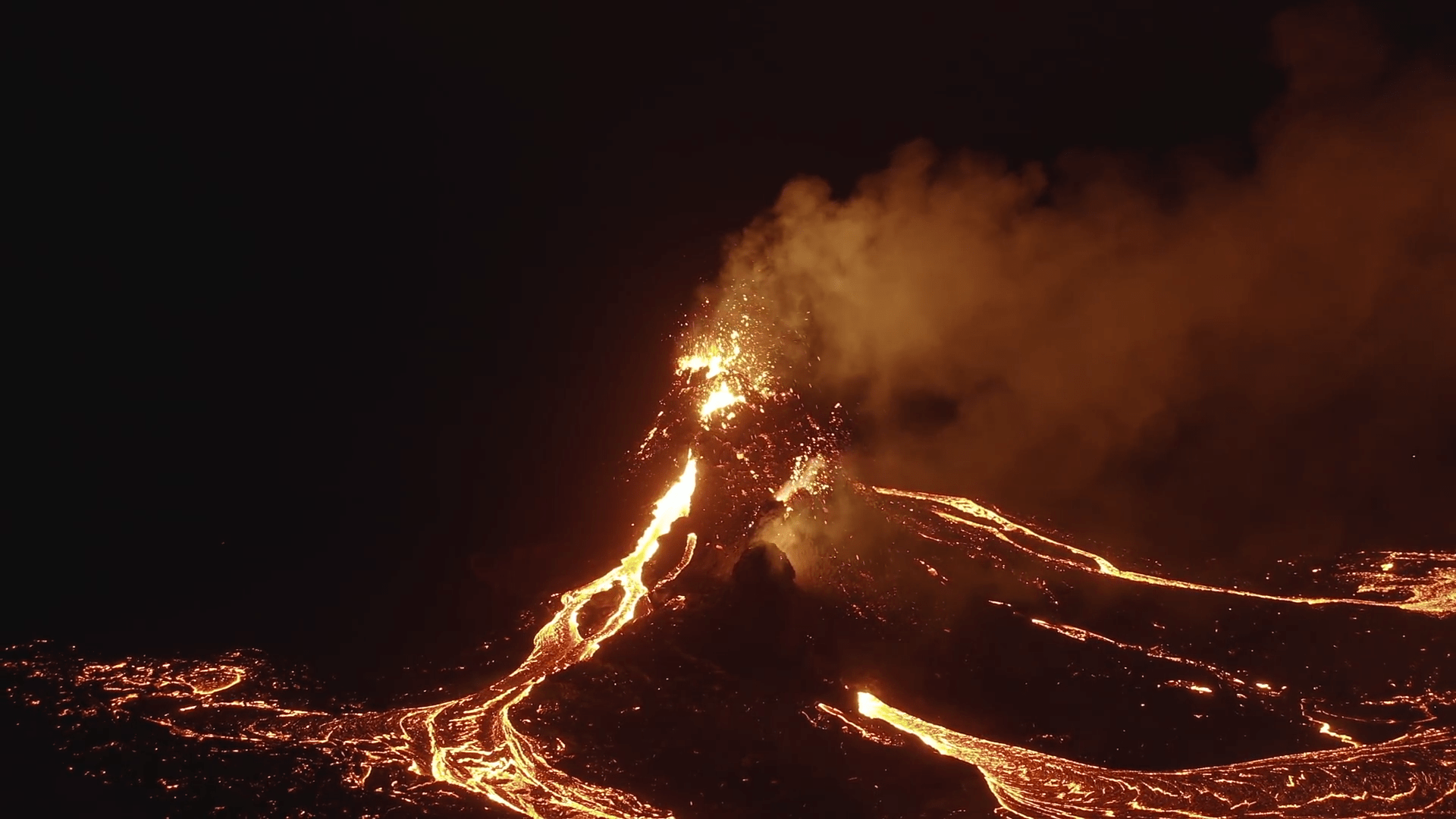
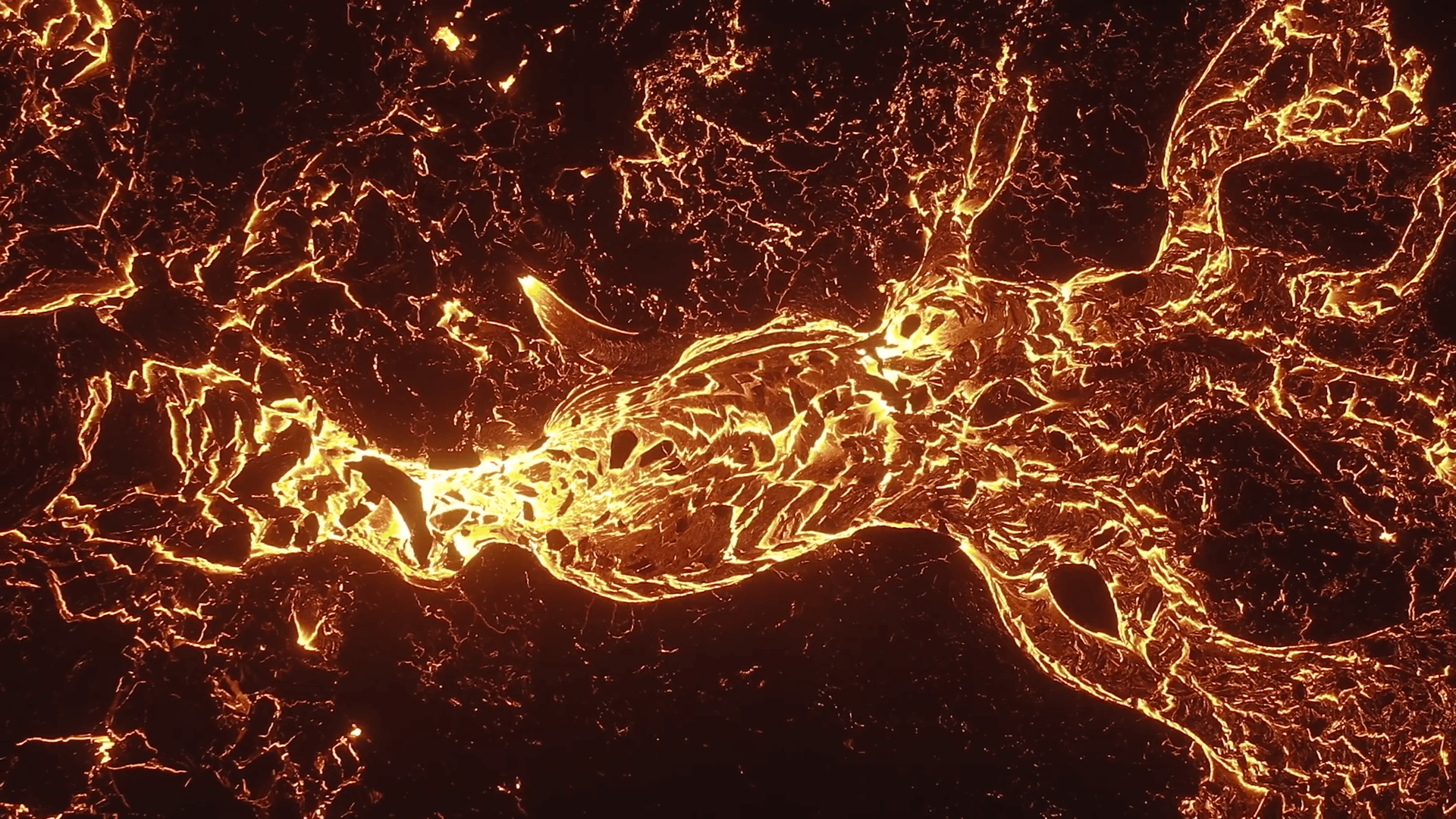
Today’s cameras and drones capture volcanic eruptions in ways that were unthinkable in years past. This incredible footage shows the recent eruption in Iceland as it glows in the night. I love the crisp details of the flow. You can clearly see how the hotter, molten lava moves compared to the cooling crust. There’s some great footage of spurting fountains and blocks of lava getting swept along by the river. Enjoy! (Image and video credit: B. Steinbekk; submitted by jpshoer)

Decelerating Jets
For more than a century, scientists have been fascinated by the jet that forms after a drop impacts a liquid. In this study, researchers tracked fluorescent particles in the fluid to understand the velocity and acceleration of flow inside the jet. They found that, within the first 10ms after the jet appears, it decelerates at up to 20 times the gravitational acceleration. That’s much too fast for gravity to cause, pointing instead to the critical importance of surface tension in dictating the behavior of these fast-moving jets. (Image and research credit: C. van Rijn et al.; via APS Physics; submitted by Kam-Yung Soh)

Wrinkles on Collapsing Bubbles
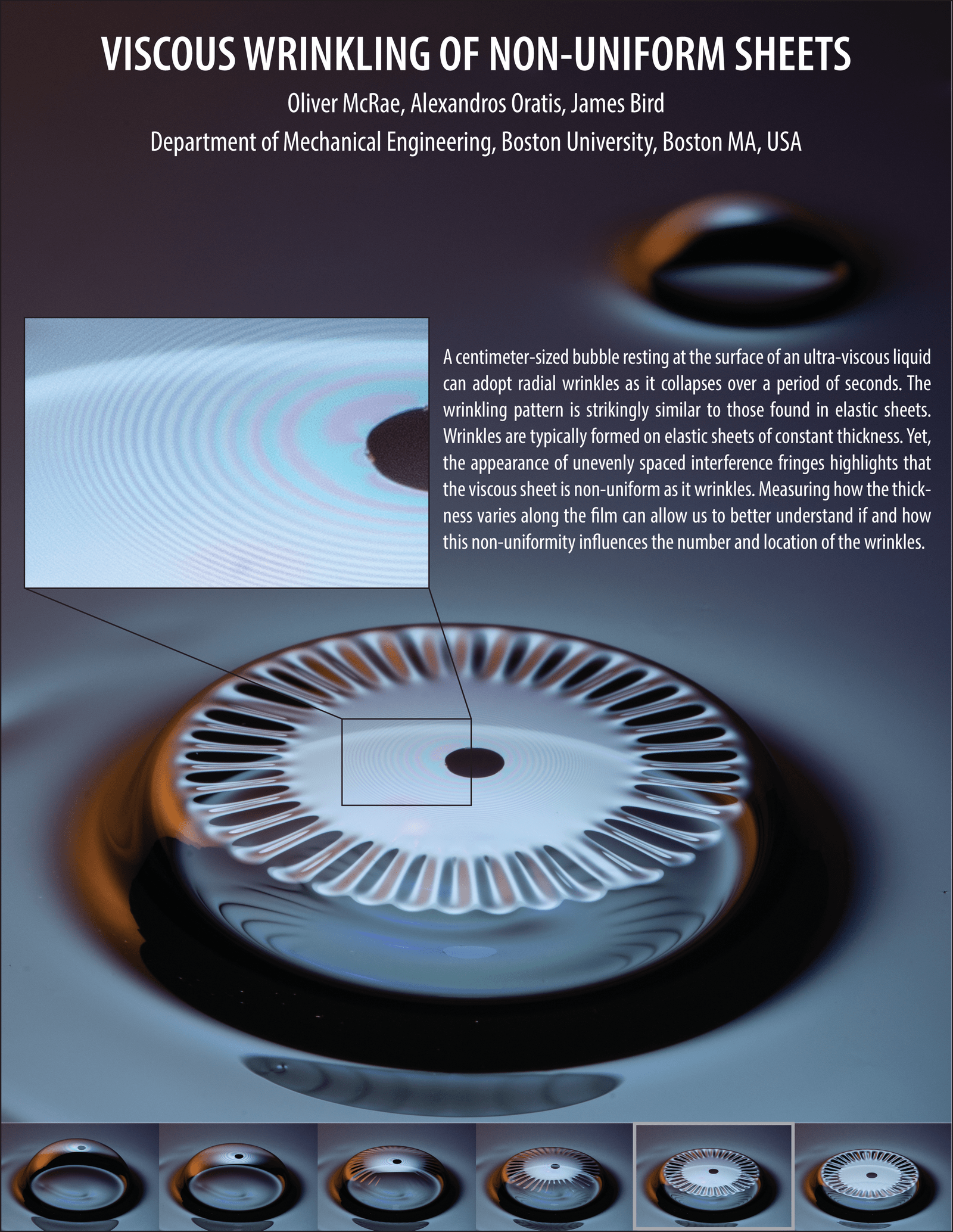
As a bubble sitting on a pool collapses, wrinkles form around its edges. Visually, the result is quite similar to the wrinkles one gets on an elastic sheet. Unlike the solid sheet, though, the bubble’s film varies in thickness; we know this because of the fringes shown in the enlarged inset of the poster. Researchers are studying this non-uniformity to see whether it affects the number and shape of wrinkles that form on the bubble. (Image and research credit: O. McRae et al.)

Whiskey Webs
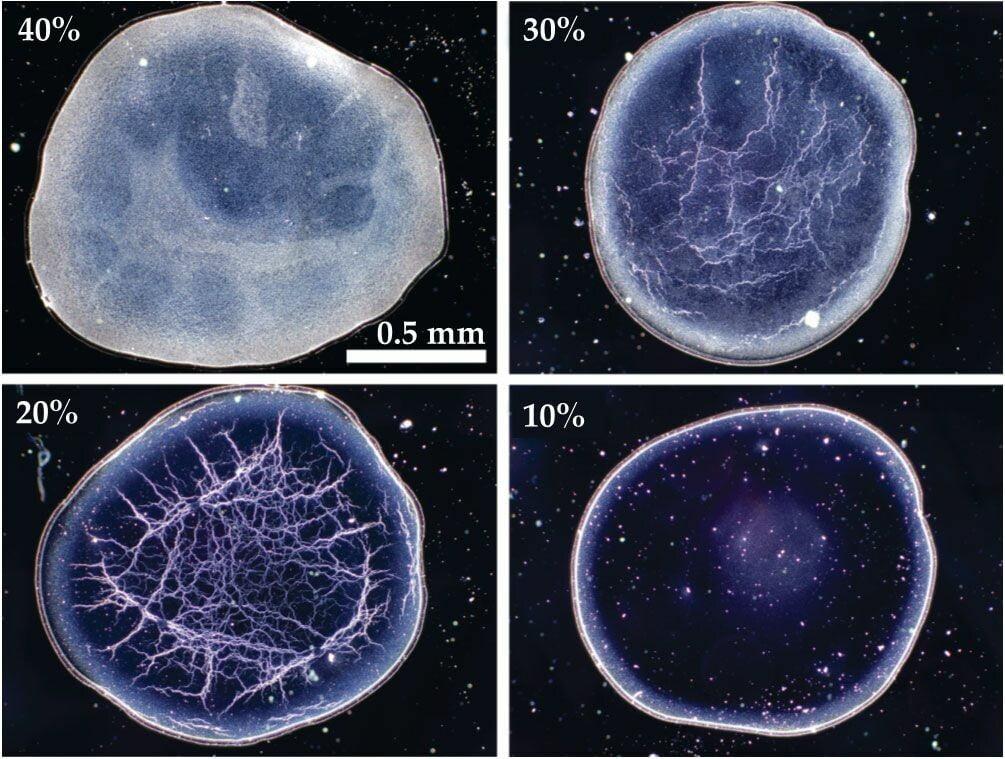
Unlike scotch whisky, when American bourbon whiskeys are diluted, they form unique web-like evaporation patterns. These differences arise in part from the way the liquors are aged: scotch is aged in re-used barrels, whereas bourbons require aging in a new, charred American white oak barrel*.
During aging, the whiskey picks up water-insoluble chemicals from the barrel. When water is added to the bourbon, it helps transport those insoluble components to the surface of a droplet, where they form a monolayer of fatty acid chains (Image 2; in green). As evaporation continues and the droplet gets smaller, the molecules at the shrinking surface collapse inward, forming the rigid web structure we see left behind. The patterns that form act as a kind of fingerprint for the bourbon. Check out some of the brand-to-brand variations over at the researchers’ Whiskey Webs site. (Image and research credit: S. Williams et al.; via Physics Today)
* In case you were wondering, this is actually a legal requirement in order to be considered bourbon. Bourbons must also be made from a grain mixture that is >50% corn.

Albedo Effect
Temperature isn’t the only factor that determines how ice will melt. In this photo, a dark oak leaf absorbed more solar radiation than the reflective ice around it, causing the ice beneath it to melt. Scientifically, this effect is described by albedo; darker, more absorptive surfaces like the leaf have a lower albedo, whereas light, reflective ice and snow have a high albedo and can better resist melting on sunny days. (Image credit: K. James; submitted by Kam-Yung Soh)