Month: May 2017

  • The Colorful Dissolution of Candies

    The Colorful Dissolution of Candies

    Many solids can dissolve in liquids like water, and while this is often treated as a matter of chemistry, fluid dynamics can play a role as well. As seen in this video by Beauty of Science, the dissolving candy coating of an M&M spreads outward from the candy. This is likely surface-tension-driven; as the coating dissolves, it changes the surface tension near the candy and flow starts moving away thanks to the Marangoni effect. With multiple candies dissolving near one another, these outward flows interfere and create more complex flow patterns. 

    These flows directly affect the dissolving process by altering flow near the candy surface, which may increase the rate of dissolution by scouring away loose coating. They can also change the concentration of dissolved coating in different areas, which then feeds back to the flow by changing the surface tension gradient. (Video and image credit: Beauty of Science)
  • Flow Above the Treetops

    Flow Above the Treetops

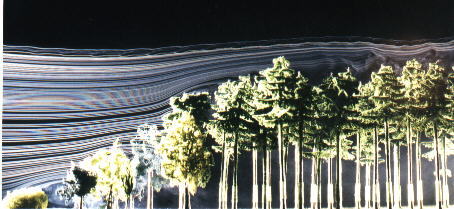
    As this smoke visualization shows, trees have a significant impact on airflow around them. Flow in the image is from left to right. On the left, the upstream air is traveling in smooth, laminar lines that are quickly disrupted as the flow moves into the trees. After the first shorter trees, flow inside the wooded area has been broken up and slowed. Above the canopy, the smoke streaklines have also slowed and become more turbulent. Understanding how wind and trees interact is important in a variety of applications, including when adding renewable energy options to buildings and when predicting the spread of forest fires. (Image credit: W. Frank et al.)

  • Sniffing Underwater

    Sniffing Underwater

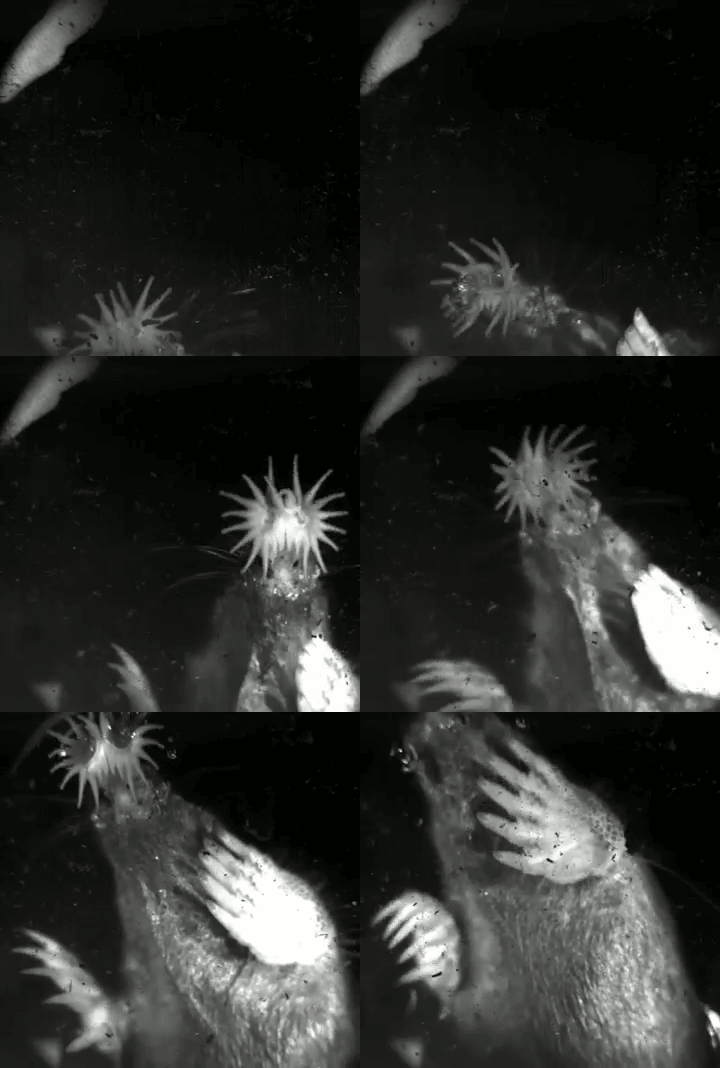
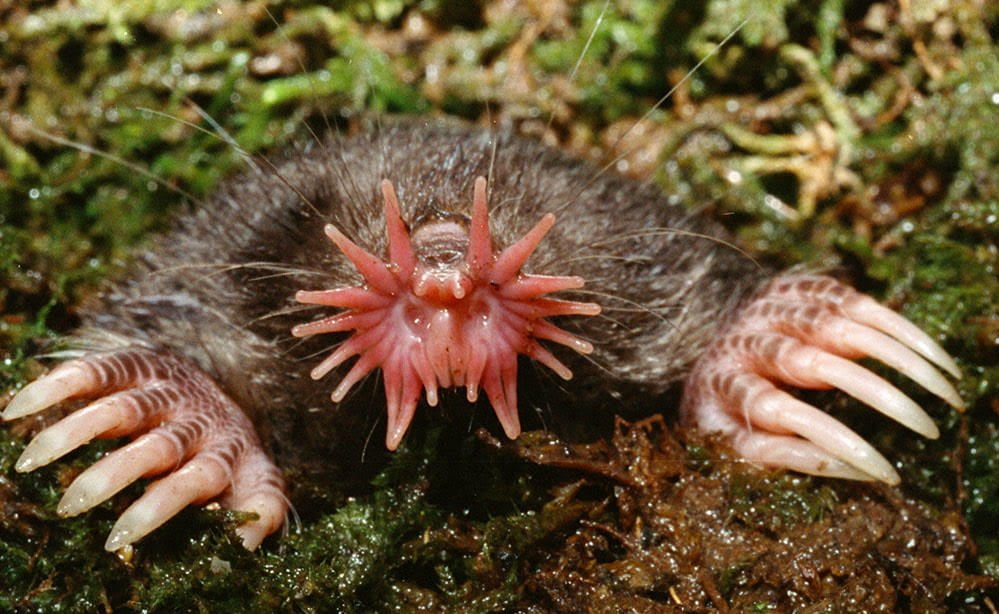
    You’d be forgiven for thinking that the star-nosed mole looks funny. Its distinctive star-shaped nose is a highly-sensitive organ, but the mole doesn’t just use it for finding its way through the underground tunnels it lives in. These moles can actually sniff underwater. By exhaling a bubble and then re-inspiring it, the moles collect scent particles that they can use to locate food. In experiments, both star-nosed moles and water shrews could use this technique to successfully follow a scent trail, demonstrating exploring and pausing behaviors similar to terrestrial sniffing as they did. To learn more about this impressive mammal, listen to the latest episode of Science Friday, where research Ken Catania describes his work with them. (Image credits: K. Catania; via Science Friday)