
When water droplets sit on a cold substrate, they freeze into a shape with a pointed tip. At first glance, this behavior seems very odd since surface tension usually acts to prevent such sharp protrusions. The shape is, however, a result of water’s expansion as it freezes. The droplet freezes from the substrate upward, with a concave shape to the solidification front. The angle of the point does not depend on the substrate temperature or the wetting angle between the water and surface. Instead, it turns out that this concave front shape and water’s expansion are the key factors that determine the pointed cusp’s angle, and that the final geometry of the cusp is essentially universal. (Video credit: M. Nauenberg; additional research credit: A. Marin et al.)
Month: May 2014

May the Fourth Be With You
It only seems appropriate to share this little bit of schlieren photography today. May the Fourth be with you all. (Video credit: M. Hargather and J. Miller)
Vibrating on a Subwoofer
[original media no longer available]
Vibrating a liquid droplet produces some awesome behavior. The video above shows a water droplet vibrating on a subwoofer at real-time speeds. The behavior and shape of the droplet shifts with the frequency of vibration, which we hear as a change in pitch. To see more clearly the shapes a particular frequency induces, check out this high-speed video of vibrating water droplets. For a given driving frequency, the droplet’s shape, or mode, is distinct and consistent. For a droplet vibrating to a song, though, there is more than one frequency driving its motion. In this case, the droplet’s shape is a superposition of the individual modes, which is just a way of saying adding the shapes together. So frequency determines the droplet’s shape. The vibration amplitude, or audible volume, affects how energetic the drop’s motion is. And the fluid’s surface tension and viscosity act as dampers to the system, controlling how quickly the drop can change shape as well as how well it holds together. (Video credit: A. Read)

Abstract Fluids

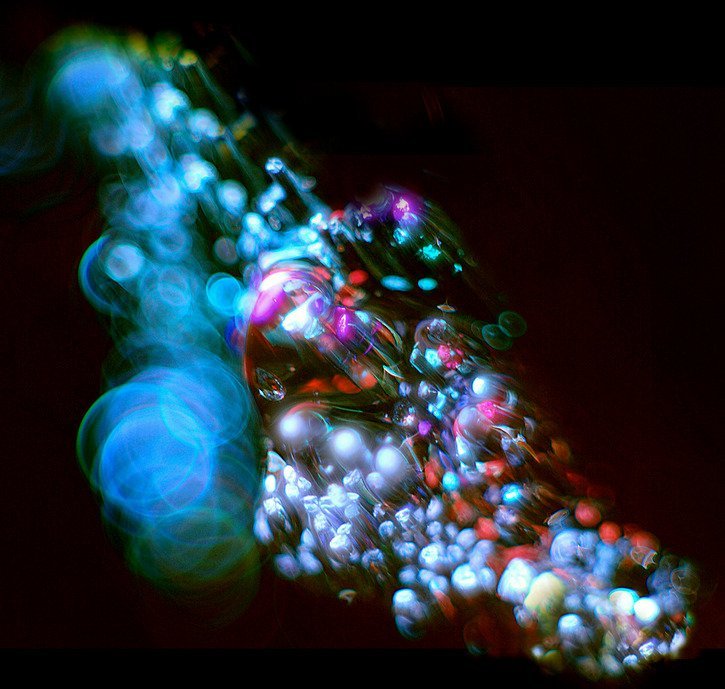
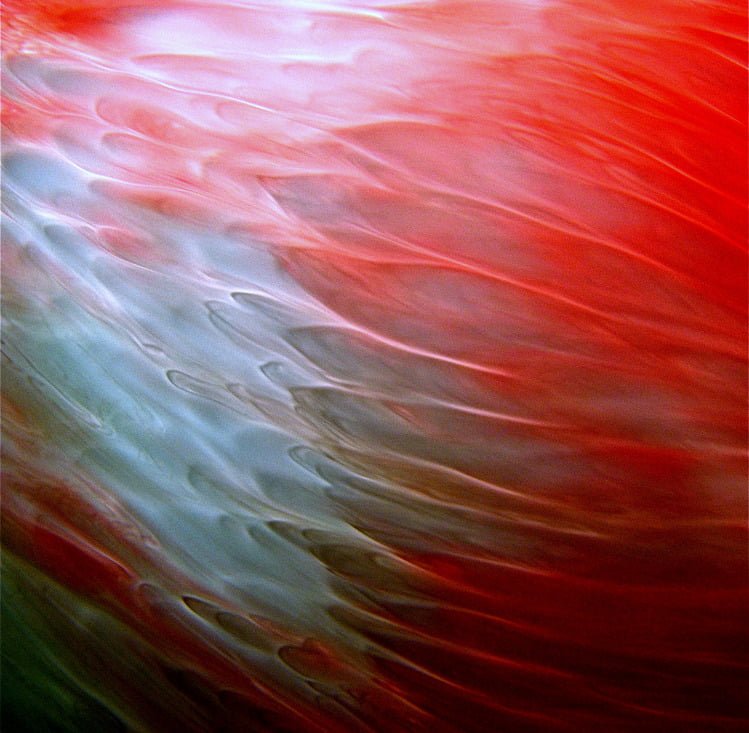
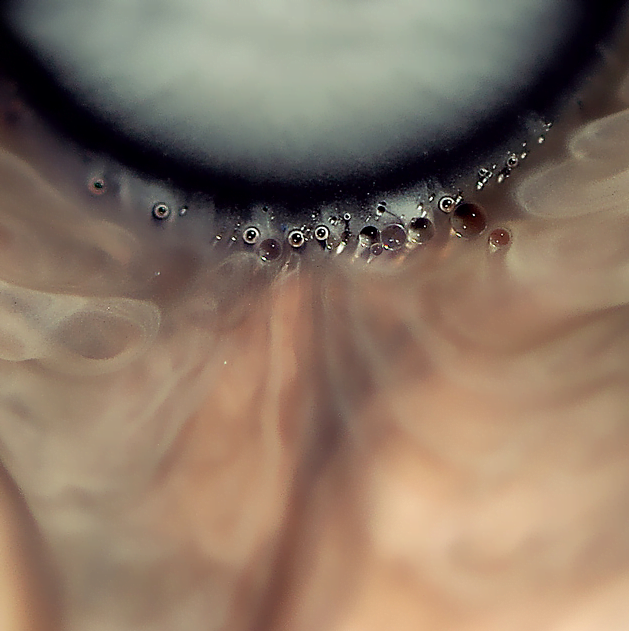
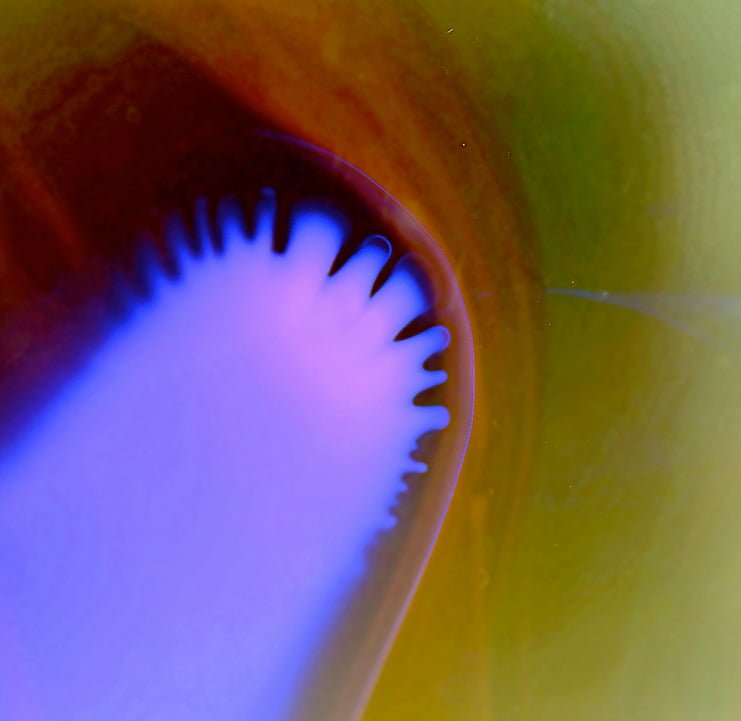
Janet Waters’ abstract photography is full of effects created with fluid dynamics. Diffusion merges different fluids, and gradients in surface tension drive interfacial flows. Changes in density and viscosity produce fingers and streaks and all manner of forms. Be sure to check out her photostream for many more examples of fluids as art. (Photo credits: J. Waters)