Tag: splashes

  • “Water in Dripping”

    “Water in Dripping”

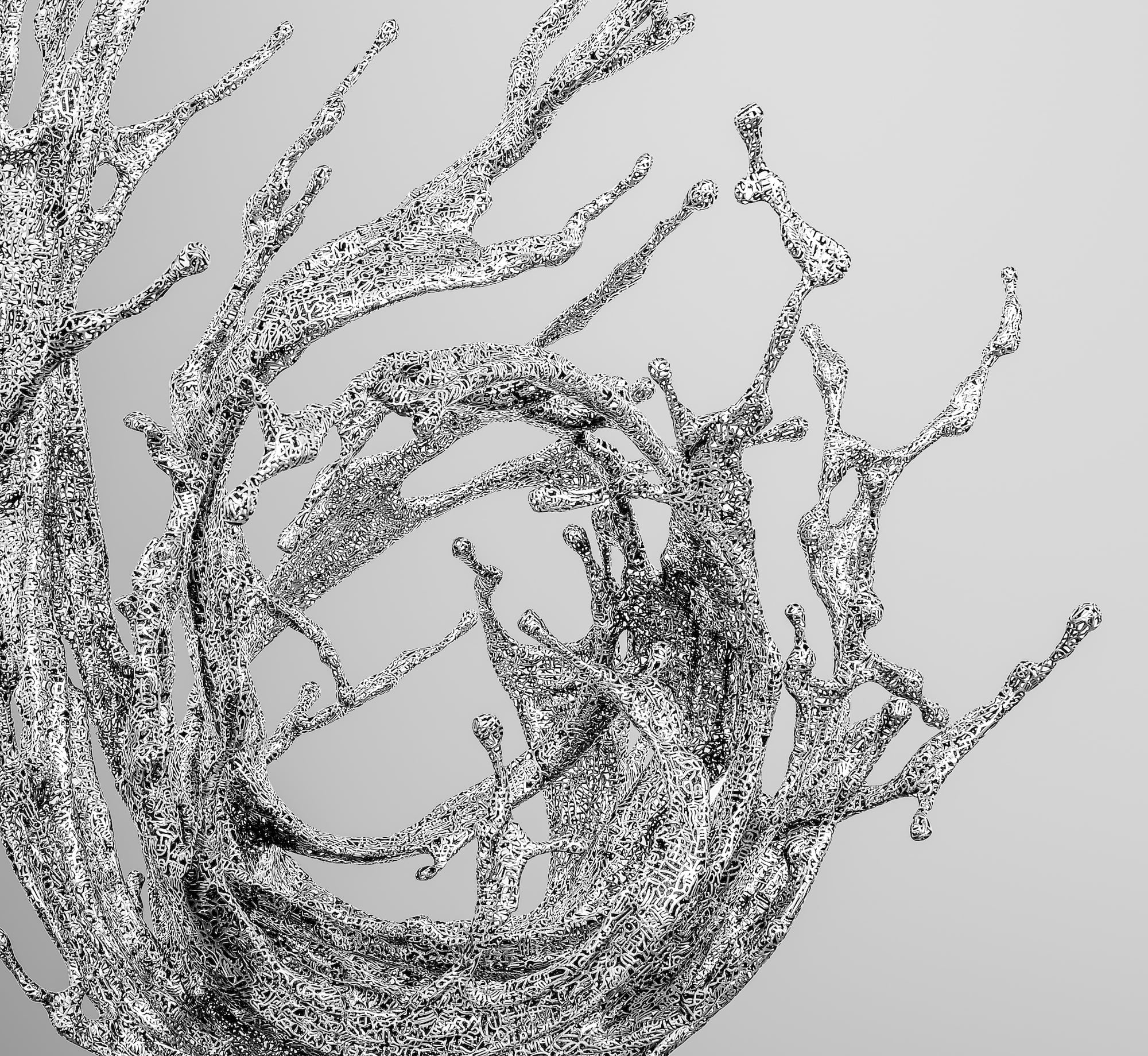
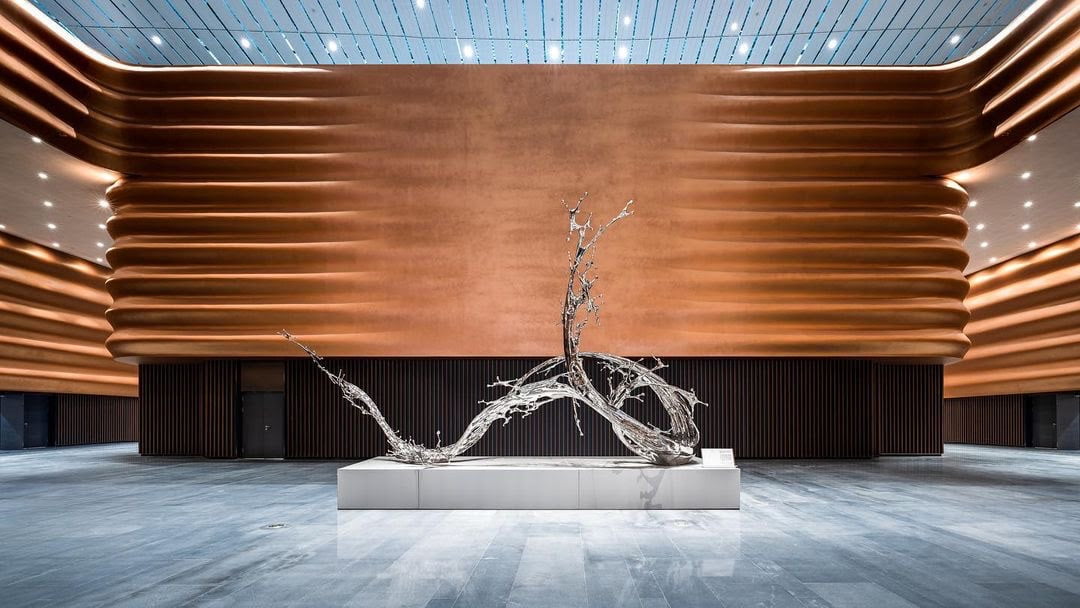
    Zheng Lu’s stainless steel sculptures capture elaborate splashes in action. In some of the pieces, thousands of Chinese characters cover the sculpture’s surface; these are quotes from historical texts and poems, an homage to early Chinese philosophers who studied the principles of the natural world. See more examples of the artist’s work here. (Image credit: Z. Lu; via Colossal)
  • A 2D Splash

    A 2D Splash

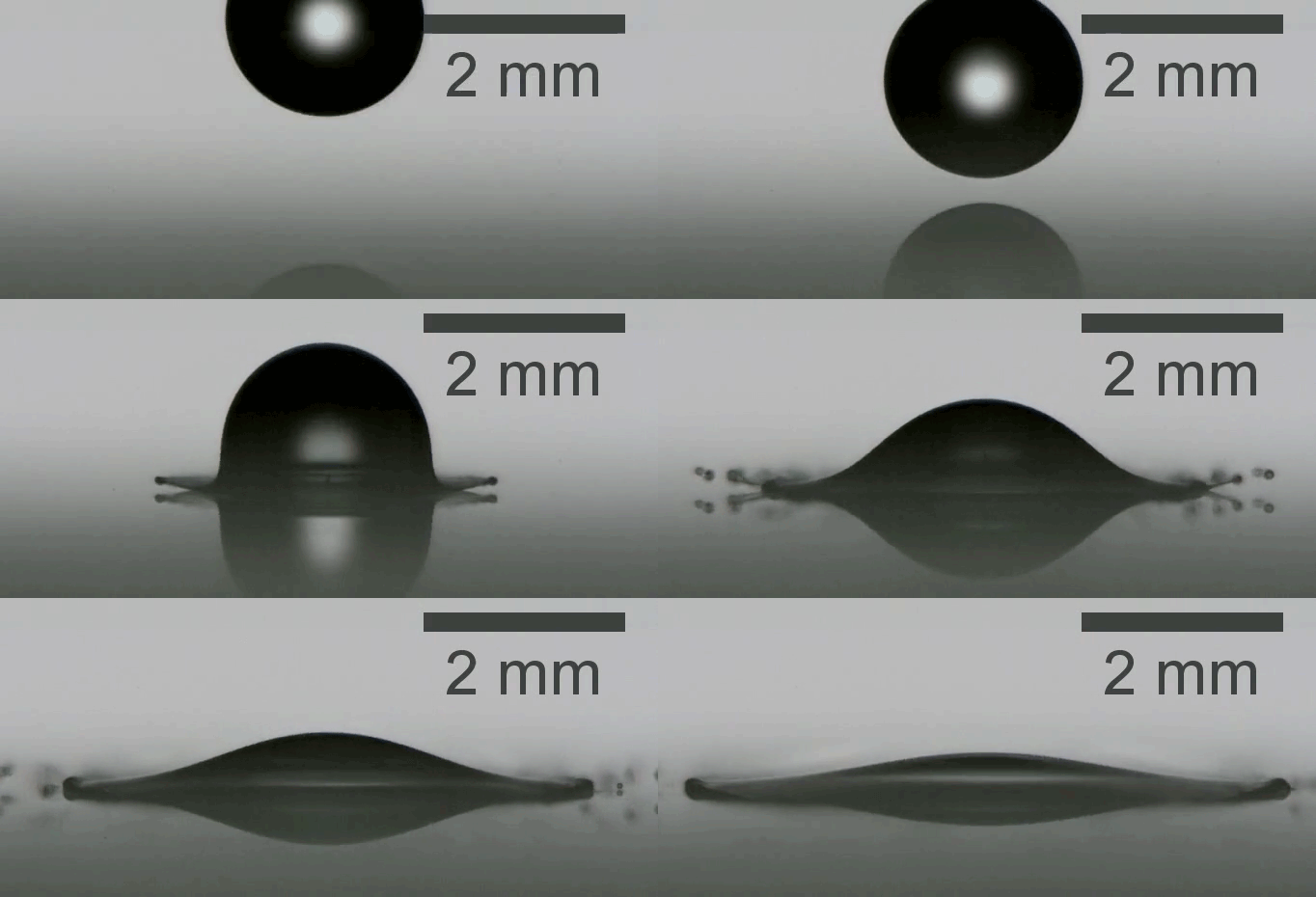
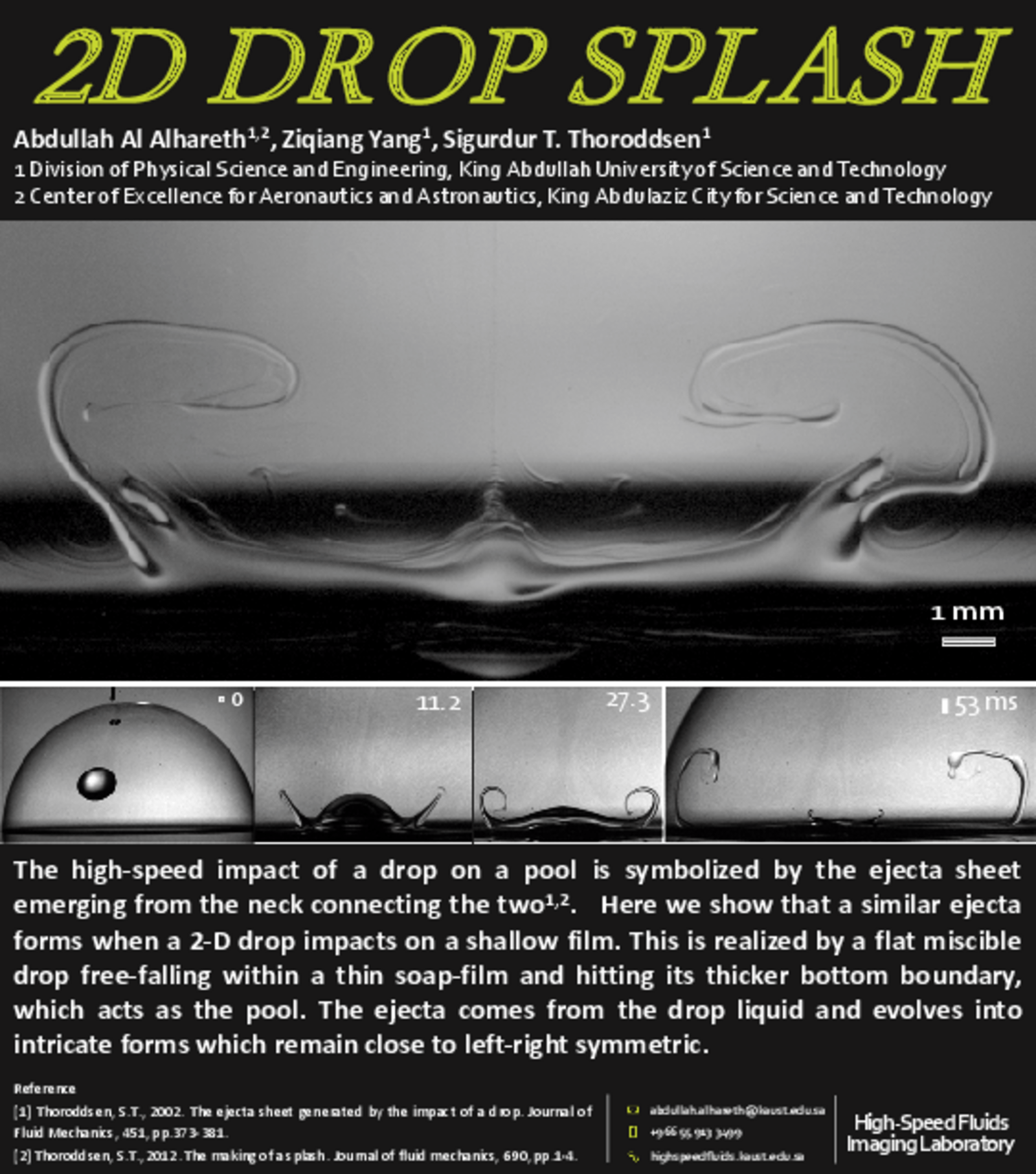
    We see plenty of droplets splash when they fall into a pool, but what happens when the drop and pool are two-dimensional? Here researchers captured the familiar process of a splash in an unfamiliar way by looking at a falling drop contained within a soap film. As the drop reached the thicker lower boundary of the soap film (which acts like a pool), its impact sent up ejecta that stretch and curl, much like the three-dimensional splashes we’re accustomed to. (Image credit: A. Alhareth et al.)

  • Liquid Sculptures

    Liquid Sculptures

    Snapshots of splashes are nothing new, but few have mastered the art of freezing incredible shapes in water the way Markus Reugels has. His splash photography is mind-boggling, especially knowing that he uses Photoshop only for minor corrections like contrast and removing sensor noise. Fortunately, he’s generous in sharing his expertise. Check out lots more incredible photos and plenty of how-to guides (mostly in German) over at his site. (Image credits: M. Reugels)

  • Splashing on Spheres

    Splashing on Spheres

    The splash of a droplet is a surprisingly complex phenomenon, depending not only on the droplet’s characteristics but also the surrounding air pressure, the roughness and temperature of the impact surface, and the surface’s curvature. In this study, researchers investigated the effects of surface curvature on splashing, finding that it’s harder for a drop to splash on spheres of smaller radius than ones with a larger radius of curvature.

    In Image 1, the falling droplet coats the 2-mm sphere with no sign of splashing. But as the radius gets larger (Images 2 and 3), splashing becomes more and more pronounced. They found that the splash suppression is due to a modification of the lift force on the leading edge of the lamella, the thin liquid layer created as the drop impacts and spread. (Image, research, and submission credit: T. Sykes et al.; also available here)

  • Featured Video Play Icon

    Outtakes

    When filming, things don’t always go according to plan. Glasses break, splashes obscure your subject, and sometimes effects just don’t turn out the way you expect. But if you’re the Macro Room team, even those mistakes and outtakes are pretty darn fascinating to watch! I especially like some of the granular “splash” sequences here. (Image and video credit: Macro Room)

  • Featured Video Play Icon

    “Playing With Time”

    The Macro Room team is back with this clever video that messes with our perception of time. I’d hate to give anything away here, so just go check it out! (Image and video credit: Macro Room)

  • The Two-Faced Splash

    The Two-Faced Splash

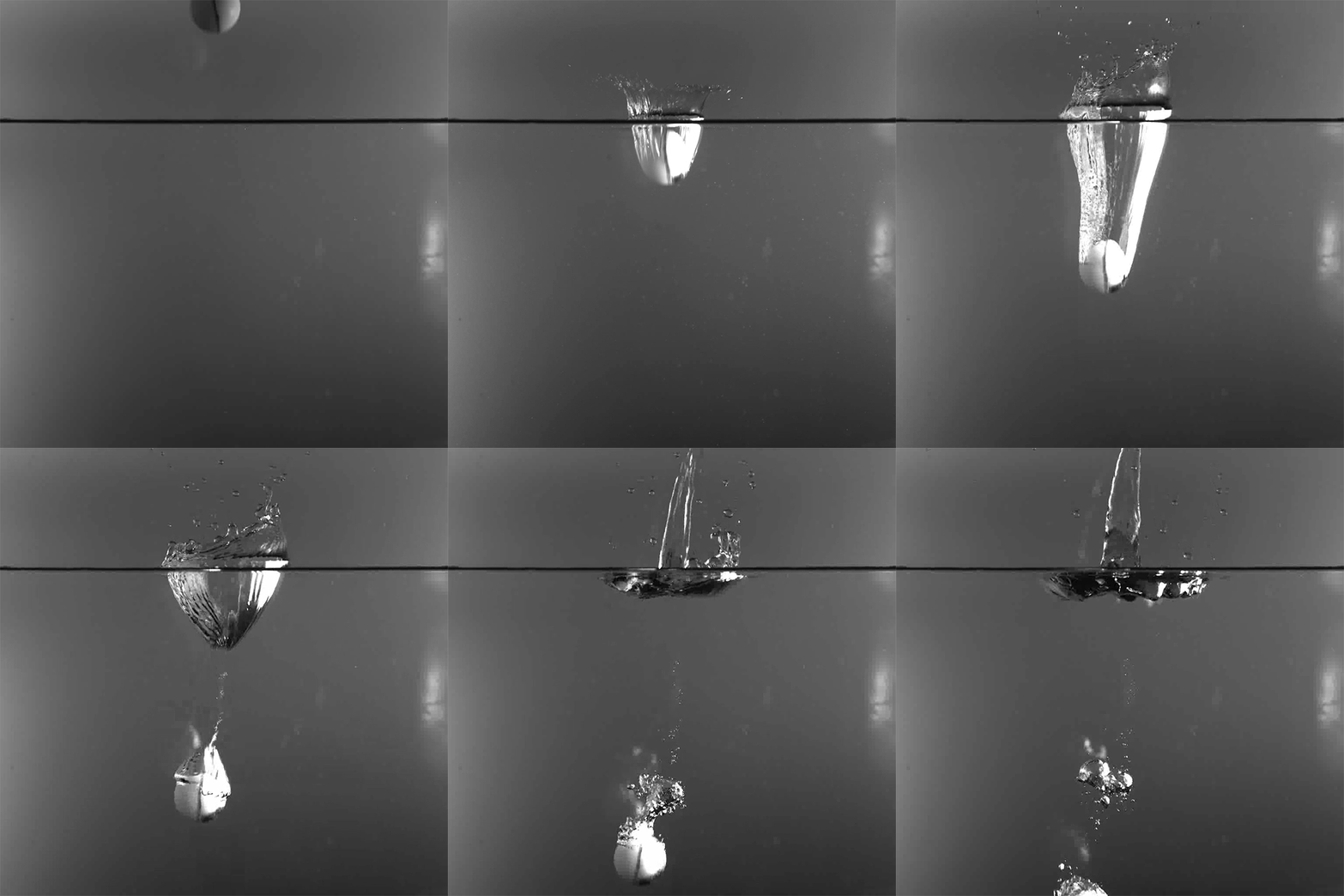
    The way a sphere enters water depends on its size, speed, and surface properties. A hydrophilic (water-attracting) sphere behaves differently than a hydrophobic (water-repelling) one. But what happens when the object’s surface properties aren’t uniform?

    That’s the situation we see above. The dark line marks the two hemispheres of the sphere and their differing surface properties. To the left, the sphere is hydrophilic; to the right, it is hydrophobic. When the sphere hits the water, both the splash and underwater cavity quickly become asymmetric. On the hydrophobic side, the cavity wall is smooth, but the cavity is rough on the hydrophilic side. In the end, the asymmetries create a horizontal force that pushes the sphere sideways. (Image and research credit: D. Watson et al.)

  • Freezing Splats

    Freezing Splats

    In fluid physics, there’s often a tug of war between different effects. For droplets falling onto a surface colder than their freezing point, the hydrodynamics of impact, sudden heat transfer, and solidification processes all compete to determine how quickly and in what form droplets freeze.

    The images above form a series based on changing the height from which the droplet falls. Each image is divided into two synchronized parts. On the left, we see a visible light, top-down view of the freezing droplet; on the right, we see an infrared view of freezing. As the height of impact increases, the shape of the frozen drop becomes more elaborate, moving from a flat splat with a small conical tip all the way to one with a concentric double-ring in its center. (Image and research credit: M. Hu et al.)

  • Aging Fluids

    Aging Fluids

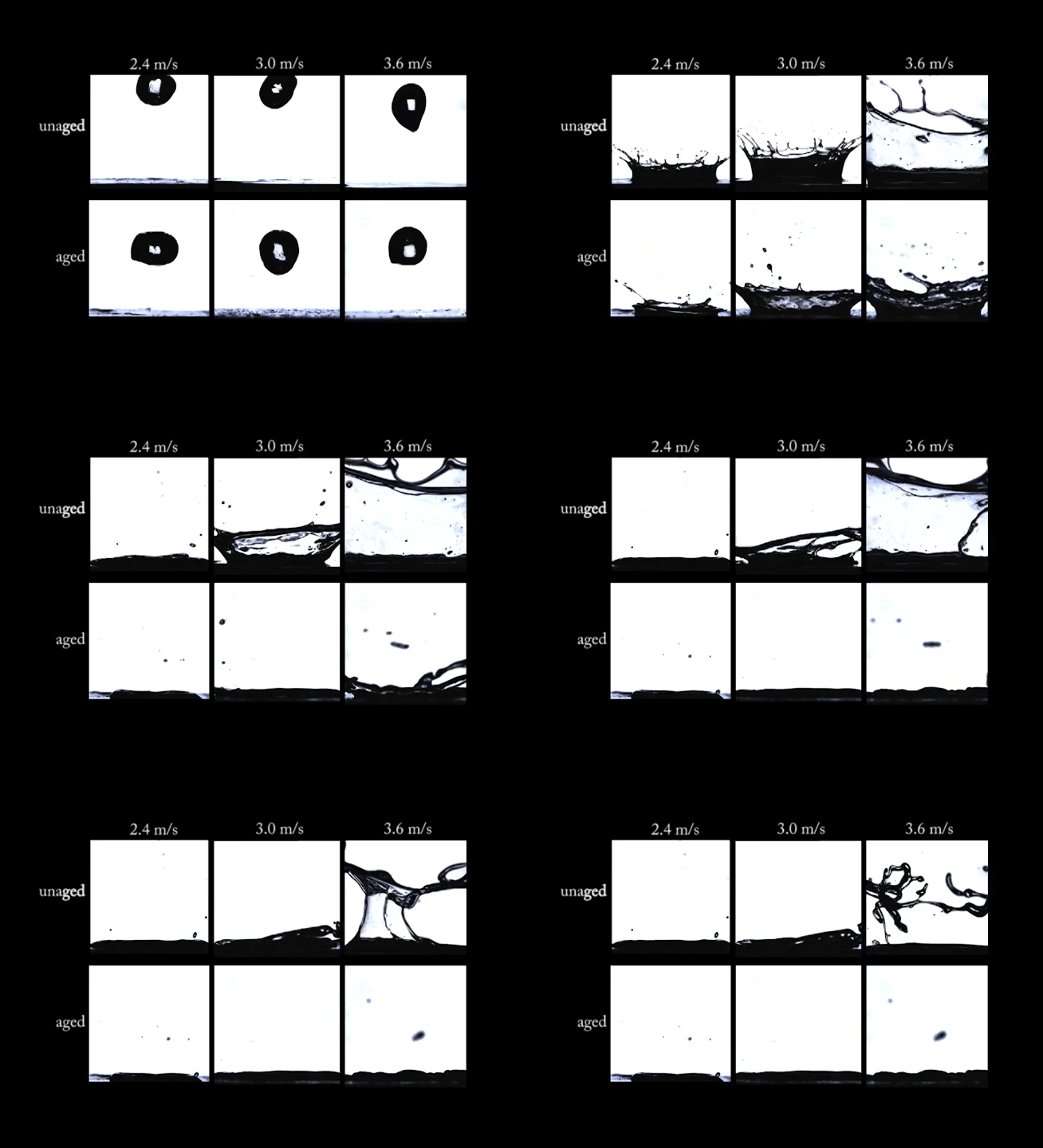
    If you’ve ever left a sealed container of Playdoh untouched for months, you know that there’s a big difference between the fresh stuff and what’s left in that can. Aging can have big effects on non-Newtonian fluids. In this video, we see drops of a synthetic clay impacting at different speeds. In the top row of images, the clay is fresh and unaged; on impact, the clay forms large crown-like splashes. In the bottom row, however, the aged clay behaves quite differently. Instead of a splash, the drops make more of a splat. (Image and video credit: R. Ewoldt et al.)

  • Droplets on Inclined Walls

    Droplets on Inclined Walls

    When a droplet impacts an inclined surface, it spreads asymmetrically. The splash shape is largely elliptical, as researchers found when modeling such impacts over a range of inclination angles. Understanding such splash patterns is important not only for industrial applications like printing but in areas like forensic science. (Image and research credit: P. García-Geijo et al.)