Tag: spiders

  • Sensing Sound Like Spiderwebs

    Sensing Sound Like Spiderwebs

    Most microphones — like our ears — work by sensing the tiny pressure changes caused by a sound wave‘s passing. But for microphones built this way, the smaller they get, the more sensitive they are to thermal noise. That’s one reason that the tiny microphones in a laptop or webcam just don’t sound as good as larger mics.

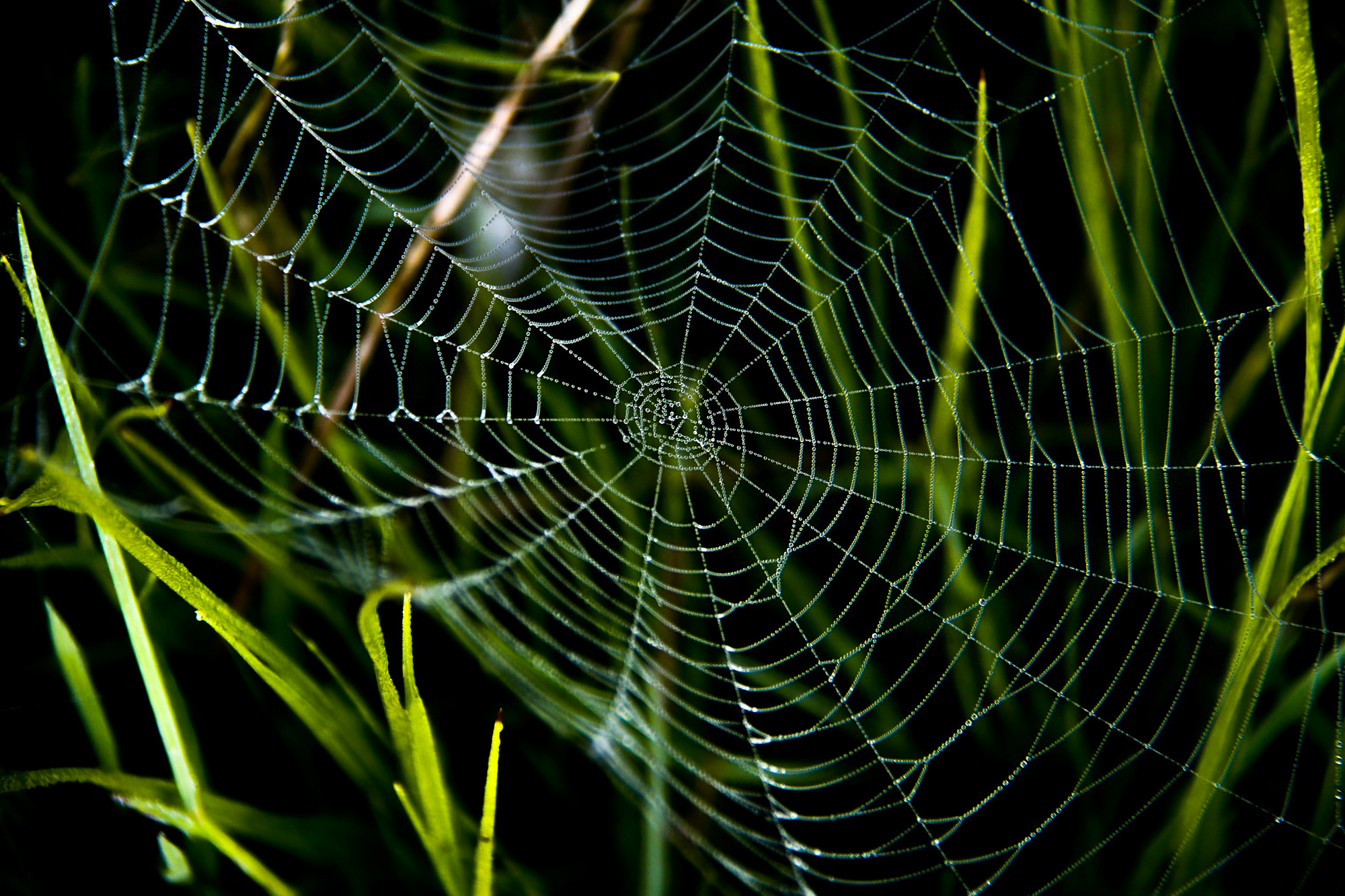
    Researchers turned to nature to look for alternative ways to measure sound and zeroed in on the mechanism spiders use. Spiders “listen” to their web’s vibrations; the tiny strands of silk quiver as air flow from a sound moves past. Instead of being pressure-based, this mechanism uses viscous drag to register a sound.

    The team fabricated an array of microbeams to test the concept of a viscosity-based microphone and found that tiny beams sensed sounds just as well as larger ones. That means these microphones can get smaller without sacrificing performance. For now, they’re not as sensitive as conventional microphones, but that’s not surprising, given that engineers have been improving pressure-based microphones for 150 years. It’s a promising start for a new technology, though. (Image credit: N. Fewings; research credit: J. Lai et al.; via APS Physics)

  • Featured Video Play Icon

    Flying Spiders Use Electric Fields

    Many species of spider fly with a technique calling ballooning. We’ve touched on spider flight before, but more recent research adds a new dimension to the phenomenon. Researchers showed that spiders can actually use electrical fields in their flight. When isolated from flow or outside electrical fields, researchers found that spiders would still begin ballooning behaviors when subjected to electrical fields similar to those found in nature. The spiders were even able to take off in the artificial environment, using the electrostatic force between the surrounding fields and their negatively charged silk strands. While electrical fields alone were enough to get spiders aloft, the team thinks spiders in nature likely still use a combination of electrostatic force and aerodynamic drag in order to travel the vast distances spiders have been known to cover. (Video and image credit: BBC; research credit: E. Morley and D. Robert)

  • Hydraulics Make Spiders So Creepy

    Hydraulics Make Spiders So Creepy

    There’s something about the way spiders move that many of us find inherently creepy. And that something, it turns out, is fluid dynamical. Unlike humans and other vertebrates, spiders don’t move using two sets of opposing muscles. The natural state of their multi-jointed legs causes them to flex inward. This is why dead spiders have their legs all curled up.

    To walk, spiders use hydraulic pressure. They pump a fluid called hemolymph into their legs to force them to straighten. If you look closely, you’ll notice that spiders’ legs always connect to the front section of their body. This is called the cephalothorax, and it acts like a sort of bellows that controls the pressure and flow of hemolymph. It moves the hemolymph around the spider’s body in a fraction of a second, allowing spiders to be quite fast, but something about the movement still feels off for those of us used to vertebrate motion. Happy Halloween, everyone!  (Image credit: R. Miller, source; see also; submitted by jpshoer)

  • Fly Away!

    Fly Away!

    Spiders are often among the first colonists on newly formed volcanic islands. Thanks to their aerial skills, they are able to travel nearly anywhere by ballooning on strands of their own silk. Exactly how spiders as large as 20 milligrams manage this is still relatively known. A new study shows that crab spiders, like any careful aviator, use a foreleg to monitor wind conditions for 5 or more seconds before attempting take-off. The spiders will only spool out ballooning threads if the wind is warm and gentle. Wind speeds higher than 3 meters per second are an automatic no-go. When the spider decides conditions are favorable, they release as many as 60 nanoscale fibers that are several meters in length. The wind catches the silks and lifts them away to their next adventure. (Image credit: Science Magazine, source; research credit: M. Cho et al.)