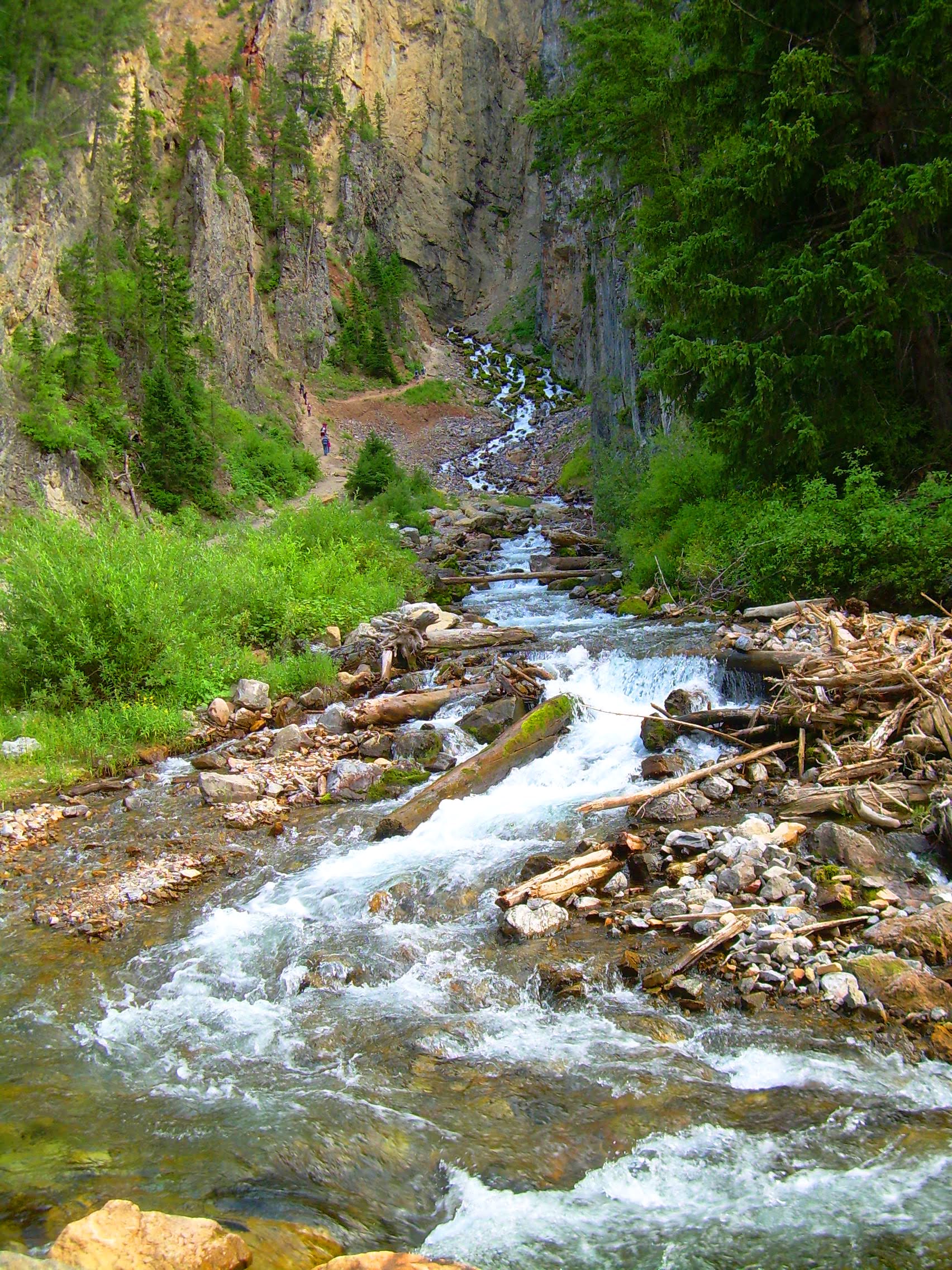
Yellowstone may get top billing, but Wyoming is home to more fluid dynamical wonders, like the world’s largest rhythmic spring. Located a little outside Afton, WY, Intermittent Spring — as the name indicates — runs for roughly 15 minutes, stops for the same length, then starts up again. The leading theory for this periodic flow depends on the siphon effect. Essentially, water runs continuously into a cavern underground, but to get to the surface, it must traverse a narrow tube with a high point that lies above the spring’s eventual exit. When the water level reaches that high point, it creates a siphon, sucking water out of the cavern and making the spring flow. But eventually the water level drops to the point where air rushes in, breaking off the flow until the water level recovers. That’s consistent with the spring’s behavior; it only runs in this intermittent fashion from late summer to fall, when groundwater levels are lower. (Image credit: Wikimedia Commons; video credit: University of Wyoming Extension; submitted by Kam-Yung Soh)
Tag: science

Space Hurricanes
Researchers have observed their first “space hurricane” – a 1,000-km-wide vortex of plasma – in Earth’s upper atmosphere. Like conventional hurricanes, this storm featured precipitation (of electrons rather than rain), a calm eye at its center, and several spiral arms. Based on the group’s model, interactions between the solar wind and Earth’s magnetic fields drive the storm. Interestingly, the storm they observed occurred during a period of low solar and geomagnetic activity, which suggests that such space hurricanes could be frequent, both on Earth and in the upper atmospheres of other planets. (Image credit: Q. Zhang; research credit: Q. Zhang et al.; via Physics World)

Light Painting

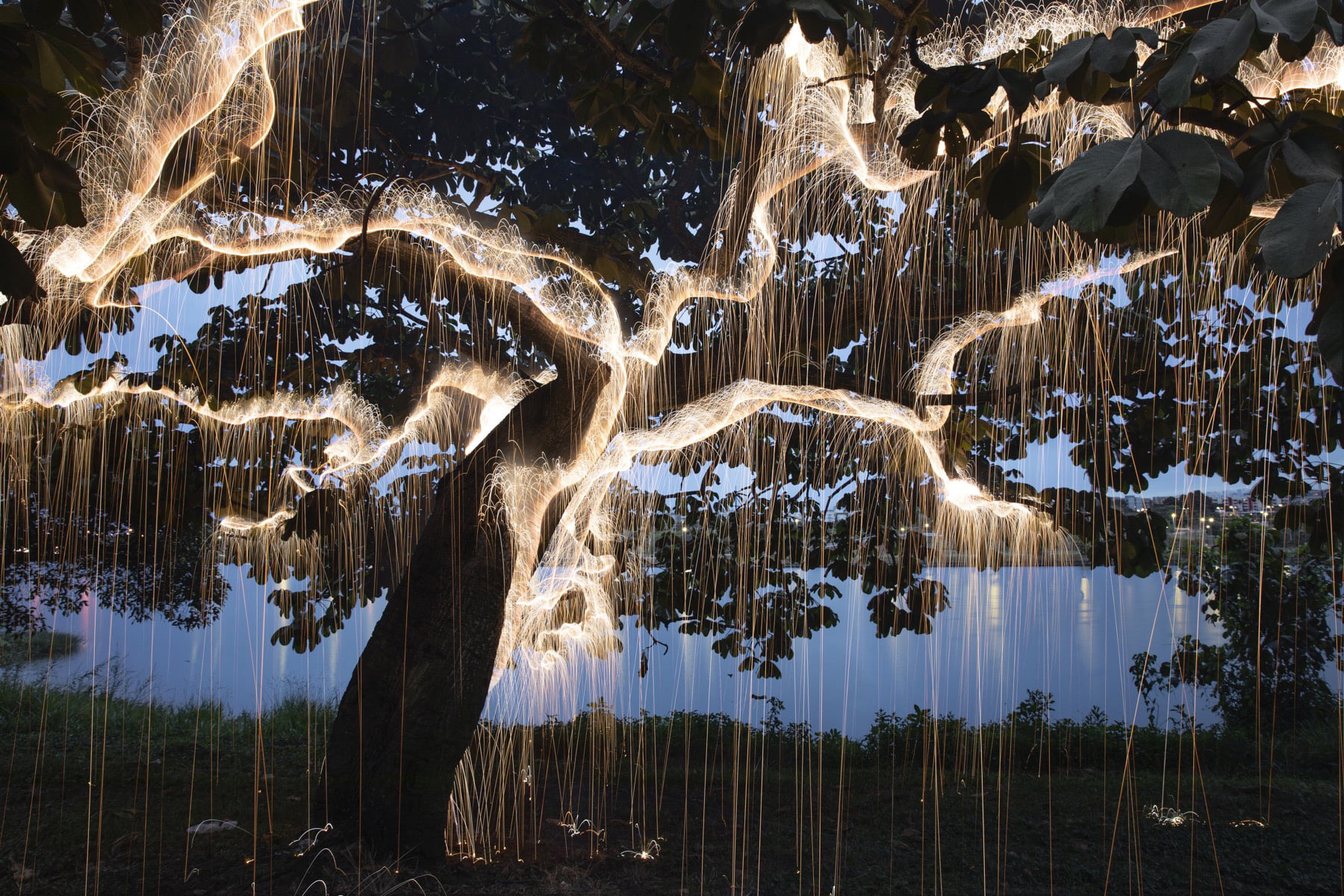


Light streams from the branches of trees in this series from photographer Vitor Schietti. The effect is created with a combination of fireworks, long-exposure photography, and compositing. I love how the falling sparks create streaklines just like so many flow visualization diagnostics do! Follow more of Schietti’s work on Instagram. (Image credit: V. Schietti; via Colossal)

Where Does Stormwater Go?


Stormwater management is one of the biggest municipal challenges towns and cities face. Urban surfaces are largely impermeable, preventing rainwater from soaking into the ground. Instead roads, ditches, and channels collect water and, typically, divert it as quickly as possible into natural waterways.
In contrast, wild landscapes tend to slow water run-off, filtering it into the water table, soaking it up with vegetation, and distributing it across a larger area. Recently, cities have started using low-impact development strategies, like rooftop gardens and rainwater collection, to mimic natural landscapes in urban ones. (Image and video credit: Practical Engineering)

Falling Beads
Liquids flowing down a fiber can form bead-like droplets that may sit symmetrically (a) or asymmetrically (b) on the fiber. In general, the asymmetric droplets appear as surface tension increases or as the fiber diameter increases. The pattern of the droplets changes with flow rate. Within each subfigure, the flow rate increases from left to right. At low flow rates, we see only one or two large droplets migrating down the fiber. At moderate flow rates, a regular pattern of drops emerges. And at high flow rates, droplets coalesce on the fiber to form drops large enough that they fall and sweep up the downstream droplets. (Image and research credit: C. Gabbard and J. Bostwick)
Reintroducing Beavers


Beavers are impressive ecological engineers and a keystone species for wetland environments. But in the UK, it’s been nearly 400 years since beavers were regularly found in the wild. In the meantime, Victorian engineering sensibilities drastically altered the landscape to quickly drain rainwater from upstream locations, which unfortunately increases flooding dangers downstream.
But all of that is changing with the reintroduction of wild beavers in a Cornwall experiment. Within their 5 acres, the beavers are transforming the landscape by deepening ponds and slowing water drainage. Their dams create ideal habitat spaces not only for the beavers but for many other species of mammals, birds, and insects. Check out the full interview to learn more and see this previous post for a similar effort in the Western U.S. (Video and image credit: BBC Earth)

Rainfall Beyond Earth
Rain is not unique to our planet: Titan has methane rain and exoplanet WASP 78b is home to iron rain (ouch). A new study examines rainfall across planets from the perspective of individual rain drops. The authors examine raindrop shape, terminal velocity, and evaporation rate as a function of droplet size for a wide range of known and speculated atmospheres.
They found that raindrops are surprisingly universal. Although planets with higher gravity tend to produce smaller raindrops, they found a remarkably narrow range for maximum drop size. That’s a pretty wild result, all things considered! The idea that iron, ammonia, methane, and countless other fluids falling through vastly different atmospheres all share very common characteristics is fascinating. (Image credit: NASA/JPL-Caltech/SwRI/MSSS/Brian Swift; research credit: K. Loftus and R. Wordsworth; via Science News; submitted by Kam-Yung Soh)

Lava Fields From Above


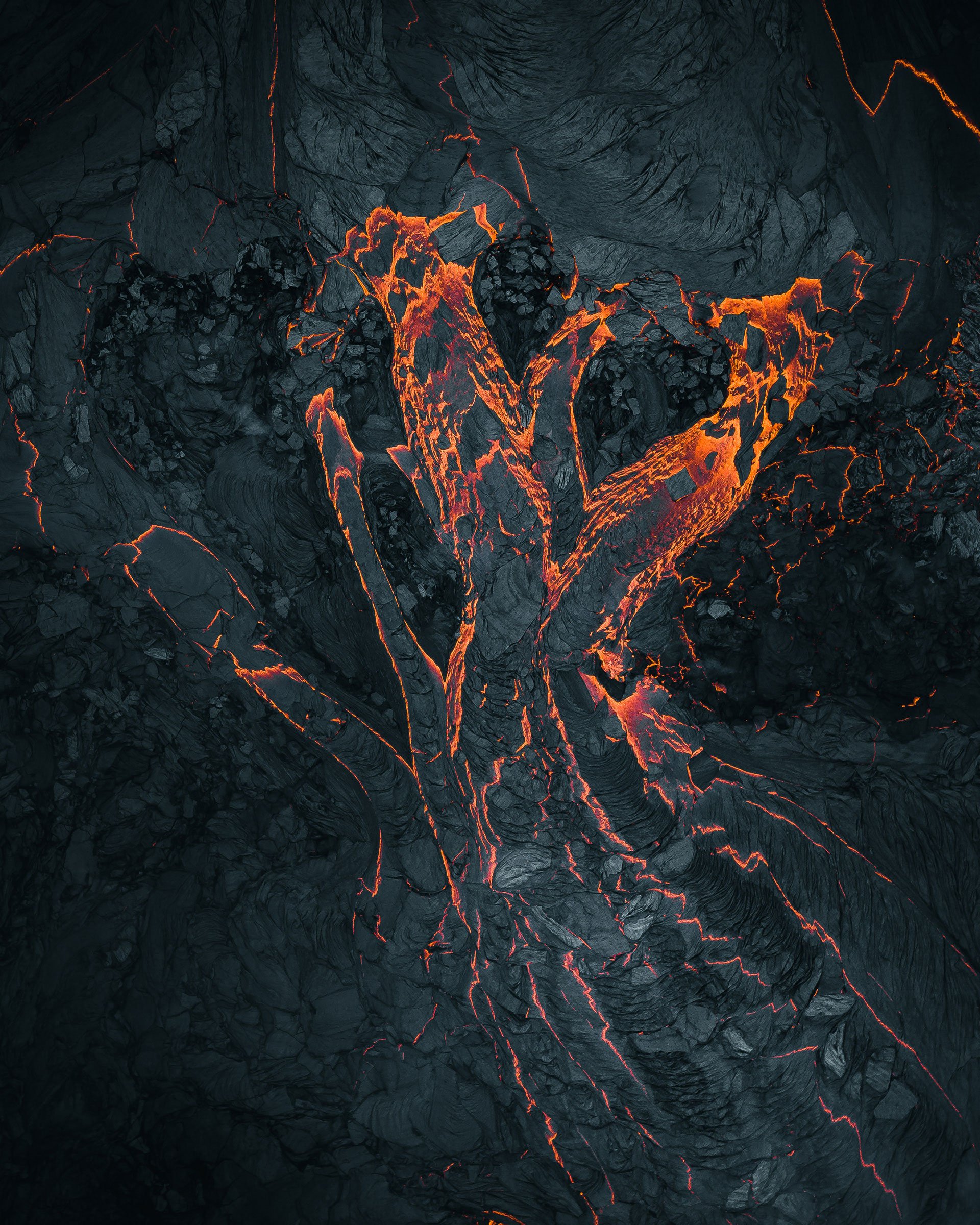
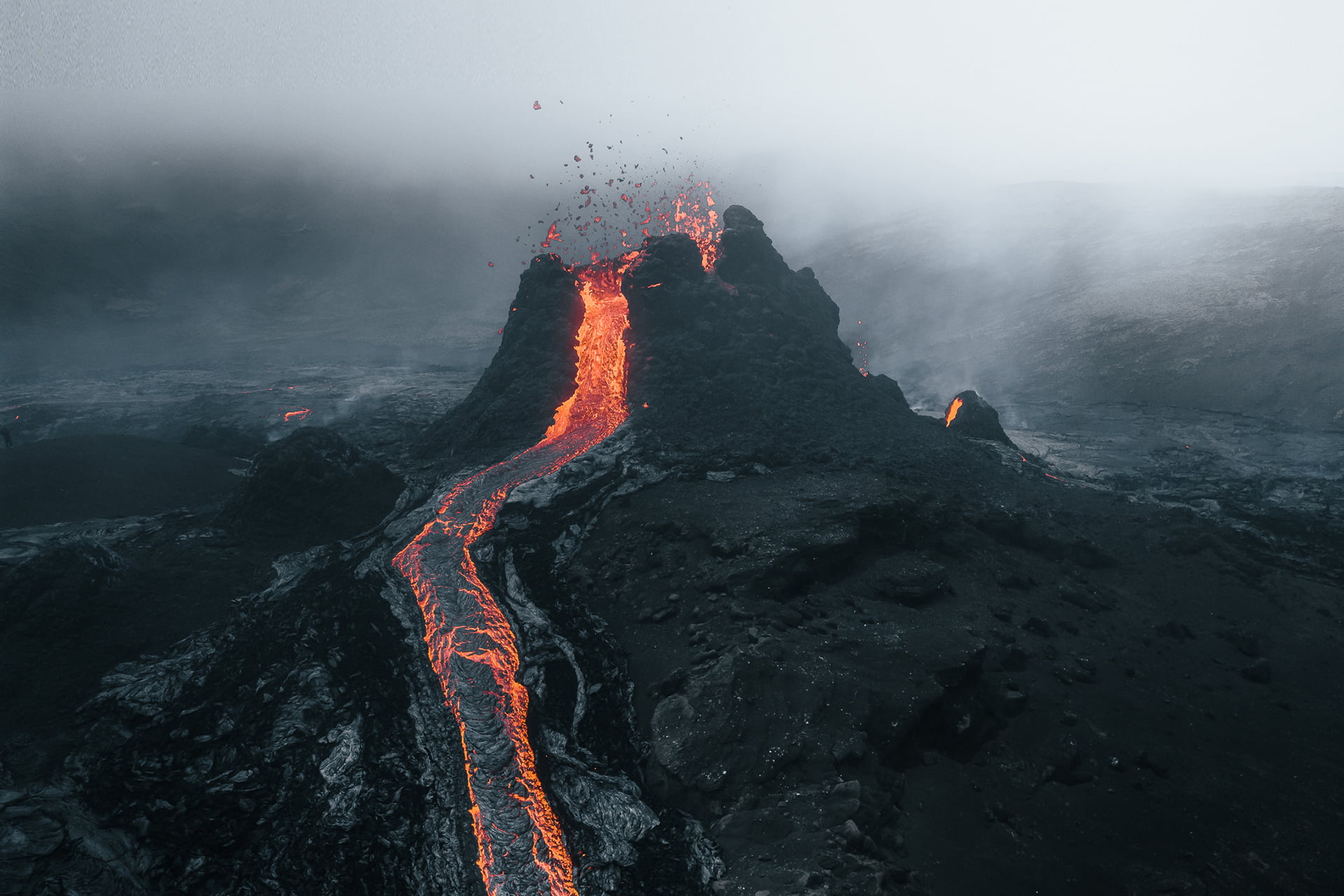

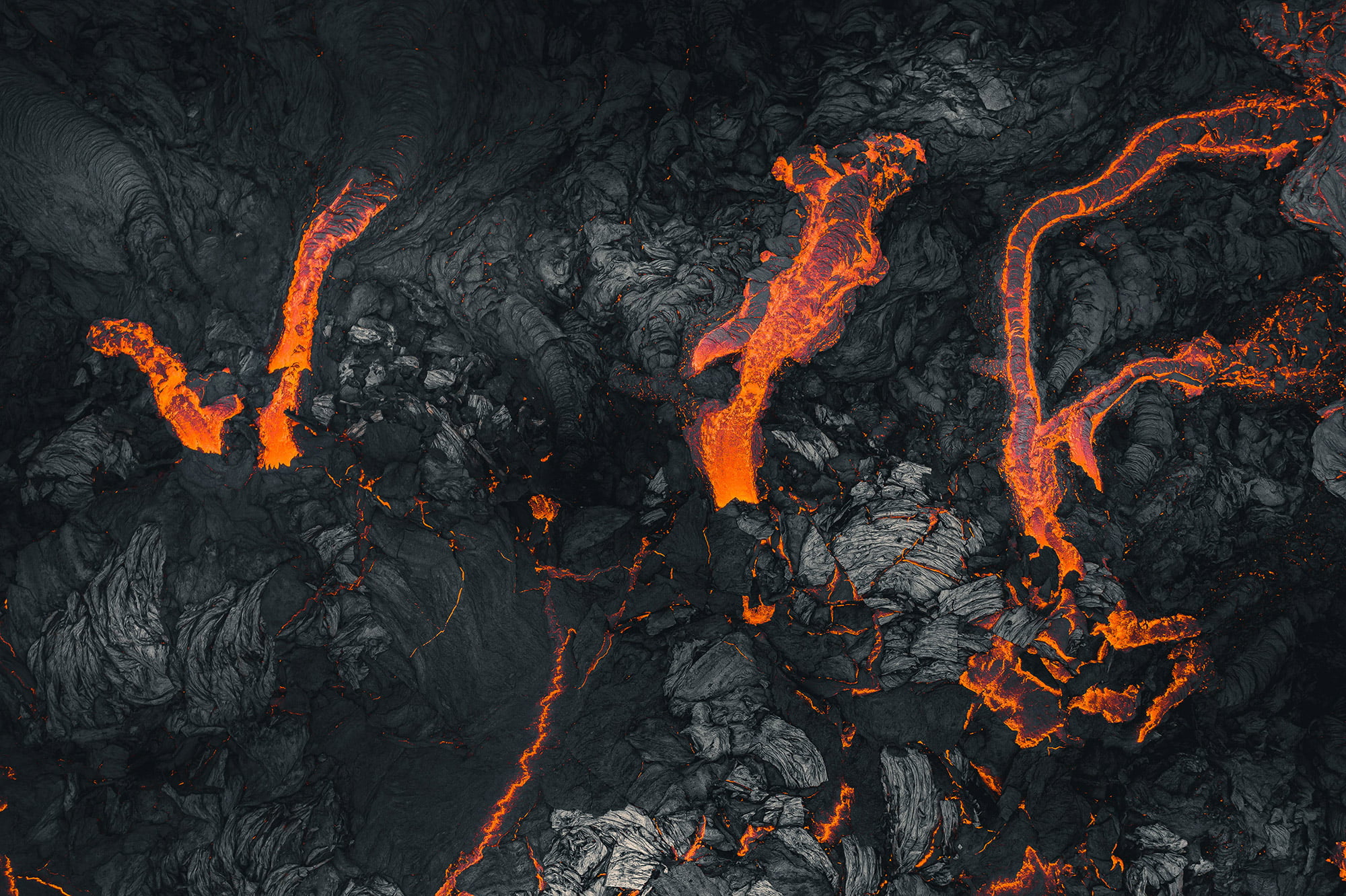

Lava flows are endlessly fascinating to watch. They’re a destructive act of creation that seems in many ways familiar; after all, lava moves the same way we see other viscous fluids move. But it’s so much more extreme in its temperature, viscosity, and destructive potential. These beautiful aerial photos by photographer Thrainn Kolbeinsson show the recent eruption at Iceland’s Fagradalsfjall volcano. I love the vivid texture of the lava in these shots and the sharp contrast between the hot and cooling flows. You can see the pahoehoe forming before your very eyes! (Image credit: T. Kolbeinsson; via Colossal)
Building a Water-Based Computer


Having previously tackled the “greedy” self-starting siphon, Steve Mould set out to build a water-based computer capable of adding simple numbers. To do this, he had to build logic gates capable of distinguishing concepts like AND and exclusive OR (XOR); the self-starting siphon was critical for this, diverting water down one output or another depending on the TRUE or FALSE result. With a series of water logic gates, he built a simple computer capable of adding numbers in binary. Check out the video to see it all in action! (Video and image credit: S. Mould)

The Two-Faced Splash
The way a sphere enters water depends on its size, speed, and surface properties. A hydrophilic (water-attracting) sphere behaves differently than a hydrophobic (water-repelling) one. But what happens when the object’s surface properties aren’t uniform?
That’s the situation we see above. The dark line marks the two hemispheres of the sphere and their differing surface properties. To the left, the sphere is hydrophilic; to the right, it is hydrophobic. When the sphere hits the water, both the splash and underwater cavity quickly become asymmetric. On the hydrophobic side, the cavity wall is smooth, but the cavity is rough on the hydrophilic side. In the end, the asymmetries create a horizontal force that pushes the sphere sideways. (Image and research credit: D. Watson et al.)


#/media/File:Periodic_Spring_(from_the_bottom).JPG)