
The Martian atmosphere is scant compared to Earth’s, but its winds still sculpt and change the surface regularly. The average atmospheric pressure on Mars is only 0.6% of Earth’s, and the density is similarly low at 1.7% of Earth’s. Despite this thinness, Martian winds are still substantial enough to shift sands on a daily basis, as shown above. These two images were taken one Martian day apart, showing how sand ripples moved and how the Curiosity rover’s tracks can be quickly obscured. Part of the reason Mars’ scant atmosphere is still so good at moving sand is that Martian gravity is roughly one-third of ours; if the sand is lighter, it doesn’t take as much force to move! (Image credit: NASA/JPL-CALTECH/MSSS)
Tag: sand ripples

Martian Ripples

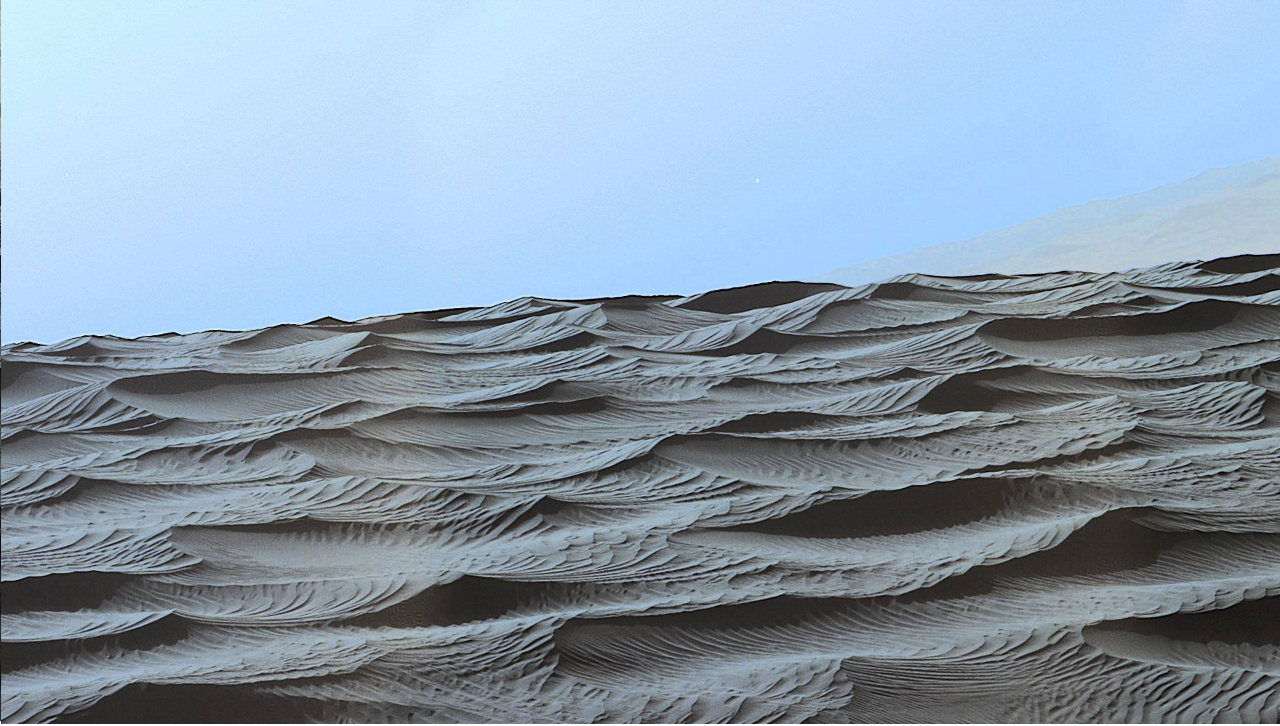
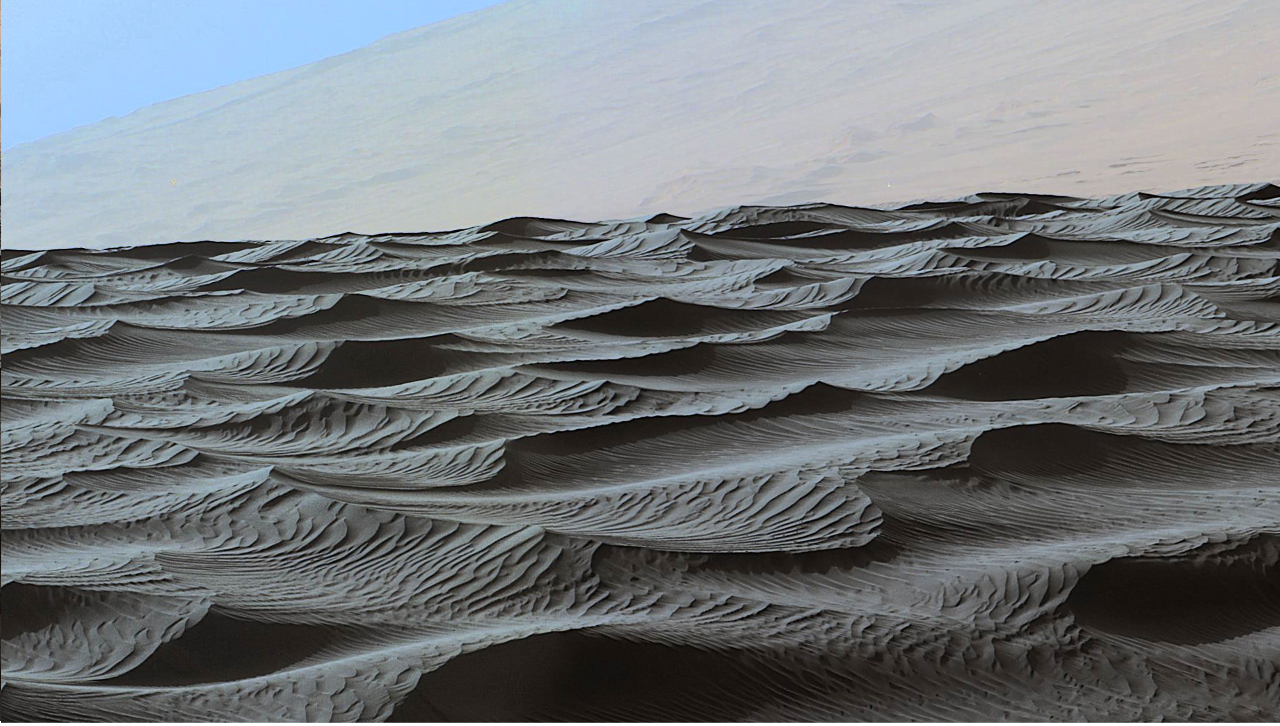
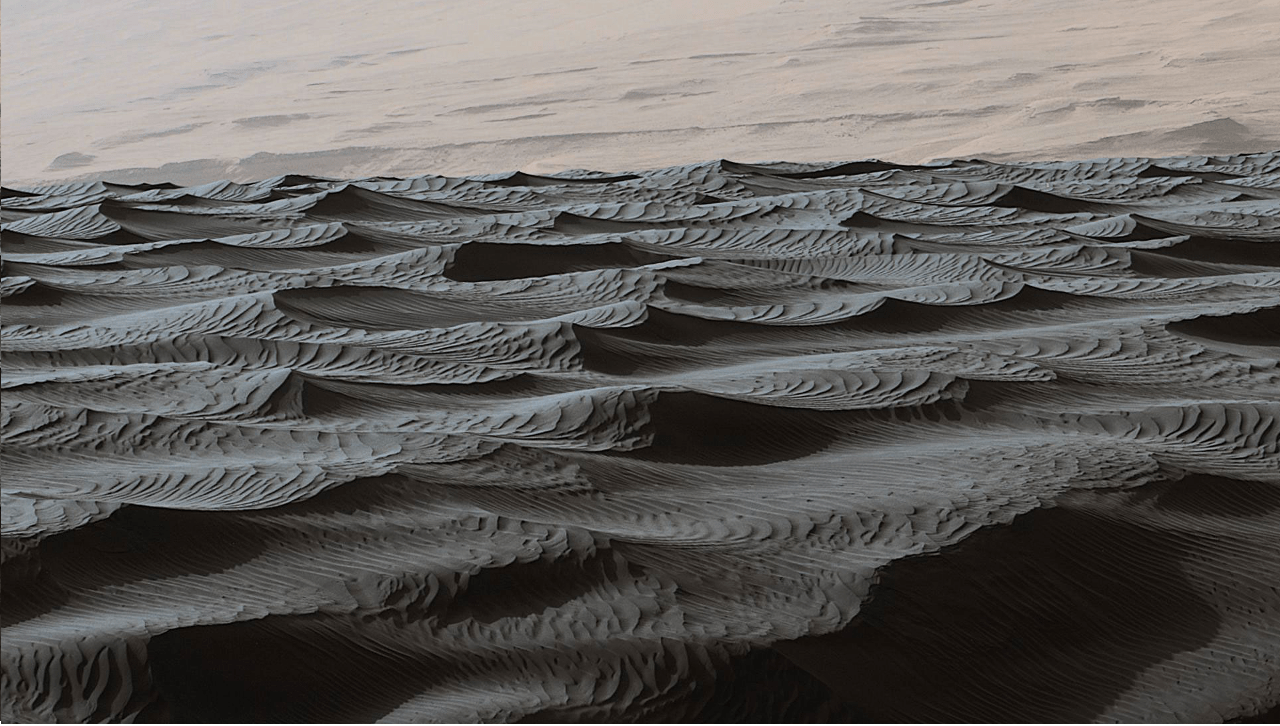

Earth and Mars both feature fields of giant sand dunes. The huge dunes are shaped by the wind and miniature avalanches of sand, and their surface is marked by small ripples less than 30 centimeters apart. These little ripples are formed when sand carried by the wind impacts the dunes. But Martian dunes have a second, larger kind of ripple, too. These sinuous, curvy ripples lie about 3 meters apart and cast the dark shadows seen in the images above. On Earth we see ripples like these underwater, where water drags sand along the surface. On Mars, the same process is thought to play out with the wind, and so scientists have named these wind-drag ripples. (Image credit: NASA/JPL/MSSS; via APOD, full-res; submitted by jshoer)

Sand Ripples in Tidal Flats


Sand, winds, and waves can interact to form remarkable and complex patterns. These sand ripples from the tidal flats of Cape Cod are a testament to such interactions. When a fluid like air or water flows over a flat bed of sand, it can shear and lift grains of sand, moving them to a new location. Very quickly, turbulence within the flow disturbs the initially smooth surface and begins to form the wavelike crests we see. Because the change in surface shape alters the nearby air or water flow, there is a trend toward self-organization and persistence. In other words, once the ripples form, they’re reinforced by their effect on the wind or water that formed them. Once rippled, the surface does not tend to smooth back out. (Image credit: N. Sharp; research credit: F. Sotiropoulos and A. Khosronejad)
