Tag: Rayleigh-Taylor instability

  • Featured Video Play Icon

    “Ink in Motion”

    In this short film, the Macro Room team plays with the diffusion of ink in water and its interaction with various shapes. Injecting ink with a syringe results in a beautiful, billowing turbulent plume. By fiddling with the playback time, the video really highlights some of the neat instabilities the ink goes through before it mixes. Note how the yellow ink at 1:12 breaks into jellyfish-like shapes with tentacles that sprout more ink; that’s a classic form of the Rayleigh-Taylor instability, driven by the higher density ink sinking through the lower density water. Ink’s higher density is what drives the ink-falls flowing down the flowers in the final segment, too. Definitely take a couple minutes to watch the full video. (Image and video credit: Macro Room; via James H./Flow Vis)

  • Acrylic and Oil

    Acrylic and Oil

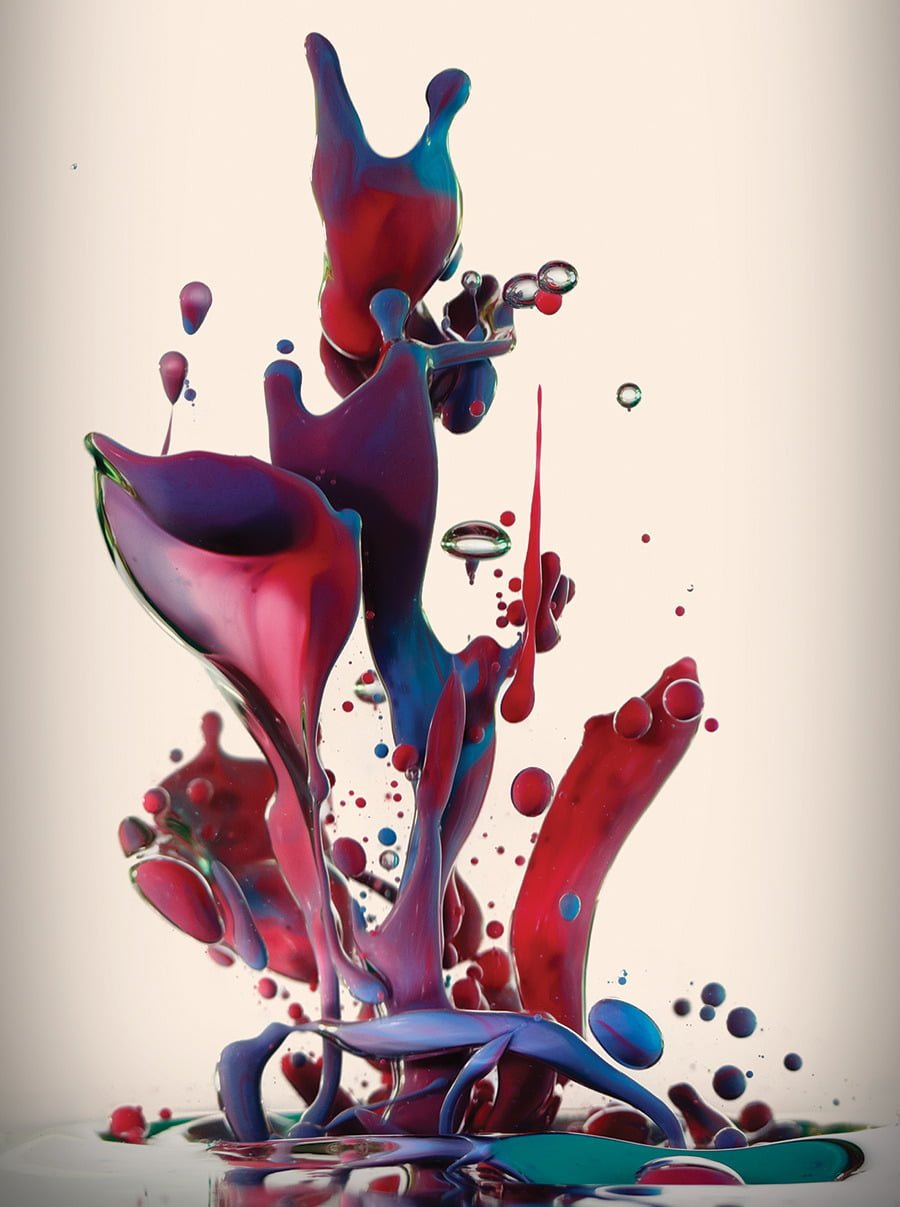
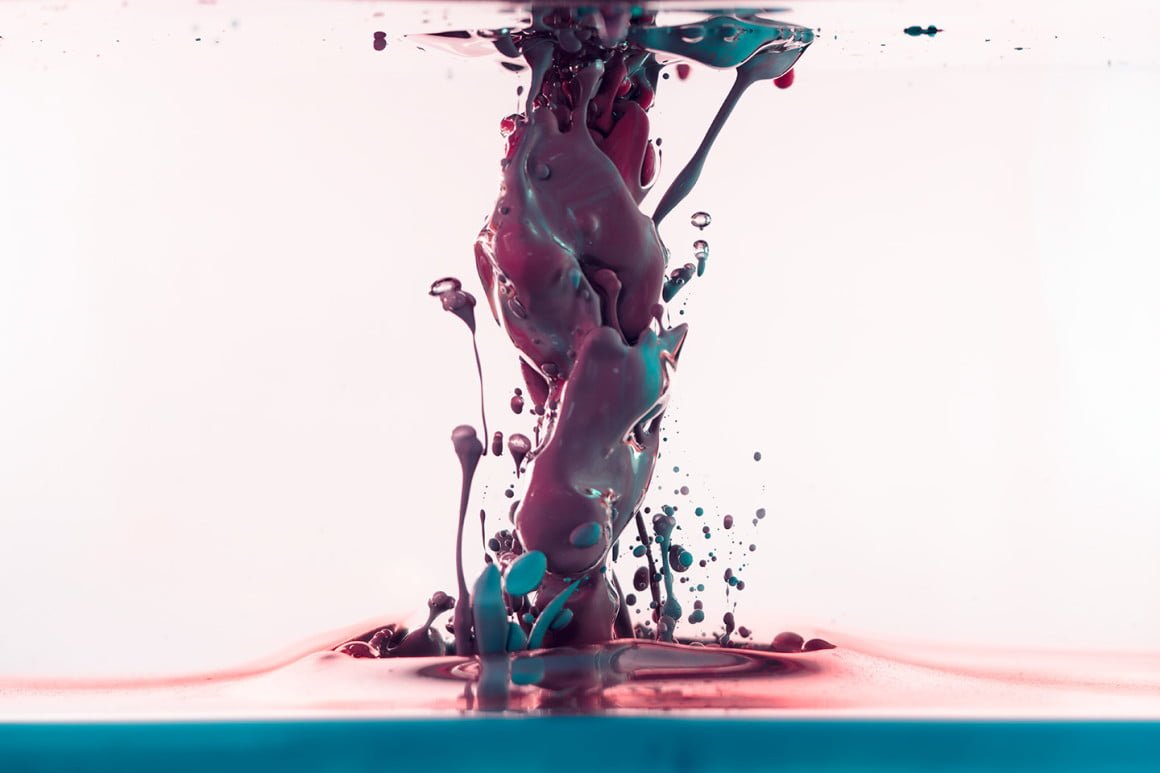
    Photographer Alberto Seveso is well-known for ink in water art, some of which FYFD has featured previously (1, 2, 3). More recently, he’s been experimenting with alternative methods, dropping fluids like acrylic paint into sunflower oil. The effect is quite different but no less beautiful. Because the paint and oil are immiscible, the boundaries between the two fluids are much more clearly defined and highlighted in an iridescent sheen. Instead of appearing like billowing waves of silk, the paint forms abstract and alien shapes driven by gravity, inertia, and density differences. For many more great examples, check out Seveso’s website. (Photo credit: A. Seveso)

  • Featured Video Play Icon

    Four Seasons

    The team behind Beauty of Science decided to explore the four seasons in this video combining macro footage of crystal growth, chemical reactions, and fluid dynamics. It’s always a fun game with videos like this to try and guess exactly what makes the mesmerizing patterns we see. Are those blue streaming waves in Spring caused by alcohol shifting the surface tension in a mixture? Are the dots of color welling up in Autumn a lighter fluid bursting up from underneath a denser one? As fun as the visuals are, though, what really made this video stand out for me was its excellent use of “The Blue Danube” to tie everything together. Check it out and don’t forget the audio! (Video credit: Beauty of Science; via Gizmodo)

  • Accidental Painting

    Accidental Painting

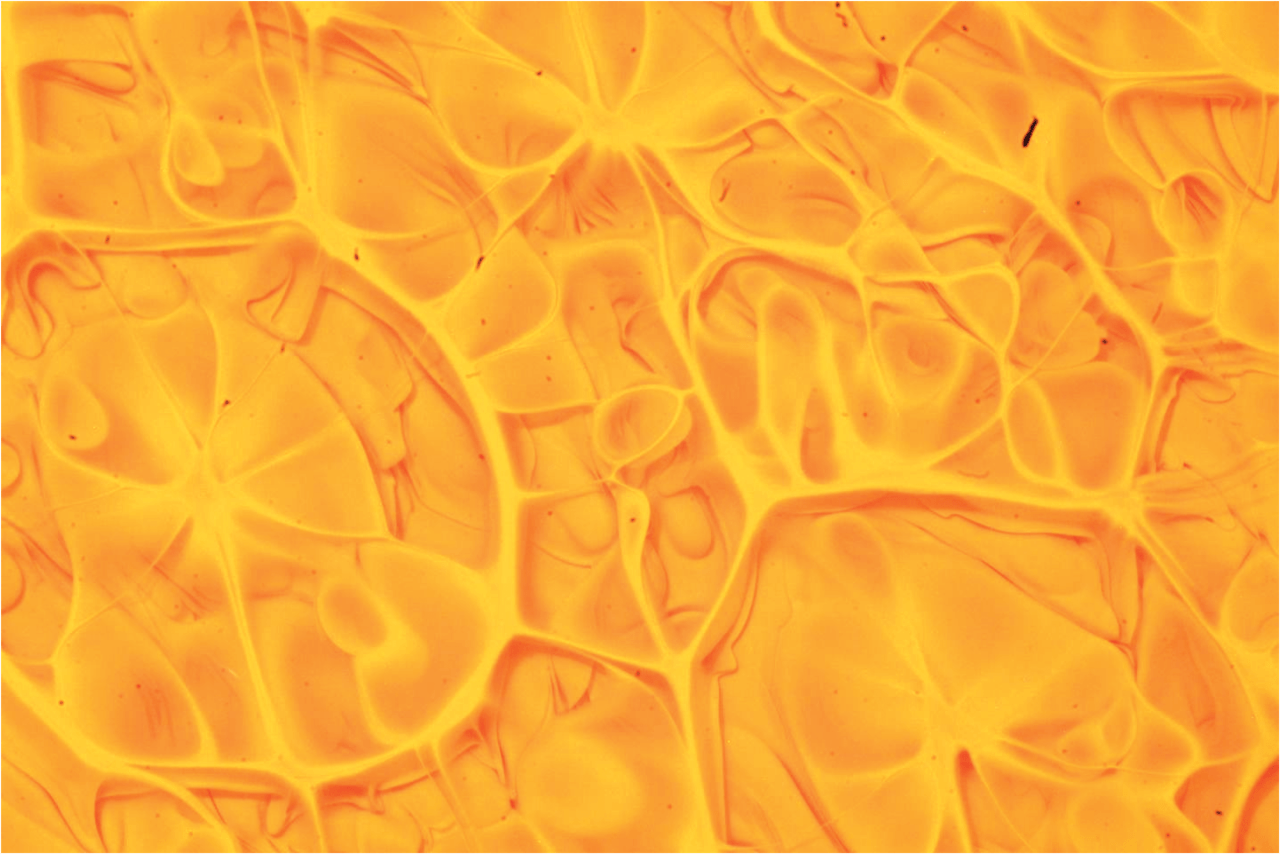
    Some paintings of Mexican artist David Alfaro Siqueiros feature patchy, spotted areas of contrasting color formed by what Siqueiros described as “accidental painting”. Many modern artists use this technique as well. By pouring thin layers of two different colors atop one other, Siqueiros was able to generate seemingly spontaneous patterns like those shown above. In fact, what Siqueiros was using was a density-driven fluid instability! These patterns will only appear when a denser paint is poured atop a lighter one. They’re the result of a Rayleigh-Taylor instability – the same behavior that makes beautiful swirls of cream in coffee and the finger-like protrusions seen in supernovae.

    Although a density difference is necessary to generate accidental painting, other factors like the paint layer’s thickness and viscosity affect the final pattern. For those who are mathematically-inclined, this paper has a linear stability analysis that shows how density difference, viscosity, and other factors affect the cell sizes in the pattern. (Image and research credits: S. Zetina et al.; GIF source)

  • Gunshot Back-Splatter

    Gunshot Back-Splatter

    Today blood pattern analysis is an important forensic technique used in reconstructing the events at crime scenes. Many methods use straight-line trajectories to try to isolate the origin of blood splatters, but this discounts the effects of gravity and drag on flying droplets. A new theory models the back-splatter of a gunshot wound fluid dynamically.

    Using characteristics of the bullet and gunshot, it estimates the initial conditions of blood drops leaving a wound, then models the break-up of the fluid as a Rayleigh-Taylor instability, where a denser fluid (blood) is accelerating into a less dense fluid (air). This results in a moving cloud of droplets and air whose trajectory and impact on a surface can be calculated. The ultimate goal is to create a physical model that can be used in reverse, where analysts can observe patterns and calculate their origin with confidence. For more, see the original paper or Gizmodo’s coverage. (Image credit: T. Webster; research credit: P. Comiskey et al.)

  • Rayleigh-Taylor Waves

    Rayleigh-Taylor Waves

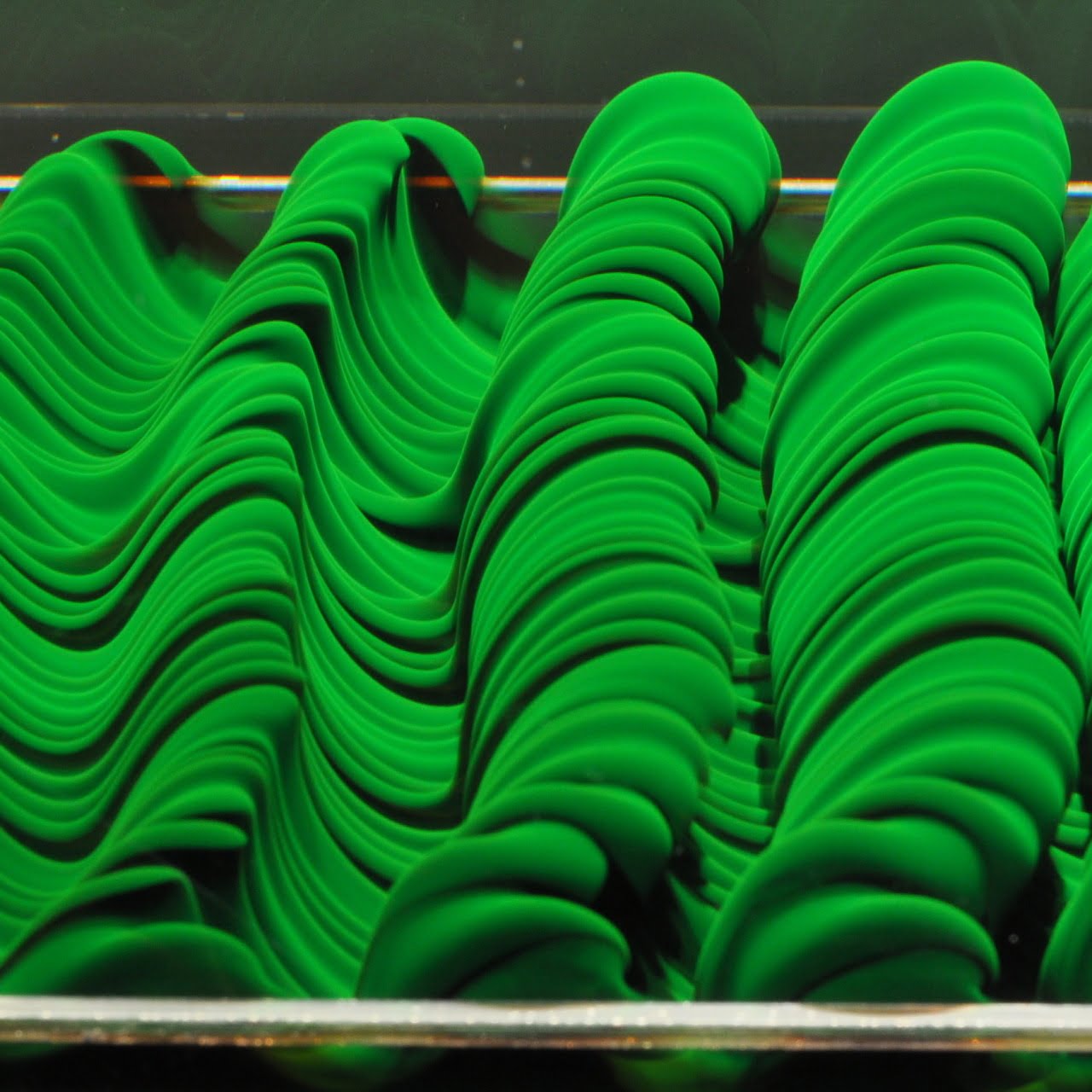
    Here on Earth, placing a denser fluid over a lighter one creates an unstable equilibrium. Thanks to gravity, the heavier, denser fluid wants to sink and the lighter fluid wants to rise. Any small disturbance will kick this into action, just like a tiny nudge can send a ball rolling down the hill. For the fluid, that nudge manifests as waviness in the interface between the two fluids. That waviness will quickly grow into billows like those shown above as the Rayleigh-Taylor instability takes over and the heavy (clear) fluid trades places with the lighter (green) fluid. You’ve probably witnessed this effect yourself when pouring milk into iced coffee. To see it in action, check out the video of this experiment or my FYFD video on the Rayleigh-Taylor instability. (Image credit: M. Davies Wykes)

  • Falling Ink

    Falling Ink

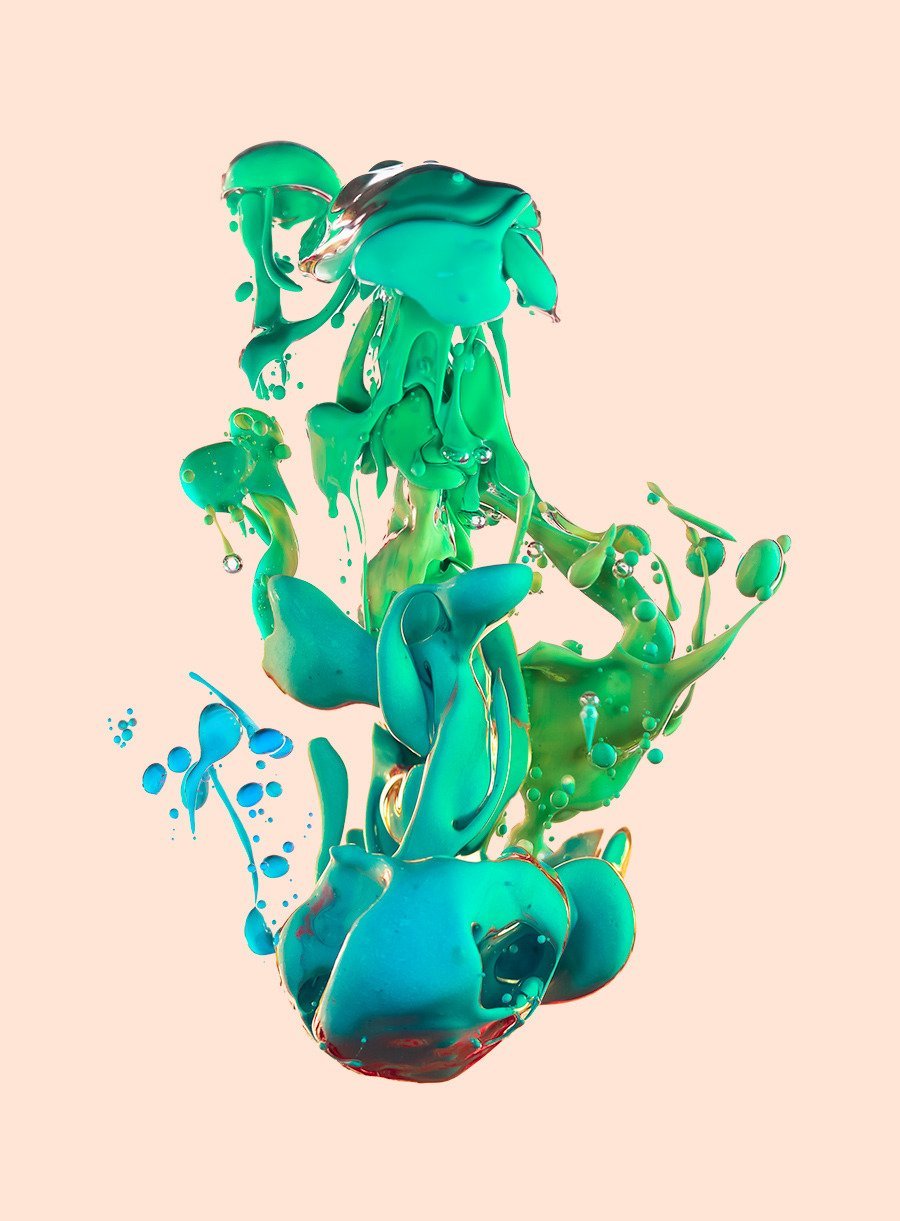
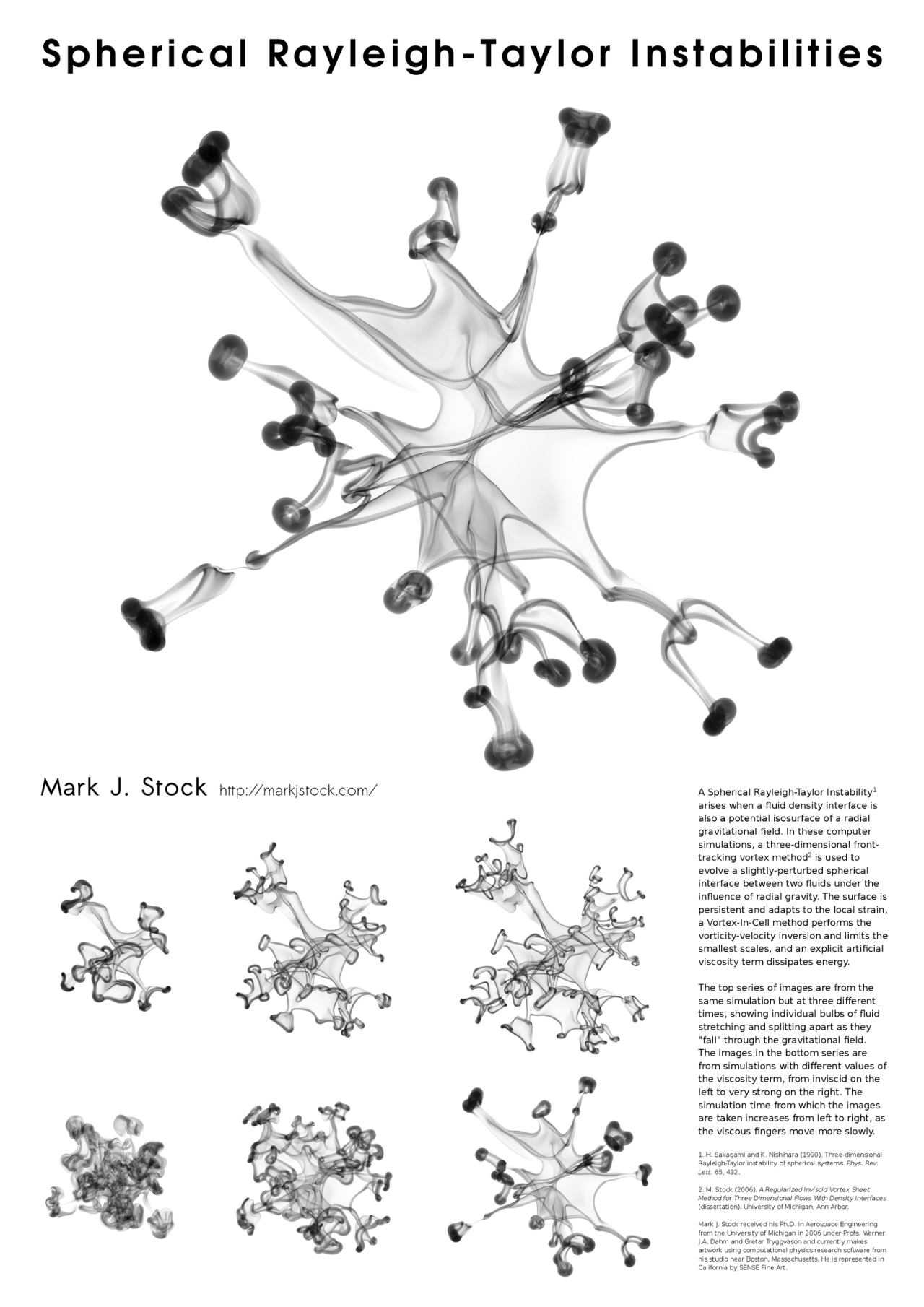
    Photographer Linden Gledhill created these nebula-like composites from photos of ink diffusing in water. The work was inspired by Mark Stock’s “Spherical Rayleigh-Taylor Instabilities” series featured here last week. Like Stock’s computational art, the twisted fingers and vortex rings above form due to the denser ink falling through less dense water. The interface between the two fluids distorts under the effects of gravity and the fluids’ relative motion. Such shapes are ephemeral at best; the falling ink will quickly become turbulent and diffuse throughout the water.  (Photo credit and submission: L. Gledhill)

  • Numerical Rayleigh-Taylor

    Numerical Rayleigh-Taylor

    If you’ve ever dripped food coloring or ink into a glass of water, you’ve probably created a cascade of tiny vortex rings similar to the images above. This is the Rayleigh-Taylor instability, in which the heavier ink/food coloring falls under gravity into the less dense water. What’s shown above is a special case–one that no experiment can recreate. It’s a numerical simulation of a spherical Rayleigh-Taylor instability. Imagine a sphere of a dense fluid “falling” outward under the influence of a radial gravitational field. This is one of the interesting aspects of computational fluid dynamics–it can simulate situations that are impossible to create experimentally. That can be both a strength and a weakness, allowing researchers to probe otherwise unavailable physics or fooling the unwary into thinking they have captured something real. (Image credit: M. Stock)

  • Featured Video Play Icon

    Cream in Coffee

    Pouring cream in coffee produces some of the most mesmerizing displays of fluid dynamics. The density difference between the two fluids sets up Rayleigh-Taylor instabilities that mushroom out and help create the turbulence that eventually mixes the drink. You can learn more about Rayleigh-Taylor instabilities in this FYFD video, and, if you need more awesome caffeine-filled examples of fluids, check out the coffee dynamics blog. (Video credit: S. Geraldine and L. Kang)

  • Boiling Water in Oil

    Boiling Water in Oil

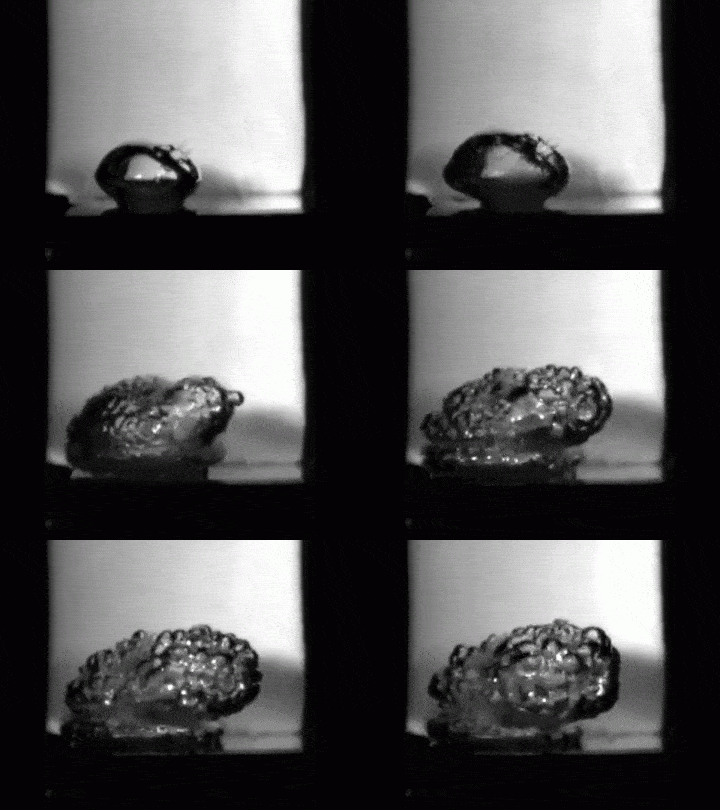
    Most people know that throwing water into hot oil is a bad idea. But, as dramatic as the results can be, the boiling of a water droplet submerged in oil is remarkably beautiful, as seen in the animations above. The initial water droplet expands as it shifts from liquid to vapor (top). At a critical volume, the expansion occurs explosively (middle), causing the bubble to overexpand relative to the pressure of the surrounding fluid. The higher pressure of the oil around it collapses the drop, which then re-expands, creating the cycle we see in the final two animations. This oscillation triggers a Rayleigh-Taylor type instability along the bubble’s interface, causing the surface corrugations observed. The vapor bubble will continue to rise through the oil, eventually breaking the surface and scattering hot oil droplets.  (Image credits: R. Zenit, source)