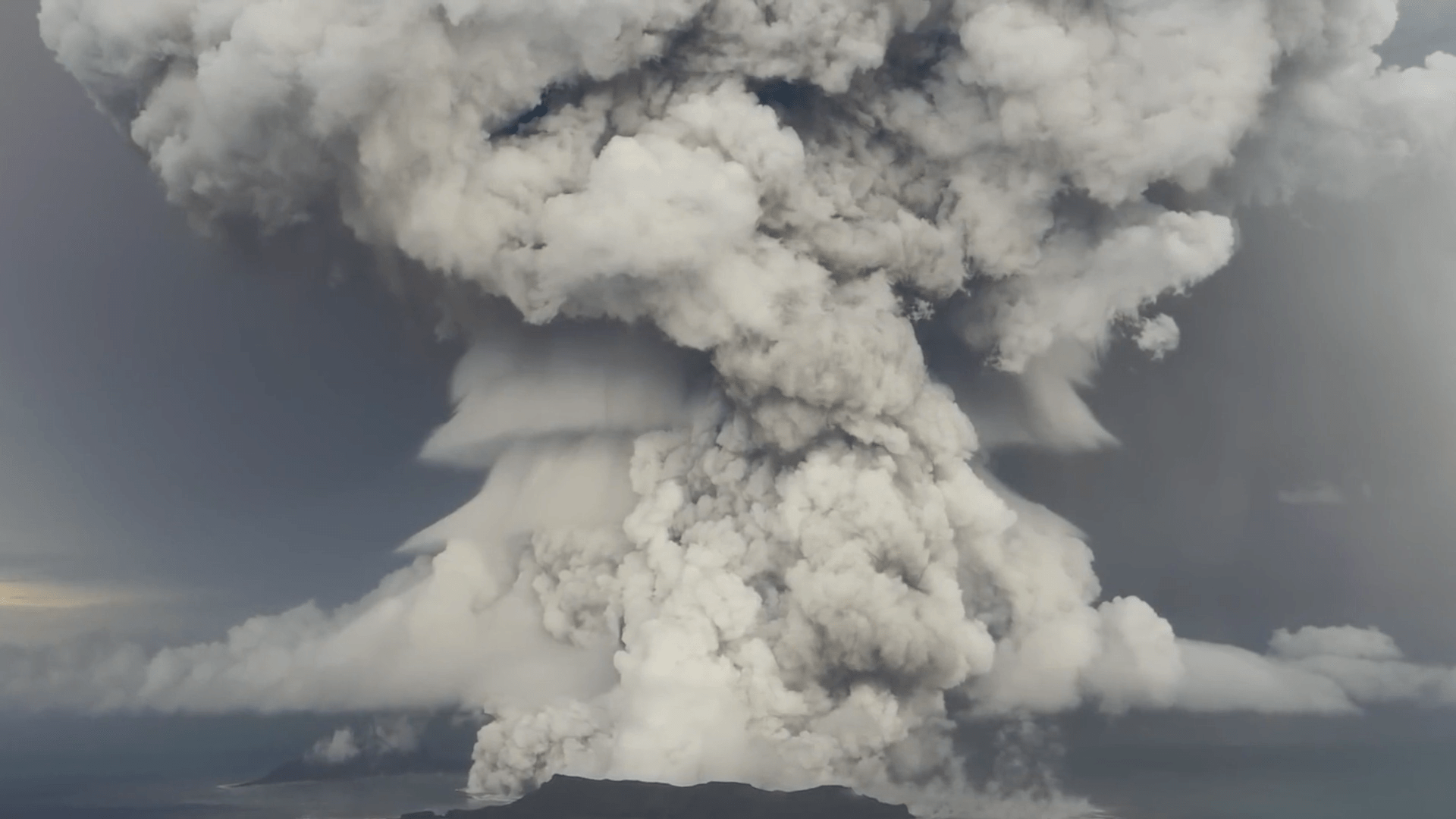
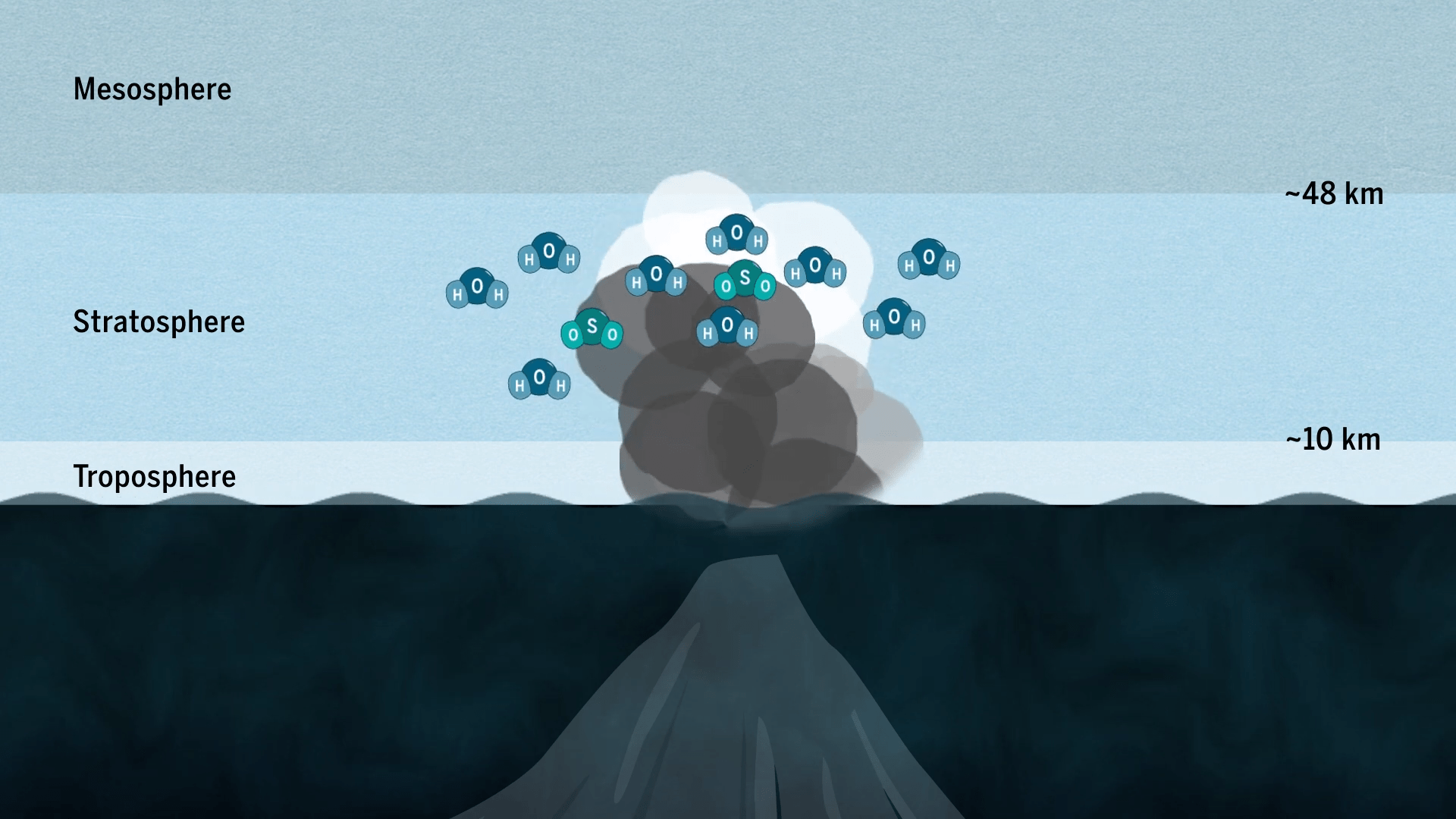
In January 2022, the Hunga Tonga-Hunga Ha’apai volcano erupted spectacularly, sending waves around the world through the air, water, and ground. In many ways, it was unlike any eruption scientists have observed, though they think it bears similarities to the 1883 eruption at Krakatoa. This video summarizes some of the research to come out of the eruption, looking at how waves propagated, what aerosols the volcano pushed high into the atmosphere, and what the long-term effects of the eruption may be. (Video credit: Science)
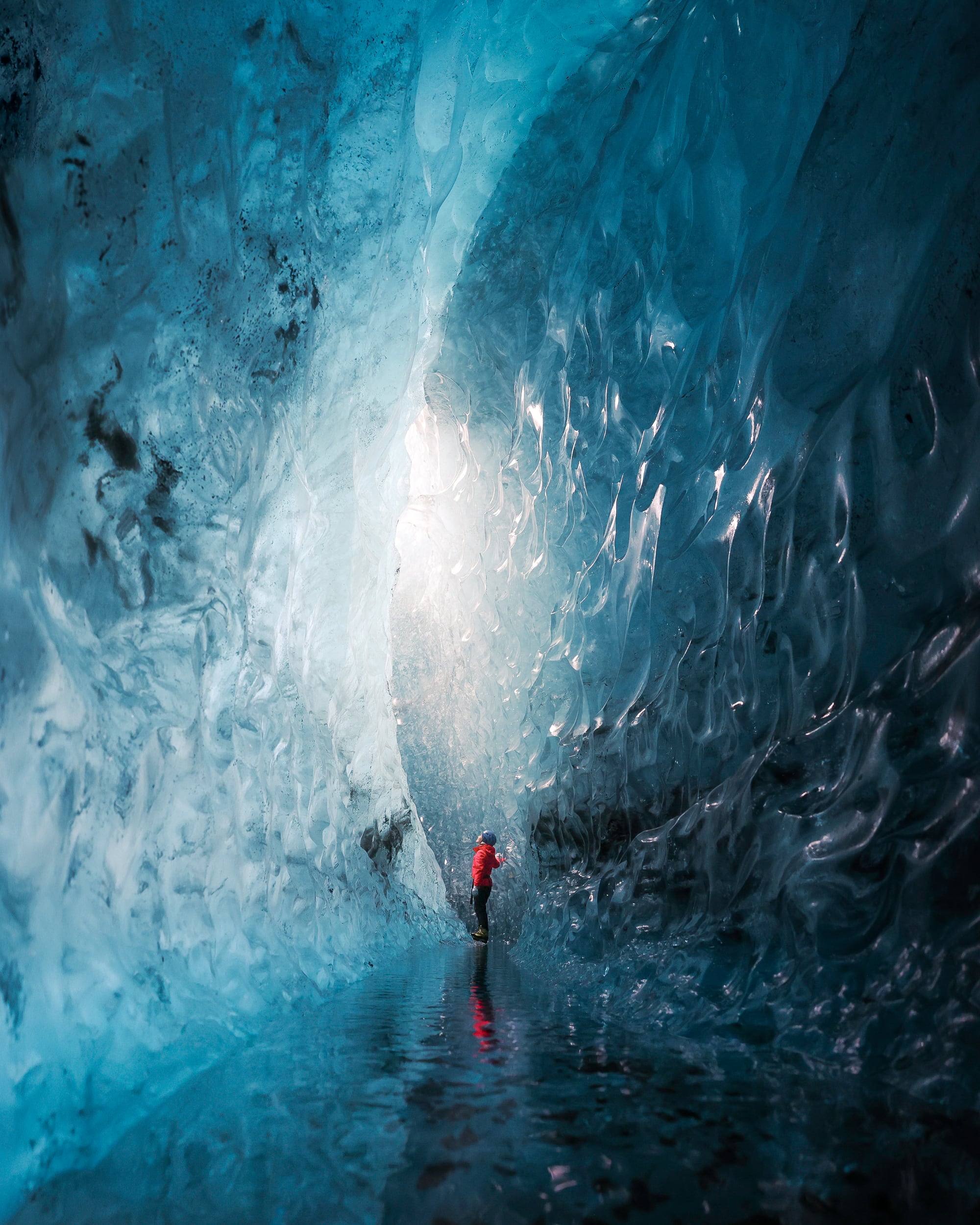
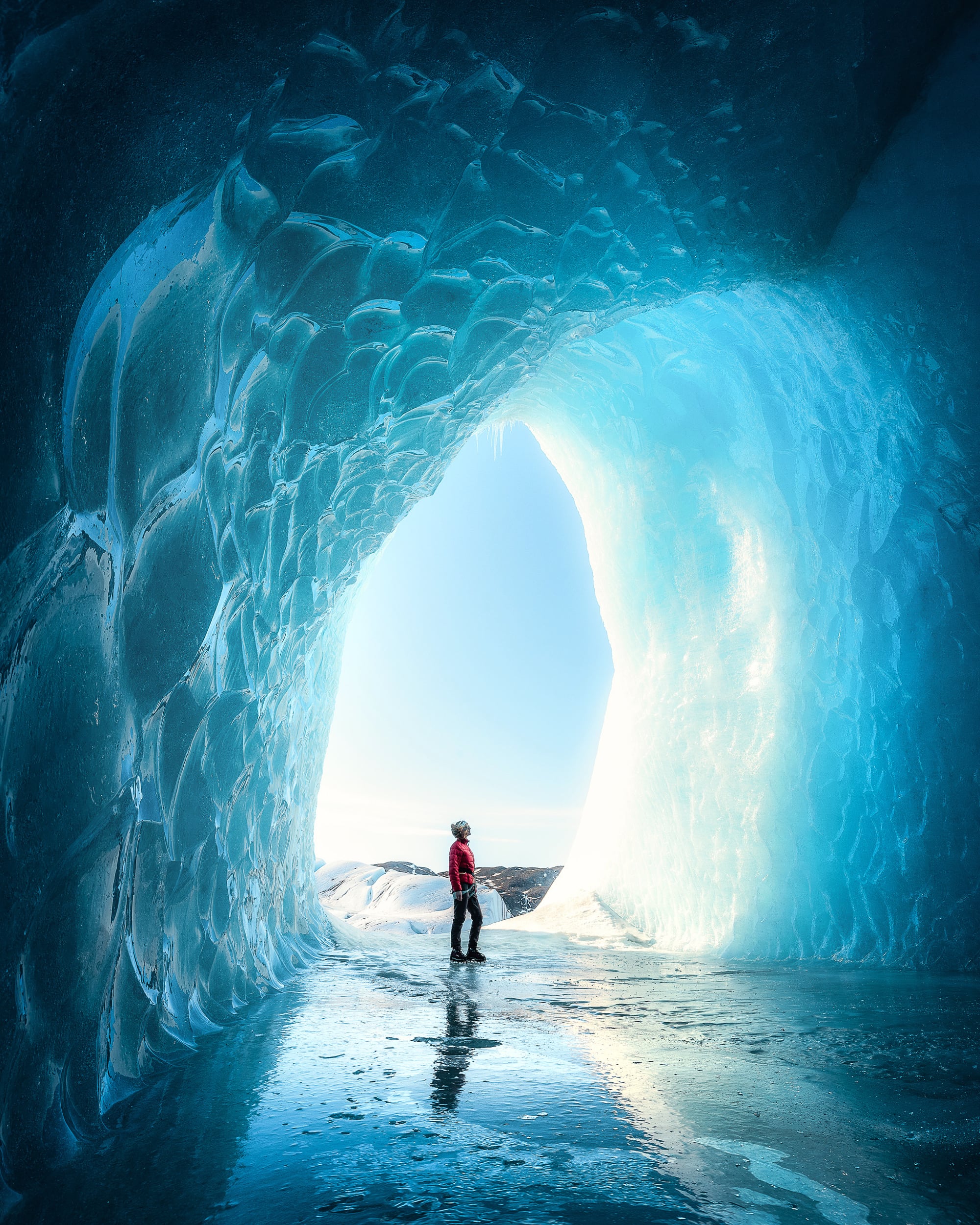
Expedition guide and photographer Ryan Newburn captures the ephemeral beauty of the glacial caves he explores in Iceland. These caves are in constant flux, thanks to the run and melt of water. The scalloped walls are a sign of this process of melting and dissolution. The icicles, too, hint at ongoing melting and refreezing. Caves can appear and disappear rapidly; they’re a dangerous environ, but Newburn freezes them in time, letting the rest of us experience a piece of their majesty. See more of his images on his Instagram. (Image credit: R. Newburn; via Colossal)
The Earth’s interior is almost entirely inaccessible to humanity, so how do we know what it consists of? As explained in this video, our knowledge of the planet’s interior is based on measuring waves sent out by earthquakes and nuclear blasts. Both produce two kinds of waves — pressure waves (P-waves) and shear waves (S-waves) that travel through the earth and get picked up by seismometers. Scientists noticed that pressure waves travel through the center of the planet while shear waves — which get dissipated in liquids — do not. This led them to conclude that part of Earth’s interior is a liquid. The idea of a solid inner core came from observations of pressure waves scattering in a way that only made sense if they’d hit something solid. (Video and image credit: Science)
The Diamantina River in Australia is dry for much of the year. But seasonal rains flood its riverbeds and provoke a bloom of vegetation along its banks. This false-color satellite image shows the river in April 2023; land appears pale and reddish, the river and its sediment blue, and vegetation a bright green. The Diamantina is an anabranching river; rather than the typical meandering paths of a delta, anabranching rivers have semi-permanent paths hemmed in by vegetation-stabilized islands. Look closely, though, and you’ll still see smaller delta-like features known as floodouts dotting some of the islands. (Image credit: A. Nussbaum; via NASA Earth Observatory)
This close-up shows details like miniature deltas (floodouts) and wind-formed dunes.
Bright colors mark this slowly draining soap film. The film sits slightly off-horizontal, so flow shifts over time from the top of the frame to the bottom. The fluid is also evaporating. All the faster shifts are caused by ambient air currents from the room. The colors of the film are directly related to the local thickness; as the film thins and evaporates, the bright colors shift to darker ones. Eventually, that black region at the top will expand and the film will break up. (Video credit: B. Sandnes/Complex Flow Lab)
Snakes’ forked tongues have long inspired fear, but, in reality, they are part of a highly-effective sensory system. When snakes flick out their tongues, they waggle them up and down about 15 times a second. That motion draws air inward toward the tongue (Image 2), allowing scent molecules to stick to the saliva on either side of the tongue. Once those molecules are gathered, the snake pulls its tongue back into its mouth, where it settles into two grooves (Image 3). Each one has its own path to the snake’s olfactory organs, giving the snake independent spots to evaluate the left and right forks. That means the snake knows which side has a stronger scent and is better able to track its prey. (Video and image credit: Deep Look)
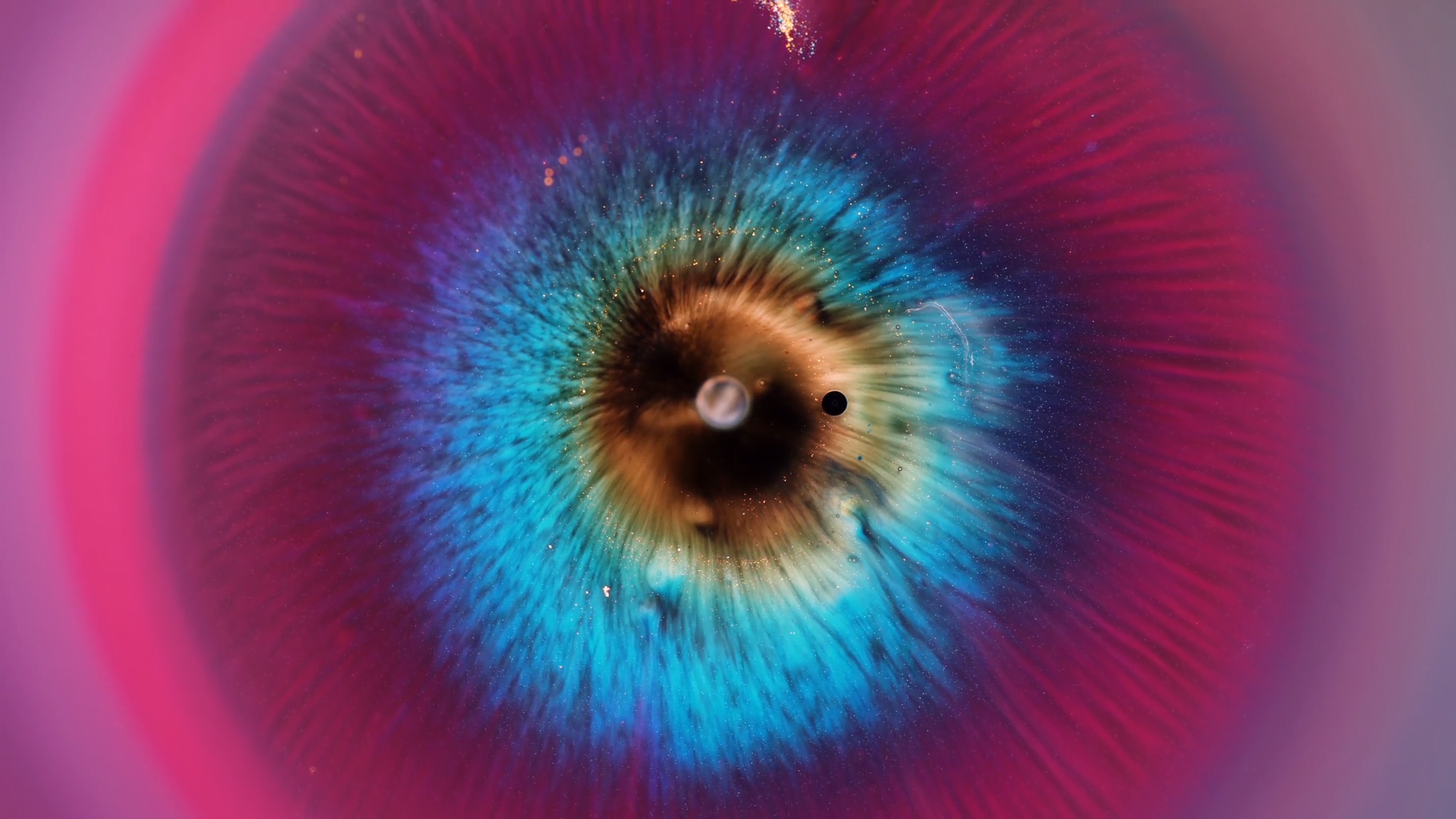
Ruslan Khasanov’s “Space Iris” explores the similarities between nebulae and eyes. Made entirely with common fluids like paint, soap, and alcohol, the film shows off the gorgeous possibilities of surface-tension- and density-driven instabilities. Marangoni flows abound! I even see some hints of solutal convection, perhaps? (Video and image credit: R. Khasanov; via Colossal)
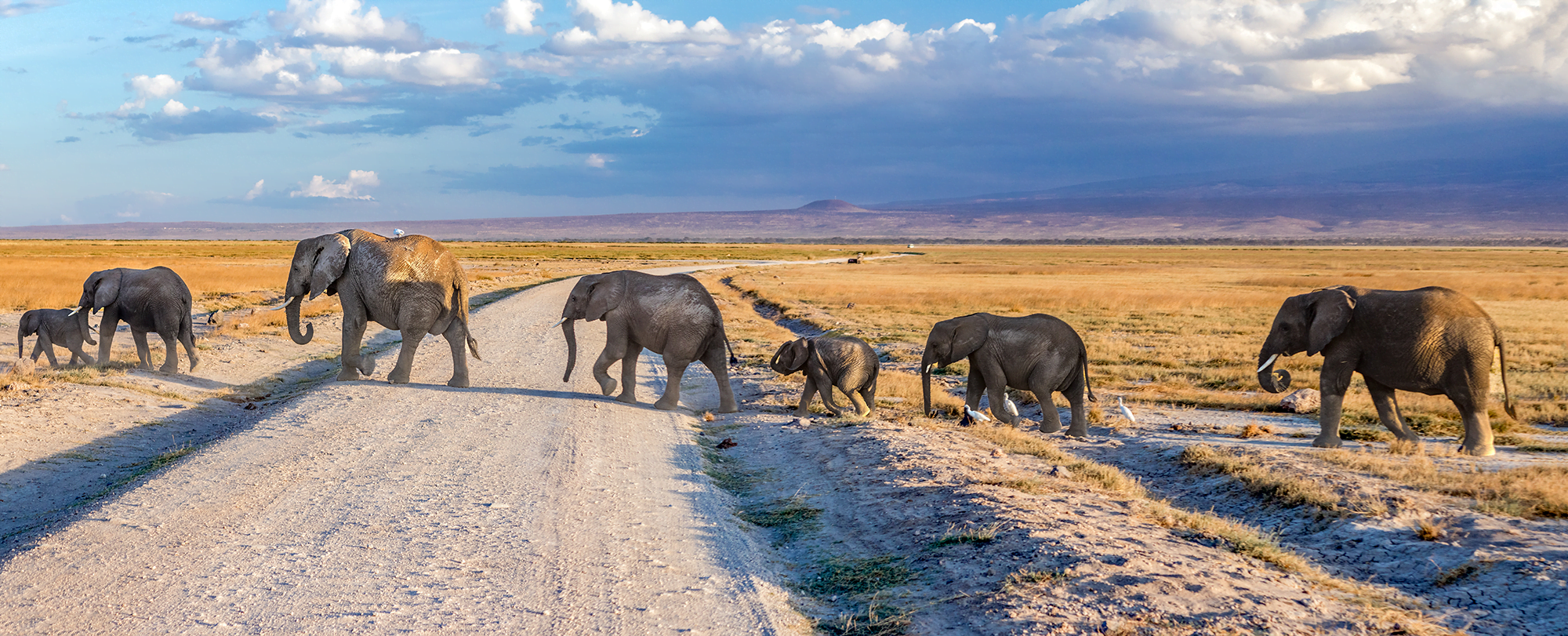
As climate change and human development continue to encroach on animals’ territories, mass migrations will become more and more common. But animals aren’t all equally able to travel long distances at speed. In general, larger animals are faster than smaller ones. But a new study shows that there’s another important factor in an animal’s top speed: heat dissipation.
By studying the characteristics of over 500 animals that walk, fly, and swim, the team found that animals were limited in their speed by how well they could dissipate heat. This makes sense, even from a human perspective; we may be able to run long distances, but once we’re too hot, we have to slow down. The same principle holds for animals, and the bigger the animal, the longer it takes to dissipate heat. As a result, the team found that the fastest animals over long distances all have intermediate body mass. At their size, they can balance the mechanical ability to produce speed with the thermodynamic requirement to dissipate heat. (Image credit: N. and Z. Scott; research credit: A. Dyer et al.; via APS Physics)
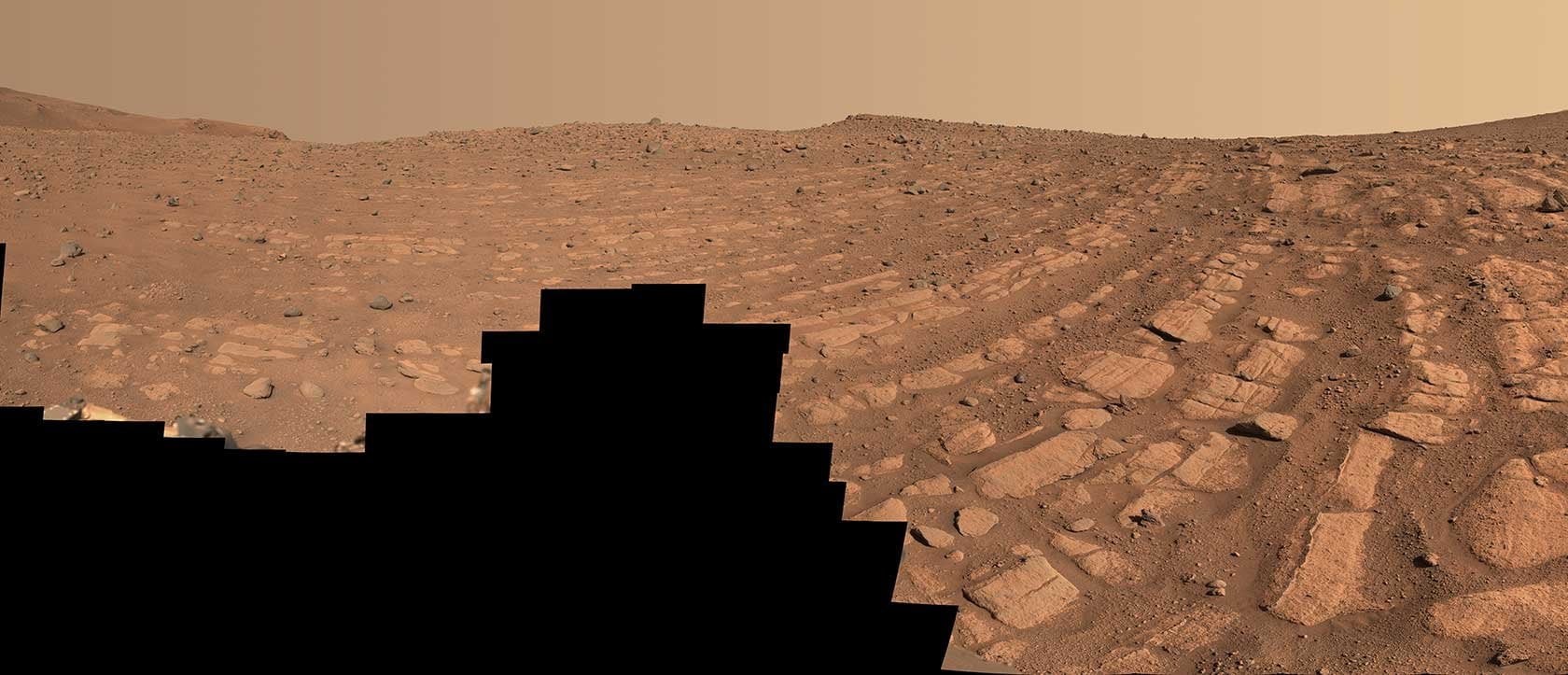
For the first time, scientists have found evidence of deep, fast-flowing ancient rivers on Mars. After examining images taken recently by the Perseverance rover in Jezero Crater, fluvial experts have spotted familiar signs of turbulent river flow. The mosaic above shows an area nicknamed “Shrinkle Haven,” where curved bands of rock mark the landscape. Although scientists are confident that a powerful river deposited these rocks, they’re still debating whether that river was a meandering one like the Mississippi or a braided river like the Platte.
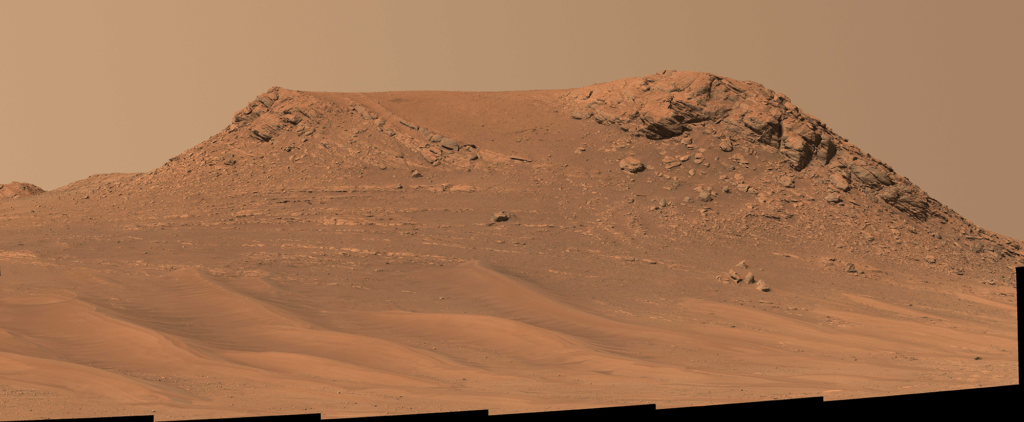
Nicknamed “Pinestand,” this hill’s sedimentary layers were likely formed by a deep, fast-moving river.
In another area, known as “Pinestand,” scientists spotted hills as high as 20 meters tall with clear sedimentary layers. Like Shrinkle Haven’s rock bands, formations like this are most often associated with a large, fast-flowing river. (Image credits: NASA/JPL-Caltech/ASU/MSSS; via Gizmodo; see also NASA JPL)
Swimming often results in water getting stuck in our ear canals. The narrow space, combined with the waxy surface, is excellent at trapping small amounts of water. If left in place, that excess fluid distorts hearing, can cause pain, and may eventually lead to an ear infection. So most people’s common response is to tilt their head sideways and shake it or jump to knock the water out. This recent study looks at just how much acceleration is needed to dislodge that water.
An acceleration of 7.8g isn’t enough to remove the water from this artificial ear canal.
The team built an artificial ear based on the shape of a human’s ear canal and observed how much acceleration was needed to knock the water out. The answer? Quite a bit. As seen above, nearly 8g of acceleration was enough to distort the interface of the water in the ear canal, but it didn’t move the water out.
At higher accelerations — above 20 times the acceleration due to gravity – the air-water interface distorts enough to get the water to flow. But accelerations that large are enough to potentially damage brain tissues.
At over 24g, the acceleration is enough to dislodge the water from this artificial ear canal. But accelerations this high can cause brain damage.
The problem is worse for children and babies, whose tiny ear canals necessitate even larger accelerations. For them, shaking hard enough to remove water could cause real damage. Instead, a couple drops of vinegar or alcohol in the ear will lower the surface tension and make the fluid easier to remove. (Image credit: top – J. Flavia, others – S. Kim et al.; research credit: S. Kim et al.; submitted by Sunny J.)