Tag: phase transition

  • Snowmelt

    Snowmelt

    Much of the rain that falls on Earth began as snow high in the atmosphere. As it falls through warmer layers of air, the snowflakes melt and form water droplets. The details of this melting process have been difficult to capture experimentally, but a new computational model may provide insight. The basic process has a couple stages. As snow begins to melt, surface tension draws the water into concave areas nearby. When those regions fill up, the water flows out and merges with neighboring liquid, forming water droplets around a melting ice core.

    Although this same sequence was observed for many types of snow, scientists also observed some important differences between rimed and unrimed snowflakes. Rime forms when supercooled water droplets freeze onto the surface of a snowflake. Lightly rimed snow still looks light and fluffy, like the animation above, but heavily rimed snow forms denser and more spherical chunks. Because there are lots of porous gaps in heavily rimed snow, water tends to gather there during initial melting. Rimed snow was also more likely to form one large water droplet rather than breaking into multiple droplets like snow with less rime. For more, check out NASA’s video and the Bad Astronomy write-up. (Image credit: NASA, source; research credit: J. Leinonen and A. von Lerber; via Bad Astronomy; submitted by Kam Yung-Soh)
  • Does Liquid in a Vacuum Boil or Freeze?

    Does Liquid in a Vacuum Boil or Freeze?

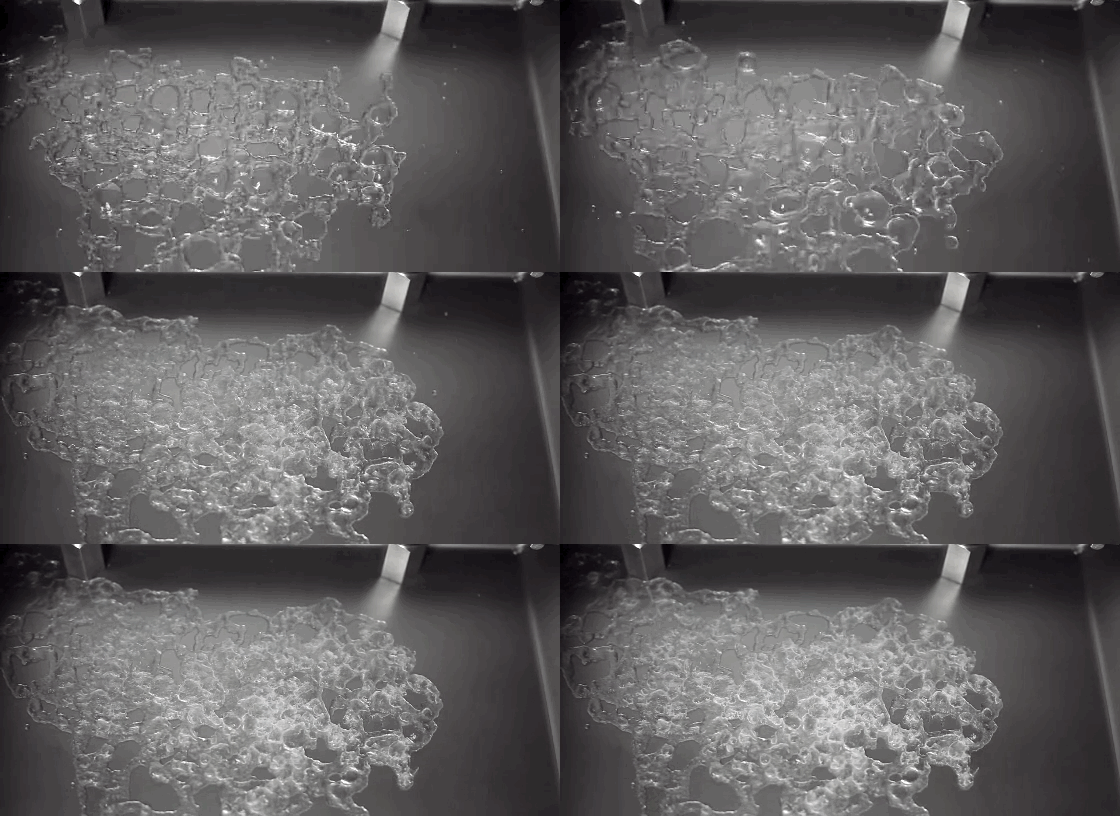
    What happens to a liquid in a cold vacuum? Does it boil or freeze? These animations of liquid nitrogen (LN2) in a vacuum chamber demonstrate the answer: first one, then the other! The top image shows an overview of the process. At standard conditions, liquid nitrogen has a boiling point of 77 Kelvin, about 200 degrees C below room temperature; as a result, LN2 boils at room temperature. As pressure is lowered in the vacuum chamber, LN2’s boiling point also decreases. In response, the boiling becomes more vigorous, as seen in the second row of images. This increased boiling hastens the evaporation of the nitrogen, causing the temperature of the remaining LN2 to drop, the same way sweat evaporating cools our bodies. When the temperature drops low enough, the nitrogen freezes, as seen in the third row of images. This freezing happens so quickly that the nitrogen molecules do not form a crystalline lattice. Instead they are an amorphous solid, like glass. As the residual heat of the metal surface warms the solid nitrogen, the molecules realign into a crystalline lattice, causing the snow-like flakes and transition seen in the last image. Water can also form an amorphous ice if frozen quickly enough. In fact, scientists suspect this to be the most common form of water ice in the interstellar medium. (GIF credit: scientificvisuals; original source: Chef Steps, video; h/t to freshphotons)

  • Glass Isn’t a Fluid

    Glass Isn’t a Fluid

    Mark R writes:

    Glass is a Fluid, Too
    Post complex equations regarding how long it would take a certain window to flow, and post pictures of sunken glass. This would be educational.

    This is a pretty widespread myth. Actually, glass is not a fluid and does not behave like one as long as it is below the glass transition temperature. It’s a bit difficult to classify glass under the traditional categories for a solid due to its phase transition behavior and its lack of crystallization, but it is usually classed as an amorphous solid.

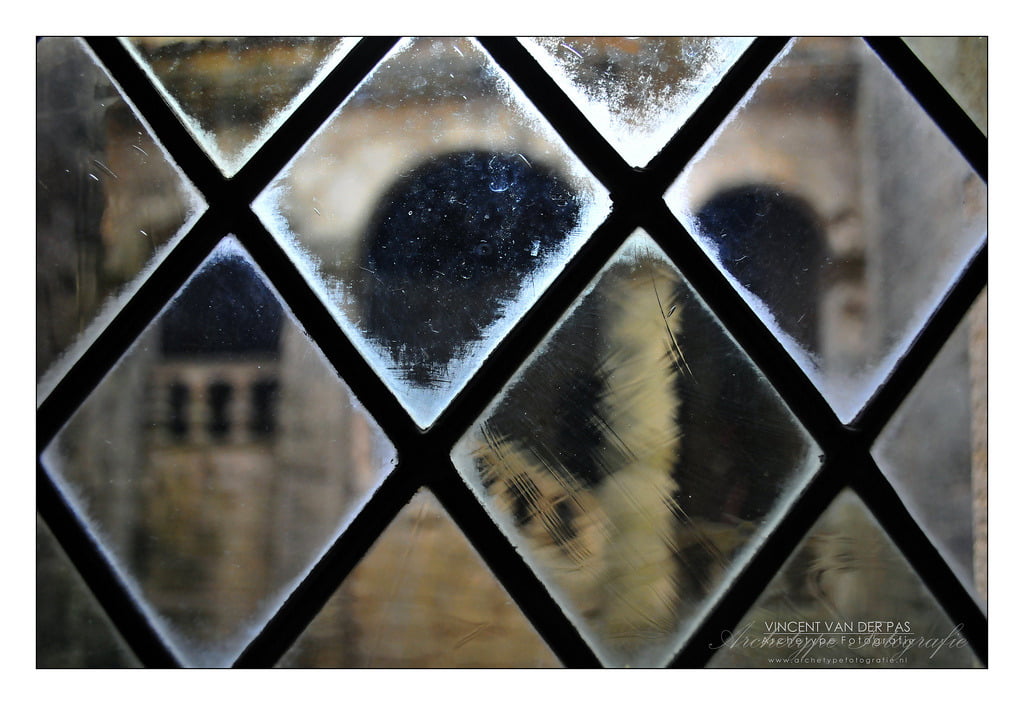
    The observation that old panes of glass tend to be thicker at the bottom is usually used as evidence that glass flows over the centuries, but this assumes that the glass was flat to begin with. However, glassblowers at the time usually made panes by spinning molten glass to create a round, mostly even flat, which was then cut to fit. Although spinning made the glass mostly flat, the edges of the disc tended to be thinner. When installed, the glass was typically placed thicker side down for stability purposes. One researcher even calculated the time period necessary for glass to flow and deform at ordinary temperatures as 10^32 years–longer than the age of the universe.

    If that is not convincing, consider this: if glass flows at a rate that’s discernible to the naked eye after a couple of centuries, then the effect of this deformation should be extremely noticeable in antique telescopes since a slight change in the lens’ optical properties should dramatically affect performance. But no such degradation occurs. (Photo credit: Vincent van der Pas)