A group at MIT have created a new 3D printer that builds with molten glass. This allows them to manufacture items that would difficult, if not impossible, to create with traditional glassblowing or other modern techniques. One of the coolest aspects of this technique is that it can use viscous fluid instabilities like the fluid dynamical sewing machine to create different effects with the glass. You can see this around 1:56 in the video. Varying the height of the head and the speed at which it moves will cause the molten glass to fall and form into different but consistent coiling patterns. All in all, it’s a very cool application for using some nonlinear dynamics! (Video credit: MIT; via James H. and Gizmodo)
Tag: glass

Glass Isn’t a Fluid
Mark R writes:
Glass is a Fluid, Too
Post complex equations regarding how long it would take a certain window to flow, and post pictures of sunken glass. This would be educational.This is a pretty widespread myth. Actually, glass is not a fluid and does not behave like one as long as it is below the glass transition temperature. It’s a bit difficult to classify glass under the traditional categories for a solid due to its phase transition behavior and its lack of crystallization, but it is usually classed as an amorphous solid.
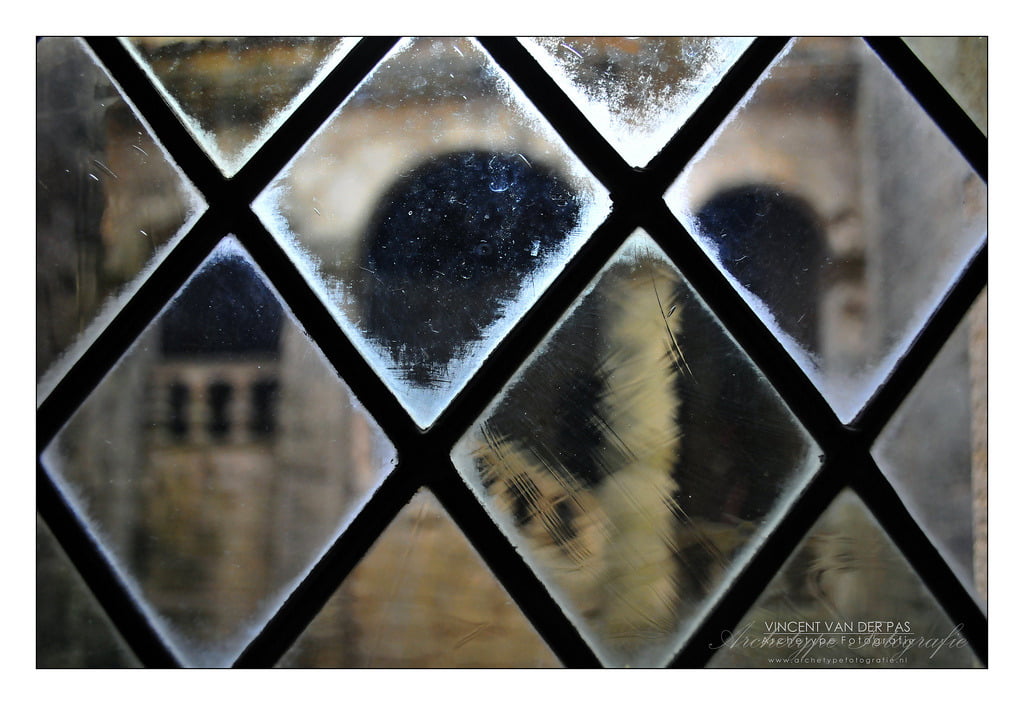
The observation that old panes of glass tend to be thicker at the bottom is usually used as evidence that glass flows over the centuries, but this assumes that the glass was flat to begin with. However, glassblowers at the time usually made panes by spinning molten glass to create a round, mostly even flat, which was then cut to fit. Although spinning made the glass mostly flat, the edges of the disc tended to be thinner. When installed, the glass was typically placed thicker side down for stability purposes. One researcher even calculated the time period necessary for glass to flow and deform at ordinary temperatures as 10^32 years–longer than the age of the universe.
If that is not convincing, consider this: if glass flows at a rate that’s discernible to the naked eye after a couple of centuries, then the effect of this deformation should be extremely noticeable in antique telescopes since a slight change in the lens’ optical properties should dramatically affect performance. But no such degradation occurs. (Photo credit: Vincent van der Pas)