Tag: milanocortina2026

  • Milano Cortina 2026: Speedskating Team Pursuit

    Milano Cortina 2026: Speedskating Team Pursuit

    Track cycling and speedskating often mirror one another, with similar events in each sport. In the team pursuit, for example, cyclists and skaters compete as a team to post the fastest time for a given distance. In cycling events, riders spend the race tucked into a line, with the lead rider providing a draft for their teammates. But that’s a tiring position for a cyclist, so every few laps the lead rider will pull off, move up the track, and drop behind their teammates for a rest. Speedskaters used to use the same technique. But no longer.

    After working with aerodynamic simulation specialists, U.S. Speedskating pioneered a new race technique, in which skaters never change positions. Instead, each racer specializes in one position and skates while pushing the skater ahead of them. The technique requires a lot of practice, finesse, and trust; skaters in the later positions cannot see, skating as close as they can to the skater in front of them.

    But, performance-wise, the new technique works. It’s taken U.S. women’s team pursuit from eighth in the world to number one. Other teams have adopted the technique, too, so this is likely what team pursuit will look like in the years to come. (Image credits: various, see image captions; via NPR)

    Fediverse Reactions
  • Milano Cortina 2026: Ski Jumping Suits

    Milano Cortina 2026: Ski Jumping Suits

    Ski jumping is in the news this Olympic cycle after rumors that male competitors may be cheating in order to wear larger suits. In particular, the suggestion is that male athletes are injecting fillers into their genitals before their pre-season 3D body scan in order to appear large enough to allow them to wear a larger suit. This comes after two Norwegian ski jumpers were punished for illegally restitching the crotches of their suits to make them larger.

    Ski jumping is a sport that relies heavily on aerodynamics; during the flight phase, jumpers try to maximize their lift-to-drag ratio so that they stay aloft as long as possible. A 2025 study underscores the importance of suit size in this calculus. In the work, the researchers used a baseline suit that was 4 centimeters larger in circumference than their jumper–the loosest configuration that regulations allow. They compared that suit’s flight performance (in wind tunnels and simulation) to a suit 2 cm larger and one 2 cm smaller. The extra 2 centimeters of circumference made a notable difference: the larger suit increased the drag by ~4% and lift by ~5%. That was enough, in their simulation, to let a jumper fly an extra 5.8 meters.

    It’s worth noting, though, that the study was looking at the effects of adjusting the suit’s circumference along the entire length between the arm pits and the knees; they never changed anything about the suit’s crotch. I don’t think there’s enough scientific data to say that packing a bit more there would really offer aerodynamic advantages. And the risks of such injections are non-negligible. (Image credit: T. Trapani; research credit: M. Virmavirta et al.; via Ars Technica)

    A ski jumper in flight, viewed from behind.
    Fediverse Reactions
  • Milano Cortina 2026: How Ski Skins Work

    Milano Cortina 2026: How Ski Skins Work

    Image of climbing skins on a set of touring skis.

    The 2026 Olympics include the debut of ski mountaineering (a.k.a. skimo), a sprint race heading both up and down the mountain on skis. During the uphill segment of the race, competitors use skins on their skis to help them climb; these skins then get ripped off (see below) before skiing back down.

    Animation of a racer pulling the skins off their skis in a transition.

    As their name suggests, the first climbing skins used on skis were made from seal skin. By angling the seal fur, skiers could glide in the forward direction and resist sliding backwards. Modern skins may have animal or synthetic fibers, but they use the same physical mechanism. The angled hairs let skis slide forward easily, then grip and resist sliding backward. (Image credits: touring – H. Morkel, skins – Josefka, video – NBC Bay Area)

    Fediverse Reactions
  • Milano Cortina 2026: Cortina Sliding Center

    Milano Cortina 2026: Cortina Sliding Center

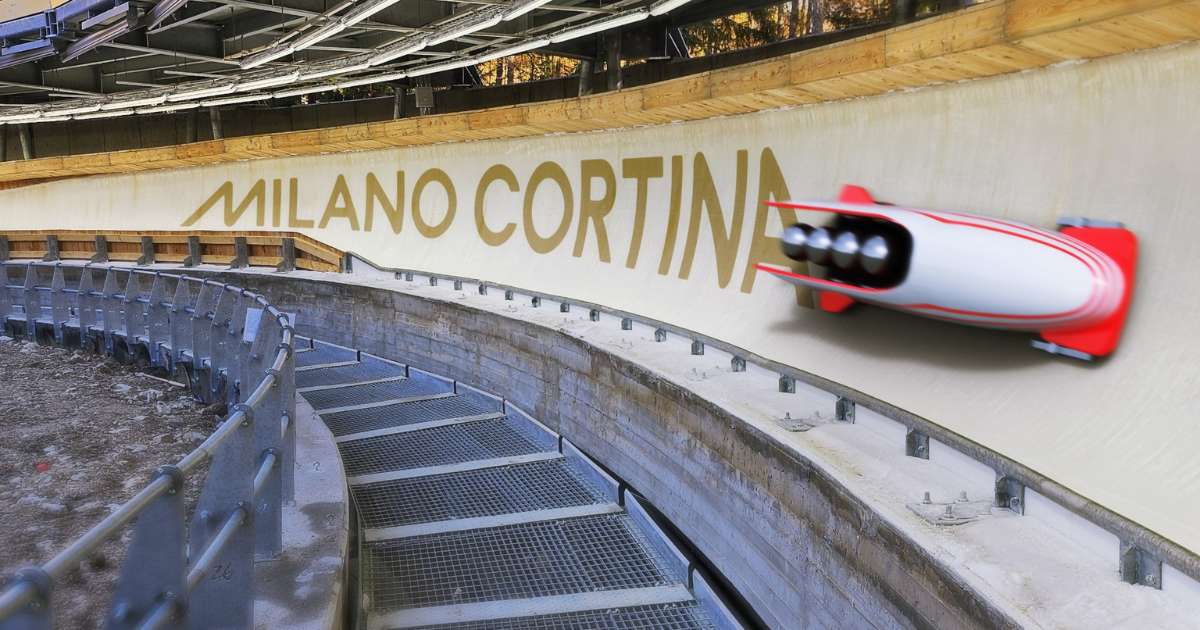
    This year’s sliding events–bobsleigh, luge, and skeleton–will take place at the brand-new Cortina Sliding Center. Built on the site of a historic sliding track, this new venue came together in only the last couple of years. It features a state-of-the-art refrigeration system that pumps a mixture of water and ethylene glycol beneath the track surface to keep the ice properly chilled. Each section of the track is continuously monitored to optimize the flow rate, temperature, and pressure of the refrigerant to keep the track at maximum performance while minimizing environmental impact.

    According to the designers, it’s the first competition track to use a glycol-based refrigeration system, which should be more sustainable than the ammonia-based systems used elsewhere. For a sense of what a run is like, check out this skeleton driver POV run from the facility’s shakedown competition last year. (Image credit: LMSteel; video credit: tuff sledding)

    Fediverse Reactions
  • Milano Cortina 2026: Curling Stones

    Milano Cortina 2026: Curling Stones

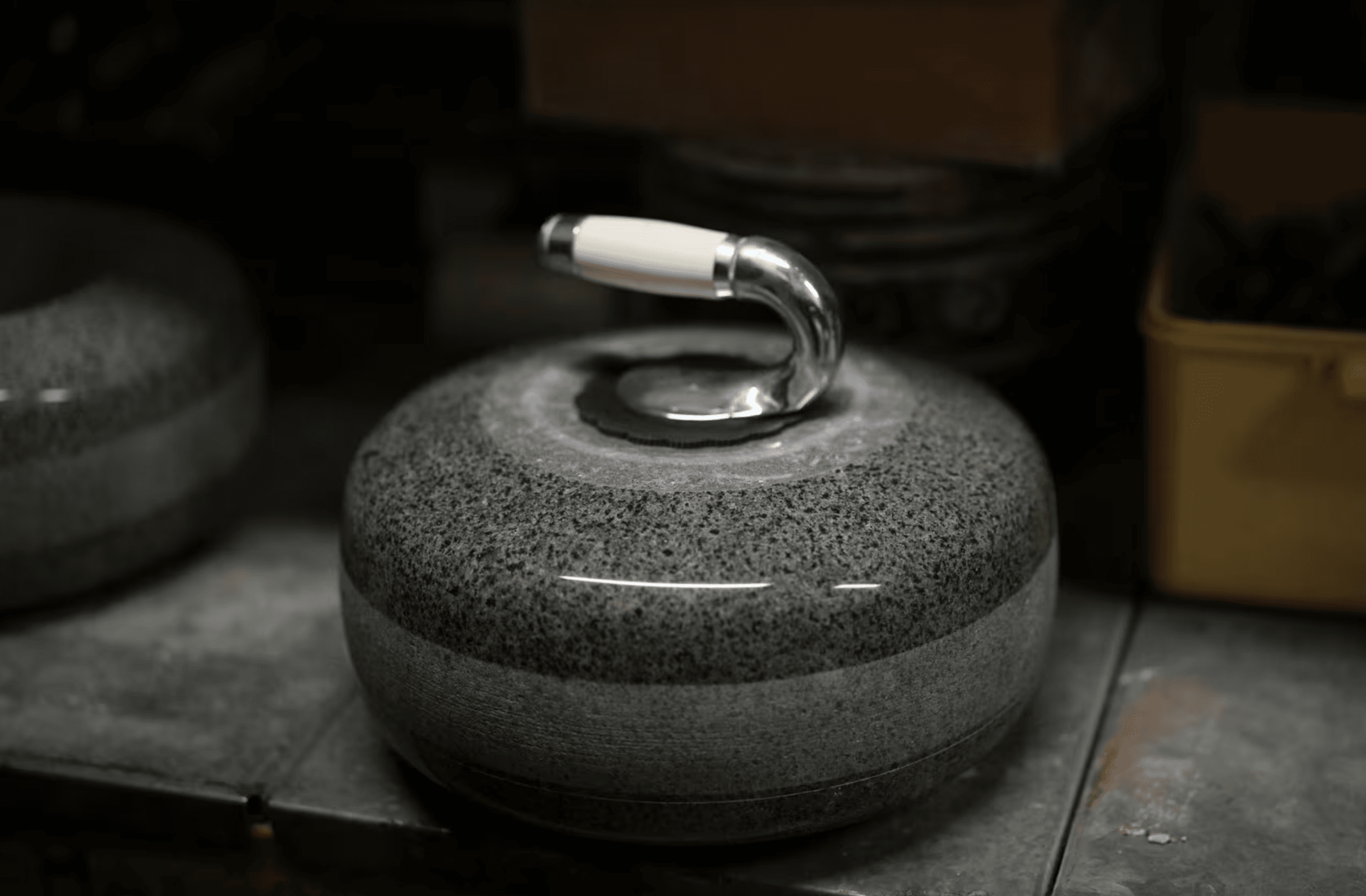
    Ailsa Craig sits about 10 miles off the Scottish coast, a granite dome left behind by a volcanic event millions of years ago. This small, now-uninhabited crag is the birthplace for every Olympic curling stone. It’s where Kays of Scotland, which has made curling stones for the Olympics since the sport appeared in the first Winter Games in 1924, gets their granite.

    Ailsa Craig, an uninhabited Scottish granite isle, sits in the distance.

    Curling stones have to withstand both cold and collisions, something Ailsa’s microgranite excels at. Its elasticity keeps it from cracking, and Ailsa’s unique blue hone granite resists water absorption, so that freeze-thaw cycles don’t erode the surface. That waterproofing makes for the perfect running surface. It’s no wonder that the majority of curling stones in the world originate in Ailsa. (Image credit: A. Grant/AP; via AP)

  • Milano Cortina 2026: Ice’s Many Forms

    Milano Cortina 2026: Ice’s Many Forms

    Welcome to another Olympic year and another FYFD celebration of the fluid physics that enable these sports! All Winter Olympic sports are required, per the IOC, to take place on snow or ice–one of the strangest substances we know of.

    Despite consisting of two simple elements–hydrogen and oxygen–water manages to find a shocking number of ways to configure itself into a solid. So far, scientists have described 21 different configurations for solid water ice. The latest one was created at room temperature and extreme pressures. (The apparatus used can reach pressures 20,000 times atmospheric pressure.)

    This particular form of ice is metastable, meaning that it balances on a knife’s edge, existing briefly at conditions where other ice structures are energetically preferable. It’s likely that many such high-temperature, metastable ice forms exist. How many more do you suppose researchers will discover before the next Olympics? (Image credit: L. Borghese; research credit: Y. Lee et al.; via Gizmodo)

    P.S. – Dig into past Olympics with posts from Beijing, PyeongChang, and Sochi.

    Fediverse Reactions