Tag: material science

  • Inside Solidification

    Inside Solidification

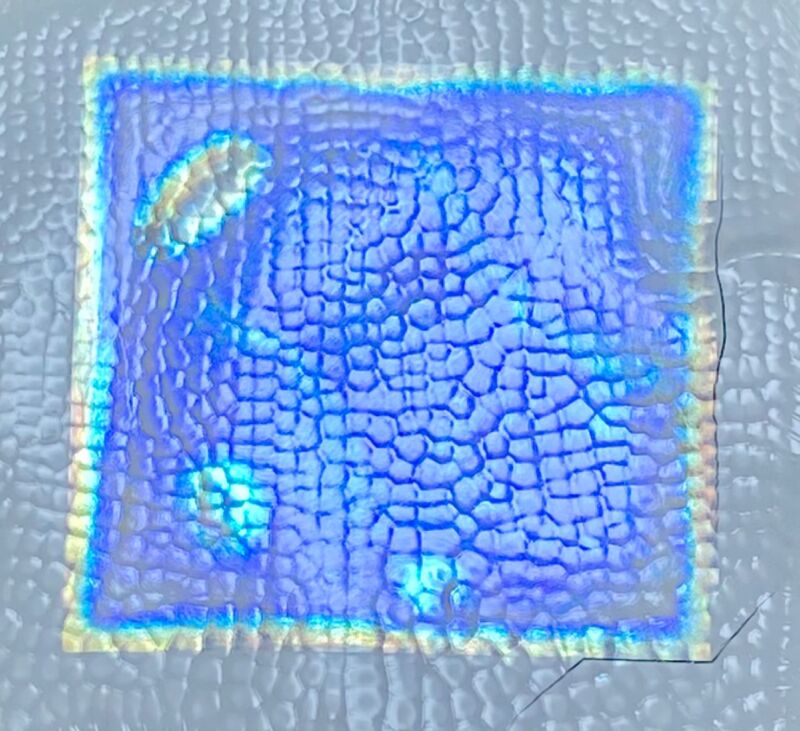
    As children, we’re taught that there are three distinct phases of matter–solid, liquid, and gas–but the reality is somewhat more complicated. In the right–often exotic–conditions, there are far more phases matter takes on. In a recent study, researchers described a metal that sits somewhere between a liquid and a solid.

    In a liquid, atoms are free to move. During solidification, atoms lose this freedom, and their frozen positions relative to one another determine the solid’s properties. Atoms frozen into orderly patterns form crystals, whereas those frozen haphazardly become amorphous solids. In their experiment, researchers instead observed atoms in liquid metal nanoparticles that remained stationary throughout the transition from liquid to solid. The number and position of stationary atoms affected whether the final solid crystallized or not.

    By tracking these stationary atoms and their influence, the team hopes to better control the material properties of the final solidified metal. (Image credit: U. of Nottingham; research credit: C. Leist et al.; via Gizmodo)


    Fediverse Reactions
  • Staying Cool in the Sun

    Staying Cool in the Sun

    For humans, staying cool in the summer heat often means expending energy on air conditioners, fans, and other cooling devices. But scientists are exploring other, less energy-intense options for beating the heat. At a conference, researchers recently unveiled a plant-based bi-layer film that’s able to stay about 7 degrees Fahrenheit cooler than its surroundings while illuminated by the sun.

    The film uses passive daytime radiative cooling, which means that it emits its heat into space (without getting absorbed by the air nearby) without any external power source. A square meter of the film generates over 120 watts of cooling power, comparable to many residential air conditioners. Even better, the films are built from layered cellulose, a sustainable and renewable resource, and can be made in a variety of colors.

    The team hopes to transition their films to commercial manufacturing, where they can be incorporated into buildings and automobiles to provide some passive cooling, thereby limiting reliance on air conditioners. (Image and research credit: Q. Shen et al.; via Ars Technica)

  • Featured Video Play Icon

    Sandgrouse Soak in Water

    Desert-dwelling sandgrouse resemble pigeons or doves, but they have a very different superpower: males can soak in and hold 25 milliliters of water in their feathers, which they carry tens of kilometers back to their chicks. The key to this ability is the microstructure of the bird’s breast feathers. Unlike other species, where feathers have hooks and grooves that “zip” them together, the sandgrouse’s specialized feathers have tiny barbules with varying bending stresses. When dipped in water, their curled shape unwinds, allowing water to soak in through capillary action. Barbules at the tips curl inward, holding the water in place so that the sandgrouse can fly home with it.

    Studying nature’s solutions for water-carrying will help engineers design better materials for human use, whether that’s a water bottle that avoids sloshing or a medical swab that’s better at absorbing and releasing fluids. (Image and video credit: Johns Hopkins; research credit: J. Mueller and L. Gibson; via Forbes; submitted by Kam-Yung Soh)

  • Finding New States of Matter

    Finding New States of Matter

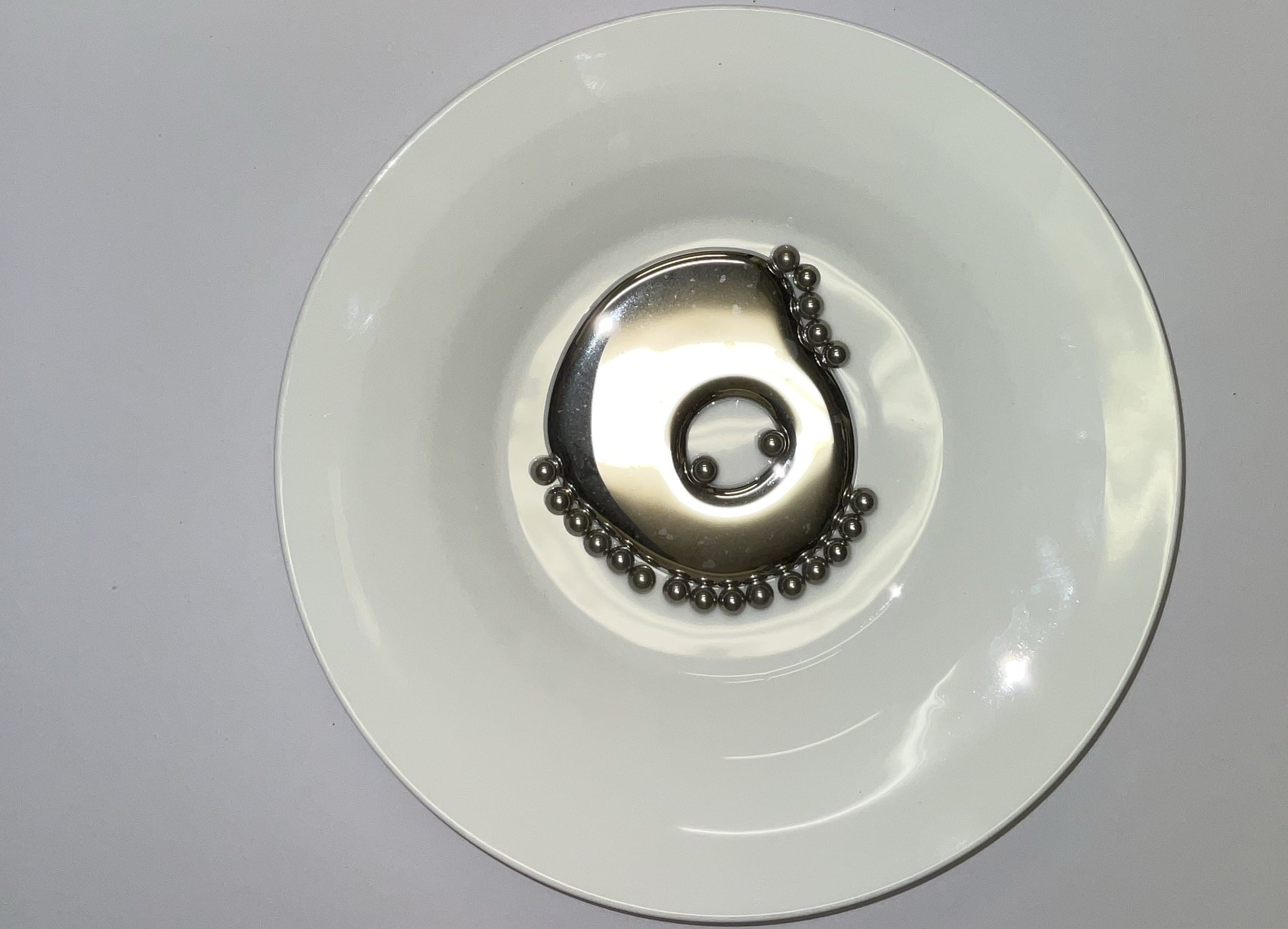
    As children we’re taught that there are three basic states of matter: solids, liquids, and gases. The latter two are known scientifically as fluids. But the world doesn’t divide quite so simply into those three categories, and scientists have since named several other states of matter, including plasmassuperfluids, and Bose-Einstein condensates.  Many of these types of matter only exist under extreme temperatures and/or pressures, which makes them difficult to observe. Scientists have instead turned to numerical simulation to discover and study these exotic materials.

    One of the latest discoveries among these bizarre materials is a form of potassium that simultaneously displays properties of a solid and a liquid. Inside this so-called chain-melted potassium, there’s a complex crystalline lattice containing smaller chains of atoms. One author described the material thus: “ It would be like holding a sponge filled with water that starts dripping out, except the sponge is also made of water.” That certainly boggles my mind! (Image credit: Turtle Rock Scientific; research credit: V. Robinson et al.; via NatGeo; submitted by Emily R.)

  • Pressing Non-Newtonian Fluids

    Pressing Non-Newtonian Fluids

    For many fluids, the relationship between force and deformation is not simple. The catch-all name for these materials is non-Newtonian fluids. In a recent episode, the Hydraulic Press Channel did some experiments extruding a couple non-Newtonian fluids: oobleck and a temperature-sensitive putty. What they demonstrated is that a fluid’s response to the forces it experiences can change depending on the rate at which force is applied.

    Take their putty example from the latter half of the video. When the hydraulic press pushes the putty slowly, it extrudes in a smooth, semi-solid string. When they increase the pressure driving the hydraulic press, it pushes the putty more quickly, causing it to spray out of the die in a shredded mess. What they actually did here is surpass a threshold for what’s known in manufacturing as the sharkskin instability. This behavior occurs due to long-chain polymer molecules in the fluid. Inside the die, flow near the walls is slowed down by friction but moves freely in the middle of the pipe. When the walls are suddenly gone, flow at the outside accelerates to match the inside of the stream, which stretches the polymers until they can snap free of the die. The result is the rough, saw-tooth-like pattern seen here. (Video and image credit: Hydraulic Press Channel, source)

  • Featured Video Play Icon

    How Patterns Repel Water

    Superhydrophobic surfaces repel water. Both naturally occurring and manmade materials with this property share a common feature: micro- or nanoscale structures on their surface. Lotus and lily leaves are coated with tiny hairs, and synthetic coatings or micro-manufactured surfaces like the one in the video above can be made in the lab. This nanoscale roughness traps air between the surface and the water, preventing adhesion to the surface and enabling the water-repelling behavior we observe at the human scale. Although effective, these nanoscale structures are also extremely delicate, which makes widespread application of superhydrophobic coatings and textures difficult. (Video credit: G. Azimi et al.)

  • Glass Isn’t a Fluid

    Glass Isn’t a Fluid

    Mark R writes:

    Glass is a Fluid, Too
    Post complex equations regarding how long it would take a certain window to flow, and post pictures of sunken glass. This would be educational.

    This is a pretty widespread myth. Actually, glass is not a fluid and does not behave like one as long as it is below the glass transition temperature. It’s a bit difficult to classify glass under the traditional categories for a solid due to its phase transition behavior and its lack of crystallization, but it is usually classed as an amorphous solid.

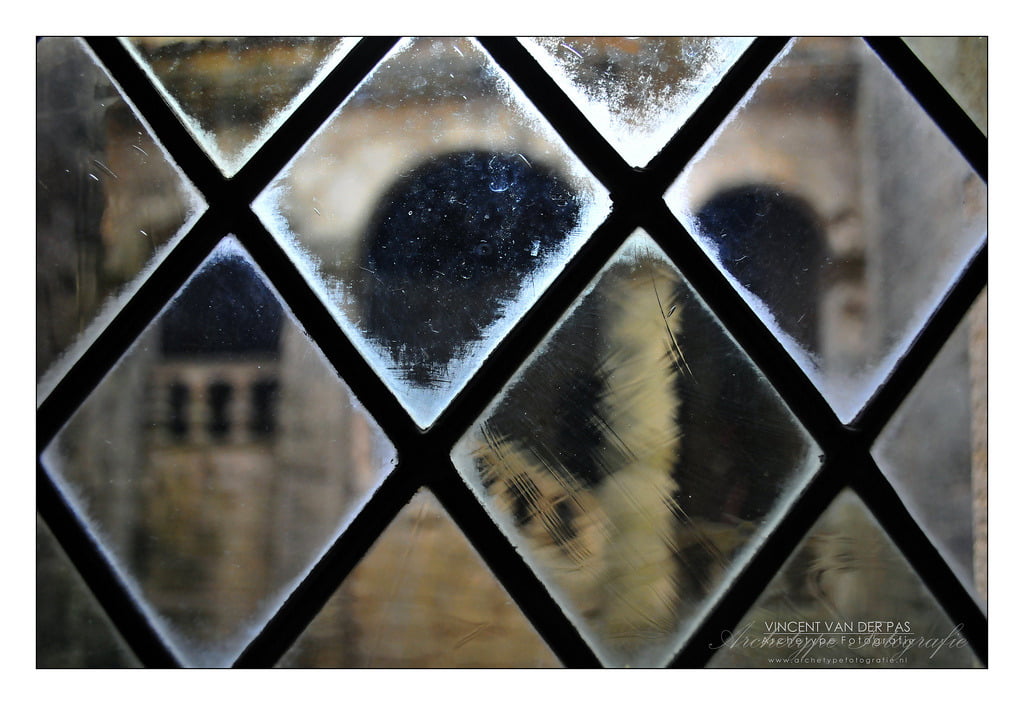
    The observation that old panes of glass tend to be thicker at the bottom is usually used as evidence that glass flows over the centuries, but this assumes that the glass was flat to begin with. However, glassblowers at the time usually made panes by spinning molten glass to create a round, mostly even flat, which was then cut to fit. Although spinning made the glass mostly flat, the edges of the disc tended to be thinner. When installed, the glass was typically placed thicker side down for stability purposes. One researcher even calculated the time period necessary for glass to flow and deform at ordinary temperatures as 10^32 years–longer than the age of the universe.

    If that is not convincing, consider this: if glass flows at a rate that’s discernible to the naked eye after a couple of centuries, then the effect of this deformation should be extremely noticeable in antique telescopes since a slight change in the lens’ optical properties should dramatically affect performance. But no such degradation occurs. (Photo credit: Vincent van der Pas)