Lake Erie, the shallowest of the Great Lakes, sees large swings in ice cover over the winter. In late January 2022, the lake was nearly completely frozen over, with 94 percent of its area covered in ice. By February 3rd, ice cover had dropped to 62 percent before rising again to 90 percent by the 5th. Air temperature and wind are the primary drivers of Erie’s fast ice growth and decay. As storms roll through, the ice can spread rapidly, but once temperatures rise, it takes very little forcing from the wind for the ice to begin breaking up. (Image credit: J. Stevens/USGS; via NASA Earth Observatory)
Tag: ice formation

Jumping Frost
Liquid water is easily electrically charged, due to its polar nature. That’s why rubbing a comb is enough to deflect a stream of water. Ice is harder to charge, but it can happen, especially when there are temperature gradients across the ice.
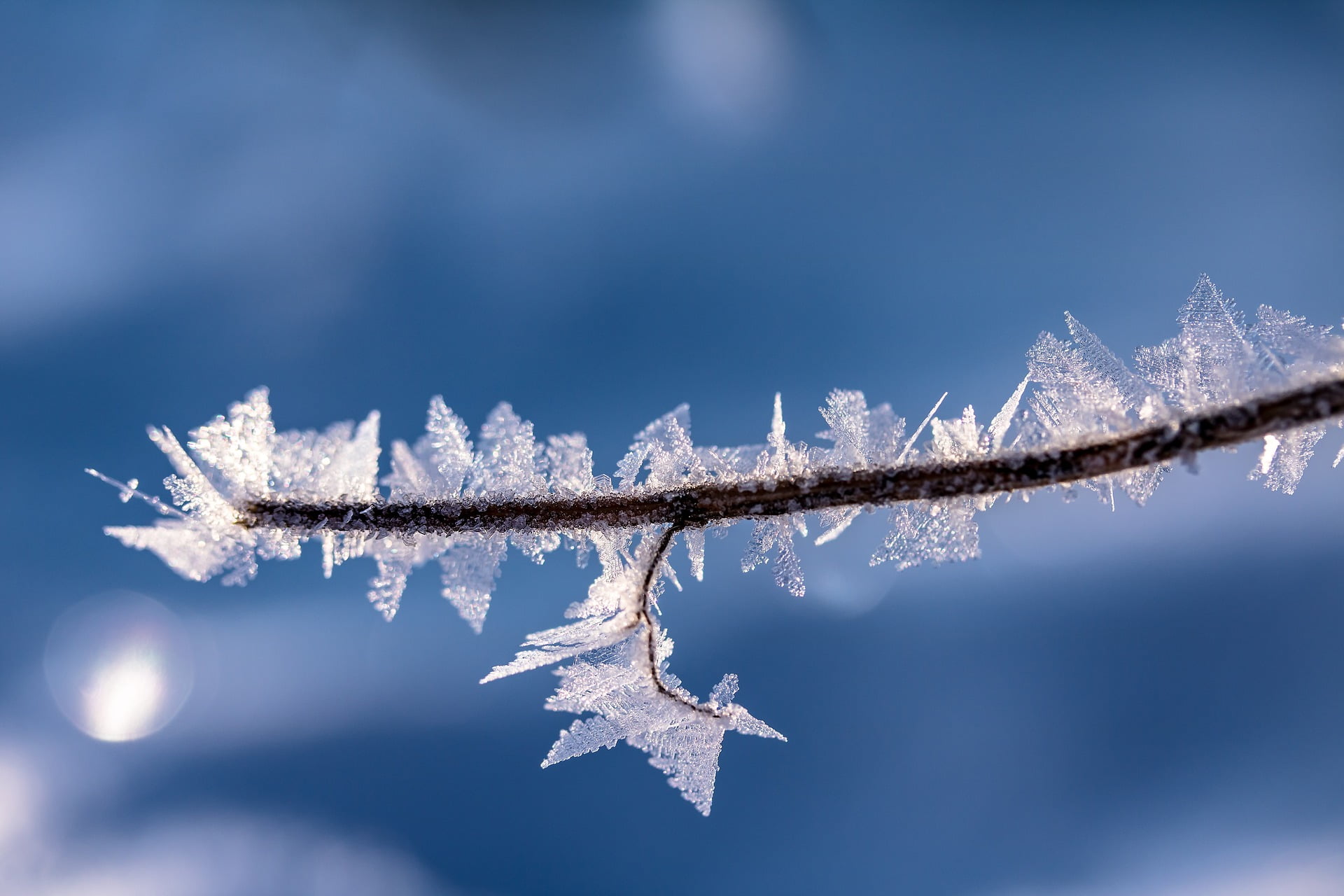
That’s the key behind this study of jumping frost. When ice crystals grow on a surface much colder than their surroundings, positive charges gather in the colder region, leaving the dendritic branches of the ice negatively charged. When researchers brought liquid water near the charged ice crystals, the water became charged, too. Positive charges in the water attracted the negatively-charged dendrites, causing the ice crystals to jump off the surface.
Studies like this help us better understand cloud and rain formation and may one day lead to new ways of de-icing surfaces. (Image credit: frost – Miriams-Fotos, figure – R. Mukherjee et al.; research credit: R. Mukherjee et al.; via ChemBites; submitted by Kam-Yung Soh)


Rings of Ice
Heavy rains followed by a sudden freeze can produce icy puddles like this one. Because the pool was shallow to begin with, it likely froze rapidly. As the temperature continued dropping, the newly-formed ice contracted; the ring pattern of the cracks tells us the stress in the ice was primarily radial. Once formed, the cracks provided a path for any unfrozen water still in the puddle to get squeezed up onto the surface through capillary action and any further expansion or contraction of the ice. (Image credit: D. Stith; via EPOD; submitted by Kam-Yung Soh)

Ice Patterns
Periods of freezing and thawing can leave complicated patterns in ice, as seen in this aerial photo of Binnewater Lake in New York. Ice rarely forms evenly on large bodies like this, so there are always underlying weaknesses. A hard freeze may have caused the ice to contract, forming the initial radial pattern. Then warmer periods of melting allowed water to rise into the cracks and expand them. As the process repeats, the visible pattern emerges.
Also note the star-like crack patterns near the shore. These may have formed in spots where something like a stick protruding from the water’s surface allowed warmer water up onto the ice to melt the snow sitting atop it. (Image credit: D. Spitzer; via EPOD; submitted by Kam-Yung Soh)

Ice in Engines
Ice build-up is a major hazard on airplane wings and control surfaces, but ice can accrete on internal engine components, too. When this happens, the turbofan jet engine can lose power. Such incidents have been observed in high-altitude flight even when pilots observed little to no inclement weather. Researchers think this ice accretion may occur when the plane flies through a cloud of tiny ice crystals. These ice crystals get ingested into the engine, where they hit the warmer internal surfaces and melt. Over the course of the flight, the engine components cool off due to this influx of ice and water. Eventually, ice begins to form and grow inside the engine, ultimately resulting in power loss. Researchers have recreated such ice cloud conditions in a facility at NASA Glenn Research Center and tested a full-scale jet engine for ice accretion. They aim to gather the data necessary to improve commercial engine capabilities under ice ingestion. (Video credit: NASA Glenn Research Center)

Icing on Airplane Wings

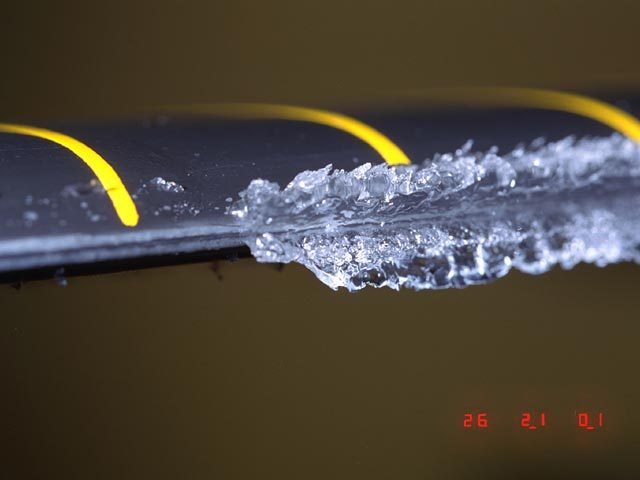
Icing on airplane wings remains little understood and a major hazard. These photos show examples of ice formation along the leading edge of a swept wing. If an aircraft flies through a cloud of supercooled water droplets, the droplets will freeze shortly after impact with the aircraft’s wings. As ice continues to build up in strange shapes, the aerodynamic profile of the wing changes, which can lead to disastrous effects as the stall and control characteristics of the wing shift. (Photo credit: NASA Glenn Research Center)