Tag: fracture

  • Fluids Can Fracture

    Fluids Can Fracture

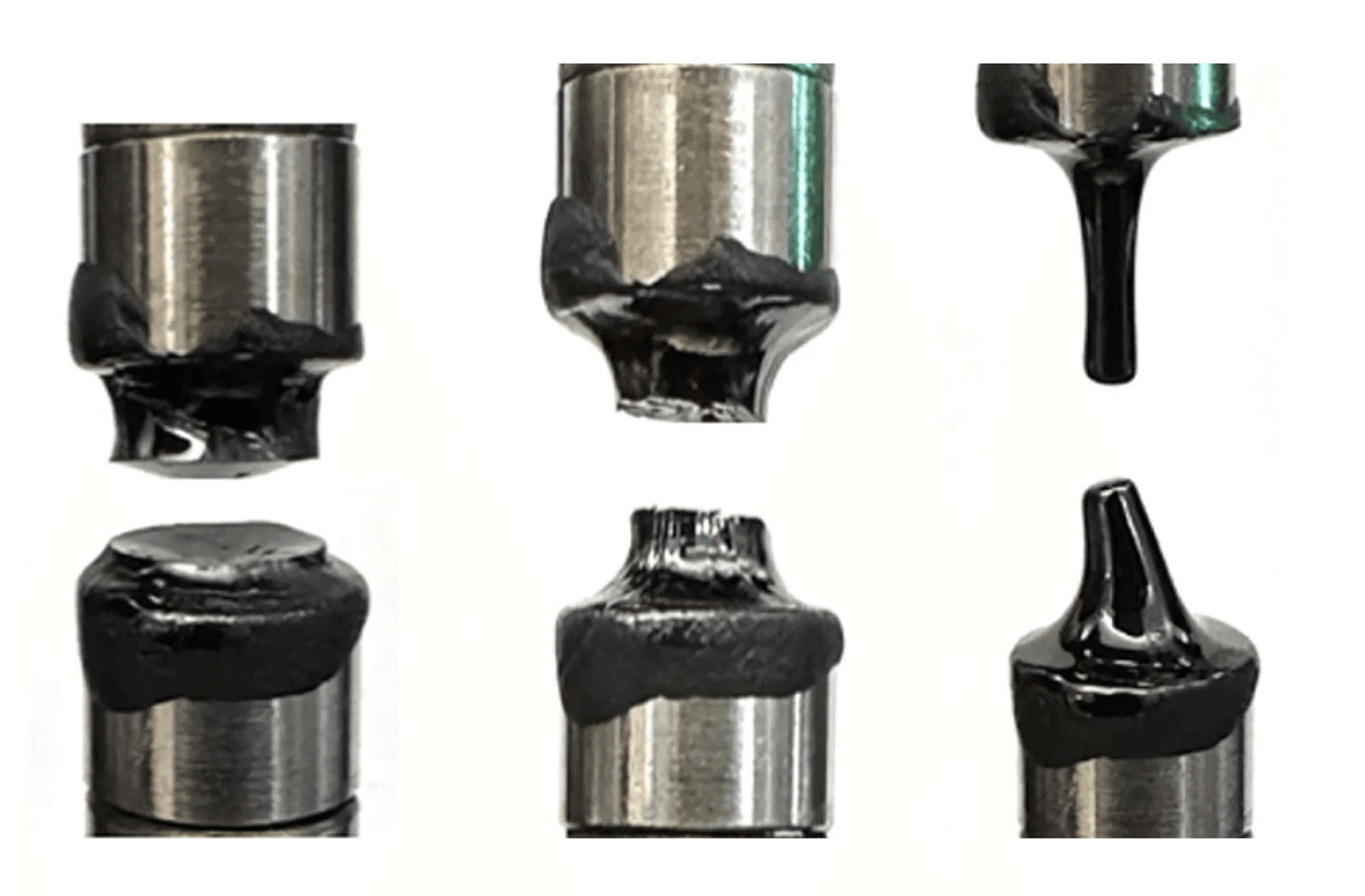
    Fracture is a sudden, brittle breaking-apart that we generally associate with solid materials that get stressed too far. Some viscoelastic, non-Newtonian fluids have been known to fracture, but that was generally thought to be unusual. But a recent study turns that idea on its head, revealing that even simple, albeit highly viscous, liquids can fracture.
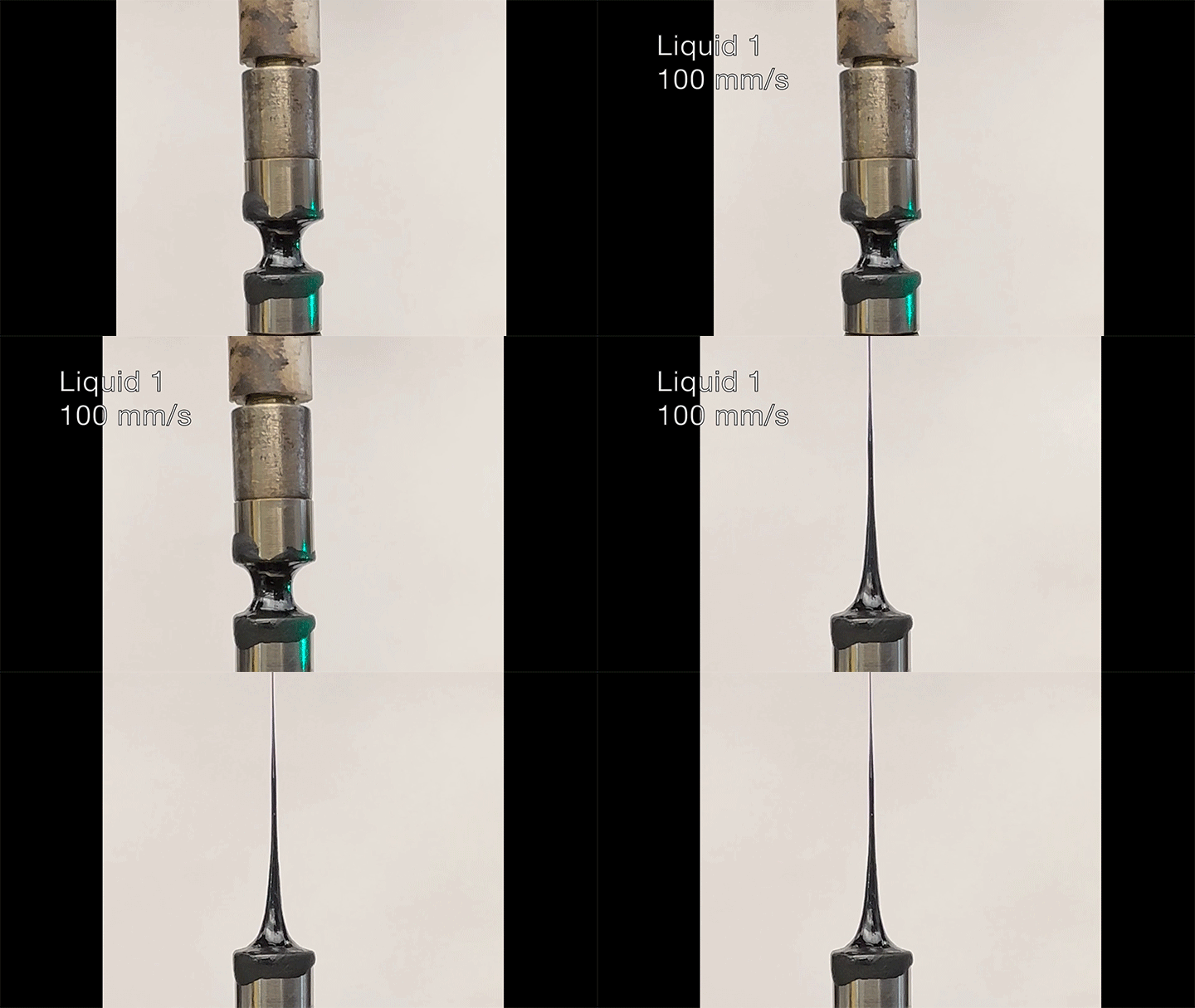
    A viscous hydrocarbon fluid gets stretched at 100 mm/s.
    A viscous hydrocarbon fluid gets stretched at 100 mm/s, drawing it into a thinning shape.

    When you stretch a liquid, the general expectation is what you see above: the liquid gets drawn into an ever thinner shape. But researchers found that–when stretched quickly–that same simple hydrocarbon liquid cracked open:
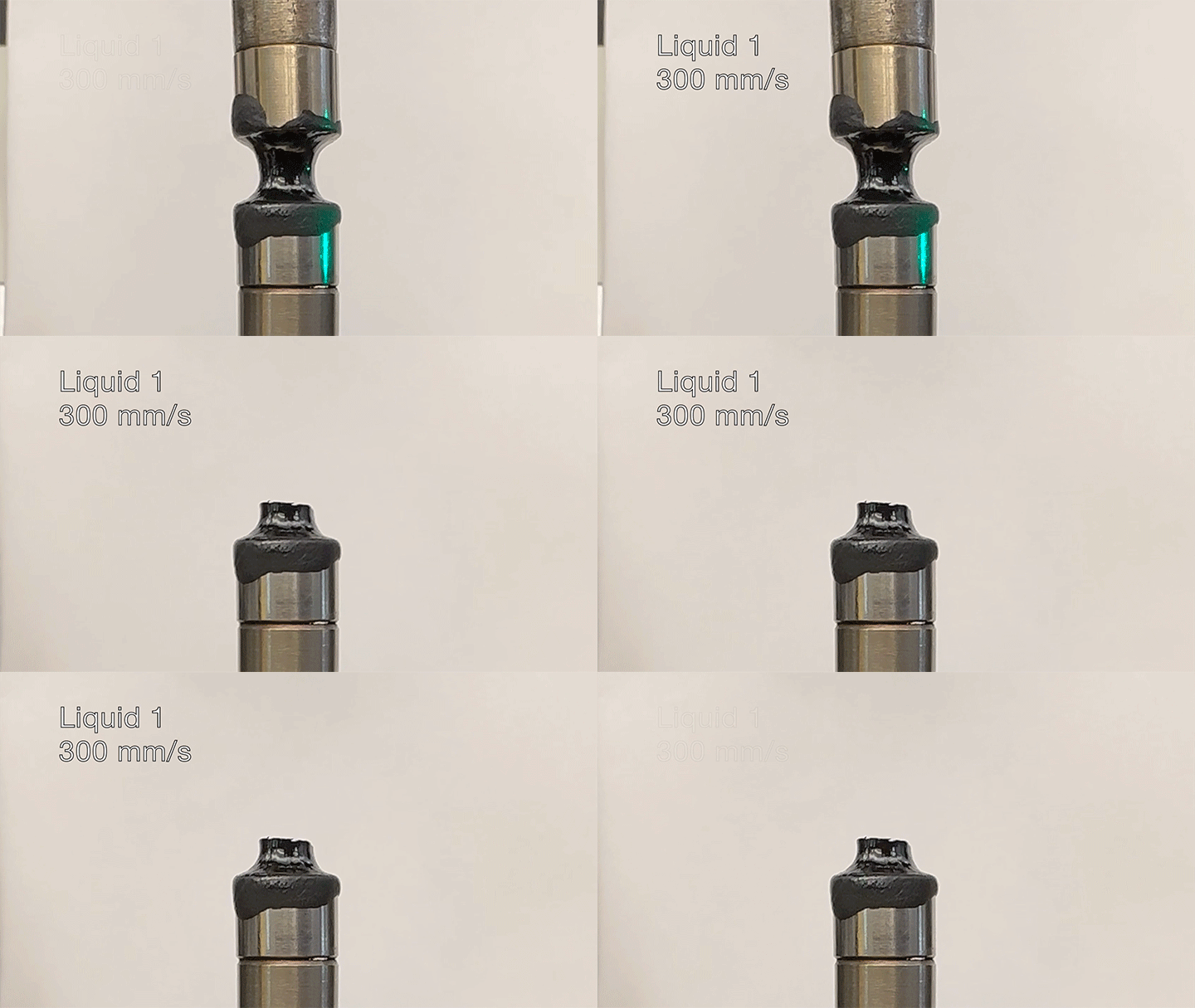
    A viscous hydrocarbon fluid gets stretched at 300 mm/s, causing it to fracture like a solid.
    A viscous hydrocarbon fluid gets stretched at 300 mm/s, causing it to fracture like a solid.

    There’s even an audible snap, which you can hear in the video below. The results were so surprising that they repeated the experiment several times and with different viscous (but Newtonian) liquids. The results held. When the liquids were pulled to a critical stress, they audibly snapped and fractured like a solid.

    The next question, of course, is why this happens. The authors suspect (but have yet to show) that cavitation may be at play in the initiation of the crack that separates the liquid in two. (Image, video, and research credit: T. Lima et al.; via Gizmodo)


    Fediverse Reactions
  • Waves Break Up Floating Rafts

    Waves Break Up Floating Rafts

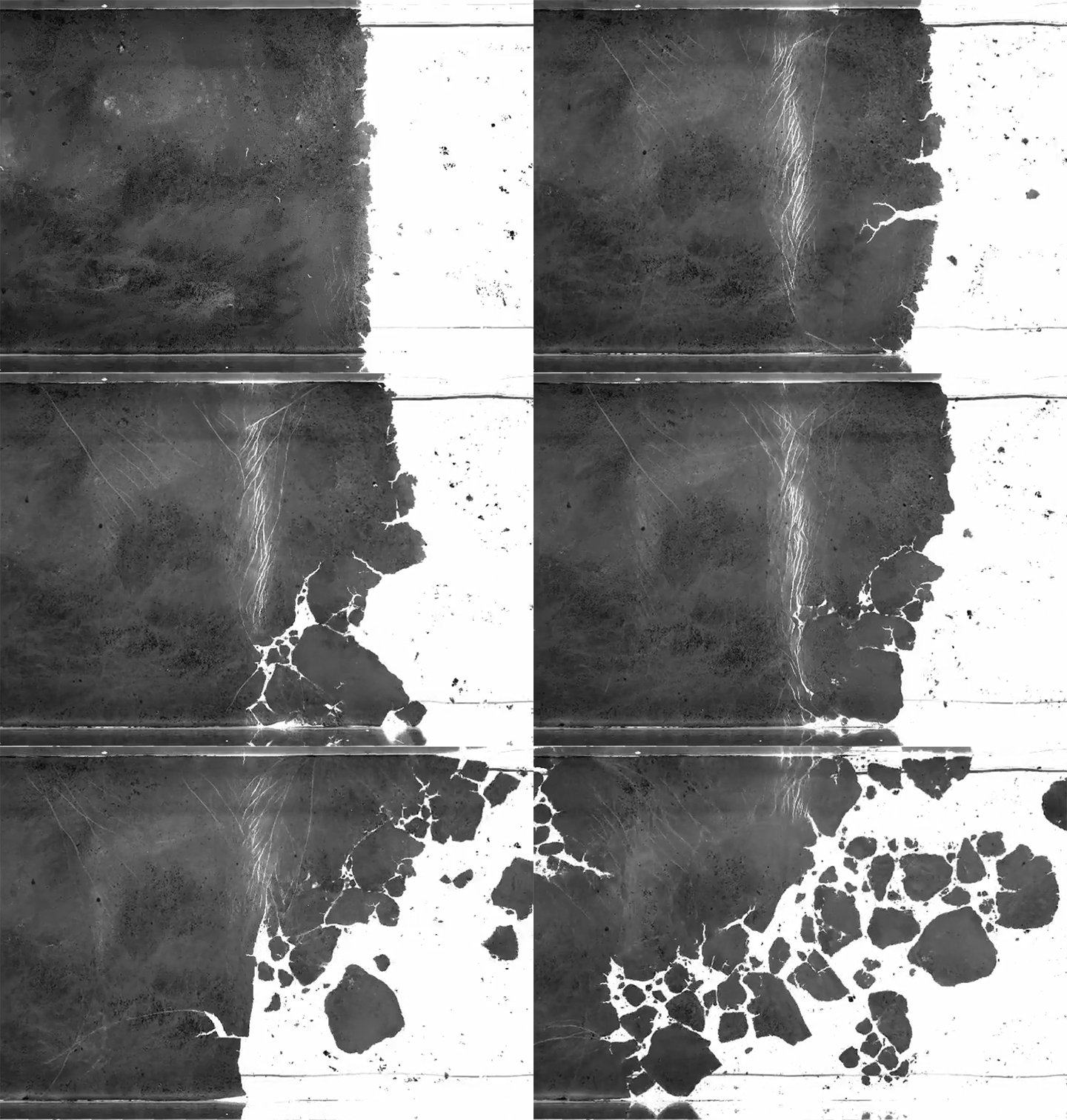
    Small particles can float on a liquid, held together as a raft through capillary action. But those rafts — like the tea skin below — break up when waves jostle them. In this study, researchers looked at how standing waves broke up a raft of graphite powder. Although the raft’s break-up resembles fields of sea ice breaking apart, the researchers found that different mechanisms were responsible. In their experiment, waves pushed and pulled horizontally at the raft, causing it to fracture. But that push-and-pull is negligible in sea ice, where sheets instead break from the up-and-down motion of waves vertically bending the ice. Nevertheless, the new insights are valuable for various biofilms and some ice floes. (Image and research credit: L. Saddier et al.; via APS Physics)

    The skin atop a cup of tea breaks up into polygons after stirring with a spoon.
    The skin atop a cup of tea breaks up into polygons after stirring with a spoon. Although the effect resembles sea ice breakup, the specific wave mechanism differs.
  • Solid, Liquid, Both?

    Solid, Liquid, Both?

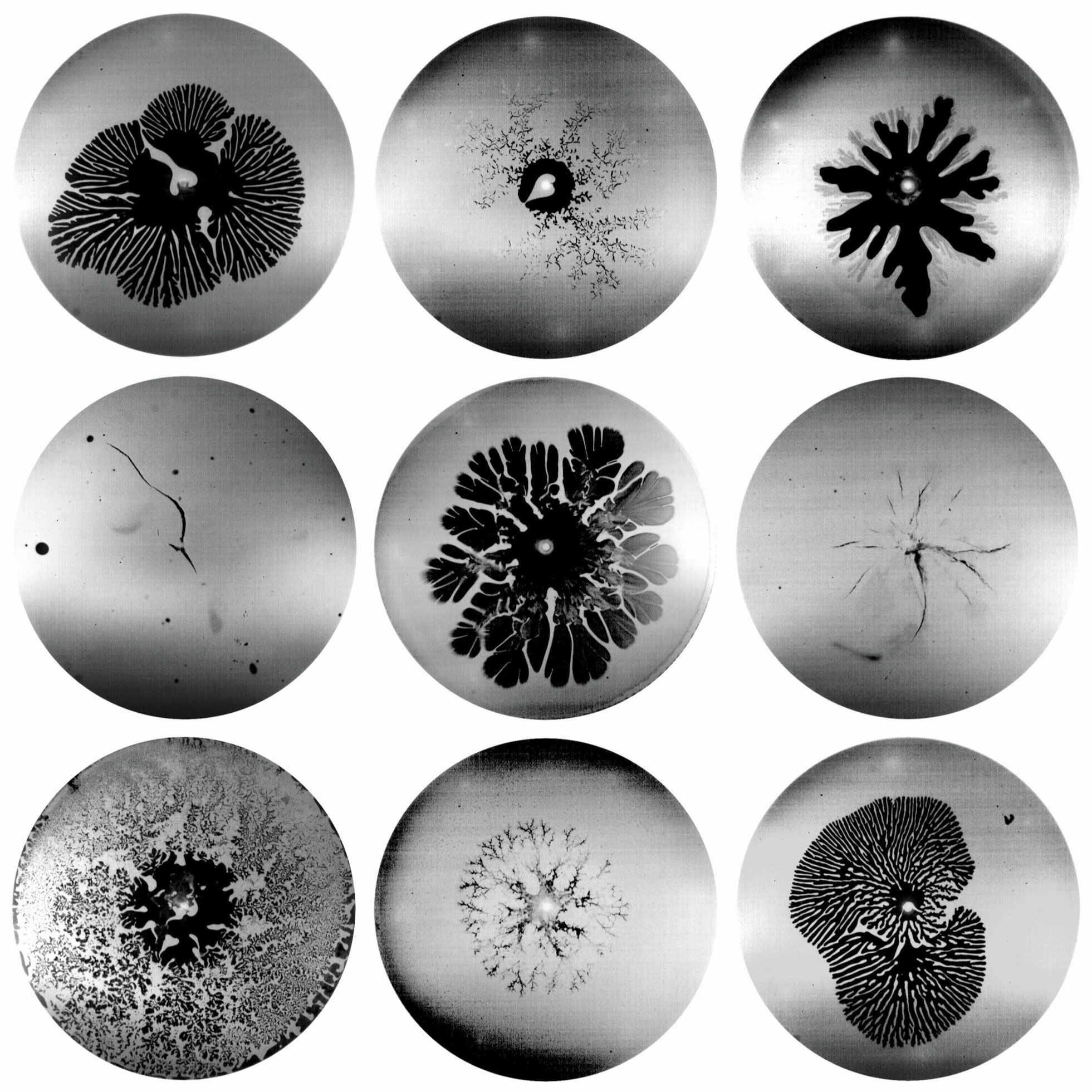
    Materials like oobleck — a suspension of cornstarch particles in water — are tough to classify. In some circumstances, they behave like a fluid, but in others, they act like a solid. Here researchers sandwiched a thin layer of oobleck between glass plates and injected air into the mixture. For a fluid, this setup creates a classic Saffman-Taylor instability where rounded fingers of air push their way into the more viscous fluid. And, indeed, for low air pressures and low concentrations of cornstarch, the oobleck forms these viscous fingers. You can see examples in the top row’s first and third image, the second row’s middle image, and the bottom row’s third image.

    Injecting air at high pressures and high cornstarch concentrations fractures the oobleck like a solid (middle row, first and third images). At intermediate pressures and concentrations, the oobleck forms a pattern called dendritic fracturing, where new branches can grow perpendicularly to their parent branch. Examples of this pattern are in the top row’s second image and the bottom row’s first and second images. (Image and research credit: D. Ozturk et al.; via Physics Today)

  • Breaking Ground

    Breaking Ground

    Pushing a fluid into a porous granular material can fracture it into branching, lightning-like patterns. Here, air is injected into wet grains as a laboratory analog to hydrocarbon extraction or fracturing to treat contaminated soil. The injection of air compacts grains along the branch boundaries, keeping individual branches separated from one another. The patterns that form change with grain shape and ultimately result from the interactions of pressure, surface tension, friction and viscous forces. Studies like these help optimize fluid flow, decontaminate polluted soil faster, and determine risk in gas-driven fracturing of hydrocarbon reservoirs. (Image and video credit: J. Campbell et al.; submitted by B. Sandnes)