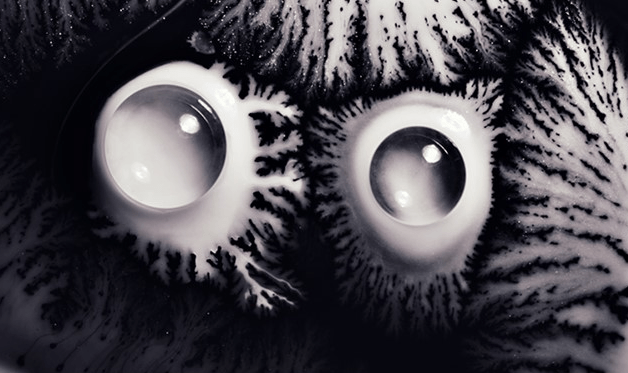
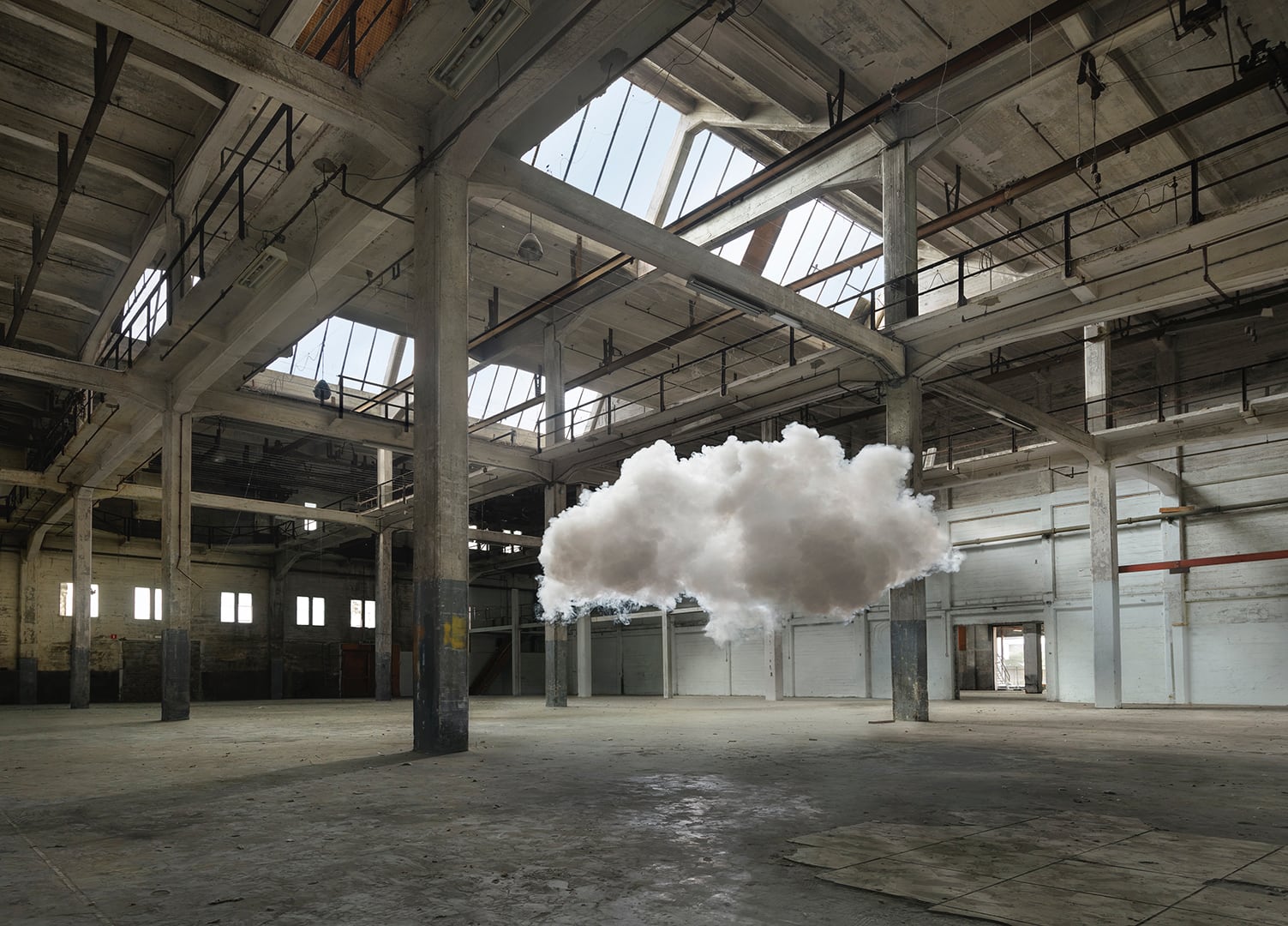
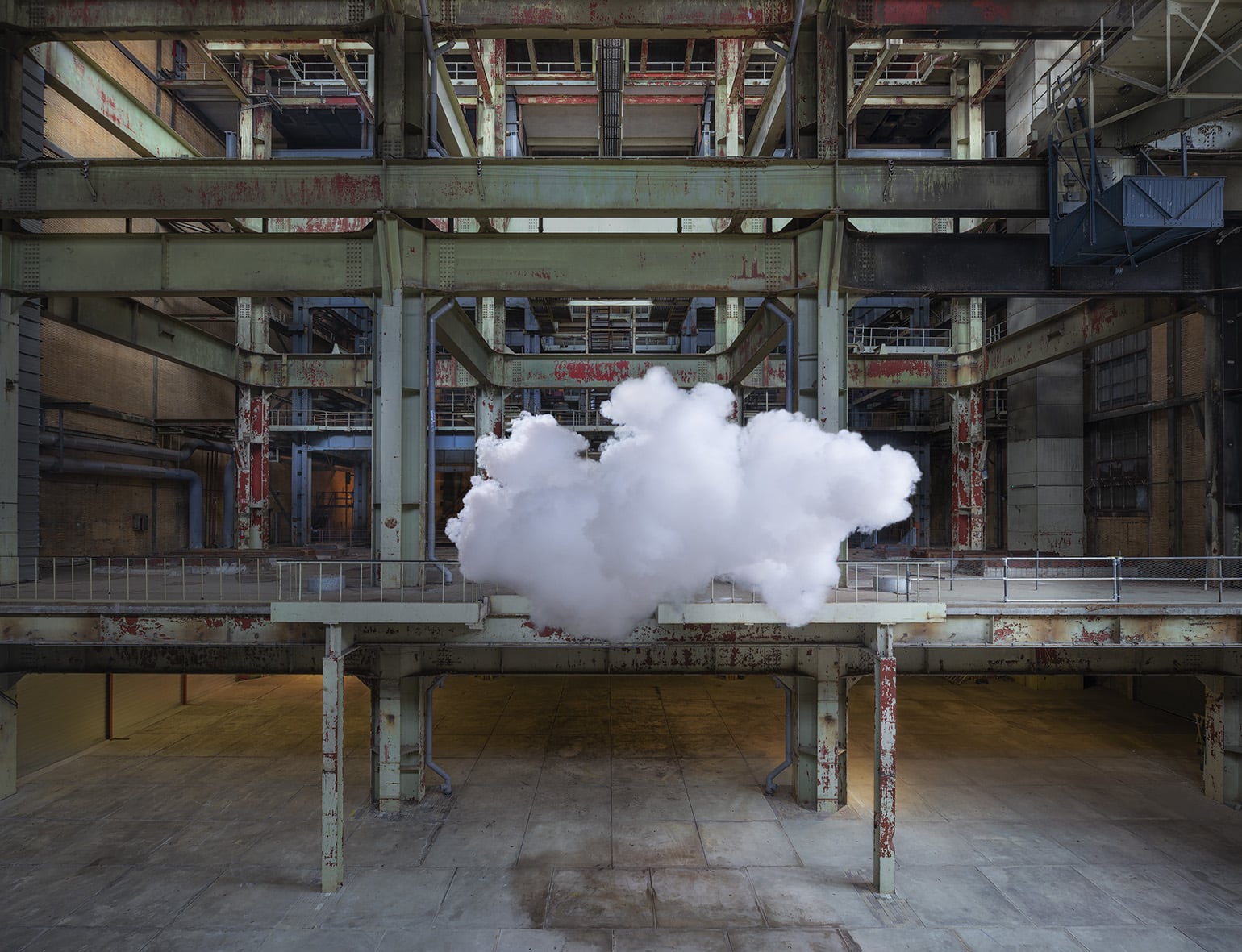
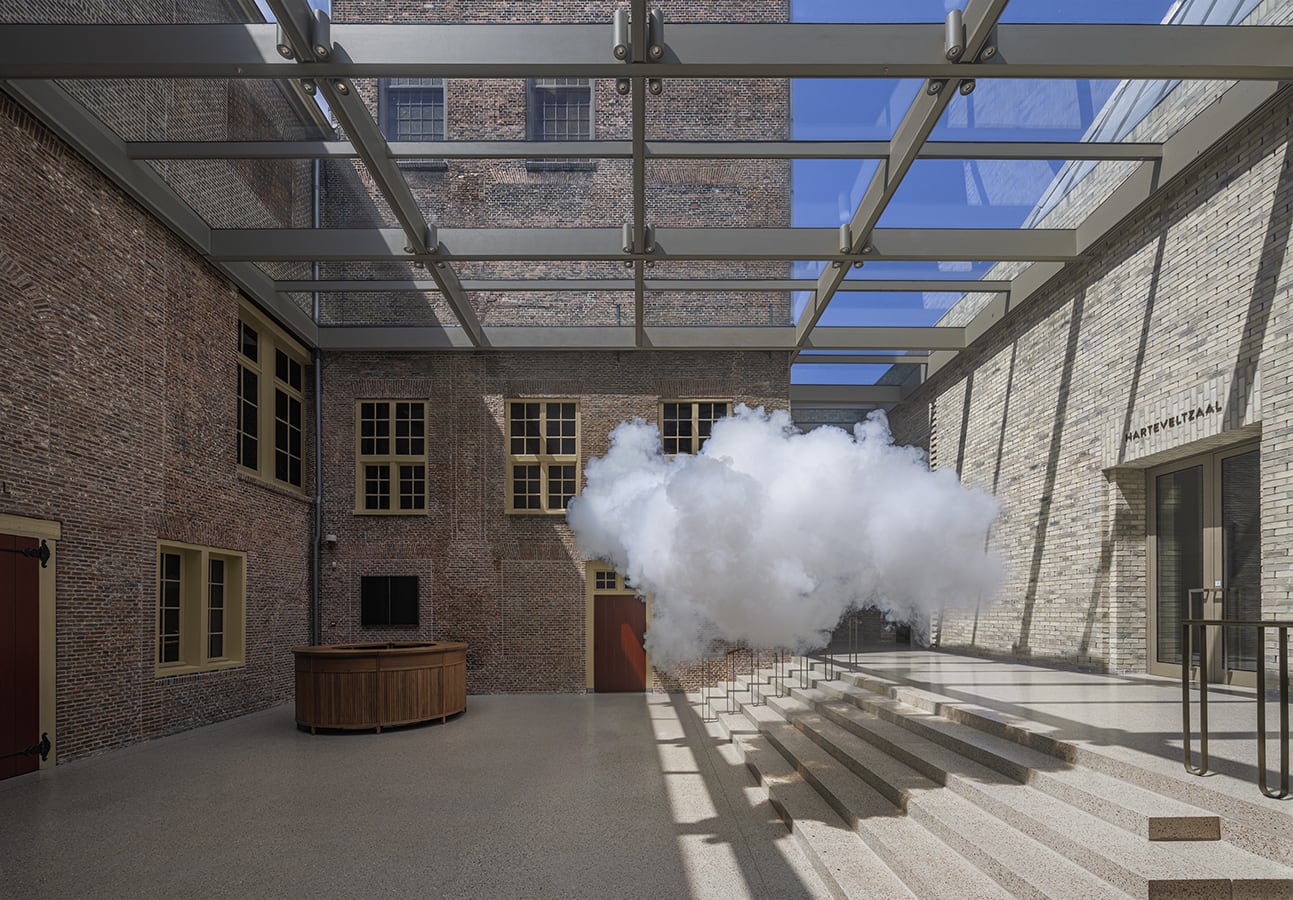
Our landscapes have changed dramatically over the last 200 years of urban development, but traces of the land’s past still remain. Many streams and rivers that once ran on the surface persist in underground culverts. Bruce Willen’s “Ghost Rivers” installation highlights the path of one such waterway, Sumwalt Run, which flows across what is now the Remington and Charles Village neighborhoods of Baltimore. The project includes ten installations that describe the hidden water and its history as well as a wavy, blue line that marks its path. (Image credits: Public Mechanics and F. Hamilton, see alt text; installation: B. Willen; via Colossal)
Tag: fluids as art

Visualizing Changes
This rather mesmerizing video by Michiel de Boer uses a video editing technique to highlight movement and changes in video clips. From falling rain to rising mist to passing footsteps, the relatively simple technique visualizes all kinds of motion. De Boer calls it “motion extraction,” but it’s essentially a way to play with autocorrelation, a mathematical technique often used in fluid dynamics. It’s especially prevalent in turbulence, where it helps researchers identify parts of the flow that are closely related to one another. (Video and image credit: M. de Boer; via Colossal)

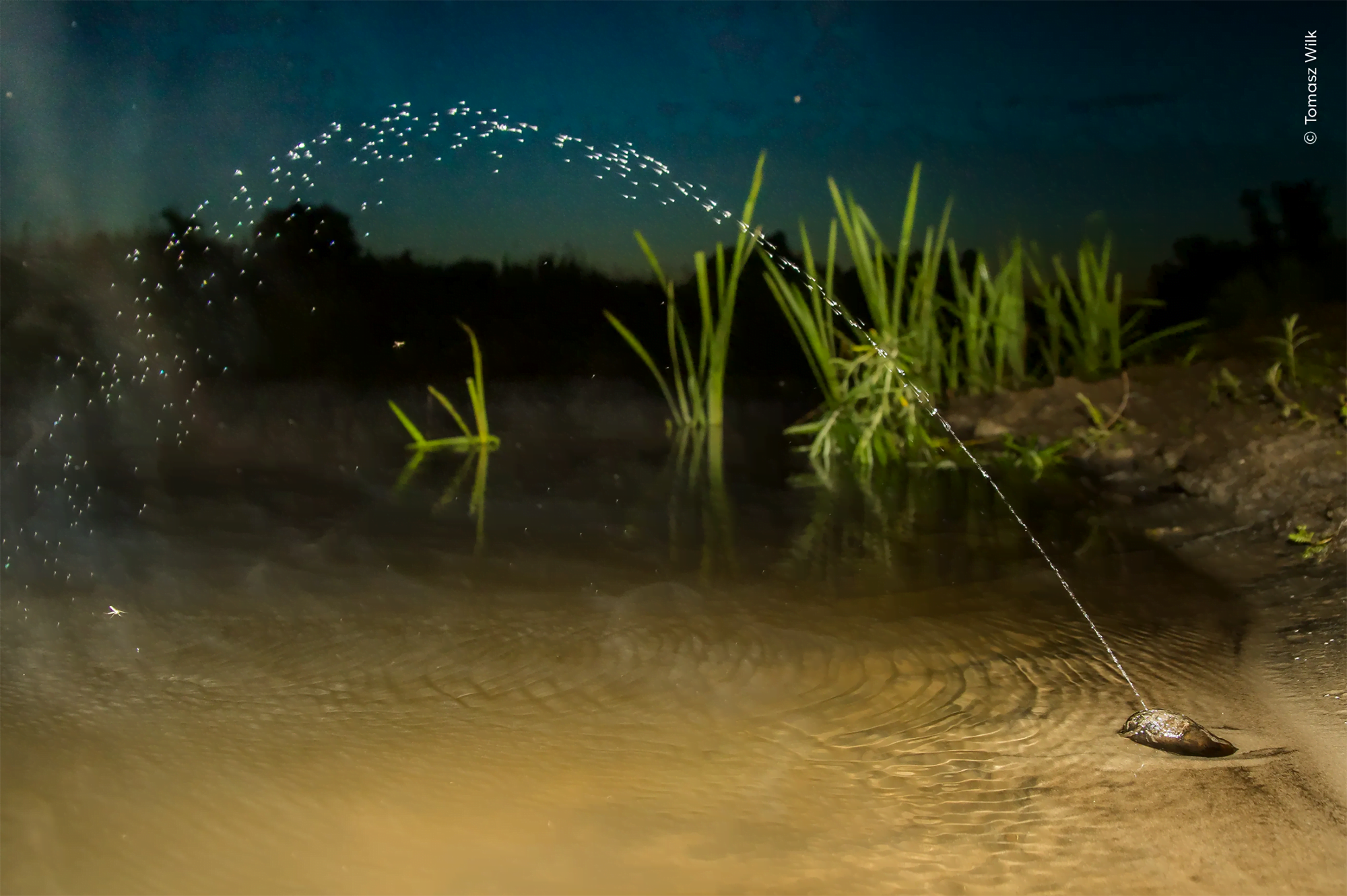
“Mosquito Egg Raft”

“Winter”
Little by little, snow and ice transform the landscape in Jamie Scott’s film “Winter.” From individual snowflakes to entire forest vistas, the timelapses showcase how winter remakes every surface in its image. The growing icicles show freezing in action, but I especially love seeing the “flow” brought about by progressively greater snowfall. Tree limbs bow, shrubs swell, and riverbanks contract as the snow gets thicker. And that final shot that pulls out from single snowflakes to the entire forest? Stunning! (Video and image credit: J. Scott et al.; via Colossal)

“High Flow”
Roman De Giuli’s “High Flow” is vibrant and energetic. Colorful paints and inks flow across the page, creating complex patterns. I love the blossoming flows, feathery fronds, and spreading Marangoni effects. De Giuli’s films never disappoint! (Video and image credit: R. De Giuli)

“Alive”
In “Alive,” filmmaker Christopher Dormoy explores acrylic paints and the variety of ways in which the medium can be used. From a fluids perspective, there’s dripping, viscous flow, turbulent eddies, billowing plumes, and “accidental painting” due to density-driven instabilities. It’s a fun tour of fluid phenomena in art. What examples do you spot? (Video and image credit: C. Dormoy)

Inside a Soap Bubble
Every child learns to blow soap bubbles, but it’s rare that we have a chance to look inside them and see the flow there. In this poster, researchers seed a growing bubble with olive oil droplets, then illuminate them with a laser. This provides a glimpse inside the bubble. In the center, we see the incoming jet dividing the bubble in two and forming two large, counter-rotating vortices. Along the left side, snapshots show the bubble’s interior as it grows and, eventually, pops. (Image credit: S. Rau et al.)

Icelandic Glow
Solar wind particles slam into the atmosphere near Earth’s poles, creating billowing curtains of glowing plasma known as auroras. Beneath the earth, molten rock seethes and flows, squeezed up fissures to release explosive gases and spurts of lava to the surface world. These natural phenomena are captured in the left and center of this image, respectively. To the right, three plumes of water vapor rise from a geothermal power plant. Three very different phenomena — all fluid dynamical in nature and all captured in a single image of Iceland. It’s no wonder the island is covered in tourists. (Image credit: W. Gorecka; via APOD)

The Best of FYFD 2023
A fresh year means a look back at what was popular last year on FYFD. Usually, I give a numeric list of the top 10 posts, but this year the analytics weren’t as clear. So, instead, I’m combining from a few different sources and presenting an unordered list of some of the site’s most popular content. Here you go:
- Eroding the Sphinx
- Getting Water Out of Your Ear
- Can Water Solve a Maze?
- Dandelion Seeds
- Black Holes in a Bathtub
- Mixing With E. coli
- Beneath the Cavity
- Leidenfrost Explosions
- Toilet Plumes
- Exascale Simulations
- Ghosts of Rivers Past
- Blood Flow in a Fin
- Snake Tracks
- Lagoon Nebula
- “Chaosmosis”
I’m really pleased with the mix of topics this year; many of these topics are straight from research papers, and others are artists’ works. At least one is both. From swimming bacteria to star-birthing nebulas, fluid dynamics are everywhere!
If you enjoy FYFD, please remember that it’s a reader-supported website. I don’t run ads and it’s been years since my last sponsored post. You can help support the site by becoming a patron, making a one-time donation, buying some merch, or simply by sharing on social media. And if you find yourself struggling to remember to check the website, remember you can get FYFD in your inbox every two weeks with our newsletter. Happy New Year!
(Image credits: sphinx – S. Boury et al., ear model – S. Kim et al., maze – S. Mould, dandelion – S. Chaudhry, water tank – P. Ammon, e. coli – R. Ran et al., drop impact – R. Sharma et al., Leidenfrost – L. Gledhill, toilet – J. Crimaldi et al., engine sim – N. Wimer et al., rivers – D. Coe, fin – F. Weston, snake – P. Schmid, nebula – J. Drudis and C. Sasse, flames – C. Almarcha et al.)

The Hydrodynamics of Marbling
In marbling, an artist floats paints on a viscosified water bath, using various thin tools to manipulate the final image. Many cultures have developed a version of this art, but for many it will be most recognizable as a technique used to decorate book interiors. In this video, researchers consider the physics behind this beautiful practice. Surface tension helps keep the paint on the surface, even though it’s denser than the water it’s on. Variations in surface tension shape and reshape the surface as new colors are added. And then low-Reynolds-number effects help artists mix the paints without inertia or diffusion disturbing the pattern. See more examples here, here, and here. (Video credit: Y. Sun et al.)