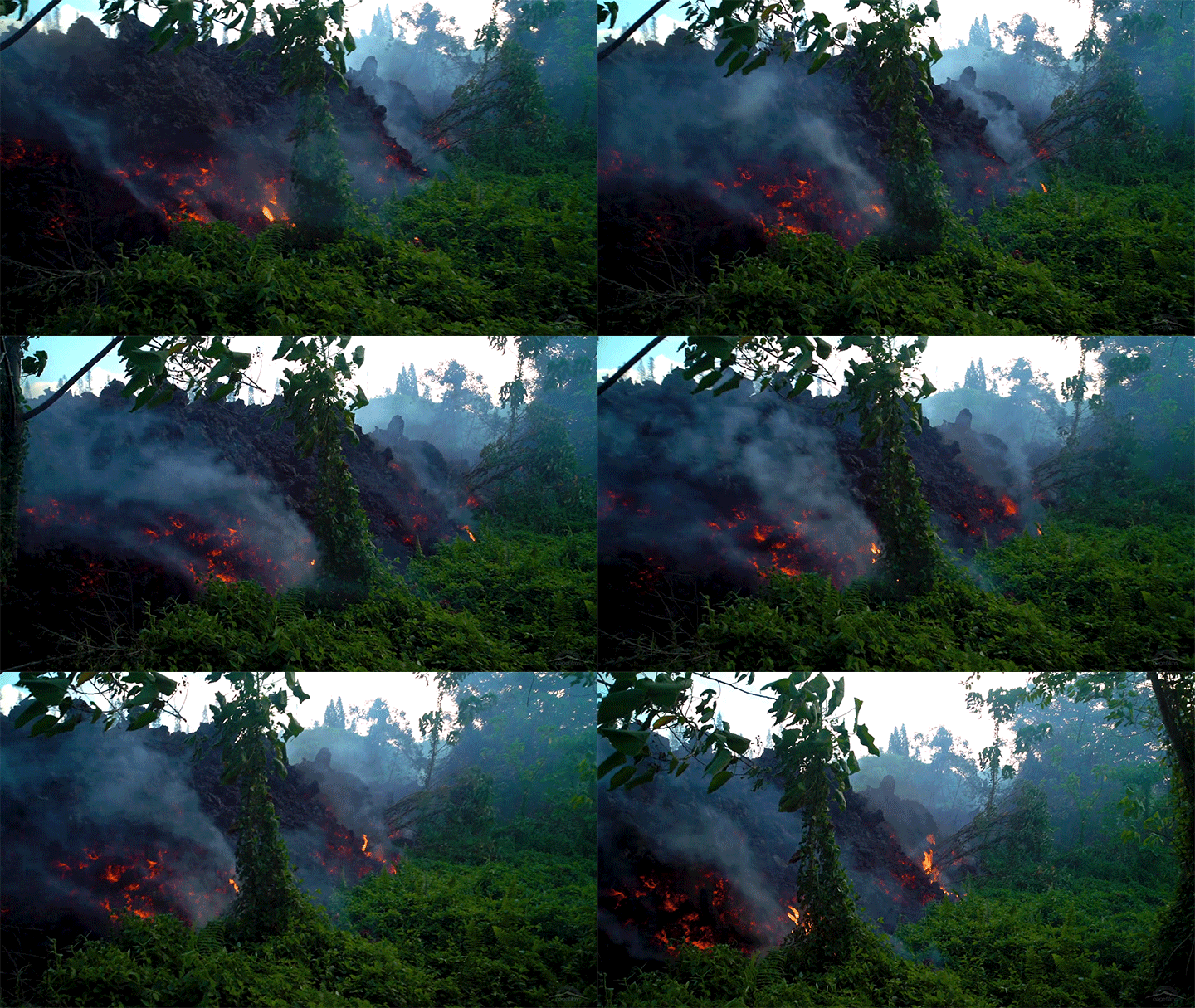
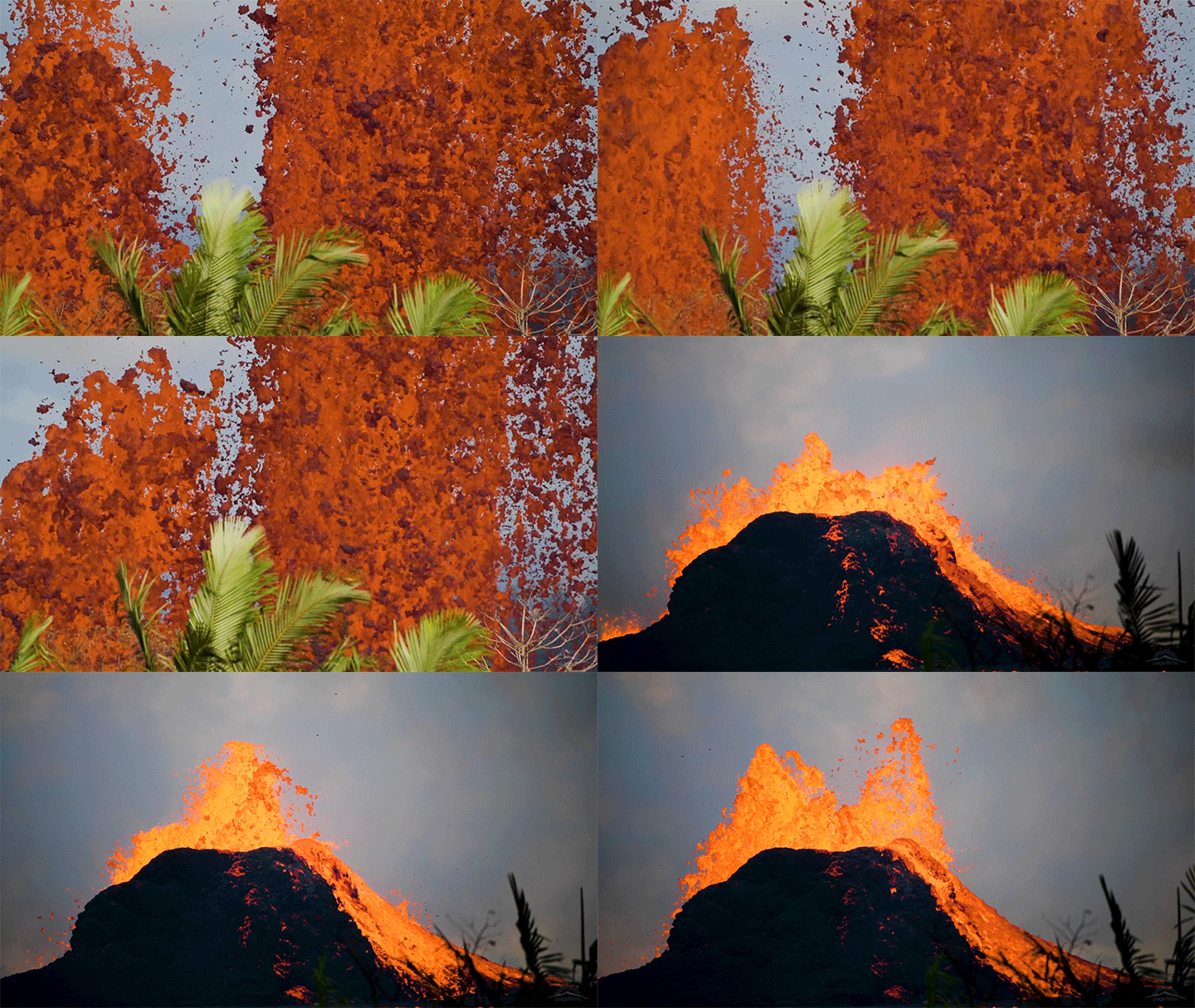
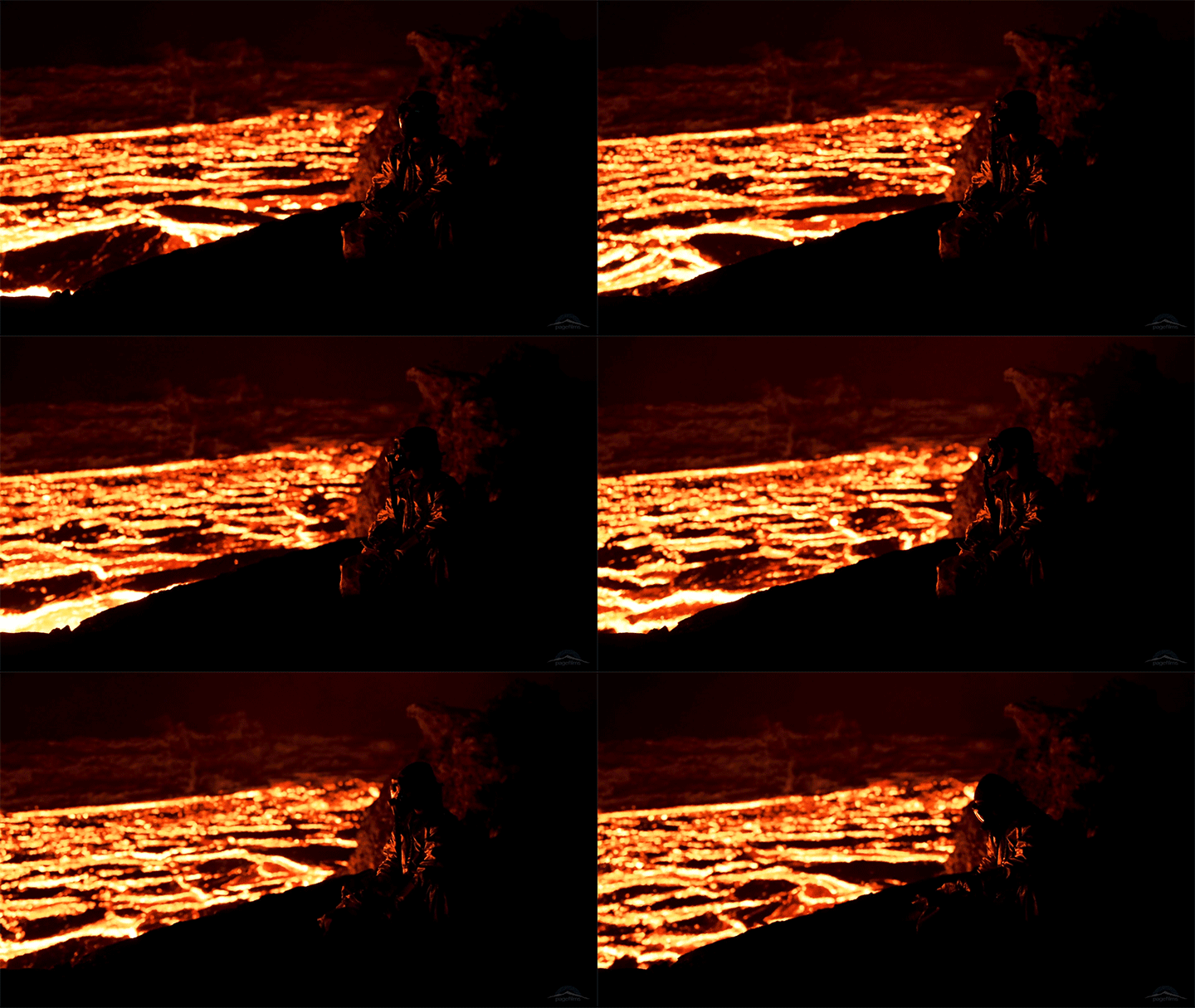
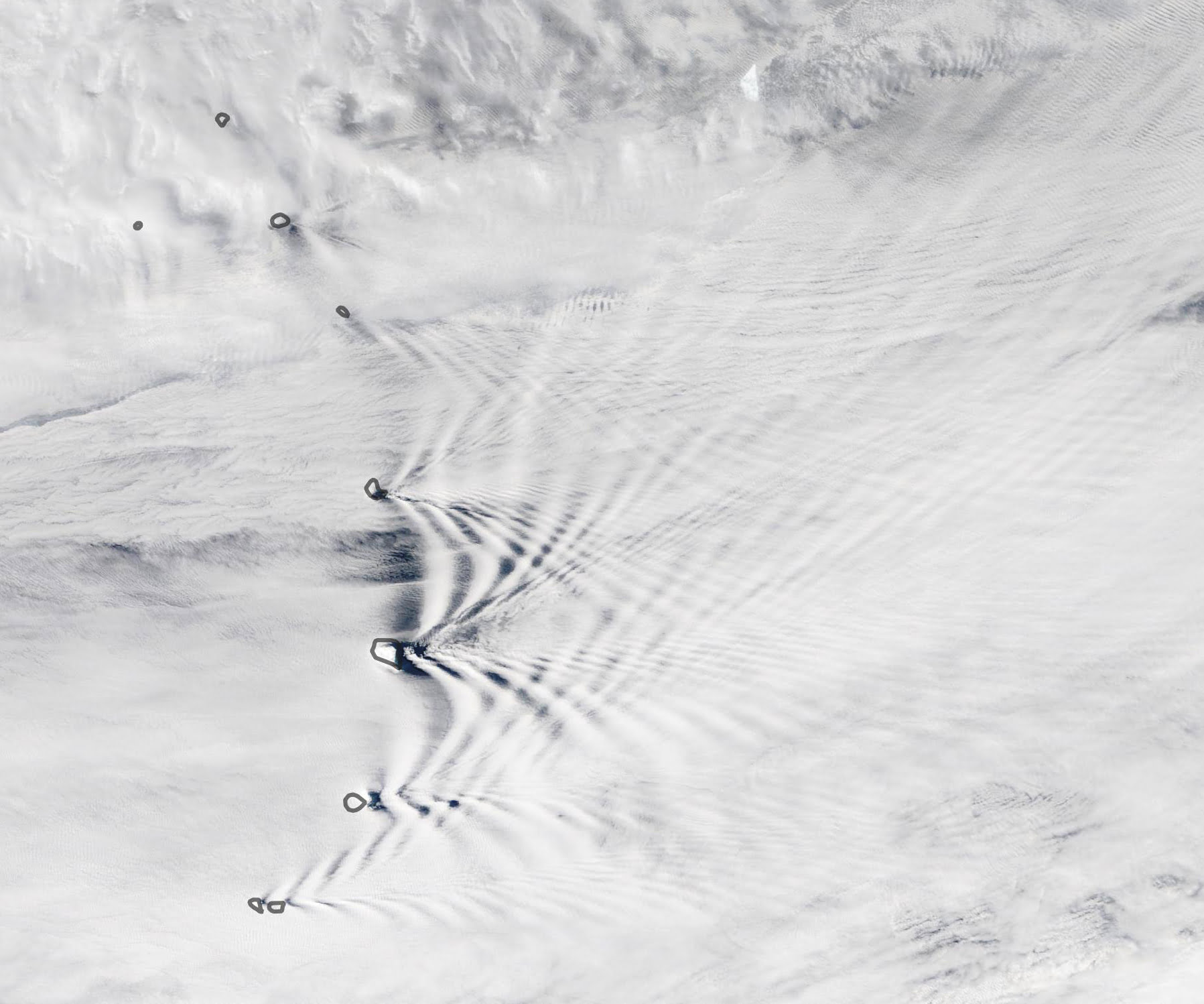
Fire plays an important role in nature, one with which humanity must live without controlling fully. After several disastrous historic wildfires in the American West, the U.S. Forest Service established its own fire lab, where research foresters can study flames firsthand. This video takes us inside the Fire Lab for a look at the facilities and people responsible for helping us better understand this fundamental force of nature. (Video and image credit: Gizmodo + Atlas Obscura)
Tag: fluid dynamics

Kneading Dough
Kneading bread dough is something of an art. The process binds flour, water, salt, and yeast into a network that is both elastic and viscous. It also traps pockets of air that will determine the texture of the final loaf. Underknead and the bubbles won’t form; overknead and the result will be a dense loaf that doesn’t rise in the oven.
Capturing all of that physics in a realistic model is tough, but researchers have done so and validated their digital dough against experiments. The group focused on simulating industrial mixers, which knead dough with a moving, spiral-shaped rod rotating around a stationary vertical one. They found the industrial set-up did not mix as well as kneading by hand, but that could be improved by swapping the stationary rod for a second spiral one. (Image credit: G. Perricone; research credit: L. Abu-Farah et al.; via Physics World; submitted by Kam-Yung Soh)

Blooming Deposits
Evaporate a droplet full of silica nanoparticles, and you’ll get beautiful, flower-like films. As the water evaporates, dry nanoparticles build up in a solid deposit. The evaporation creates a pressure gradient that pulls toward the center of the drop, forcing the deposit to bend. As stress builds in the deposit, cracks form petal-like segments. The number of cracks is indicative of how much of the drop was solid material; the higher the volume fraction of particles is, the fewer cracks form and the less the deposit bends. (Image, video, and research credit: P. Lilin et al.)

Creating Star Wars-Like Volumetric Displays
Despite their ubiquity in science fiction, volumetric displays — three-dimensional displays visible from any angle — have been tough to create in real life. But a team from the University of Sussex has made impressive strides using a system based on acoustic levitation.
Here’s how it works: an array of ultrasonic speakers levitates and moves small plastic beads at up to 9 m/s. Simultaneously, LED lights project colors onto the sphere. Thanks to the human brain’s ability to create persistent images from the motion, we’re able to see simple displays like the figure-8 and smiley face above with the naked eye. To form something more complicated, like the spinning globe seen in the final image, the bead must be filmed using a camera with a slow shutter speed. But with that, the display looks incredible.
There’s obviously a ways to go before your R2 unit can project holographic messages for you, but all the basic ingredients for that technology are here. Check out the coverage on Scientific American and the original research paper for more. (Image credit: Star Wars – Lucasfilm; others – E. Jankauskis; research credit: R. Hirayama et al.; via SciAm)

“Ornitographies”
If birds left trails in the sky, what would they look like? This is the question that haunted photographer Xavi Bou and inspired him to create his “Ornitographies” series. Using video of birds in flight, he combines frames to construct these snapshots of flight. In them, birds become streaklines feathered with wingbeats.
I love how the technique highlights the patterns of flapping flight. A bird flying steadily over a lake becomes a wavy line with consistent, perfectly matched up- and downstrokes, whereas a bird just taking off has short, fast wingbeats that slowly lengthen and steady out as the bird gets aloft. Flocks of birds turn into a tornado of swirling lines as they land or take-off en mass. (Image credit: X. Bou; via Flow Vis)

Drying Out
Look closely at old paintings, and you’ll notice arrays of tiny, straight cracks that form as the paint dried. This sort of pattern formation during drying is not unusual. Here we see the patterns formed when a thin layer of hydrogel sandwiched between two glass plates dries. As the water evaporates, stress builds at the interface between the air and gel, causing bubbles to form. The bubble size and shape depend on the size on the gap between the plates and the characteristics of the gel. The resulting patterns can be entirely disordered, or they can form worm-like designs that curl throughout the domain. (Image and research credit: R. Pic et al.)

Robotic Research Facilities
One of the major challenges in fluid dynamics is the size of the parameter spaces we have to explore. Because many problems in fluid dynamics are non-linear, making small changes in the initial set-up can result in large differences in the results. Consider, for example, a simple cylinder towed through a water tank. As the cylinder moves, vortices will form around it and shed off the back, causing the cylinder to vibrate. The details of what will happen will depend on variables like the cylinder’s size and flexibility, the speed it’s being towed at, and which directions it’s allowed to vibrate in. Mapping out the parameter space, even sparsely, could take a graduate student hundreds of experiments.
To speed up this process, engineers are now building robotic facilities like the Intelligent Towing Tank (ITT) shown above. Like graduate students, the ITT can work into the wee hours of the night, but, unlike graduate students, it never needs to eat, sleep, or stop experimenting. Now, one could use a facility like this to brute-force the answers by testing every possible combination of parameters, but even working 24 hours a day, that would take a long time. Instead, researchers use machine learning to guide the robotic facility into choosing test parameters in a way that optimizes the factors the researchers define as important.
Essentially, the system starts with experiments chosen at random within the parameter space, and then uses those results to select areas of interest until it’s gathered enough data to satisfy the limits specified by human researchers. In theory, a well-designed algorithm can dramatically reduce the number of experiments needed to explore a parameter space. (Image and research credit: D. Fan et al.; submitted by Kam-Yung Soh)

Envisioning Chemical Patterns
One of the most beautiful chemical reactions is the Belousov–Zhabotinsky reaction, and it’s the subject of the latest video from Beauty of Science. Known colloquially as the BZ reaction, it begins as growing spots of color that turn into rings and chaotic spirals as the chemical reaction progresses.
Mathematically, the BZ reaction is a type of reaction-diffusion system, meaning that the patterns we see depend both on the speed of local chemical reactions and the time necessary for chemical reagents to move (or diffuse) throughout the dish. Although the diffusion in these systems can simply be the random wandering of molecules, fluid dynamics also plays a role. Variations in chemical concentration between different regions of the reaction drive fluid flows that continue to feed the pattern-making until all the reagents are consumed. (Image and video credit: Beauty of Science; via PetaPixel; submitted by clogwog)

Falling Drops and Forming Stalagmites
The vast stalactites and stalagmites found in caves take millennia to form. Mineral-rich water seeps down the icicle-like stalactites and then drips onto stalagmites below, each drop depositing a little more calcite onto the growing rock. By observing this dripping action first-hand, researchers found that most falling drops create a splash that’s much smaller than the width of the stalagmite they fall onto. So how do stalagmites end up so wide?
It turns out that there’s a large variance in where drops hit the stalagmite. There’s no wind in these caves to push the droplets, so researchers concluded the drop’s trajectory depends on the vortices it sheds as it falls. A drop that falls from a short height will have a vertical trajectory. But once the drop is falling tens of meters, it can end up as many as several centimeters to the side of where it would fall in a vacuum. This scatter-shot variation in drop impacts is what enables stalagmites to grow so wide. (Image and research credit: J. Parmentier et al., source; via NYTimes; submitted by Kam-Yung Soh)