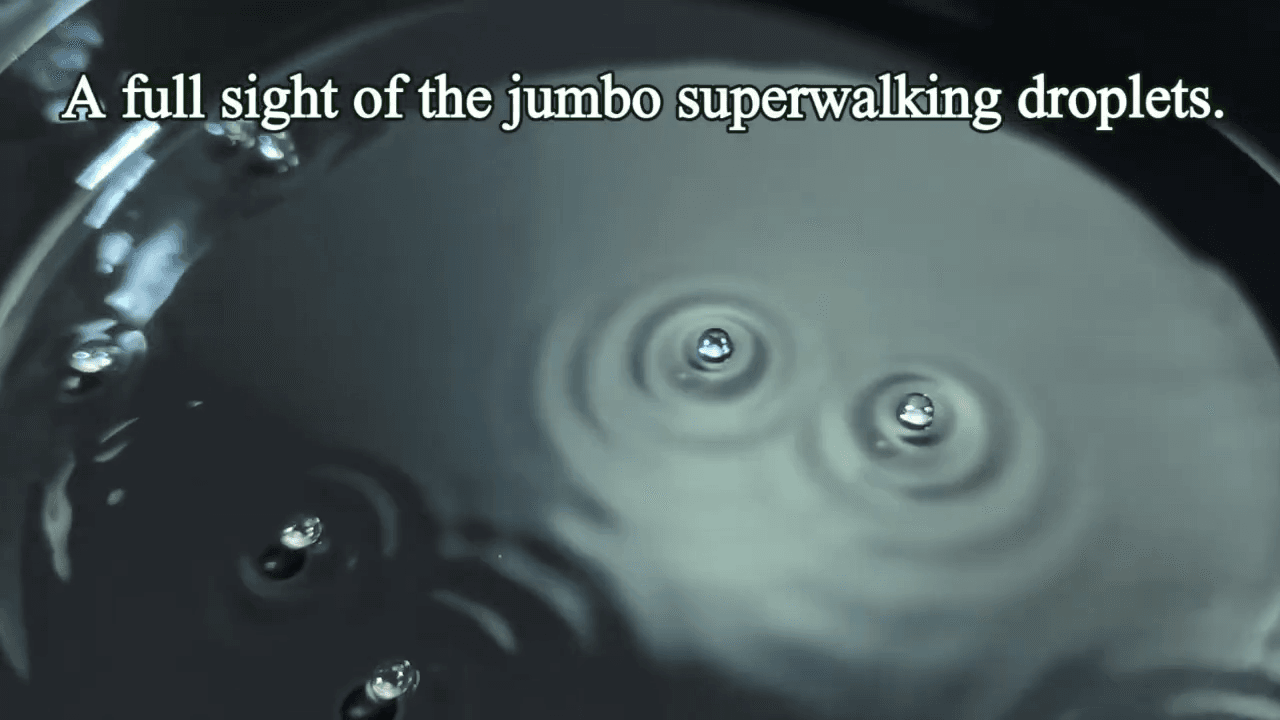
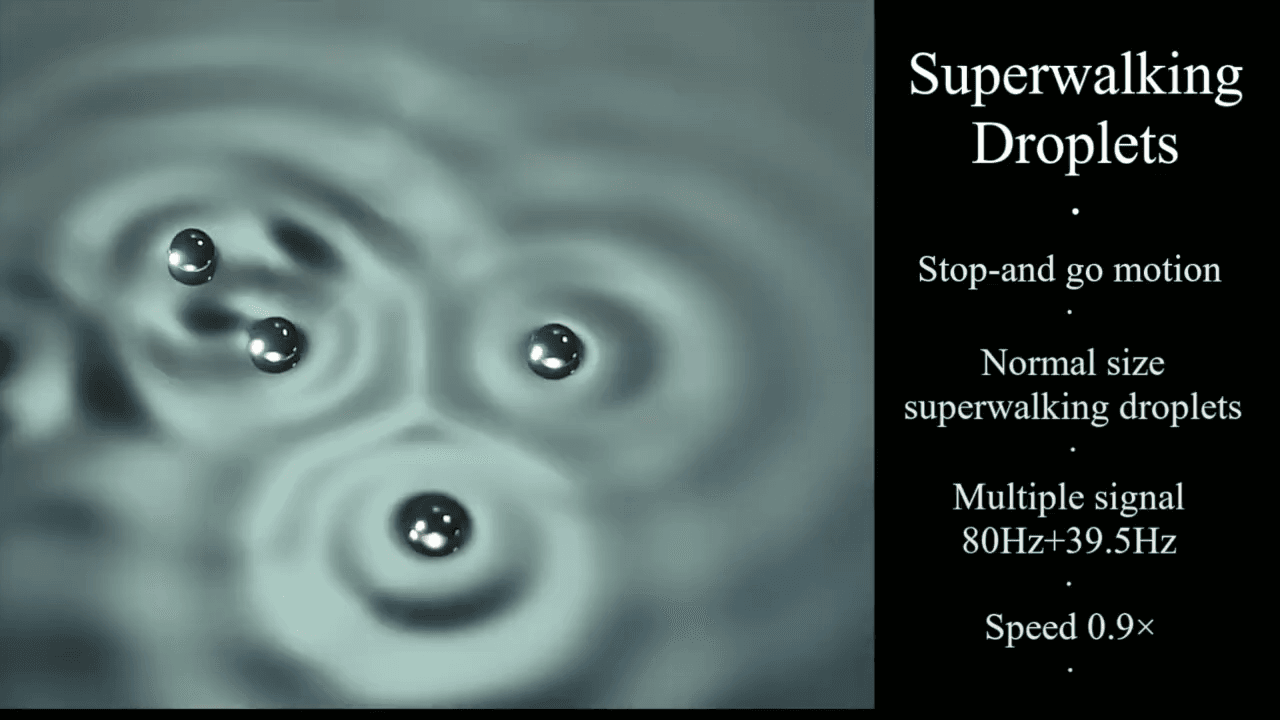
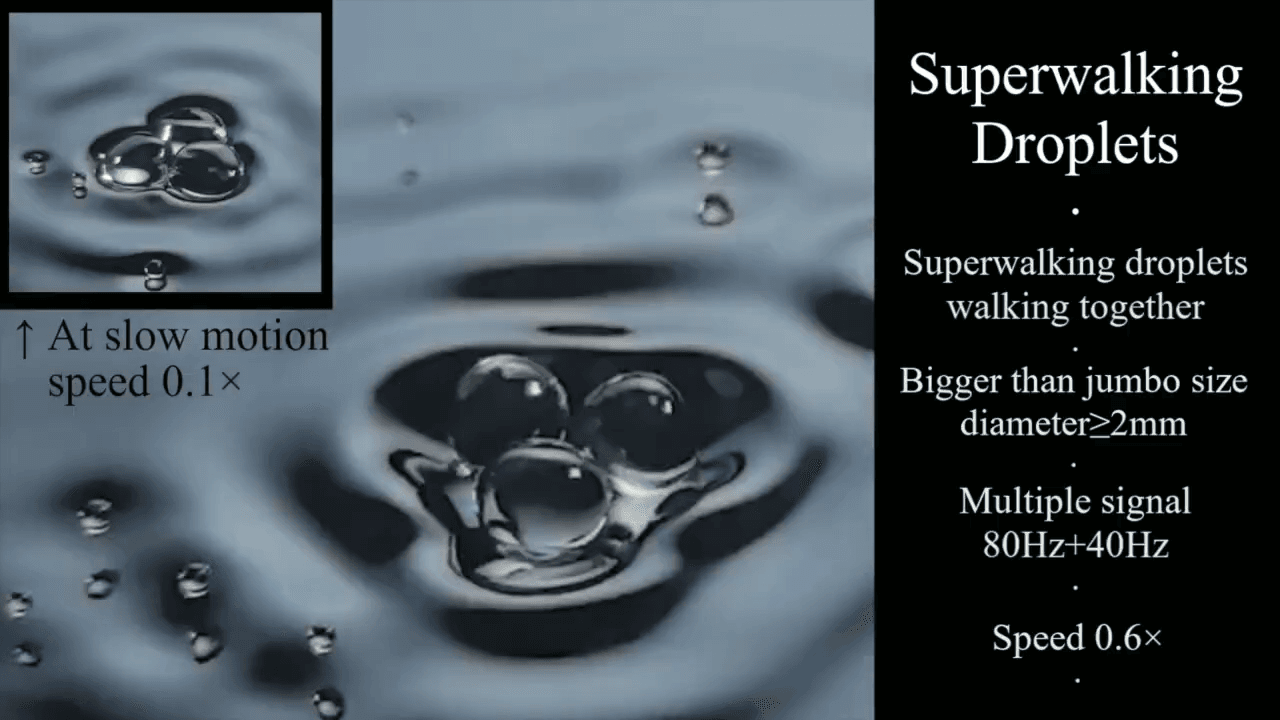
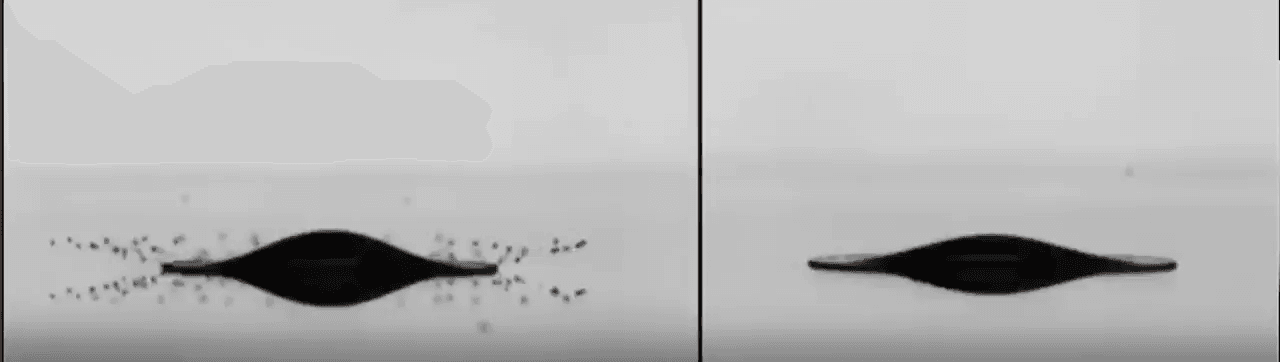
When placed on a vibrating oil bath, droplets have many wild behaviors, some of which mirror quantum mechanics. Even big droplets — bigger than 2 millimeters in diameter — can get in on the fun. This video shows several of these “jumbo superwalkers” in action, both singly and in groups. (Video and image credit: Y. Li and R. Valani; via GFM)
When droplets flow through a forest of microfluidic posts, they can deform around the obstacle or break up into smaller droplets. Here, researchers explore the factors that control the outcome, as well as when droplets collide, coalesce, and mix. (Video and image credit: D. Meer et al.)
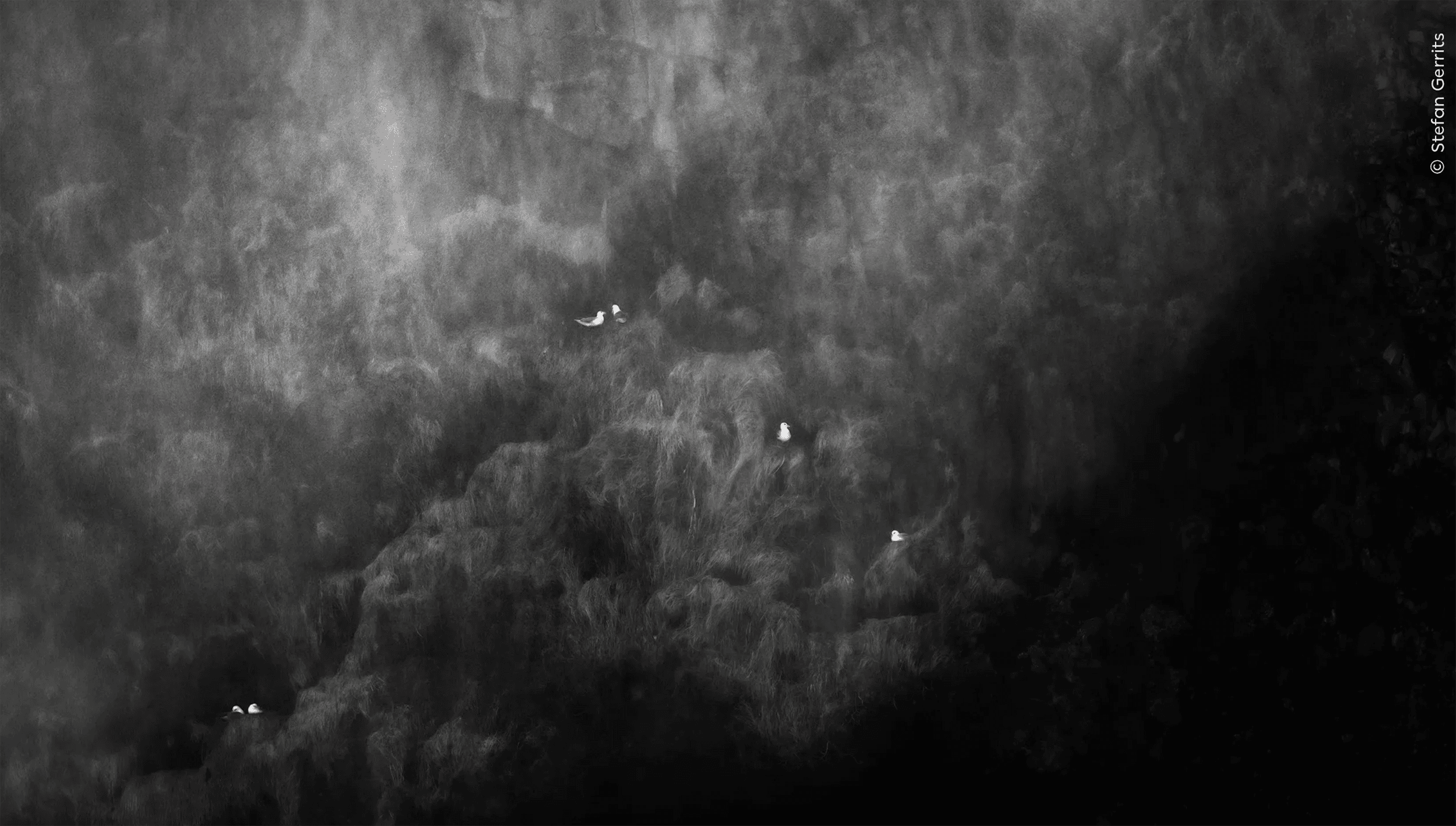
Strong winds blew curtains of mist across Skógafoss in this image of nesting northern fulmars by photographer Stefan Gerrits. Despite water’s high density compared to air, fine droplets are able to stay aloft for long periods, given the right breeze. Mists, fogs, and sea spray can float surprising distances; droplets exhaled from our lungs can persist even farther. (Image credit: S. Gerrits; via Colossal)
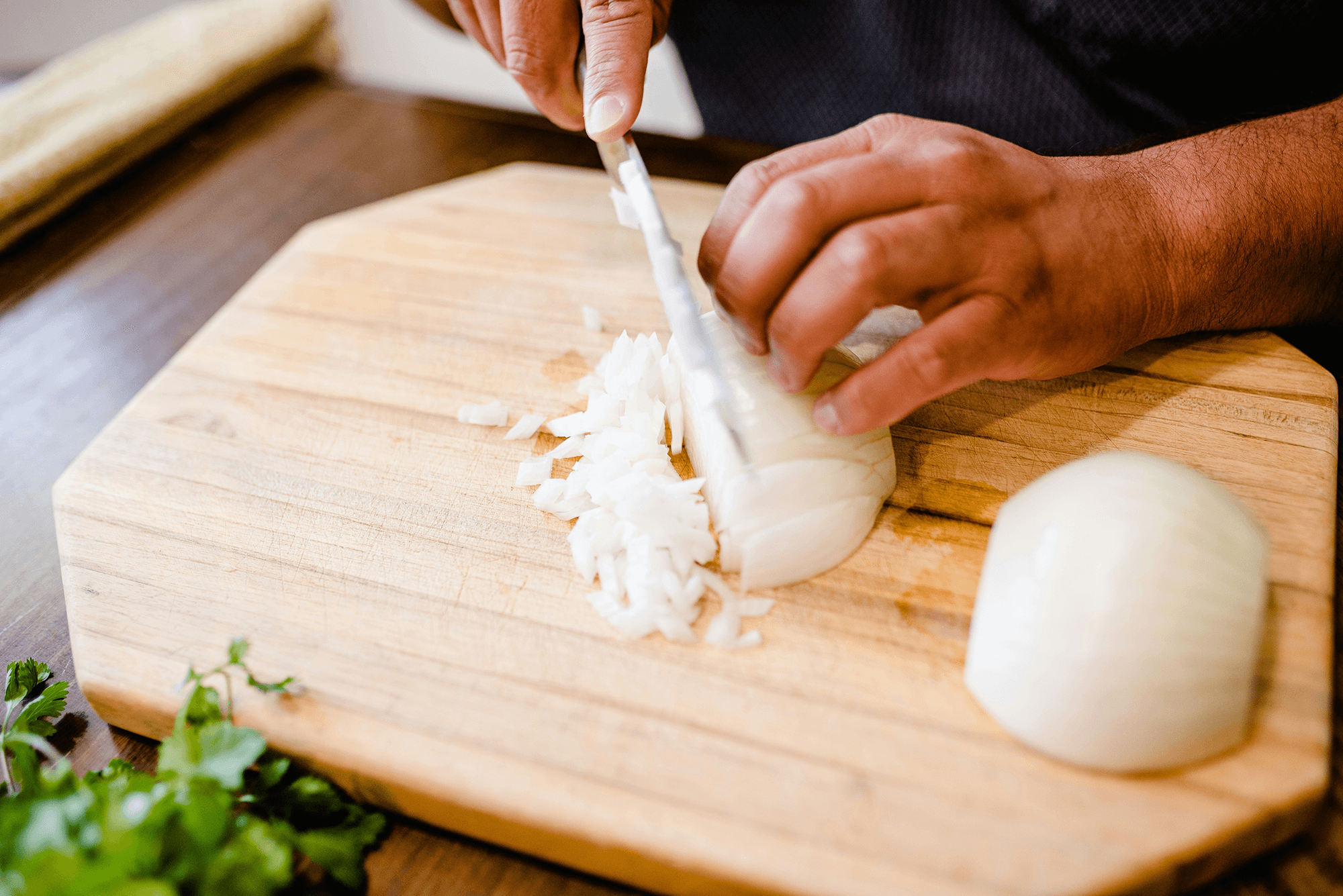
Onions are a well-known source of tears for many a cook. And while the chemical source of their power–onions release a chemical that reacts in our eyes to produce tears–has been known for years, no one has looked at the fluid dynamics in the process until now.
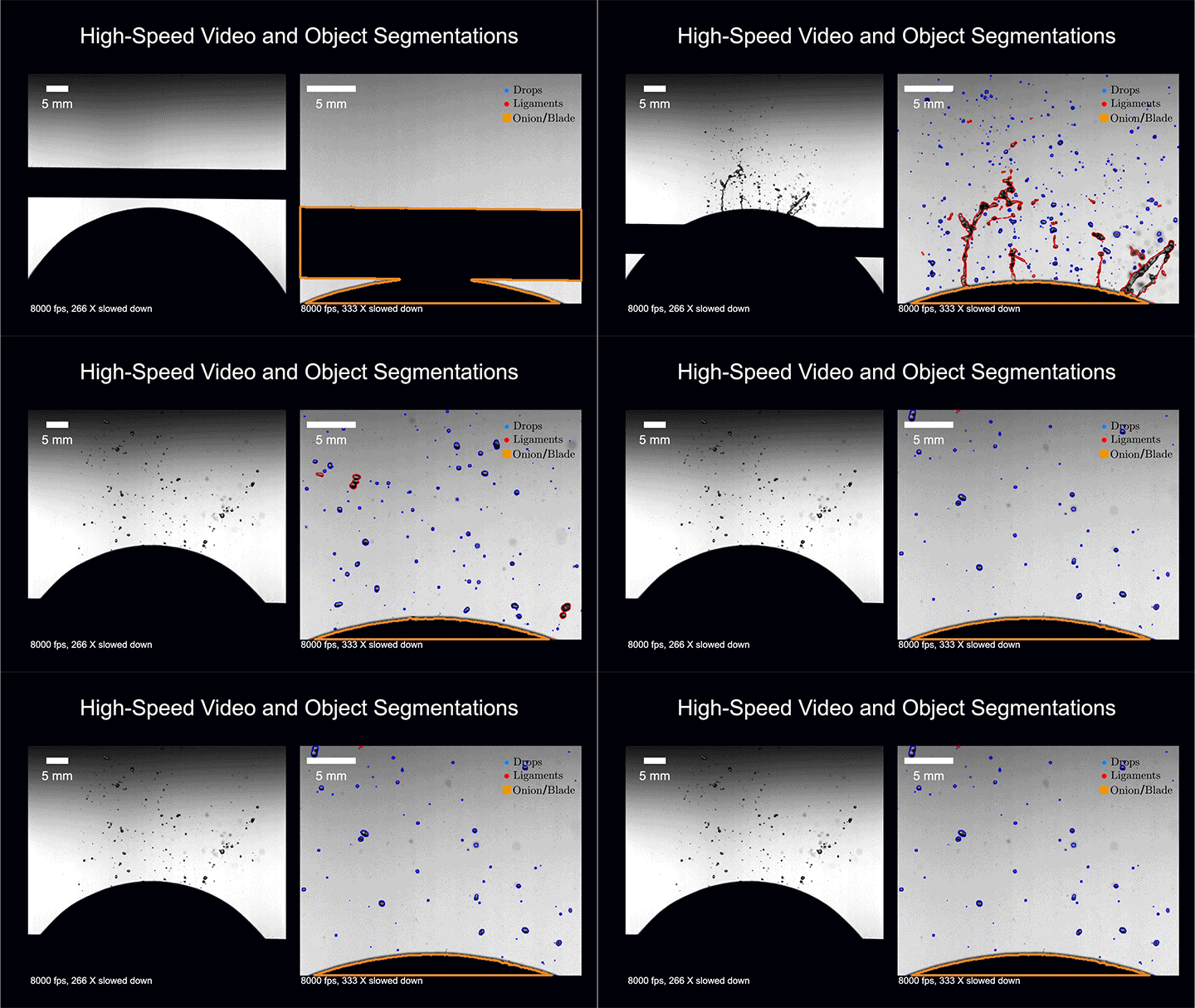
As seen above, a knife piercing the onion’s surface releases a mist of high-speed droplets, followed by a slower spray. Much like a citrus fruit’s microsprays, the onion’s fountain depends on both solid and fluid mechanics. As the knife presses into the onion’s stiffer outer layer, pressure builds in the softer layer underneath, which contains pores of fluid. Once the knife breaks the epidermis, that pressurized fluid sprays out.
The good news is that the team also confirmed a common culinary wisdom: using a sharper knife and a slower, gentler cut will reduce the spray and its speed, resulting in fewer tears. (Image credit: M. Stone; research credit: Z. Wu et al.)
Beautiful colors, subtle flows, and sudden fractals animate Thomas Blanchard’s “Sensations,” which, like his other short films, is entirely CGI-free. It’s a lovely exploration of droplets, liquid lenses, Marangoni effects, and fingering instabilities. (Video and image credit: T. Blanchard)
Droplets of a gallium alloy are liquid at room temperature. When spiked with aluminum grains and immersed in a solution of NaOH, the droplets change shape and move in a random fashion. This video delves into the phenomenon, describing how a chemical reaction with the aluminum grains changes the local surface tension and creates Marangoni flows that make the droplets move. To get the droplet motion, you need to have the aluminum concentration just right. With too little, there’s not enough Marangoni flow. With too much, the hydrogen gas produced in the chemical reaction disrupts the droplet motion. (Video and image credit: N. Kim)
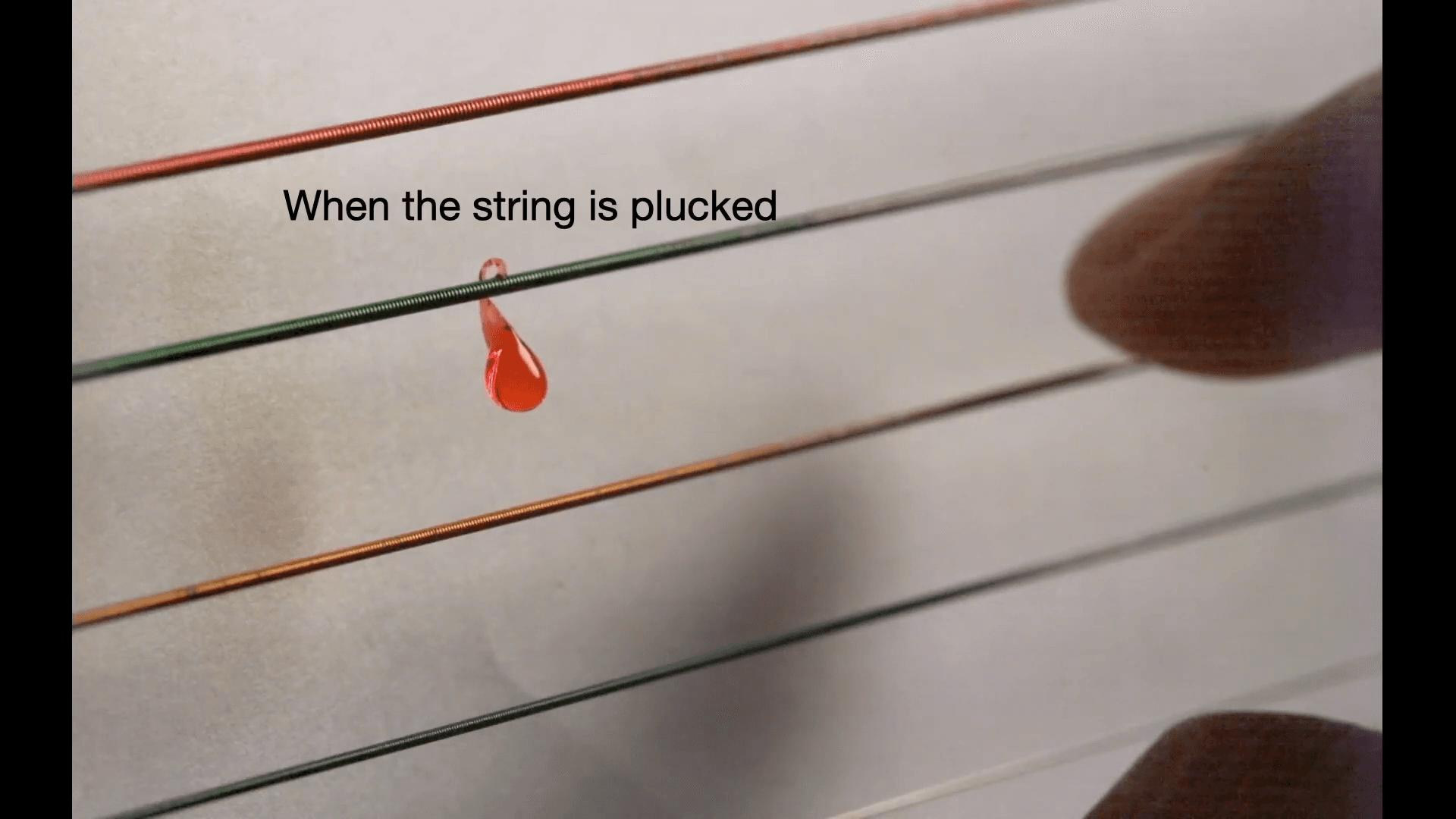
What happens to a droplet hanging on a wire when the wire gets plucked? That’s the fundamental question behind this video, which shows the effects of wire speed, viscosity, and viscoelasticity on a drop’s detachment. With lovely high-speed video and close-up views, you get to appreciate even subtle differences between each drop. Capillary waves, viscoelastic waves, and Plateau-Rayleigh instabilities abound! (Video and image credit: D. Maity et al.)
Getting caught in the rain is annoying for us but has the potential to be deadly for smaller creatures like insects. So how do they survive a deluge? First, they don’t resist a raindrop, and second, they have the kinds of surfaces water likes to roll or bounce off. The key to this second ability is micro- and nanoscale roughness. Surfaces like butterfly wings, water strider feet, and leaf surfaces contain lots of tiny gaps where air gets caught. Water’s cohesion — its attraction to itself — is large enough that water drops won’t squeeze into these tiny spaces. Instead, like the ball it resembles, a water drop slides or bounces away. (Video and image credit: Be Smart)
When a droplet falls on a surface, it spreads itself horizontally into a thin lamella. Sometimes — depending on factors like viscosity, impact speed, and air pressure — that drop splashes, breaking up along its edge into myriad smaller droplets. But a new study finds that a small electrical charge is enough to suppress a drop’s splash, as seen below.
The drop’s electrical charge builds up along the drop’s surface, providing an attraction that acts somewhat like surface tension. As a result, charged drops don’t lift off the surface as much and they spread less overall; both factors inhibit splashing.* The effect could increase our control of droplets in ink jet printing, allowing for higher resolution printing. (Image and research credit: F. Yu et al.; via APS News)
*Note that this only works for non-conductive surfaces. If the surface is electrically conductive, the charge simply dissipates, allowing the splash to occur as normal.
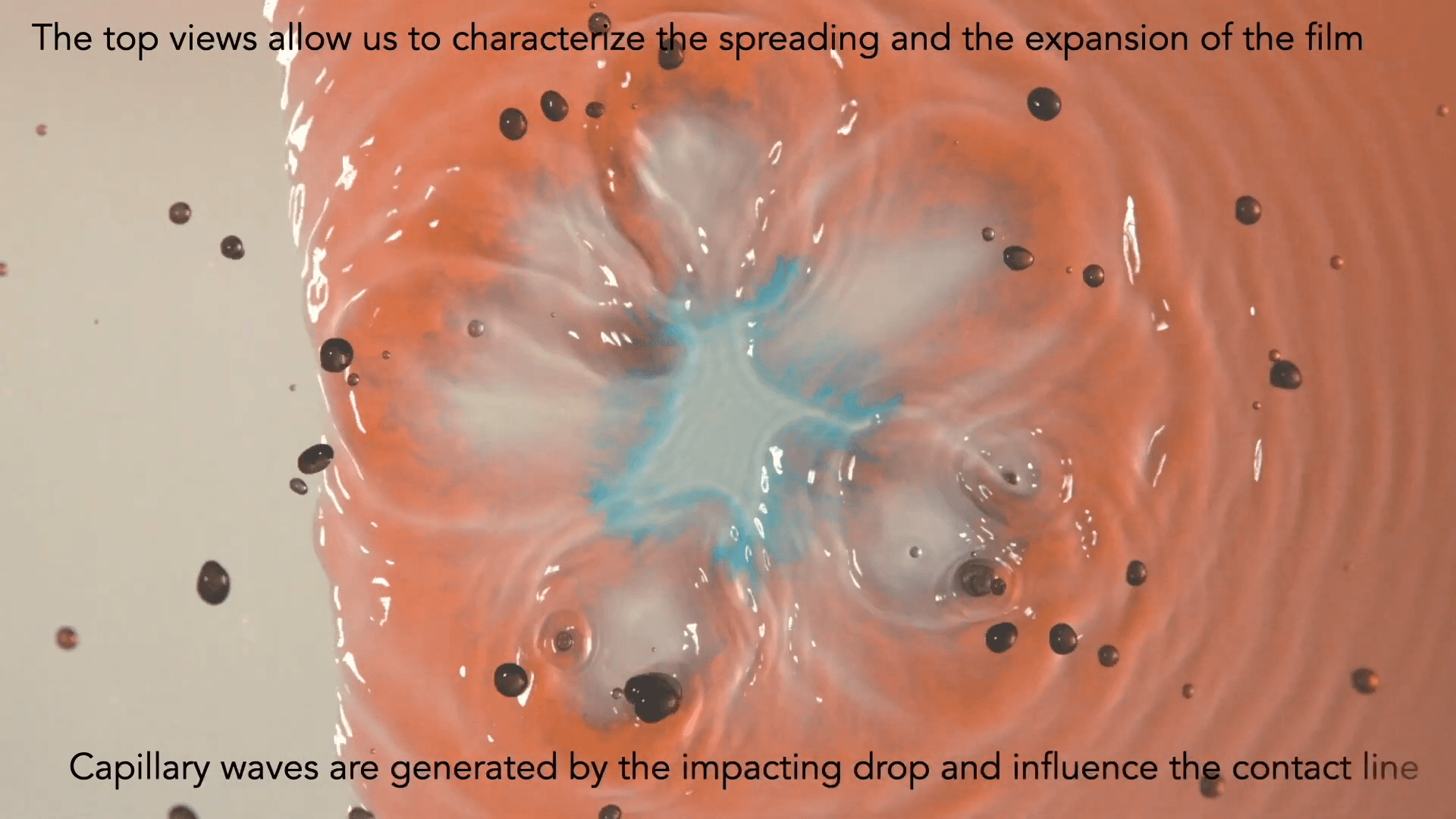
Drops impacting a dry hydrophilic surface flatten into a film. Drops that impact a wet film throw up a crown-shaped splash. But what happens when a drop hits the edge of a wet surface? That’s the situation explored in this video, where blue-dyed drops interact with a red-dyed film. From every angle, the impact is complex — sending up partial crown splashes, generating capillary waves that shift the contact line, and chaotically mixing the drop and film’s liquids. (Video and image credit: A. Sauret et al.)