Tag: condensation

  • Aircraft Contrails

    [original media no longer available]

    Under the right atmospheric conditions, condensation can form, even at low speeds, as moist air is accelerated over airplane wings. This acceleration causes a local drop in pressure and temperature, which can cause water vapor in the air to condense. The condensation can sometimes get pulled into the wingtip vortices shed off of the wings, tail, and ailerons of an aircraft, as in the video above, making the aerodynamics of the airplane visible to the naked eye.

  • Hurricane Irene

    Hurricane Irene

    This August 25th satellite image shows Hurricane Irene over the Bahamas and Florida. Hurricanes are fueled largely by the release of heat as warm water vapor in the rising air condenses. The hurricane requires a body of warm water to sustain the process, which is why hurricanes weaken drastically after they make landfall. Over open water, the heat released by condensation fuels higher winds, which lowers the pressure at the center of the system and helps increase the rate of evaporation near the ocean surface, providing additional warm vapor for future condensation. See more photos of Irene from space, along with video from the ISS#

  • STS-135: The Final Shuttle Flight

    STS-135: The Final Shuttle Flight

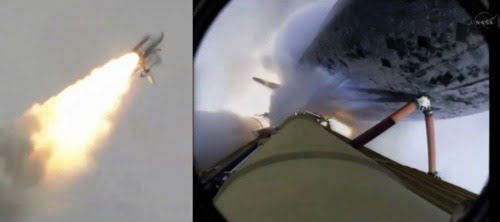
    Condensation clouds form around sections of Atlantis as STS-135–the final space shuttle flight–launches from Cape Canaveral this morning. These clouds, also called Prandtl-Glauert singularities or vapor cones, form at transonic speeds when air accelerates around the vehicle. The area just behind these shock waves experiences a drop in pressure and temperature that brings a localized portion of the flow below the dew point. Rapid condensation of the moisture in the air results. Miss the launch? Watch it here.