Tag: bubble

  • Ocean Bubbles Capture Carbon

    Ocean Bubbles Capture Carbon

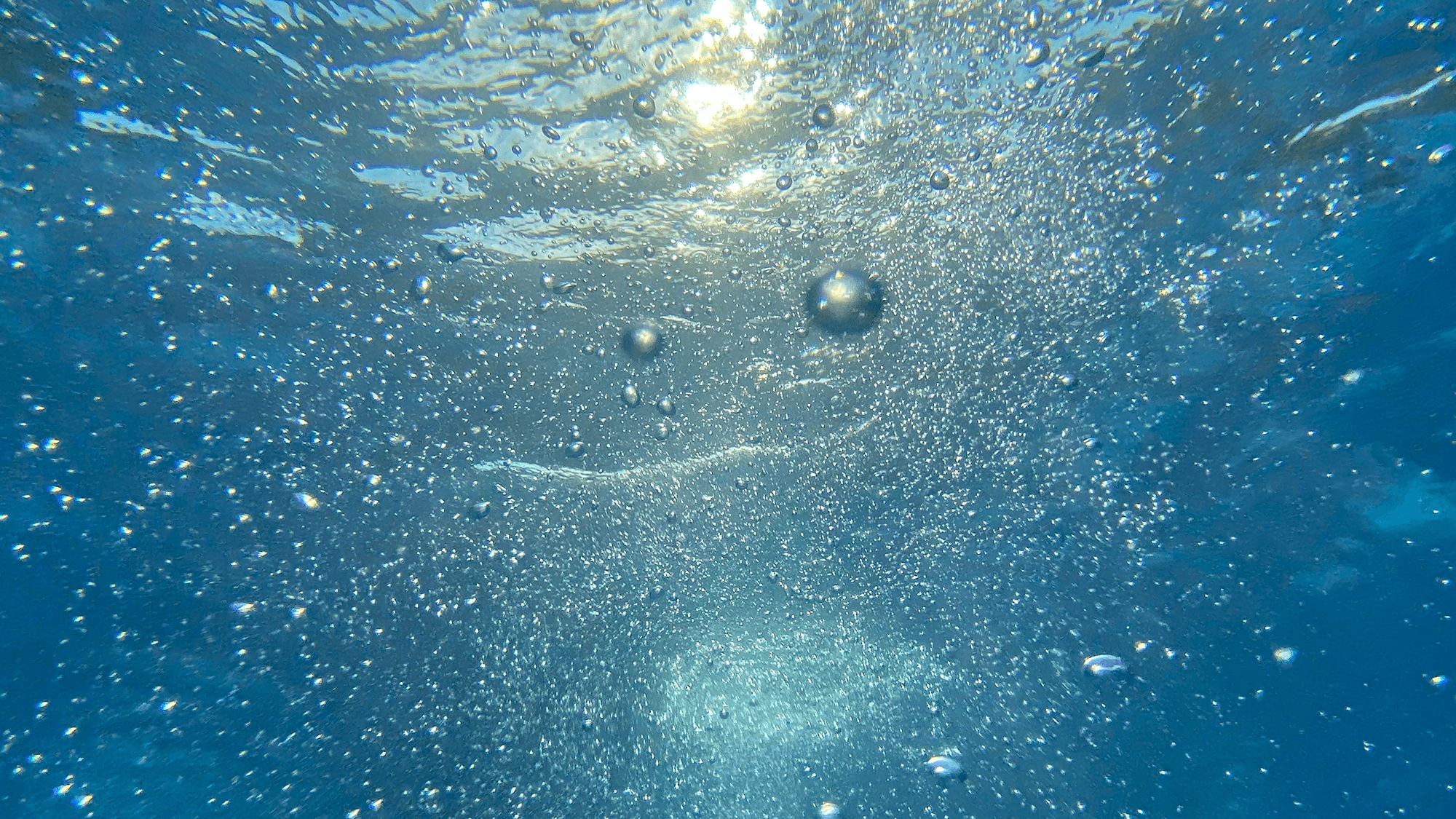
    As humanity pumps carbon dioxide into the atmosphere, the ocean absorbs about a quarter of it. This exchange happens largely through bubbles created by breaking waves. When waves grow large enough to break, their crests curl over and crash down, trapping air beneath them. The turbulence of the upper ocean can push these buoyant bubbles meters under the surface, where the gases inside them dissolve into the surrounding water. This is how the ocean gets the oxygen used by marine animals, but it’s also how it gathers up carbon dioxide.

    Current climate models often approximate this process using only the wind speed, but a recent study took matters a step further by modeling wave breaking and bubble generation, too. While they found a global carbon uptake that was similar to existing models, the researchers found their breaking wave model showed more variability in where carbon gets stored. For example, more carbon got absorbed in the southern hemisphere, where oceans are consistently rougher, than in the northern hemisphere, where large landmasses shelter the oceans. (Image credit: J. Kernwein; research credit: P. Rustogi et al.; via Eos)


    Fediverse Reactions
  • Bubbling Up

    Bubbling Up

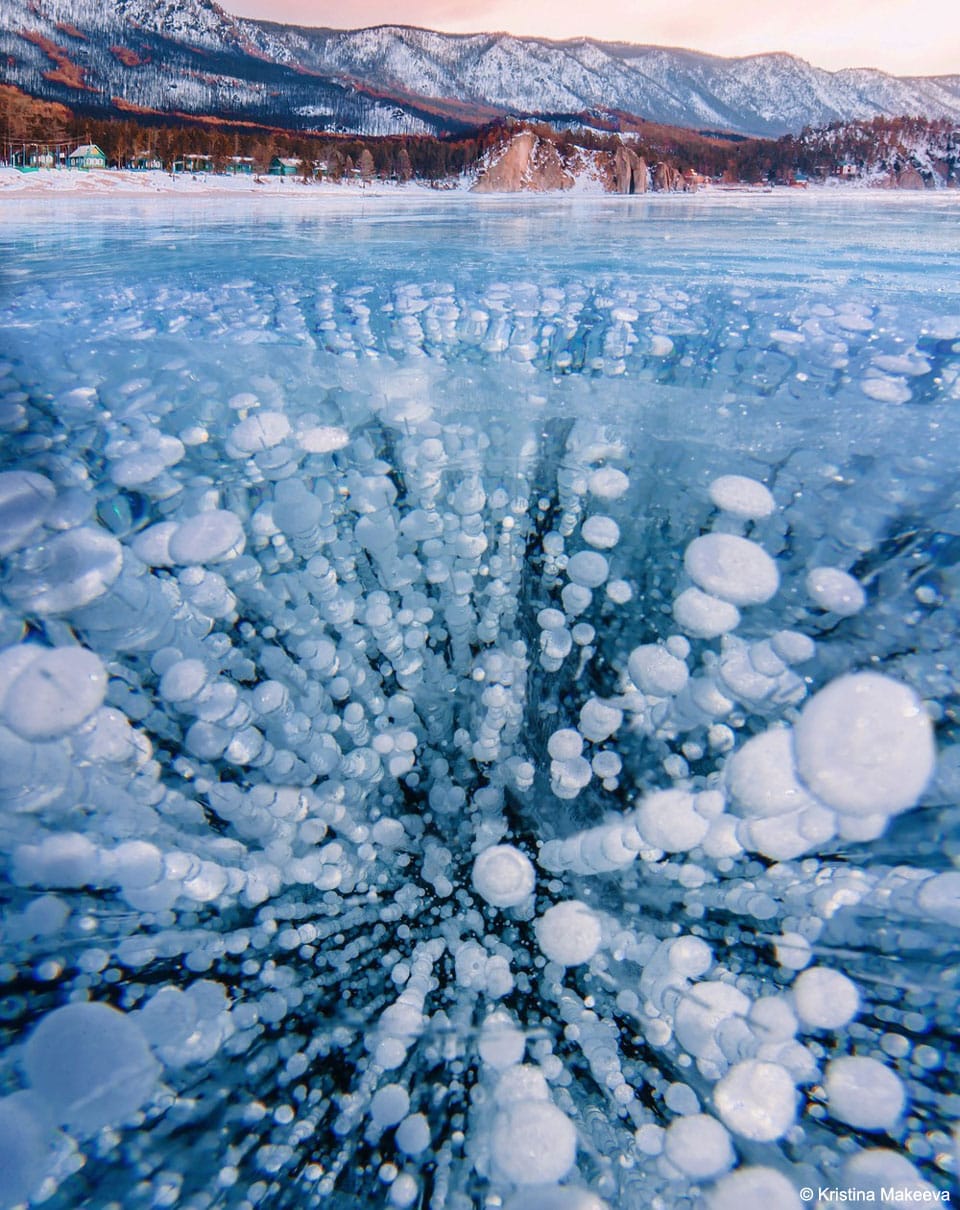
    By volume, Lake Baikal is the world’s largest lake, holding over 20% of the planet’s fresh water. It’s also a major carbon sink, holding large amounts of methane. That’s the gas trapped in the frozen bubbles seen here. Baikal’s ice is exceptionally clear, making long trails of frozen bubbles visible during the winter. (Image credit: K. Makeeva; via APOD)

    Fediverse Reactions
  • Geyser Sculptures

    Geyser Sculptures

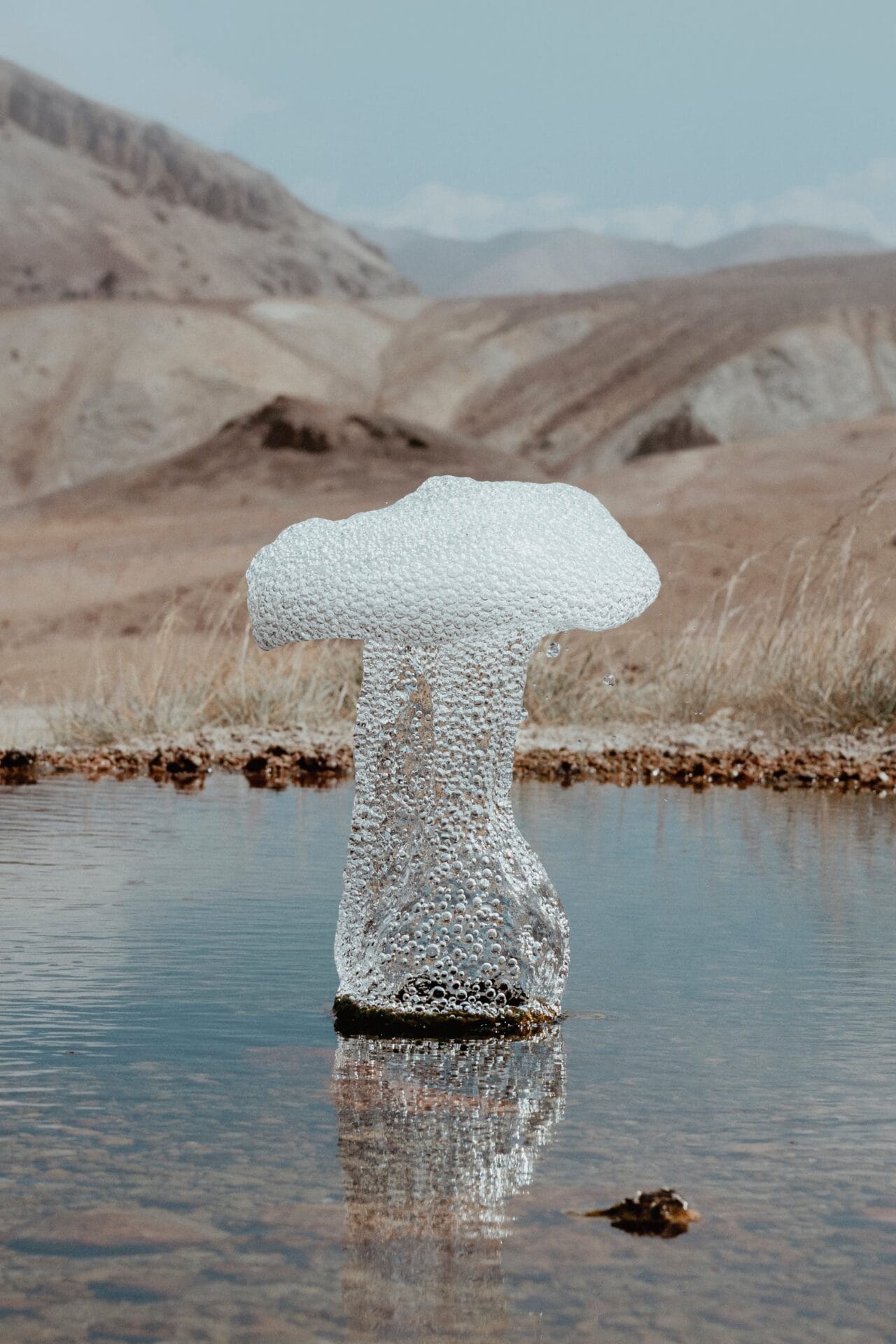
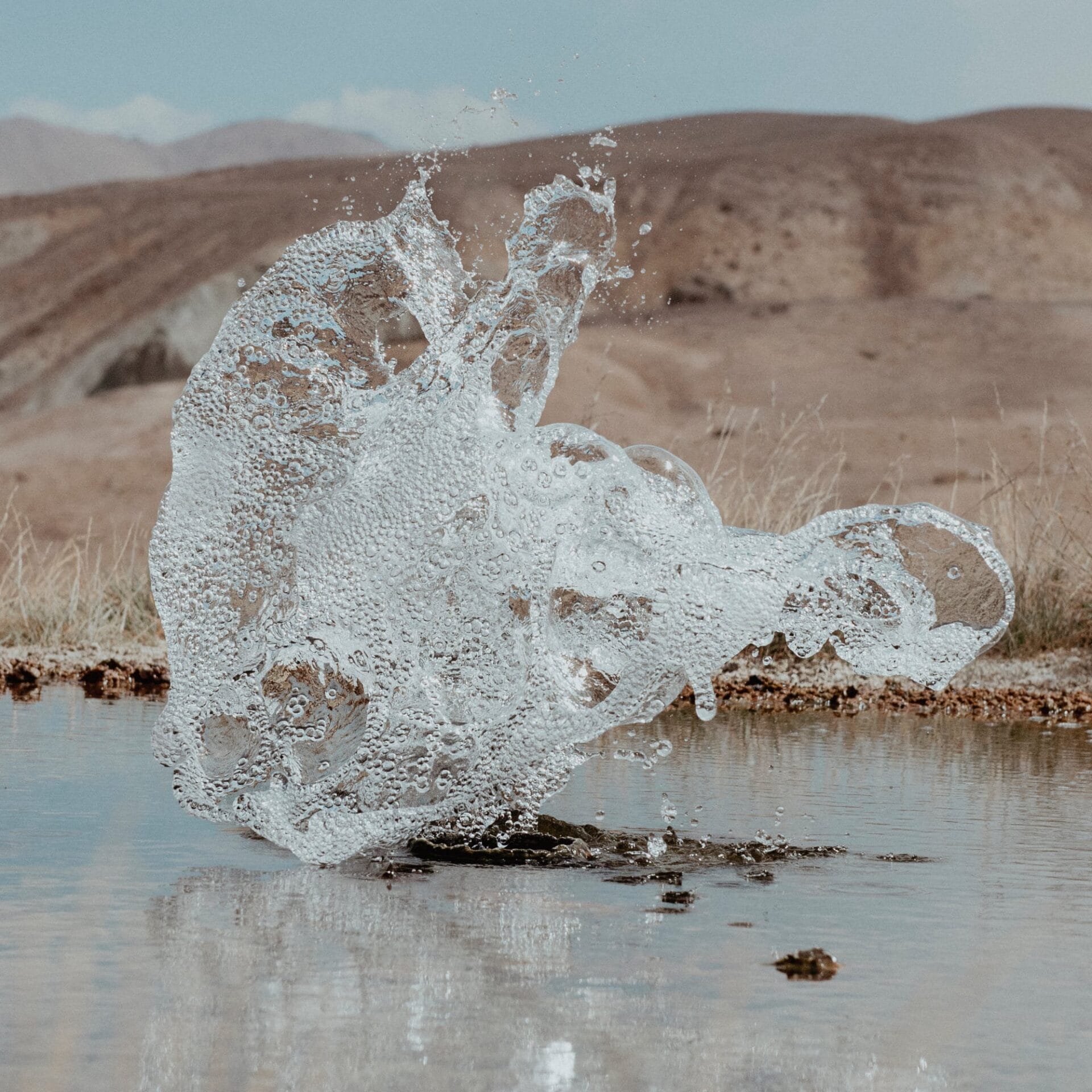
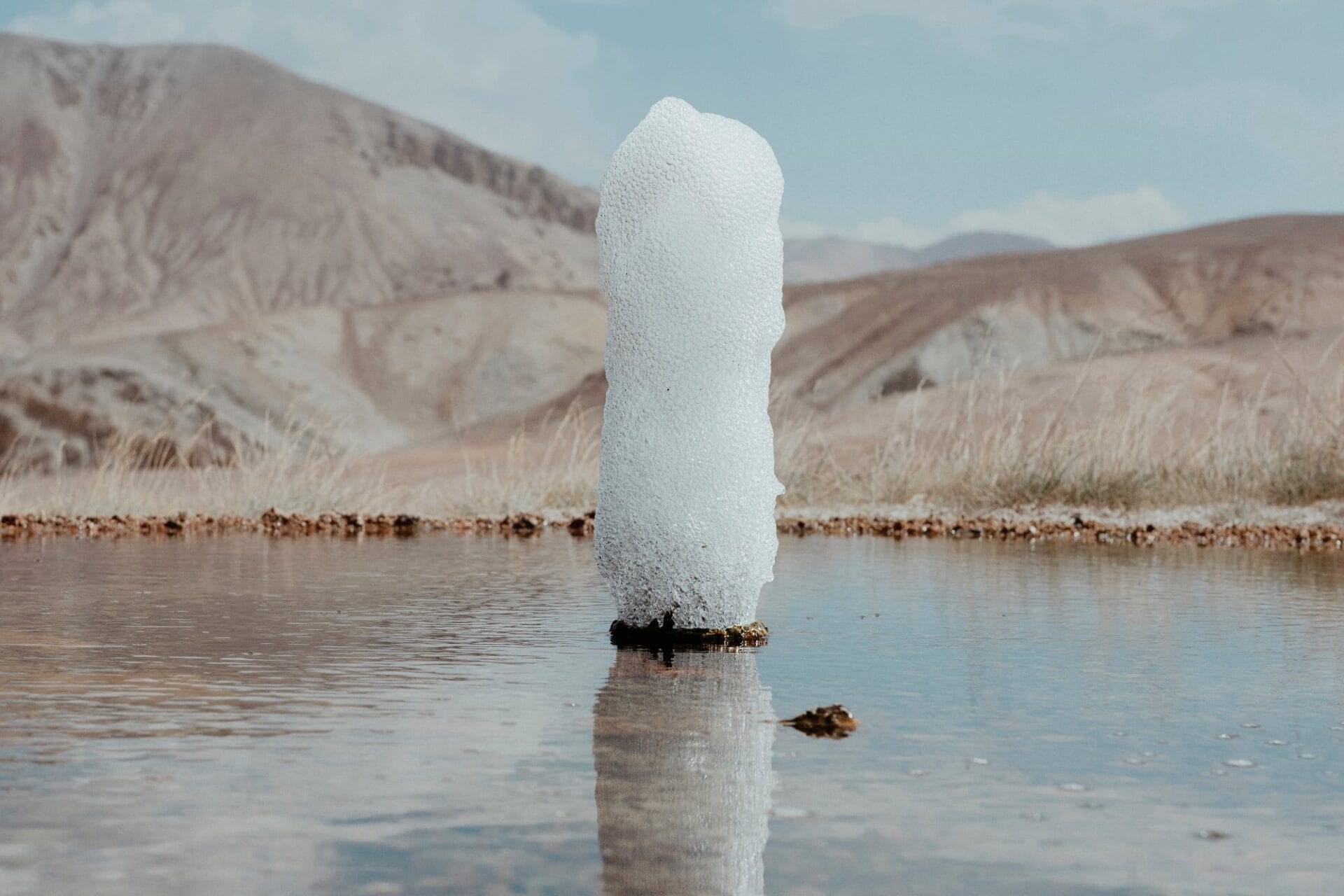
    In the remote landscape of Tajikistan, photographer Øystein Sture Aspelund discovered a small geyser near a high-altitude lake. With a fast shutter, he “froze” the shapes of the eruption, capturing bubbly columns, mushrooms, and splashes. I love the sense of texture here. Aspelund’s photographs really highlight the difference between a geyser and an artificial fountain: bubbles. Geysers erupt because of the buildup of steam and pressure in their underground plumbing. Those bubbles are the signature of that process. (Image credit: Ø. Aspelund; via Colossal)

  • Why Sea Foams

    Why Sea Foams

    Seawater froths and foams in ways that freshwater rarely does. A new study pinpoints the ocean’s electrolytes as the reason bubbles resist merging there. By studying the final moments before bubbles coalesce in both pure and salt water, researchers found that dissolved salts slow down the drainage of the thin film of liquid between two bubbles. Once the film reaches a 30-50 nanometer thickness, its electrolyte concentration causes a difference in surface tension that slows the outward flow of liquid in the film. That keeps the film in place longer and makes bubbles form foams instead of merging or popping. (Image credit: P. Kuzovkova; research credit: B. Liu et al.; via APS Physics)

  • Featured Video Play Icon

    Scuba-Diving Fly

    Mono Lake, three times saltier than the ocean, is an extreme environment by any measure. But for the alkali fly, it’s home. This extremophile insect dives into the lake, protected by a bubble sheath, to eat and lay eggs. The fly’s wings and body are covered in tiny, waxed hairs that repel water. That traps a bubble of air around the insect, allowing it to breathe. Fresh oxygen can diffuse into the bubble from the water, replenishing the supply. (Image and video credit: Deep Look)

  • Breaking Up

    Breaking Up

    The dripping of a faucet and the break-up of a jet into droplets is universal. That means that the forces – the inertia of the fluid, the capillary forces governed by surface tension, and the viscous dissipation – balance in such a way that the initial conditions of the jet – its size, speed, etc. – don’t matter to the process of break-up. 

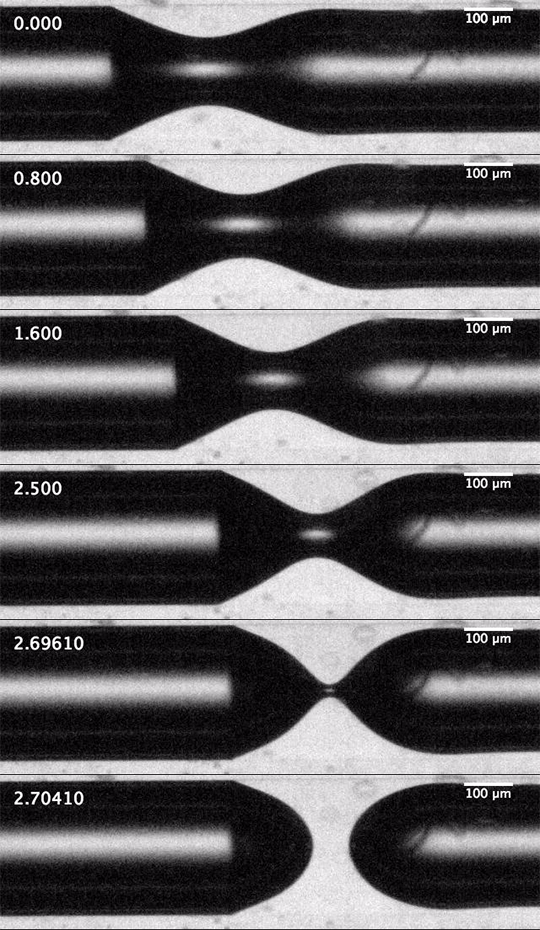
    We’d expect that the inverse situation – the breakup of a gas into bubbles in a liquid – would be similarly universal, but it’s not. When unconfined bubbles pinch off, the way they do so is heavily influenced by initial conditions. But that changes, according to a new study, if you confine the gas to a liquid-filled tube before pinch-off. Confinement forces a different balance between viscous and capillary effects, one which effectively erases the initial conditions of the flow and restores universality to the pinch-off process. (Image and research credit: A. Pahlavan et al.; via phys.org)

  • Boiling Water in Oil

    Boiling Water in Oil

    Most people know that throwing water into hot oil is a bad idea. But, as dramatic as the results can be, the boiling of a water droplet submerged in oil is remarkably beautiful, as seen in the animations above. The initial water droplet expands as it shifts from liquid to vapor (top). At a critical volume, the expansion occurs explosively (middle), causing the bubble to overexpand relative to the pressure of the surrounding fluid. The higher pressure of the oil around it collapses the drop, which then re-expands, creating the cycle we see in the final two animations. This oscillation triggers a Rayleigh-Taylor type instability along the bubble’s interface, causing the surface corrugations observed. The vapor bubble will continue to rise through the oil, eventually breaking the surface and scattering hot oil droplets.  (Image credits: R. Zenit, source)