Tag: art

  • Pollock Avoided Coiling

    Pollock Avoided Coiling

    Streaks of black and gray in the Jackson Pollack painting the researchers studied.

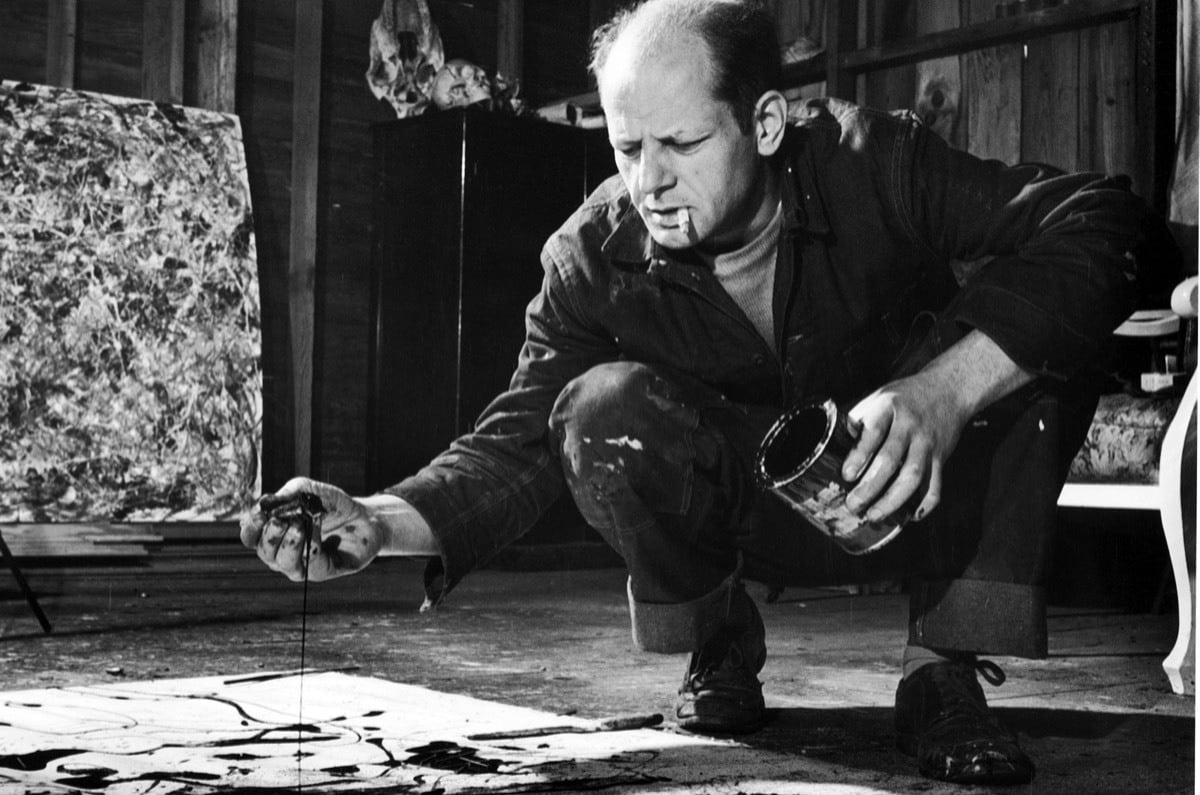
    Artists are often empirical masters of fluid dynamics, as they must be to achieve the effects they want. Jackson Pollock was particularly known for his so-called dripping technique, in which he dropped filaments of paint from brushes, cans, and even syringes as he moved around a horizontal canvas. (Scientifically speaking, this wasn’t really dripping since the paint wasn’t breaking up into droplets for the most part, but that’s another story.)

    What Pollock was doing, fluid dynamically speaking, is the subject of a new study. Researchers analyzed historical footage of Pollock painting to measure the typical heights from which he dropped paint and the speed at which he moved. Then they built their own apparatus to mimic the painting style with modern paints and study the flow regime Pollock’s technique falls into. 

    Since much of the paint falls in a steady stream, like syrup falling onto pancakes, the researchers wondered whether the paint was likely to coil the way other viscous fluids do. What they found, however, is that Pollock’s choice of height and speed when applying paint seems deliberately designed to avoid the coiling instability. That fact suggests that art historians might identify forged paintings in part from the presence of too much coiling among the paint filaments. (Image credits: photo – M. Holmes/LIFE, painting – J. Pollock; research credit: B. Palacios et al; via Ars Technica; submitted by Kam-Yung Soh)
  • “Muses”

    “Muses”

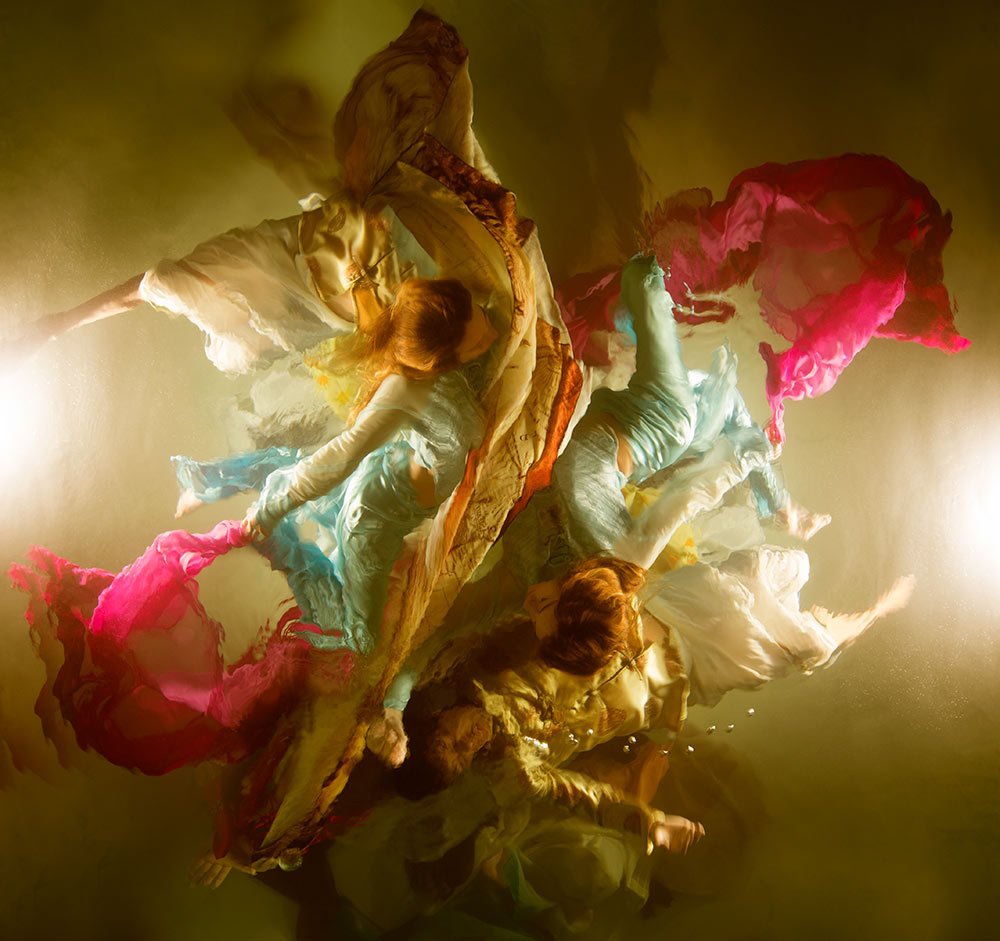
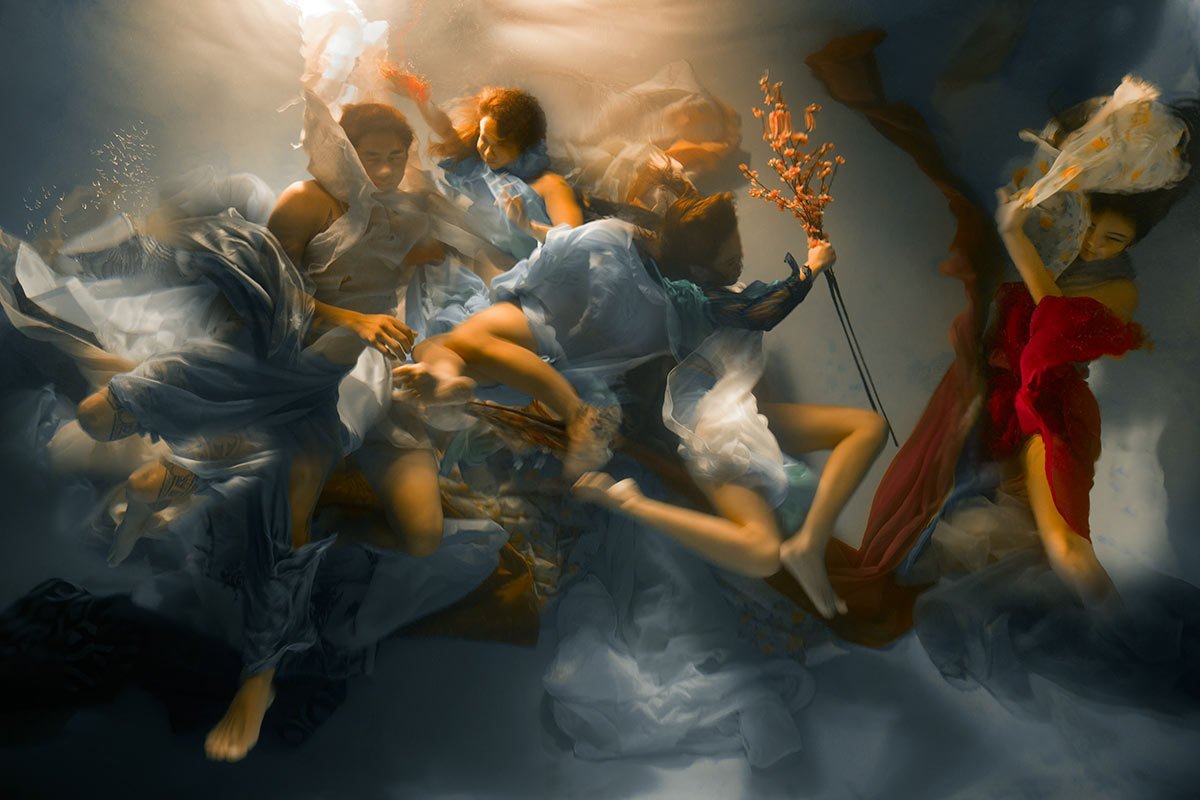
    What looks like Baroque paintings are, in fact, underwater photographs in Christy Lee Rogers’ new “Muses” series. By photographing her models underwater at night, Rogers creates a unique, almost dream-like atmosphere that owes its effect to the interplay of light and water. The billowing fabric and chaotic motion come from the water itself, and the dramatic lighting relies on the reflection and refraction going on between the water and its surface. (Image credit: C. Rogers; via Colossal)

  • Accidental Painting

    Accidental Painting

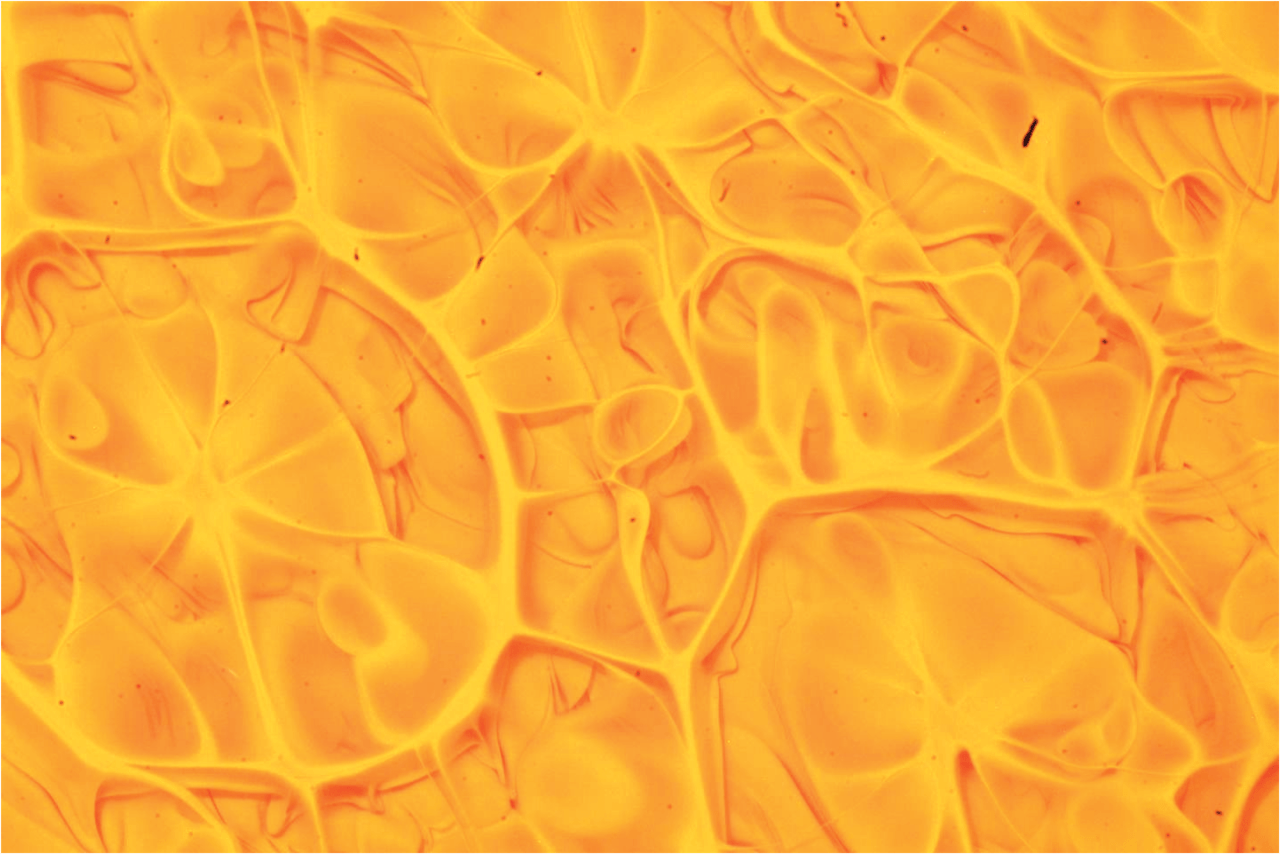
    Some paintings of Mexican artist David Alfaro Siqueiros feature patchy, spotted areas of contrasting color formed by what Siqueiros described as “accidental painting”. Many modern artists use this technique as well. By pouring thin layers of two different colors atop one other, Siqueiros was able to generate seemingly spontaneous patterns like those shown above. In fact, what Siqueiros was using was a density-driven fluid instability! These patterns will only appear when a denser paint is poured atop a lighter one. They’re the result of a Rayleigh-Taylor instability – the same behavior that makes beautiful swirls of cream in coffee and the finger-like protrusions seen in supernovae.

    Although a density difference is necessary to generate accidental painting, other factors like the paint layer’s thickness and viscosity affect the final pattern. For those who are mathematically-inclined, this paper has a linear stability analysis that shows how density difference, viscosity, and other factors affect the cell sizes in the pattern. (Image and research credits: S. Zetina et al.; GIF source)

  • Featured Video Play Icon

    “Kingdom of Colours”

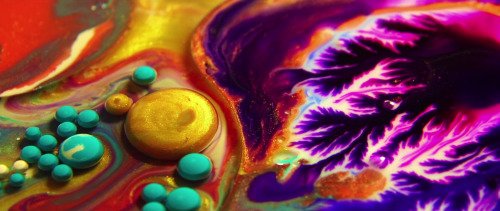
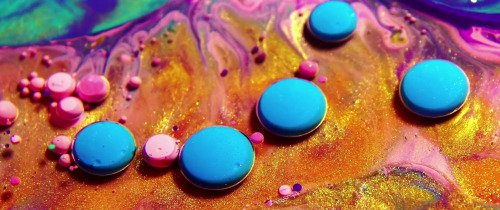
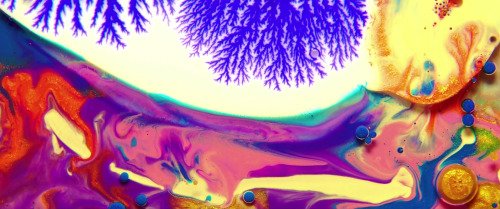
    Oil, paint, and soap combine to create a polychrome landscape in Thomas Blanchard’s “Kingdom of Colours” short film. Colorful droplets of paint coated in oil form anti-bubbles that skim along the liquid surface until they burst, dispersing new colors. One of my favorite touches in this video, though, are the branching fingers of color that appear repeatedly (most often in blue-violet). This is an example of a phenomenon known as the Saffman-Taylor instability. It’s a hallmark of a low viscosity fluid pushing into a higher viscosity one–like air into honey. (Image/video credit: T. Blanchard; via Flow Vis)

  • Featured Video Play Icon

    Paint Spilling Physics

    There is a remarkable amount of physics contained in art. In this video, scientists from The Splash Lab explore some of the physics involved in pouring paint atop a rectangular post. The spreading paint transforms its shape repeatedly, and, at the corners of the post, it preserves a tiny history of all the colors poured. Paint sliding down the sides shifts from a thin sheet to a thicker jet that deposits color in waves. For tall posts, the distance the paint falls is long enough for instabilities to set in, producing a paint puddle that’s riddled with curves and waves between each color of paint. It’s a lovely reminder of the complexity inherent even within a simple action. (Video credit: R. Hurd et al.)

  • Featured Video Play Icon

    Paper Marbling

    Fluid dynamics and art have gone hand-in-hand for centuries. In this video, artist Garip Ay demonstrates one of the coolest fluids-based art techniques: paper marbling. In this technique, artists float ink or paints on a liquid surface, manipulate the colors as desired–in this case to recreate Van Gogh’s “Starry Night”–and then float a piece of paper atop the surface to transfer the image. Multiple cultures around the world developed marbling techniques, dating all the way back to the Middle Ages. Ay is an expert in ebru, a Turkish form of the art. For more of Ay’s art, check out his website and YouTube channel. (Video credit: G. Ay; via Gizmodo)

  • Foggy Flows

    Foggy Flows

    The transparency of air makes it easy to overlook its fluid nature. In this National Geographic Travel Photographer of the Year entry, photographer Thierry Bornier captures the early morning view from China’s Yellow Mountain. Foggy clouds flow around and over nearby mountain peaks, like water flowing over rocks in a stream. To see other, similar effects, check out these timelapse videos of fog in the Grand Canyon and clouds around San Francisco. (Image credit: T. Bornier; via Colossal)

  • Featured Video Play Icon

    Webcast Teaser Reel

    Saturday I topped off a week of water-walking physics by holding a webcast with Professor Tadd Truscott and PhD student Randy Hurd of The Splash Lab. We had an absolutely blast talking about skipping balls, aesthetics and art, sailing, STEM outreach, and much more. The video above is a short teaser for the webcast – you can watch the full hour here. There are demos, a lab tour, and even a chance to learn about how I do FYFD. If you’d like to see or take part in future webcasts, you can do so by becoming an FYFD patron! (Video credit: FYFD)

  • Psychedelic Cymatics

    Psychedelic Cymatics

    image

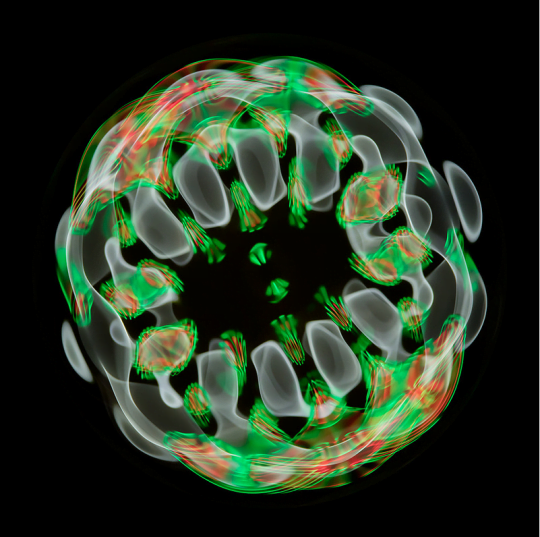
    Cymatics are the visualization of vibration and sound. Here photographer Linden Gledhill has taken a simple speaker vibrating a dish of water and turned it into some incredible art. When you vibrate liquids like water up and down, it disturbs the usually flat air-water interface and creates waves on the surface. These Faraday waves are a standing wave pattern that differs depending on which sound is being played. By combining the wave patterns with LED lighting and strobe effects, Gledhill creates some remarkable images that combine sound, light, and fluid dynamics all in one. If you watch the video (make sure to hit the HD button!), you’ll see the patterns in motion and hear the sounds used to generate them. In the last clip (around 0:19), he’s added glitter to the set-up, which highlights the circulation within the vibrating fluid. As you can see, there are strong recirculating regions in each lobe of the pattern, but other areas, like the center region are almost entirely stationary. You can see more photos from the project in his Flickr feed. Special thanks to Linden for letting me post the video of his work, too! (Video and image cred

    its and submission: L. Gledhill)

    If you enjoy FYFD, please consider becoming a patron to help make sure the Internet keeps getting its daily dose of fluid dynamics!

  • Featured Video Play Icon

    “Cymatic Sun”

    “Cymatic Sun” from artist Lachlan Turczan uses vibrating fluids to generate mesmerizing and surreal visuals. At some points distinct Faraday waves are visible on the surface. At other times, there is simply a blur of motion and refracted light. Check out my “fluids as art” tag for many more great examples of fluid dynamics and art merging. (Video credit and submission: L. Turczan)