Tag: 2021gofm

  • Featured Video Play Icon

    Morphing Particle Rafts

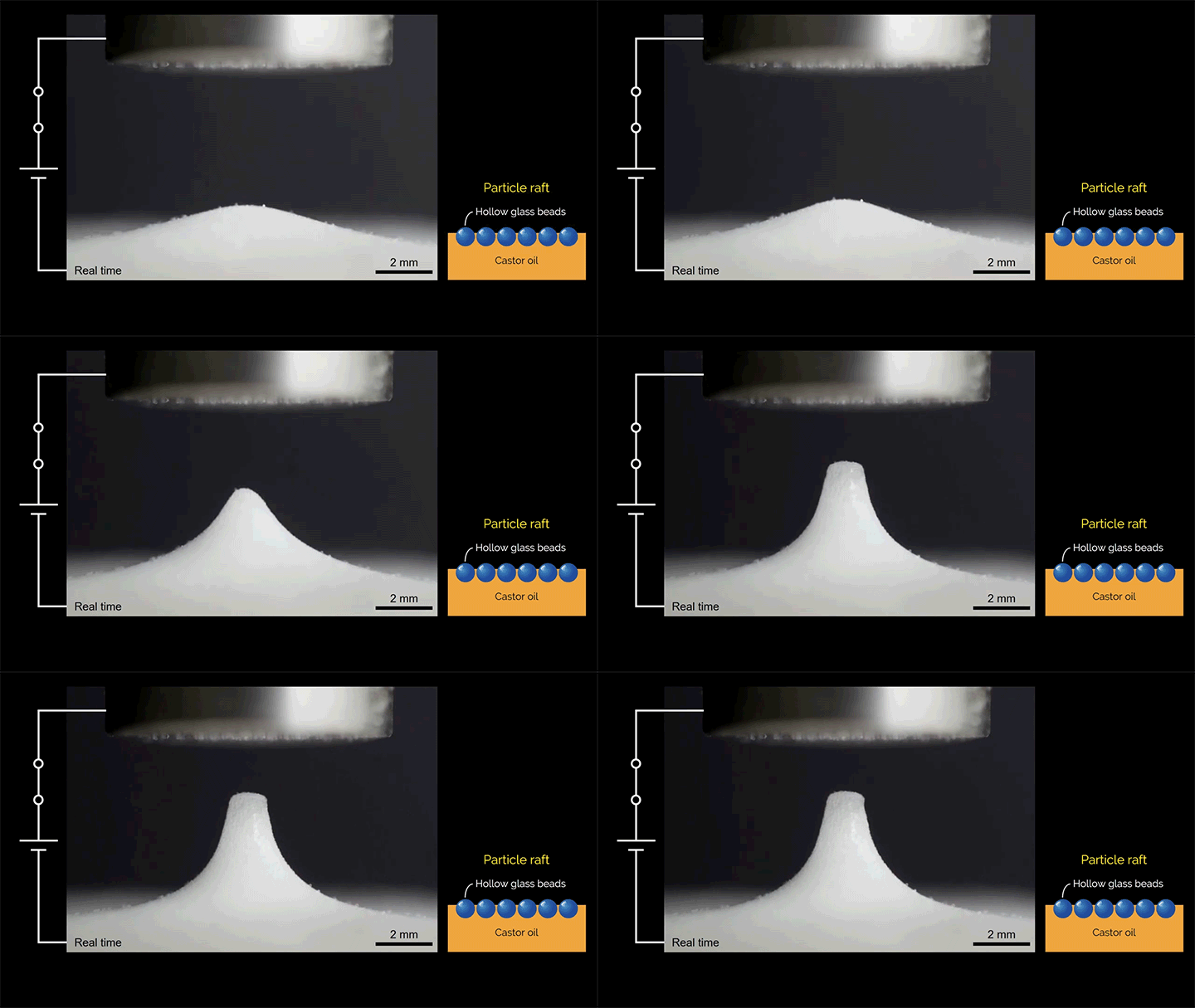
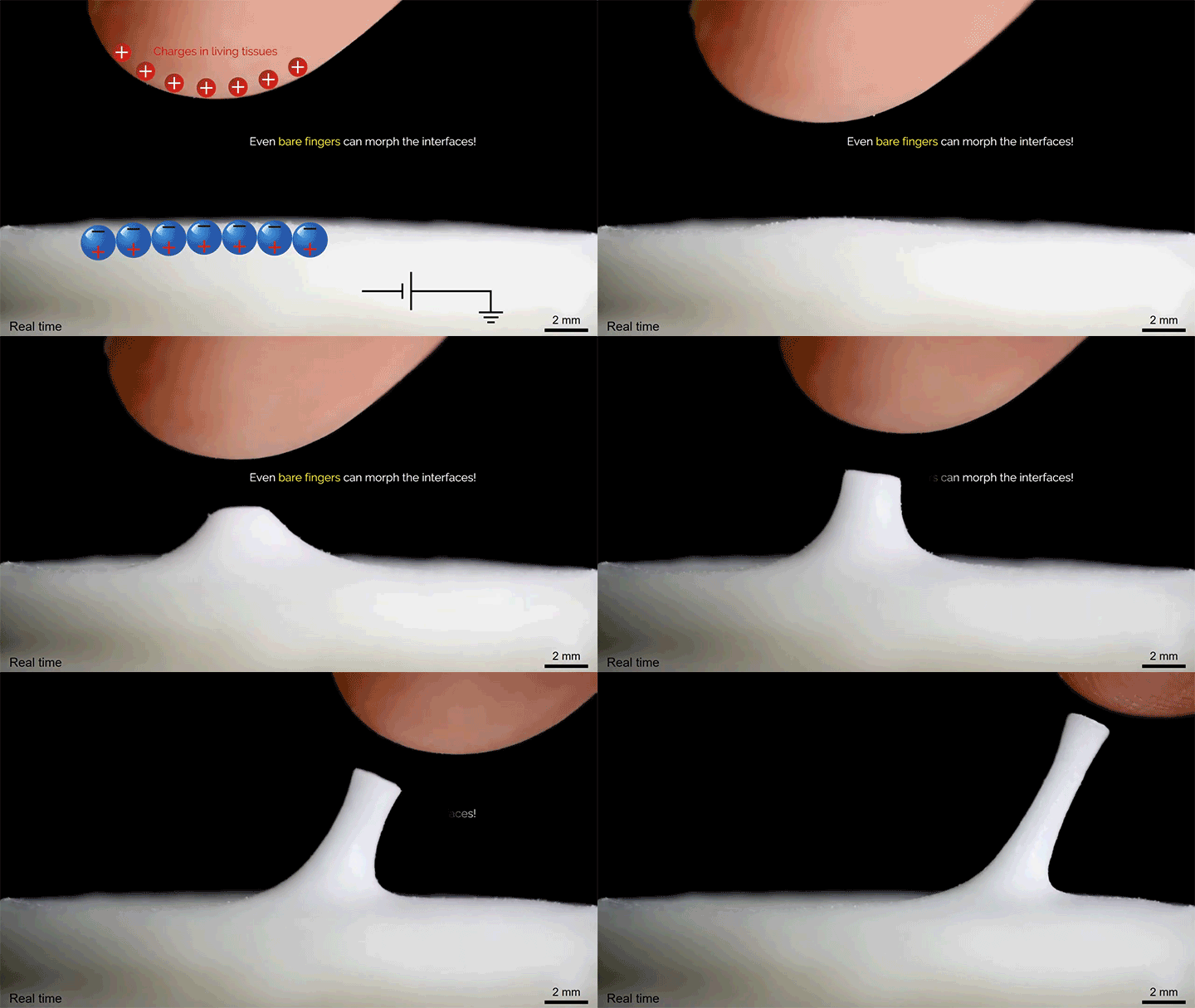
    A layer of tiny glass beads sitting atop a pool of castor oil becomes a morphing surface in this video. Applying an electric field creates enough electrostatic force to draw the interface upward against the power of both gravity and surface tension. Moving the electric field — either by shifting the electrode or simply moving a finger over the surface — is enough to pull columns of fluid along! I could imagine this making some very cool human-machine interfaces one day. (Image and video credit: K. Sun et al.)

  • Featured Video Play Icon

    Vortex Arms

    A fixed cylinder will shed alternating vortices in its wake, but one allowed to oscillate forward and backward in the flow instead sheds simultaneous vortices. The shape of the wake still depends on the flow’s velocity. At low flow speeds, the two vortices are the same size when they shed. At higher velocities, the two vortices still shed simultaneously, but one will be large while the other is small. The larger vortex moves faster and travels downstream, but the smaller, slower vortex drifts inward. In the next shedding cycle, the small and large vortices switch positions, creating alternating symmetric shedding. (Image and video credit: P. Boersma et al.)

  • Featured Video Play Icon

    Backflipping Bubbles

    Rising bubbles can backflip when they impact a tilted surface. As shown in this video, small bubbles will bounce off a titled surface, with each hop leading the bubble further up the incline. For slightly larger bubbles, though, things get a little more complicated. The bubble impacts the surface, bounces away, then circles back and makes its second impact behind the first before moving further up the plate. What drives this backflip? The researchers found that circulation around these bubbles is asymmetric, generating a lift force that drives the bubble’s backflip. (Image and video credit: A. Hooshanginejad et al.)

  • Featured Video Play Icon

    Acrylic Paint Fractals

    Here’s a simple fluids experiment you can try at home using acrylic paints, ink, isopropyl alcohol and a few other ingredients. When dropped onto diluted acrylic paint, a mixture of black ink and alcohol spreads in a fractal fingering pattern. The radial (outward) flow is driven by the alcohol’s evaporation, which increases the local surface tension and draws fluid outward. The shape and density of the fingers depends, at least in part, on the viscosity of the underlying paint layer; more viscous paint layers grow smaller and denser fractal patterns. (Image and video credit: S. Chan et al.)

  • Featured Video Play Icon

    The Yarning Droplet

    Marangoni bursting takes place in alcohol-water droplets; as the alcohol evaporates, surface tension changes across the liquid surface, generating a flow that tears the original drop into smaller droplets. Here researchers add a twist to the experiment using PMMA, an additive that dissolves well in alcohol but poorly in water. As the alcohol evaporates, the PMMA precipitates back out of the water-rich droplet, forming yarn-like strands. (Image and video credit: C. Seyfert and A. Marin)

  • Cracking Droplets

    Cracking Droplets

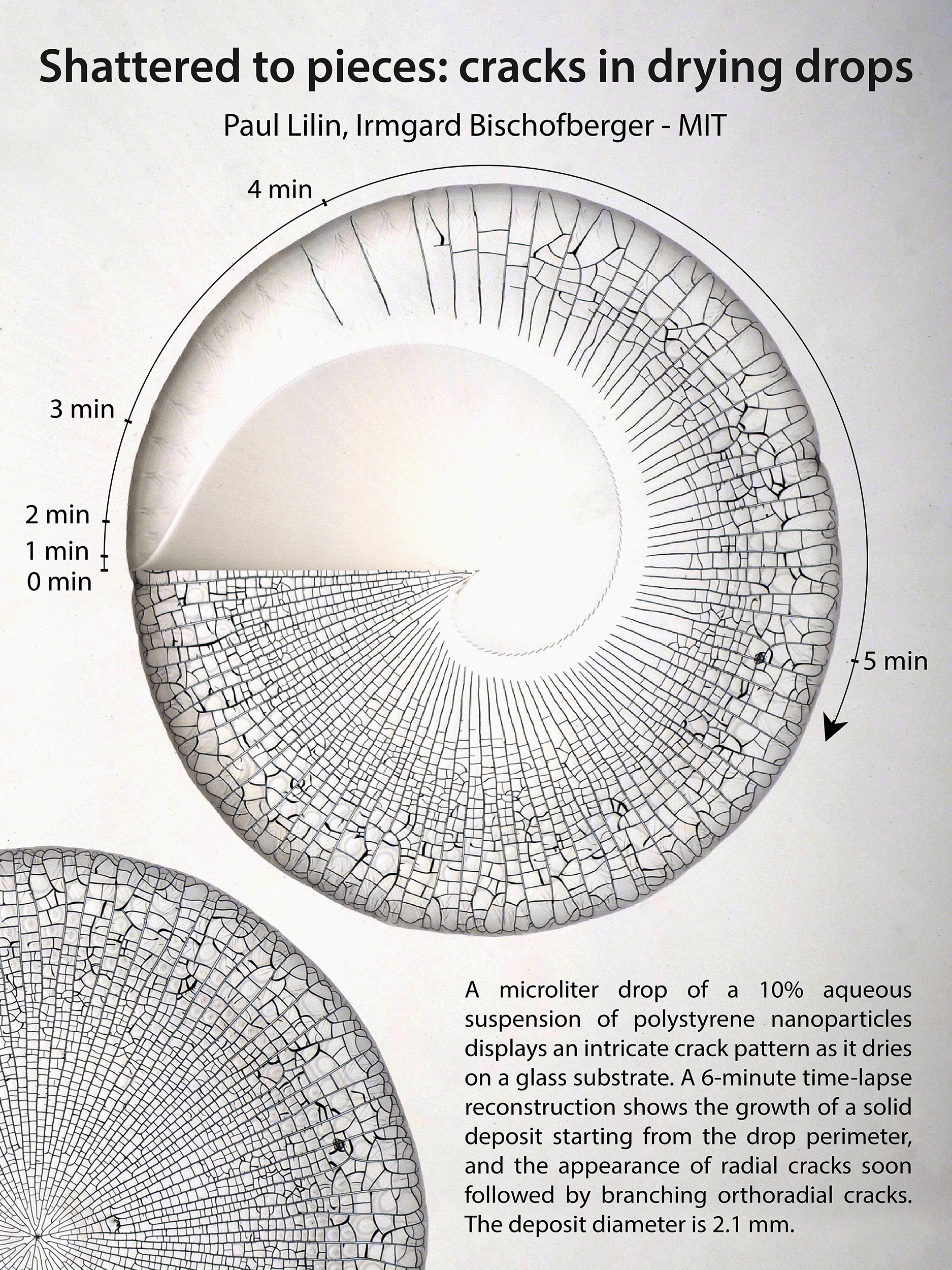
    Droplets infused with particles — like coffee — can leave complex stains once they evaporate. Here researchers show the complex cracking pattern that develops as a droplet with nanoparticles evaporates. The central image in the poster actually shows the drop’s pattern changing in time. The initial drop is shown at 9 o’clock, and as you move clockwise around the drop, time passes and the crack structure becomes more complex. What a neat way to visualize the changes! (Image and research credit: P. Lilin and I. Bischofberger)

  • Featured Video Play Icon

    Cavitation-Induced Microjets

    In cavitation, tiny bubbles of vapor form and collapse in a liquid, often sending shock waves ricocheting. In most occurrences beyond the lab, cavitation bubbles aren’t a solo act; many bubbles can form and interact. This video takes a look at some of the effects of those interactions. When close together, two cavitation bubbles can act to focus the flow during collapse, generating a microjet strong enough to penetrate into nearby surfaces. Researchers hope this technique may one day be used for needle-free injections. (Image, video, and submission credit: A. Mishra et al.)

  • Featured Video Play Icon

    Breaking Compound Ligaments

    When pulled, viscous liquids stretch into ligaments that thin and then break into droplets. In this video, researchers investigate how these ligaments break up, depending on their composition. The initial views show the break-up of a water-glycerol ligament (Image 1) and an oil ligament (Image 2). By placing a water droplet inside oil, the researchers got quite different results, including oil-encapsulated droplets (Image 3). The technique could be useful for making compound droplets, even with more than two components. (Image and video credit: V. Thiévenaz and A. Sauret)