Category: Reader Questions

  • Reader Question: Winglets

    Reader Question: Winglets

    Reader tvargo writes:

    First off… love your blog! I know very little about physics, but love reading about it. Could you potentially explain what the little upturned ends of wings do? looking on wikipedia is see this: “There are several types of wingtip devices, and although they function in different manners, the intended effect is always to reduce the aircraft’s drag by partial recovery of the tip vortex energy.” huh?

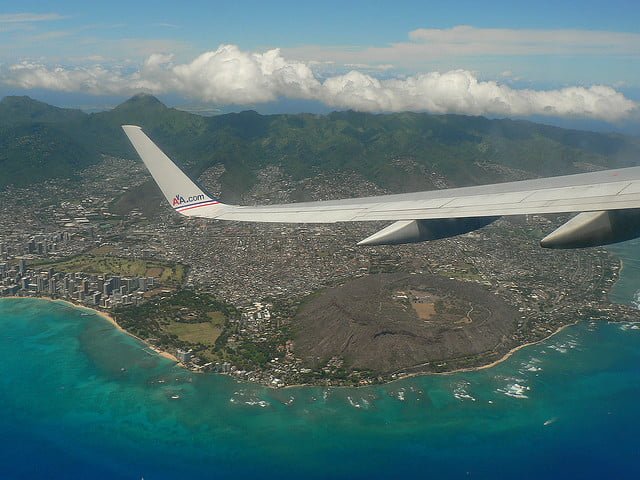
    Thanks! That’s a great question. Winglets are very common, especially on commercial airliners. To understand what they do, it’s helpful to first think about a winglet-less airplane wing. Each section of the wing produces lift. For a uniform, infinite wing, the lift produced at each spanwise location would be the same. In reality, though, wings are finite and wingtip vortices at their ends distort the flow. The vortices’ upward flow around the ends of the wing reduces the lift produced at the wing’s outermost sections, making the finite wing less efficient (though obviously more practical) than an infinite wing.

    Adding a winglet modifies the end conditions, both by redirecting the wingtip vortices away from the underside of the wing and by reducing the strength of the vortex. Both actions cause the winglet-equipped wing to produce more lift near the outboard ends than a wing without winglets.

    But why, you might ask, does the Wikipedia explanation talk about reducing drag? Since a finite wing produces less lift than an infinite one, finite wings must be flown at a higher angle of attack to produce equivalent lift. Increasing the angle of attack also increases drag on the wing. (If you’ve ever stuck a tilted hand out a car window at speed, then you’re familiar with this effect.) Because the winglet recovers some of the lift that would otherwise be lost, it allows the wing to be flown at a lower angle of attack, thereby reducing the drag. Thus, overall, adding winglets improves a wing’s efficiency. (Photo credit: C. Castro)

  • Reader Question: Rib Vortices

    Reader Question: Rib Vortices

    Reader tarastarr1 asks:

    For the (awesome) wave gif and explanation, I think the asker was wondering about that little branch-like projection you can see in the top-middle part of the gif right after the camera submerges. Your explanation of the wave is great, but now I’m also wondering: if the wave is so powerful, how can that little jet form?

    I think you’re probably right about the original question. I actually didn’t even notice that tiny vortex until after the post went up today! I think the little vortex is probably similar to the rib vortices I referenced at the end of the last post. If there happened to be some small localized rotation in the water initially, the wave’s passage would stretch it out. Stretching a vortex causes it to spin faster, exactly the way that an ice skater pulling her arms in causes her to spin faster – conservation of angular momentum! In that situation, the wave’s passage actually strengthens the vortex rather than destroying it.

  • Reader Question: Wave Vortex

    Reader Question: Wave Vortex

    Reader unquietcode asks:

    I saw this post recently and it made me wonder what’s going on. If you look in the upper right of the frame as the camera submerges, you can see a little vortex of water whirring about. Even with the awesome power of the wave rolling forward a little tornado of water seems able to stably form. Any idea what causes this phenomenon?

    This awesome clip was taken from John John Florence’s “& Again” surf video. What you’re seeing is the vortex motion of a plunging breaking wave. As ocean waves approach the shore, the water depth decreases, which amplifies the wave’s height. When the wave reaches a critical height, it breaks and begins to lose its energy to turbulence. There are multiple kinds of breaking waves, but plungers are the classic surfer’s wave. These waves become steep enough that the top of the wave  overturns and plunges into the water ahead of the wave. This generates the vortex-like tube you see in the animation. Such waves can produce complicated three-dimensional vortex structures like those seen in this video by Clark Little. Any initial variation in the main vortex gets stretched as the wave rolls on, and this spins up and strengthens the rib vortices seen wrapped around the primary vortex. (Source video: B. Kueny and J. Florence)

  • Reader Question: Fractals and Turbulence

    Reader Question: Fractals and Turbulence

    Reader 3d-time asks:

    Hi, there is a guy, at my college, who is doing a master’s degree thesis in turbulence. He says he uses fractals and computational methods. Can you explain how fractals can be used in fluid dynamics?

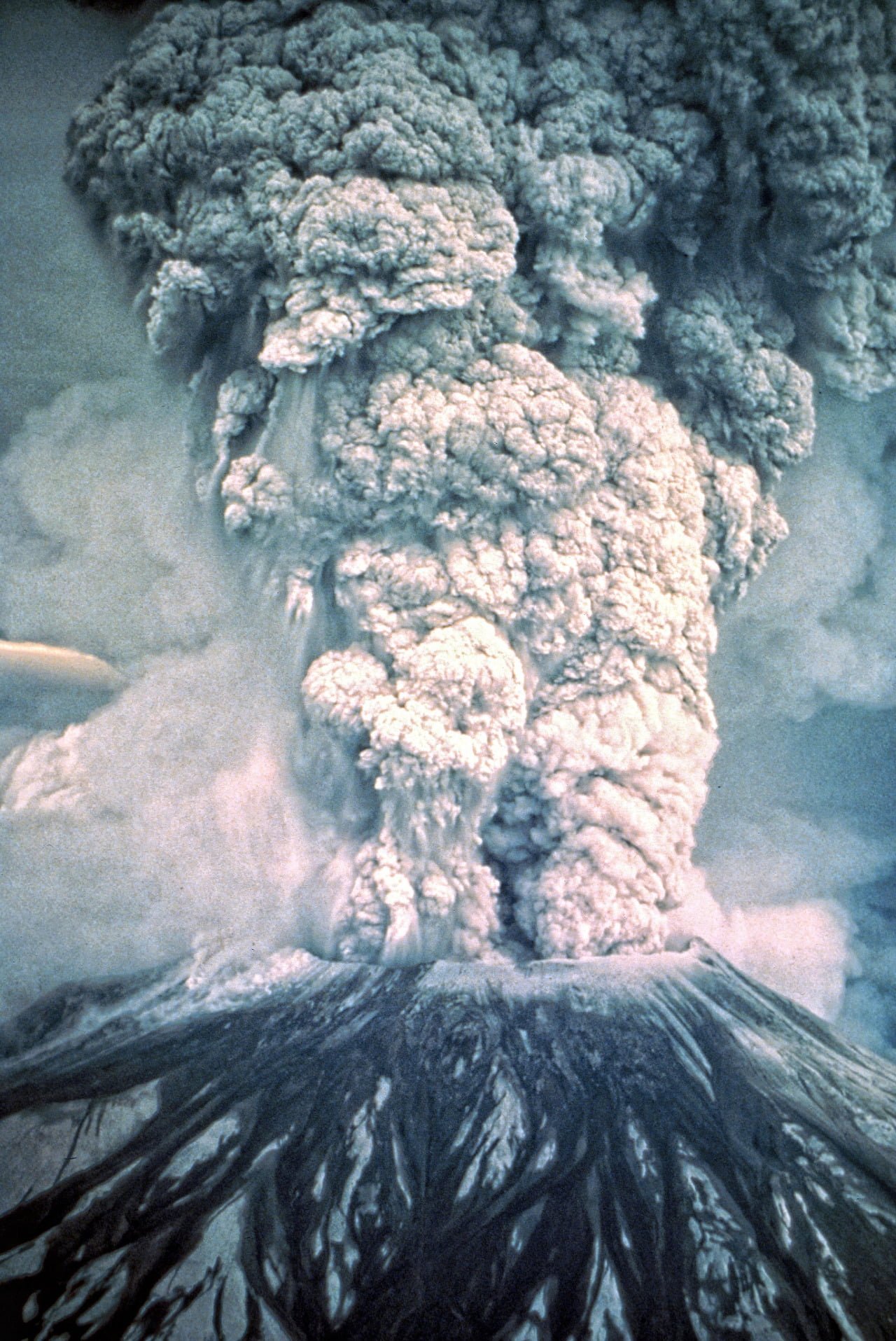
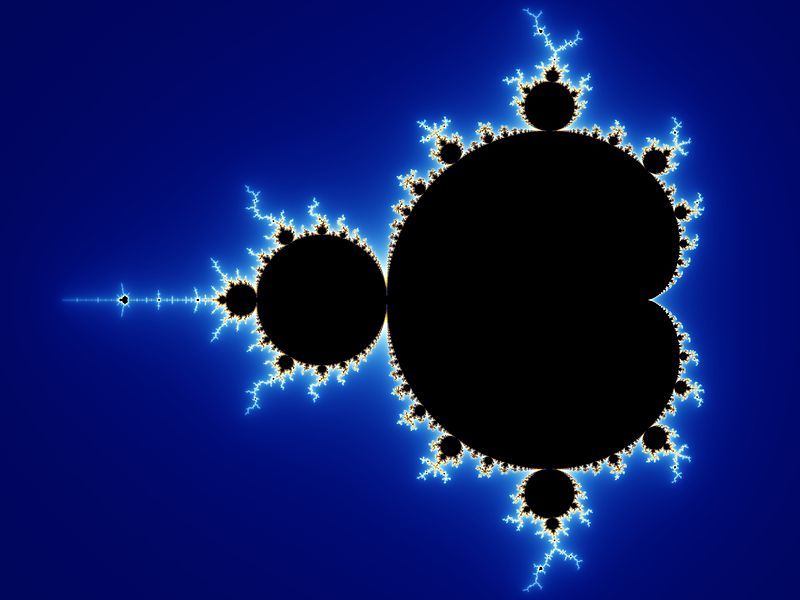
    That’s a good question! Fractals are a relatively recent mathematical development, and they have several features that make them an attractive tool, especially in the field of turbulence. Firstly, fractals, especially the Mandelbrot set shown above, demonstrate that great complexity can be generated out of simple rules or equations. Secondly, fractals have a feature known as self-similarity, meaning that they appear essentially the same regardless of scale. If you zoom in on the Mandelbrot set, you keep finding copy after copy of the same pattern. Nature, of course, doesn’t have this perfect infinite self-similarity; at some point things break down into atoms if you keep zooming in. But it is possible to have self-similarity across a large range of scales. This is where turbulence comes in. Take a look at the turbulent plume of the volcanic eruption in the photo above. Physically, it contains scales ranging from hundreds of meters to millimeters, and these scales are connected to one another by their motion and the energy being passed from one scale to another. There have been theories suggested to describe the relationship between these scales, but no one has yet found a theory truly capable of explaining turbulence as we observe it. Both the self-similarity and the complex nature of fractals suggest they could be useful tools in finally unraveling turbulence. In fact, Mandelbrot himself wrote several papers connecting the two concepts. Perhaps your friend will help find the next hints!  (Image credit: U.S. Geological Survey, Wikimedia)

  • Reader Question: Lagrangian Vs. Eulerian

    Reader Question: Lagrangian Vs. Eulerian

    Reader isotropicposts writes:

    Hi, I’m taking a fluids class and I’m not sure I understand the whole lagrangian-eulerian measurements of velocity and acceleration. Could you explain this?

    This is a really great question because the Eulerian versus Lagrangian distinction is not obvious when you first learn about it. If you think about a fluid flowing, there are two sensible reference frames from which we might observe. The first is the reference frame in which we are still and the fluid rushes by. This is the Eulerian frame. It’s what you get if you stand next to a wind tunnel and watch flow pass. It’s also how many practical measurements are made. The photo above shows a Pitot tube on a stationary mount in a wind tunnel. With the air flow on, the probe measures conditions at a single stationary point while lots of different fluid particles go past.

    The other way to observe fluid motion is to follow a particular bit of fluid around and see how it evolves. This is the Lagrangian method. While this is reasonably easy to achieve in calculations and simulations, it can be harder to accomplish experimentally. To make these kinds of measurements, researchers will do things like mount a camera system to a track that runs alongside a wind tunnel at the mean speed of the flow. The resulting video will show the evolution of a specific region of flow as it moves through time and space. The video below has a nice example of this type of measurement in a wave tank. The camera runs alongside the the wave as it travels, making it possible to observe how the wave breaks.

    In the end, both reference frames contain the same physics (Einstein would not have it any other way), but sometimes one is more useful than the other in a given situation. For me, it’s easiest to think of the Eulerian frame as a laboratory-fixed frame, whereas the Lagrangian frame is one that rides alongside the fluid. I hope that helps! (Photo credit: N. Sharp; video credit: R. Liu et al.)

  • Reader Question: What is Surface Tension?

    Reader Question: What is Surface Tension?

    Last week reader thesnazz asked:

    Is there a difference between surface tension and viscosity, or are they two manifestations of the same process and/or principles? If you know a given fluid’s surface tension, can you predict its viscosity, and vice versa?

    I’m tackling this one in parts, and you can click here to read about viscosity.

    Surface tension’s intermolecular origins are a bit clearer than those of viscosity. Essentially, within the interior of a water drop, you can imagine water molecules all hanging out with other water molecules. They tug on one another, but because they are surrounded on all sides by other water molecules, the net force of all these interactions on any molecule is zero. Not so at the surface of the drop. The surface is also called an interface; it’s a place where the fluid ends and something else–another fluid or perhaps a solid–begins. For a water molecule at that interface, the forces exerted by neighboring molecules are not balanced to zero. Instead, the imbalance causes the water molecules to be tugged inward. We call this effect surface tension.

    Because surface tension is an interfacial effect, it is not completely dependent on the fluid alone. For example, a drop of water sitting on a solid surface can take a variety of shapes depending on the properties of the solid (see also hydrophobicity) and the surrounding air as well as those of the water. This is only one of many manifestations of surface tension. Wikipedia has a pretty good overview of some others, if you’d like to learn more. Like viscosity, surface tension is usually measured rather than calculated from first principles.

    In the end, both surface tension and viscosity have molecular origins, but they are two very different and independent properties. Viscosity is inherent to a fluid, whereas surface tension depends on the fluid and its neighboring substance. Both quantities are more easily measured than calculated. Thanks again to thesnazz for a great question! As always, you can ask questions or submit post ideas here on Tumblr or via Twitter or email. (Image credit: Wikimedia)

  • Reader Question: What is Viscosity?

    Reader Question: What is Viscosity?

    Reader thesnazz asks:

    Is there a difference between surface tension and viscosity, or are they two manifestations of the same process and/or principles? If you know a given fluid’s surface tension, can you predict its viscosity, and vice versa?

    This is a good question! To answer it, let’s think about where surface tension and viscosity come from. Like many concepts in fluid dynamics, these quantities describe for a whole fluid the properties that arise from interactions between molecules.

    To prevent this becoming overly long, I’m going to tackle this over a couple posts. Today, I’ll talk about viscosity.

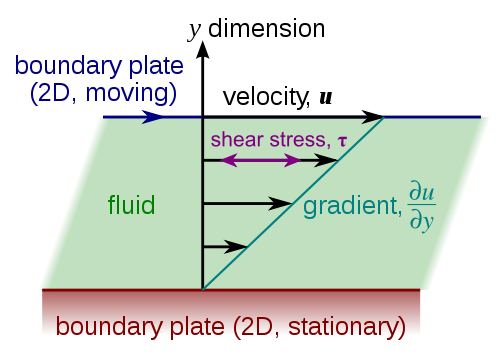
    One way to describe a fluid’s viscosity is as a measure of its resistance to deformation. Another way to think of it is how easily momentum is transmitted from one part of the fluid to another. The diagram above is the classic representation. A layer of fluid is sandwiched between two flat plates. If the top plate moves, friction requires that the fluid particles in contact with the plate get dragged along. This shears the fluid just below that and drags it along, but not quite as much. Those fluid particles do the same to their neighbors and so on down to the stationary second plate, where the fluid is at rest.

    Viscosity is the property that determines how much those neighboring fluid particles move; the more viscous the fluid, the more the neighboring bits of fluid resist getting pulled along. This is a property that’s inherent to a fluid. It comes from how the molecules of the fluid interact with one another, but there are no simple expressions to calculate the viscosity of a liquid or a gas from the individual interactions of its molecules. Instead we experimentally measure viscosity values and use empirical formulas to approximate how viscosity changes with temperature and other effects. (Image credit: Wikimedia)

  • Reader Question: Oceans Meeting?

    Reader Question: Oceans Meeting?

    Reader favoringfire asks:

    Hi! Maybe you can help me: I’ve seen a pic revolving around Tumblr from the Danish city of Skagen showing the Baltic and North sea meeting. Where they meet the ocean is two very distinct hues of blue–what captions say are “two opposing tides with different densities.” Tides? Currents w/different temps often are often diff color from one another. But can “tides” be of different “densities???”

    After some searching, I think the photo above is probably the one you’ve seen represented as where the Baltic and North Seas meet. It turns out, however, that it’s not. It’s a photo from an Alaskan cruise taken by Kent Smith. Fluid dynamically, though, it’s still very interesting! What we see here is a sharp gradient between regions with very different densities. One side contains lots of freshwater from rivers fed by melting glaciers, which creates a very different density from the general seawater.

    It’s not true, however, that the two won’t mix. This border is not a static phenomenon but one that is ever-changing due to currents and the diffusion of one fluid into another. In a sense, this photo is very much the sea-level version of photos like these which show the massive scale of sediment transport and nutrient mixing that occur in our oceans.

    (Photo credit: K. Smith)

  • Reader Question: Heat Shimmer

    Reader Question: Heat Shimmer

    Reader dialectical-induction asks:

    Being as its pretty hot right now where I am, I was always curious, what exactly is occurring when the air is seemingly rippling on a hot day. I’ve noticed this phenomenon most often close to the pavement or anywhere where it’s really hot. Is it moisture in the air, off the pavement. What’s going on?!

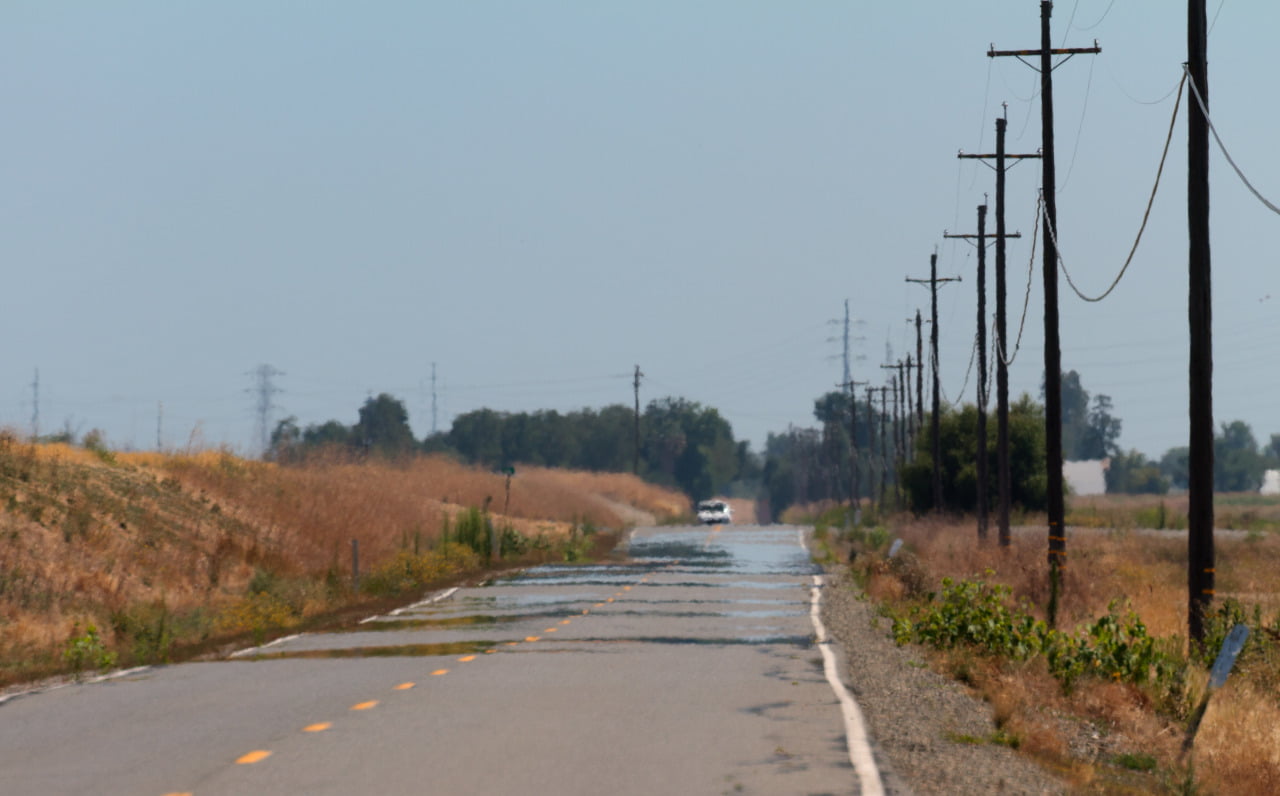
    Good question! This is a pretty common optical illusion to observe, especially when driving on a hot day, and it goes by many names including mirage and heat shimmer. What’s happening is actually a case of refraction, much like when a straw in a glass of water looks bent. Near the ground, the air is significantly hotter (maybe 10 degrees Celsius) than the air about a meter above the surface. Changing air’s temperature also changes its index of refraction. When a ray of light passes from the layer of cooler air into the hotter air near the ground, it encounters a lower index of refraction and will bend upward toward the higher index of refraction. From an observer’s perspective, these distorted rays look like they are coming straight from the ground, making it look as if a refracted image of the sky is the ground. The brain will often interpret this as a spurious puddle reflecting the sky. Getting closer to the mirage makes it disappear because the light bends less (relatively speaking) as the angle between the observer and mirage source increases. The rippling effect you note is typically a result of this refraction occurring through hot, moving air. (Photo credit: M. Fern)

  • Featured Video Play Icon

    Reader Question: Non-Coalescing Droplets

    Reader ancientavian asks:

    I’ve often noticed that, when water splashes (especially as with raindrops or other forms of spray), often it appears that small droplets of water skitter off on top of the larger surface before rejoining the main body. Is this an actual phenomenon, or an optical illusion? What causes it?

    That’s a great observation, and it’s a real-world example of some of the physics we’ve talked about before. When a drop hits a pool, it rebounds in a little pillar called a Worthington jet and often ejects a smaller droplet. This droplet, thanks to its lower inertia, can bounce off the surface. If we slow things way down and look closely at that drop, we’ll see that it can even sit briefly on the surface before all the air beneath it drains away and it coalesces with the pool below. But that kind of coalescence cascade typically happens in microseconds, far too fast for the human eye.

    But it is possible outside the lab to find instances where this effect lasts long enough for the eye to catch. Take a look at this video. Here Destin of Smarter Every Day captures some great footage of water droplets skittering across a pool. They last long enough to be visible to the naked eye. What’s happening here is the same as the situation we described before, except that the water surface is essentially vibrating! The impacts of all the multitude of droplets create ripples that undulate the water’s surface continuously. As a result, air gets injected beneath the droplets and they skate along above the surface for longer than they would if the water were still. (Video credit: SuperSloMoVideos)