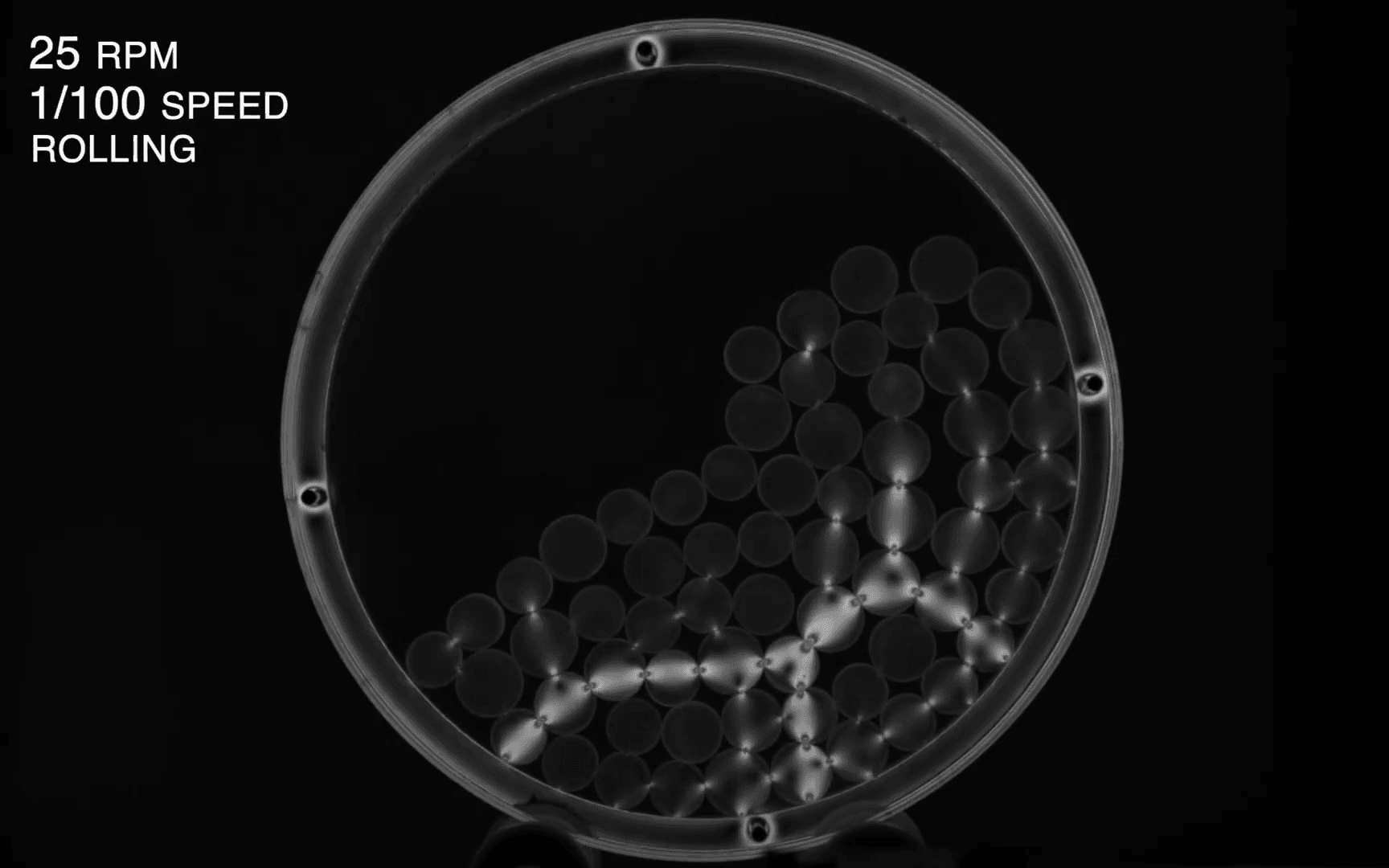
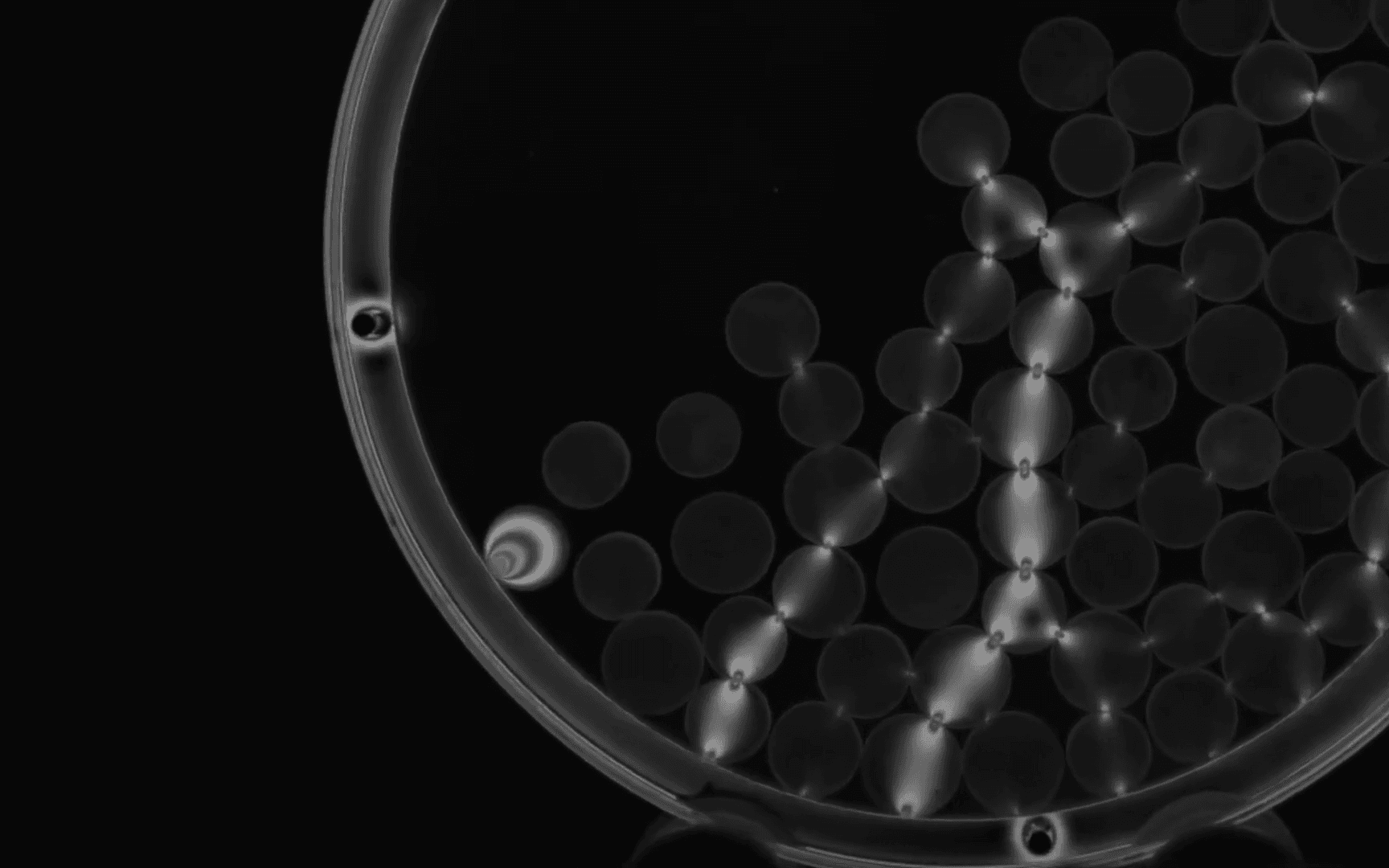
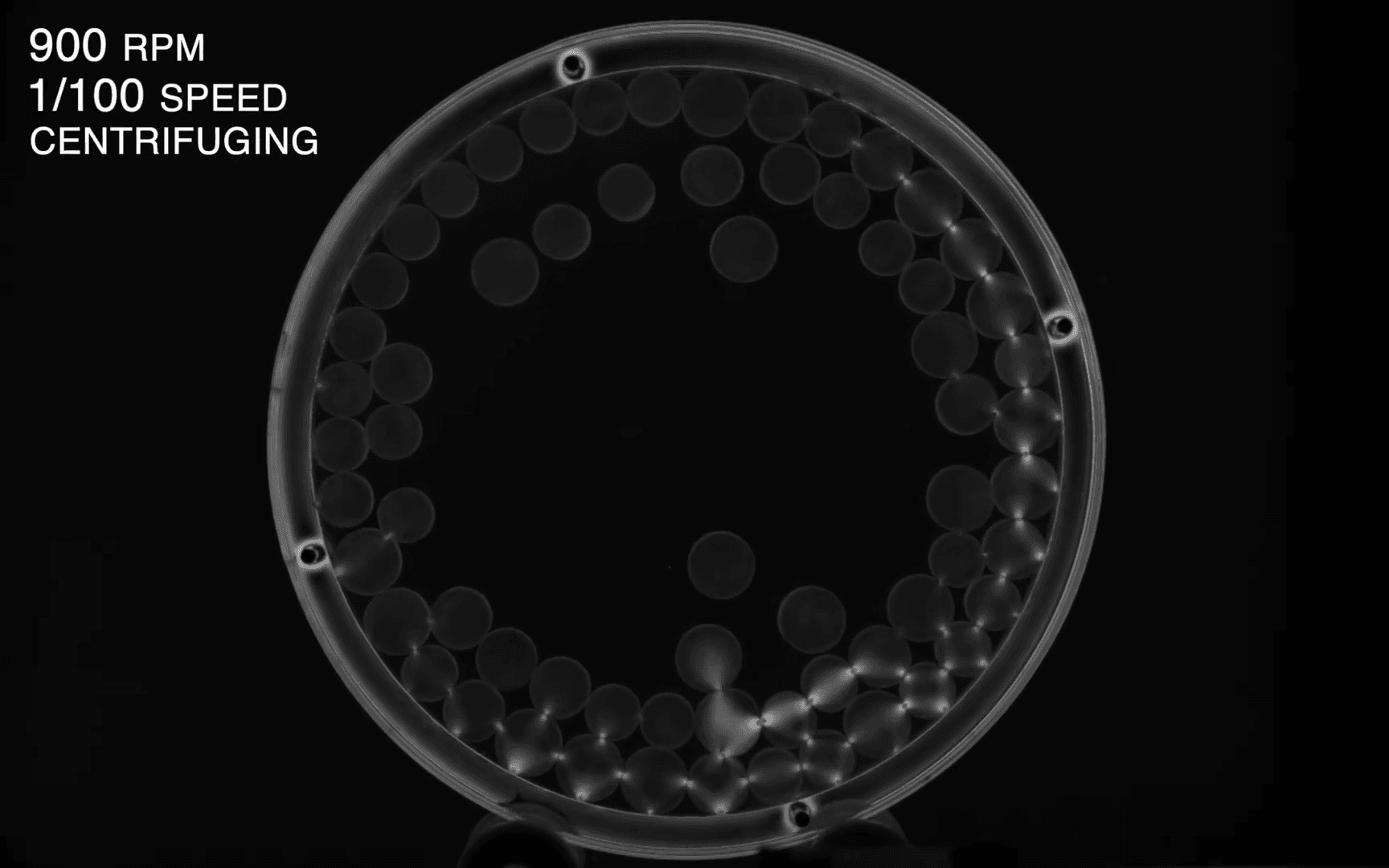
Researchers sometimes study avalanches and other granular flows in a rolling drum, where grains can cascade down continuously. Here, the twist is that they’ve done it with photoelastic disks, which show stress patterns when viewed under crossed polarizing filters.
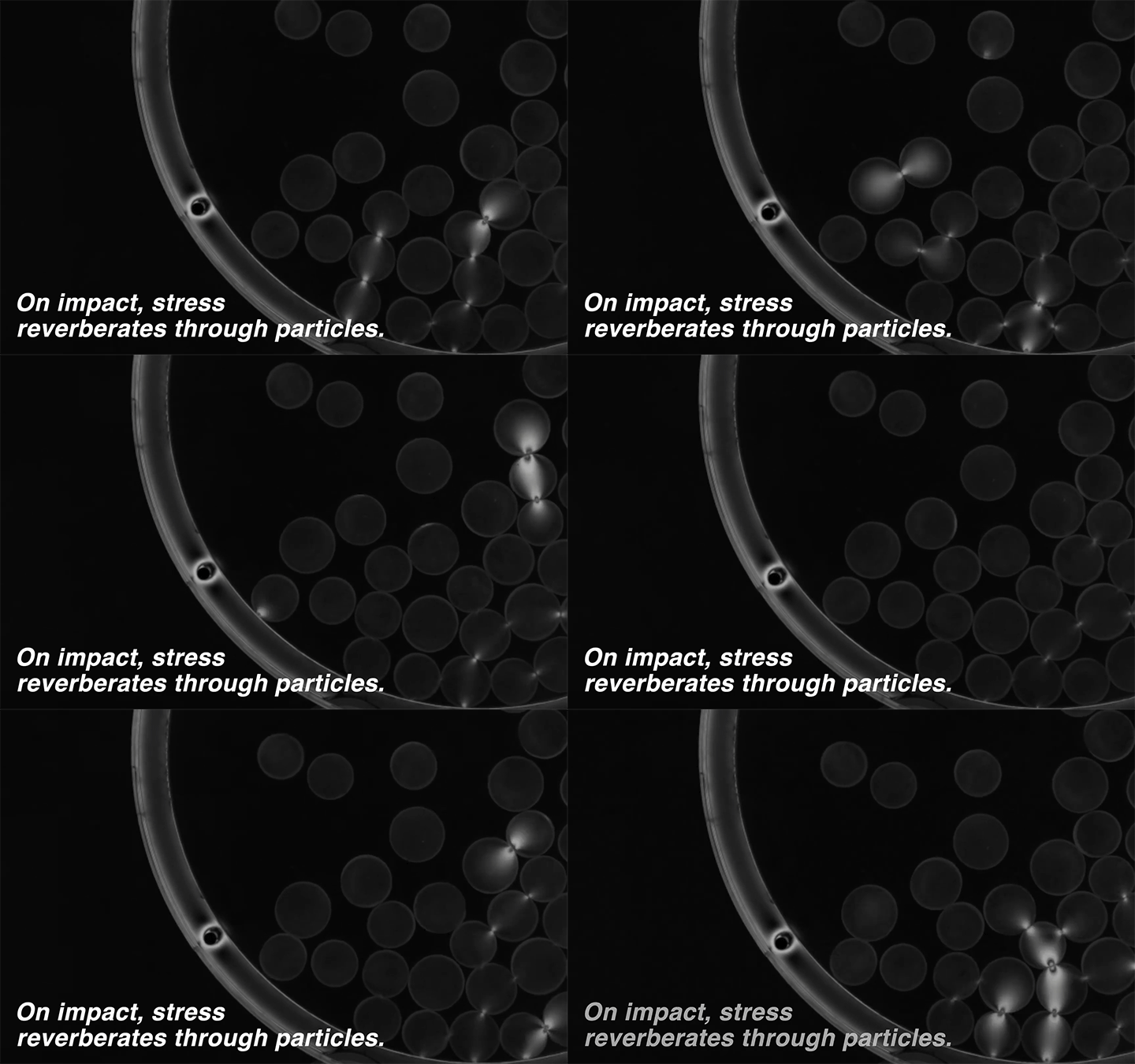
In any given moment, the contacts between neighboring particles form a force chain that lights up the disks. In motion, the effect resembles lightning forking and branching across the sky. The close-ups of stress reverberating during impact are especially mesmerizing. (Video and image credit: R. Hodgson et al.)
Animation of stress reverberating through particles as they roll in a drum.
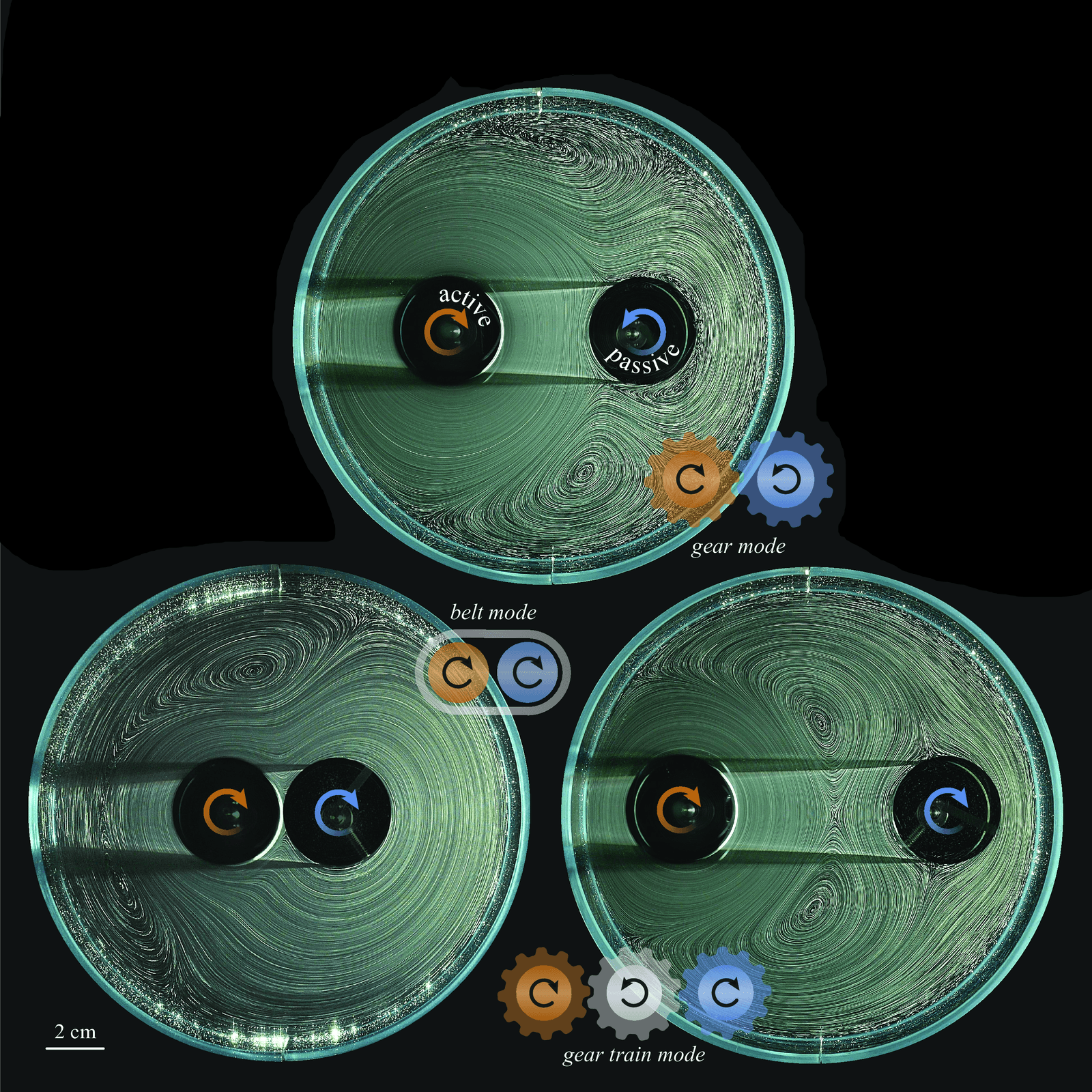
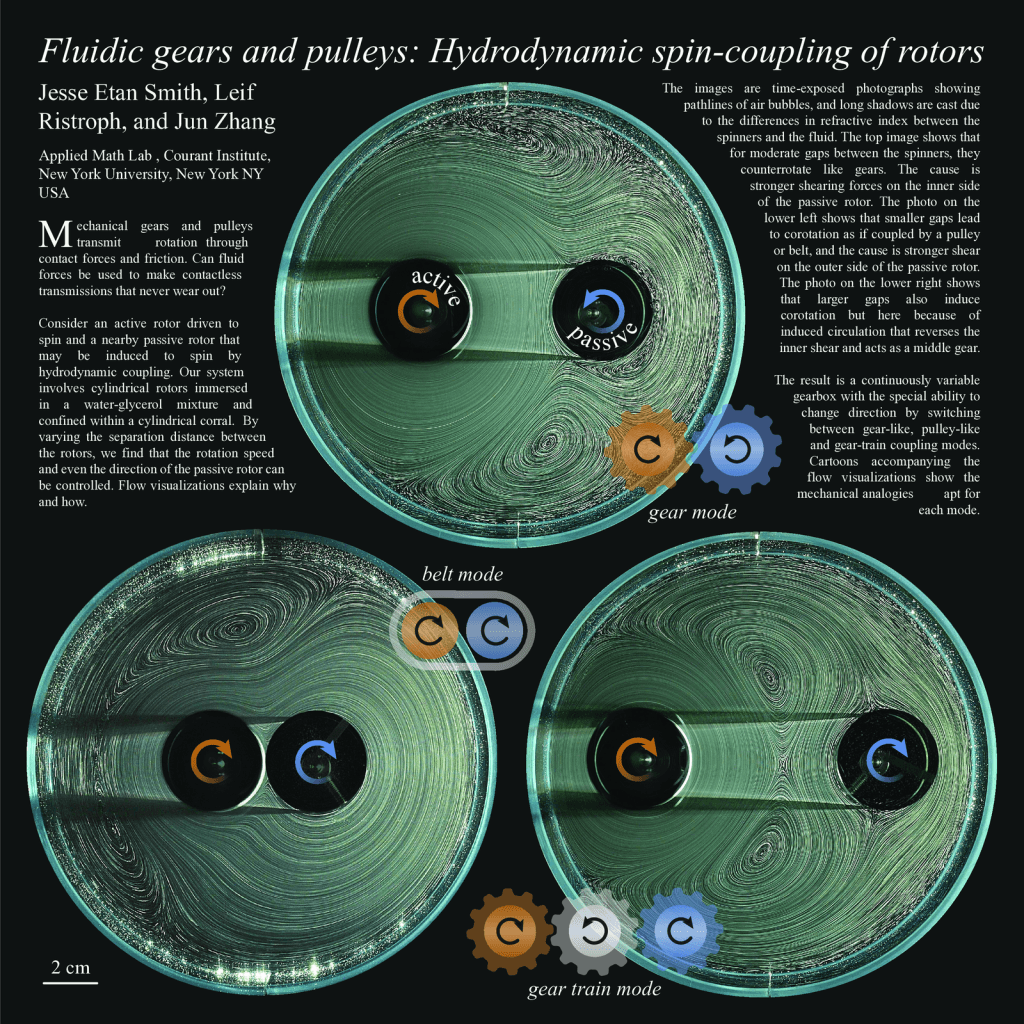
In mechanical systems, gears and pulleys transmit rotation from one location to another. Here, researchers explore a fluid dynamical version of such systems. The set-up consists of two rotors contained in a cylindrical corral filled with a water-glycerin mixture. One of the rotors is active, marked here with orange; the other (blue) one is passive, meaning that it can rotate due to the forces on it but it is not actively driven by a motor.
The three flow visualizations illustrate different configurations the rotors can take on, depending on their separation distance. In the top image, the rotors have a moderate separation distance and the passive one rotates opposite of the active one. That rotation direction is set by the high-shear flow on its inner side. If the rotors are close together (left image), they rotate in the same direction, aided by strong shear on the outside edge of the passive rotor; this mimics being linked with a belt. And, finally, if the rotors are widely separated, they also corotate, with the fluid in between acting like a virtual gear linking them. (Image credit: J. Smith et al.)
Research poster showing how an active and a passive rotor can be paired through hydrodynamic interactions.
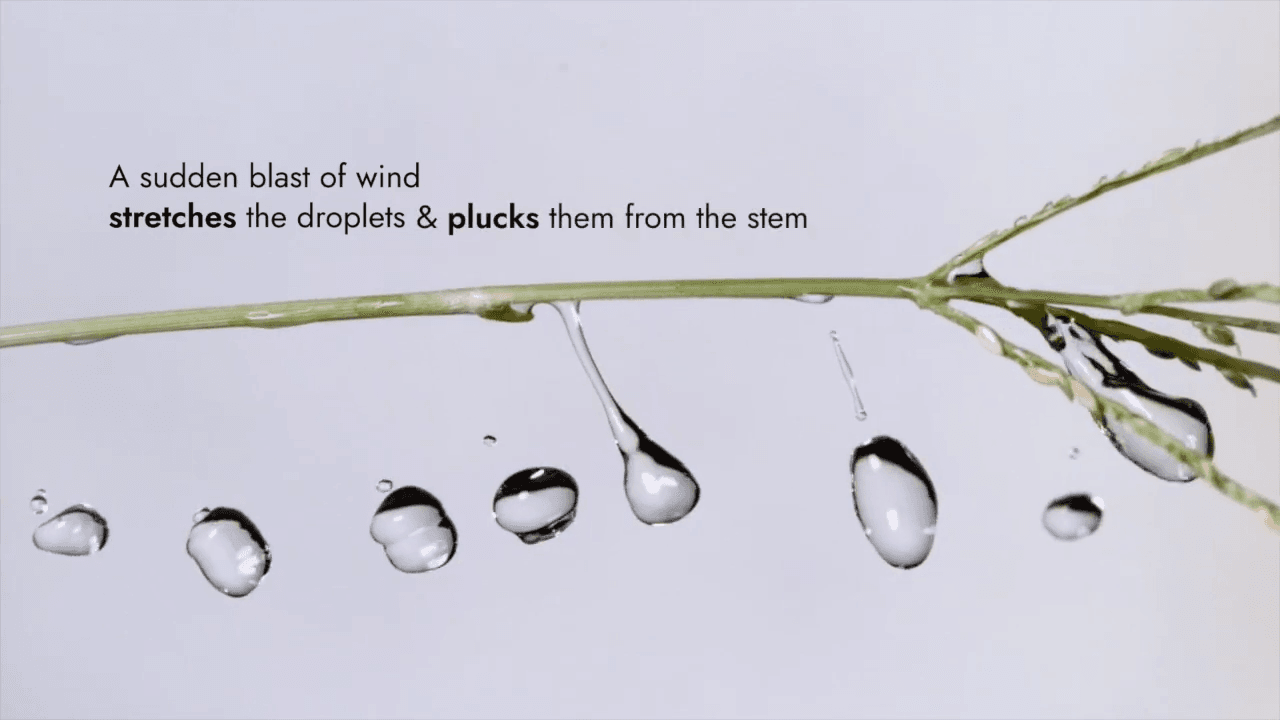
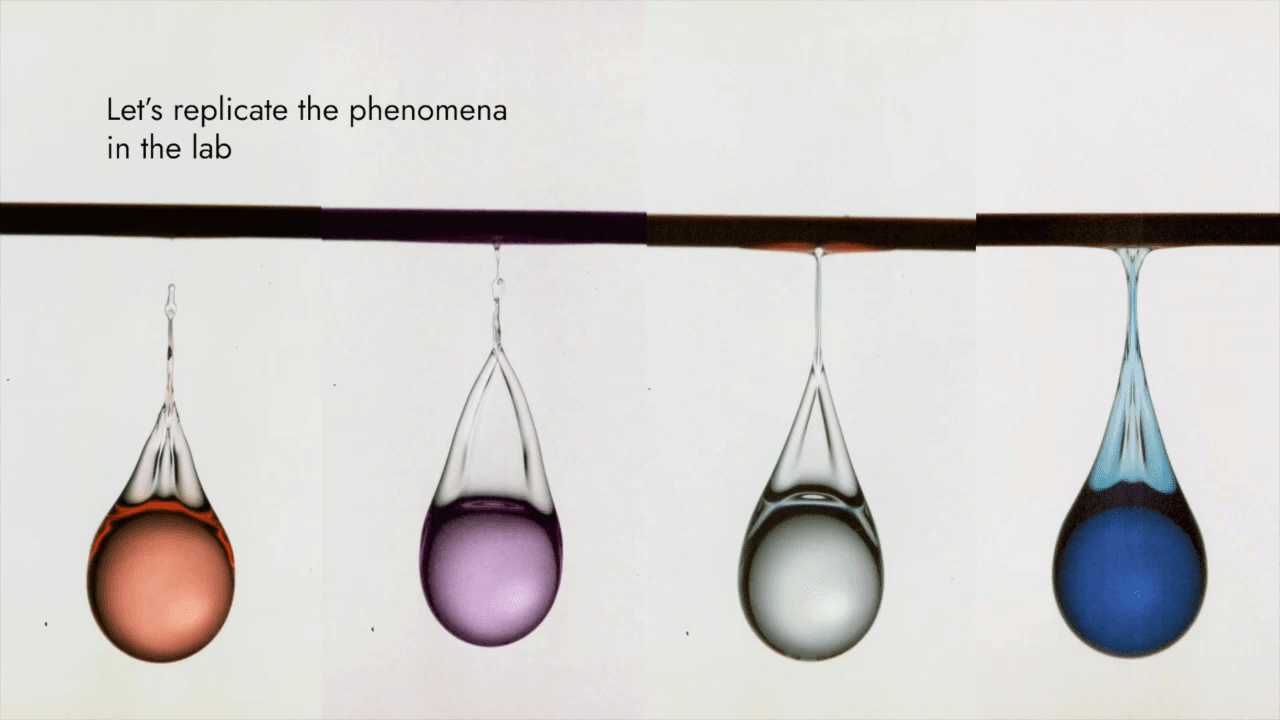
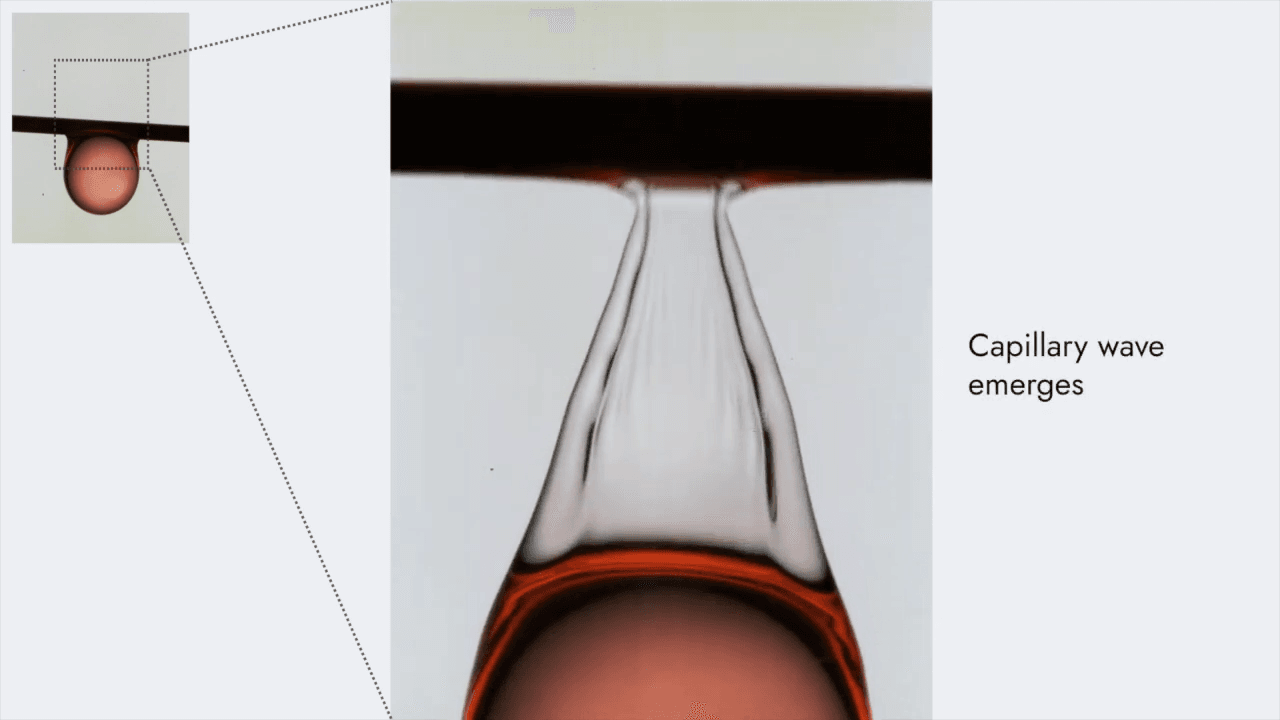
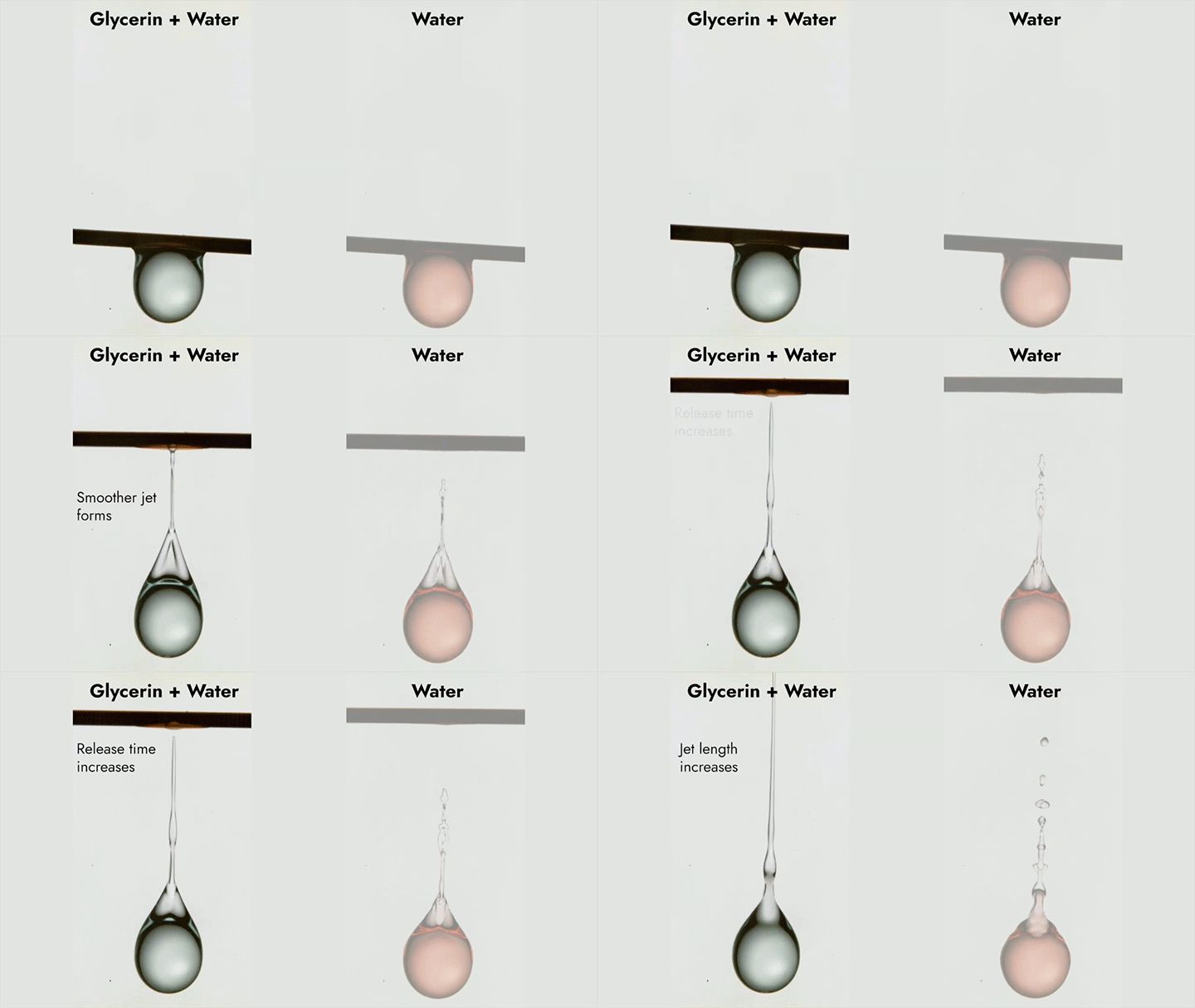
A sudden breeze can pluck droplets hanging from a stem. Here, researchers recreate that phenomenon in the laboratory. With a close-up view and high-speed images, we can enjoy every detail of the detachment and break-up. As the wire pulls away, it drags a liquid sheet off the droplet. The thicker rims on either side of the sheet eventually collide, creating a jet that stretches, deforms, and, at last, breaks. (Video and image credit: D. Maity et al.)
Animation of two droplets getting plucked, one made of glycerin+water (left) and one of water (right).
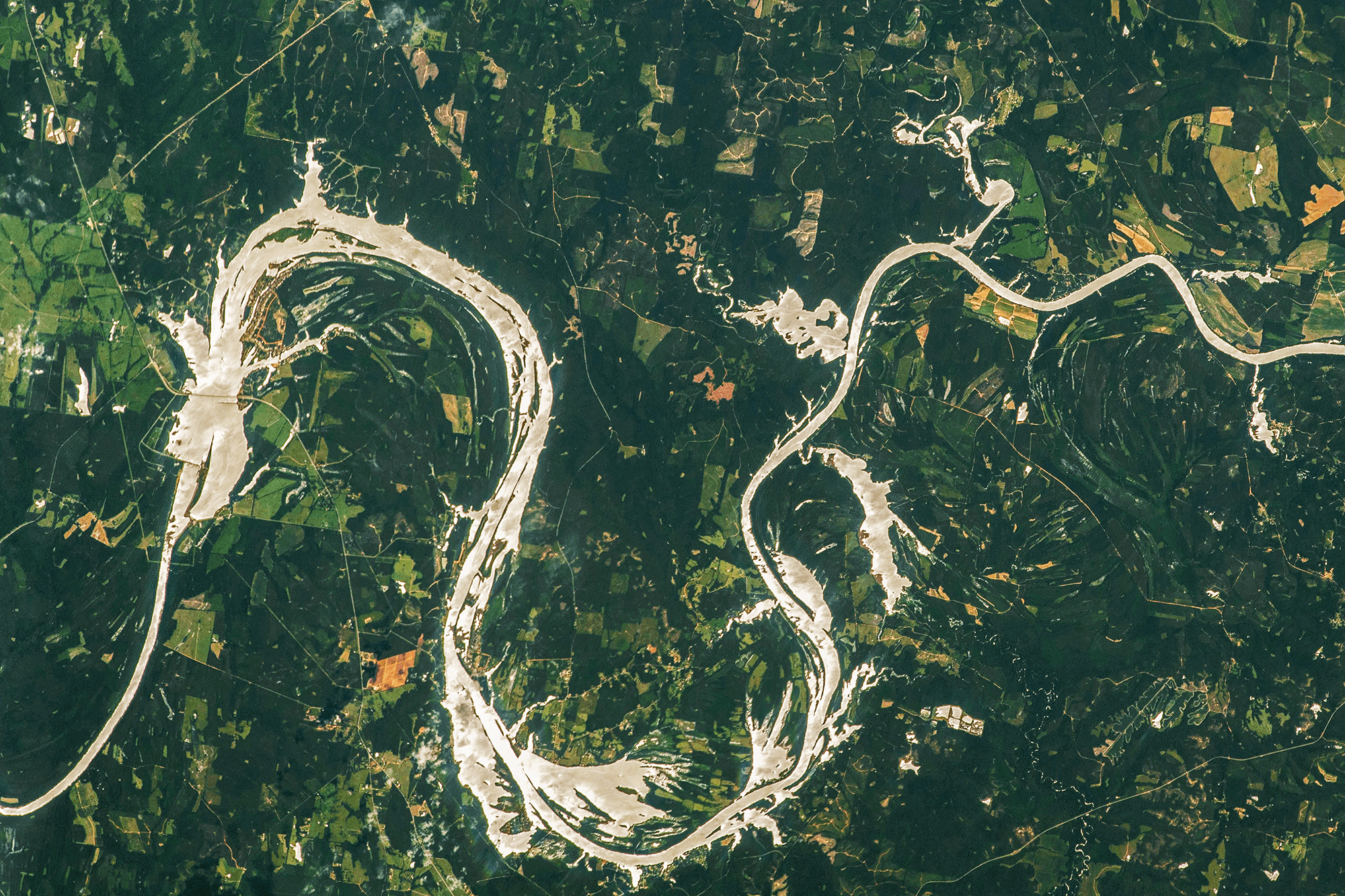
Over time, rivers naturally curve and meander. As water accelerates around a river bend’s curve, it creates a secondary flow that carves sediment away from the outer bank and deposits it on the inner one. That, in turn, makes the river bend sharper until it eventually cuts part of the river off into an oxbow lake. In this astronaut photo, we see the Alabama River flowing right-to-left. The river’s natural meander is constrained by the dam on the center left, which widens the river upstream. The higher water level upstream creates the feather-like floodplains lining the river. (Image credit: NASA; via NASA Earth Observatory)
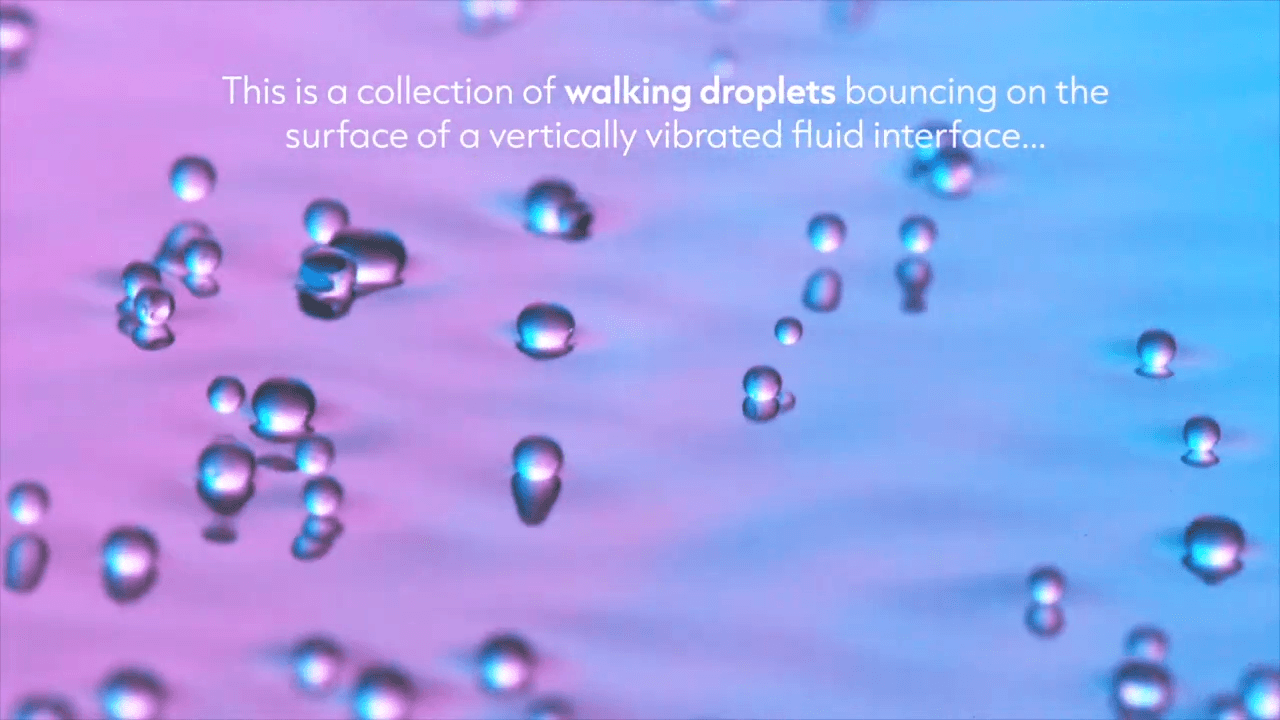
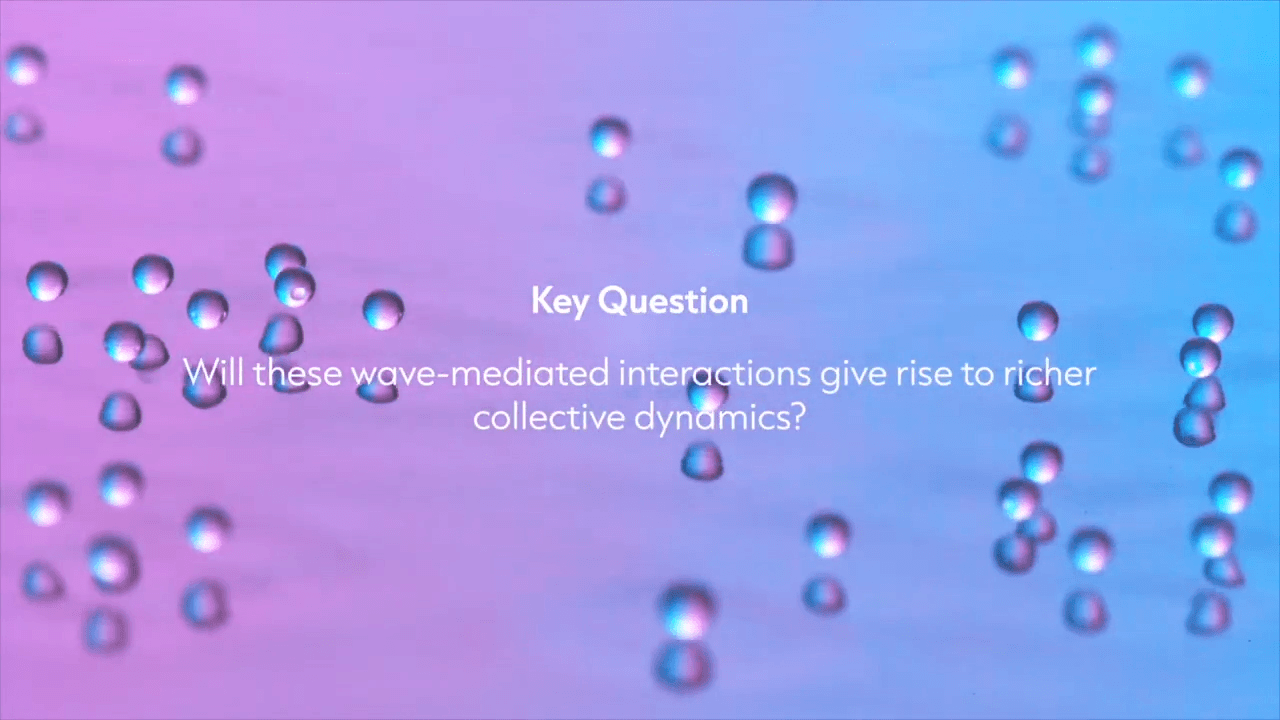
On a vibrating fluid, droplets can bounce and interact in complex ways. Here, researchers demonstrate some of the peculiar dynamics of these wave-guided droplets, showing how they can do things like pair up in waltzes. To keep the droplets from coalescing with one another, they perform their experiments in a pressurized chamber; the higher air pressure makes it harder for the air film between droplets to drain during a collision, making the droplets unable to coalesce. Under these conditions, the authors show that the droplet-wave system has quantum-like statistics. (Video and image credit: J. Clampett et al.)
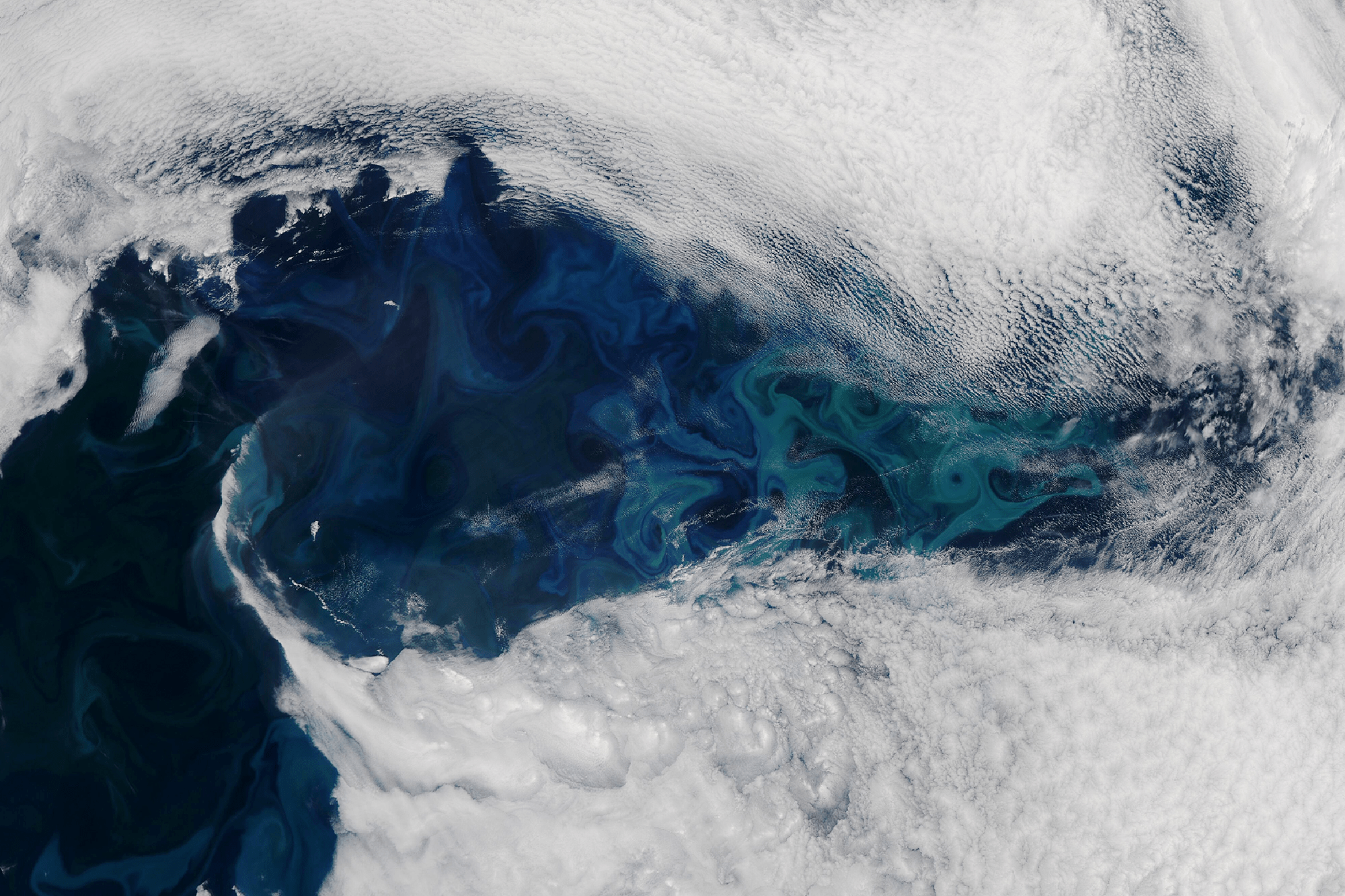
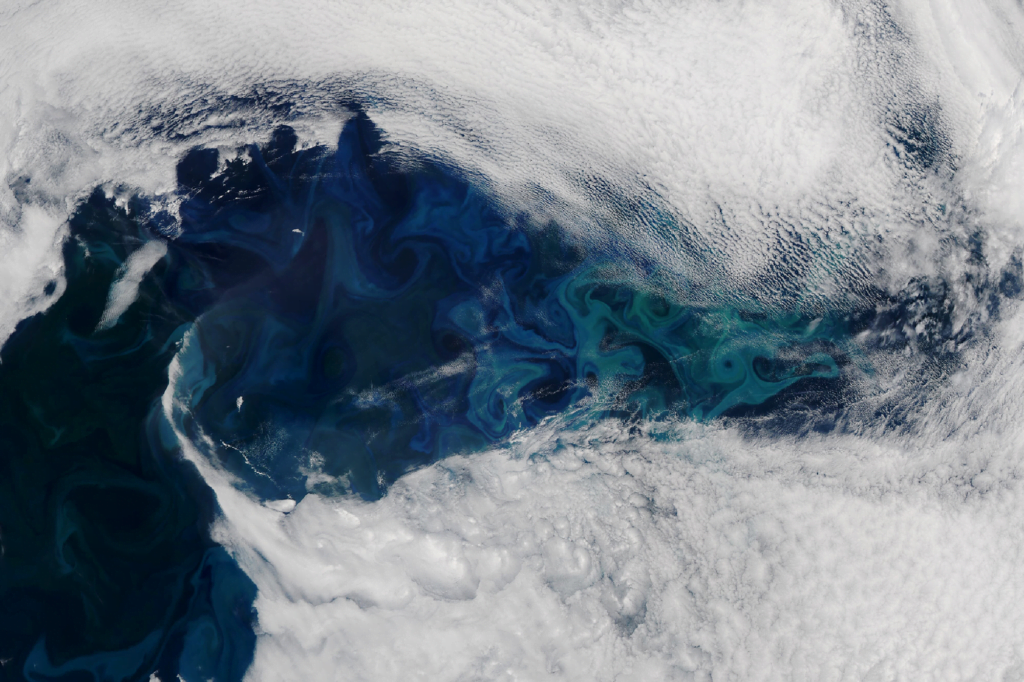
Peeking between the clouds, satellites caught a glimpse of a massive phytoplankton bloom off the coast of Greenland in May 2024. The tiny organisms may be visible only under a microscope, but gatherings like these stretch hundreds of kilometers and are visible from space. Like tracer particles in a flow, the phytoplankton outline the swirls and eddies of the underlying ocean. (Image credit: L. Dauphin; via NASA Earth Observatory)
A satellite image reveals the blue and green swirls of a phytoplankton bloom.
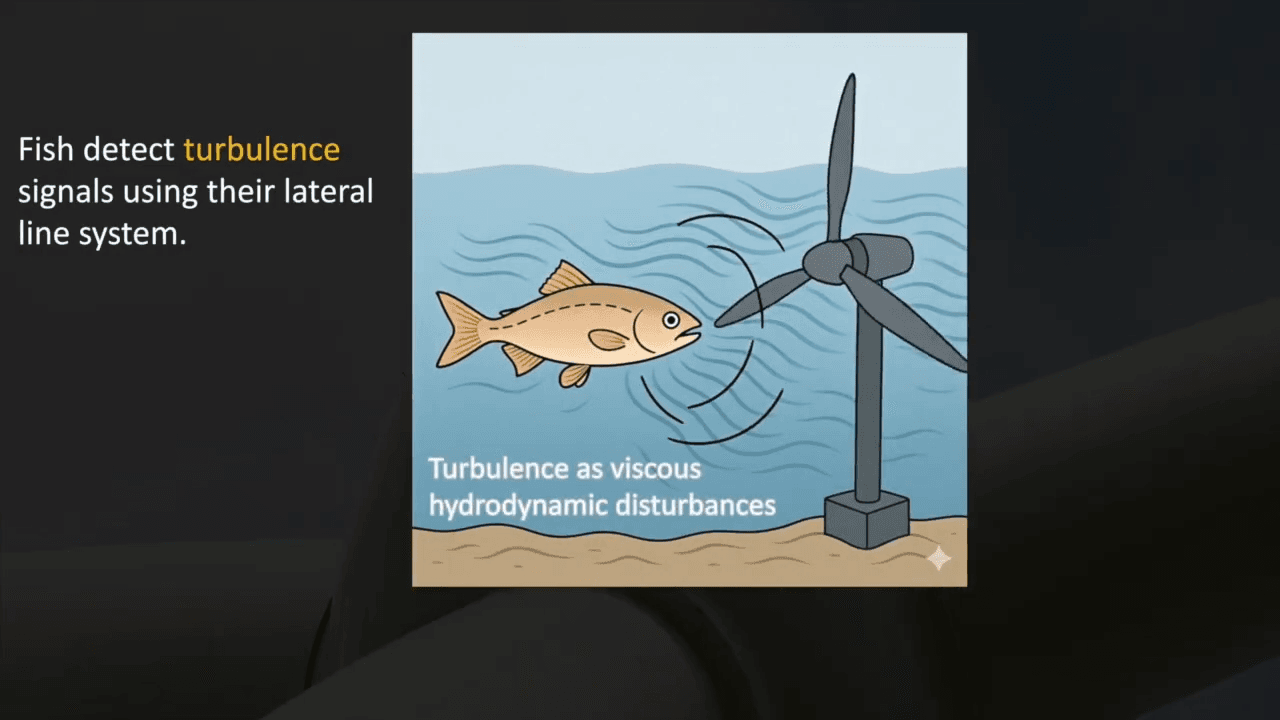
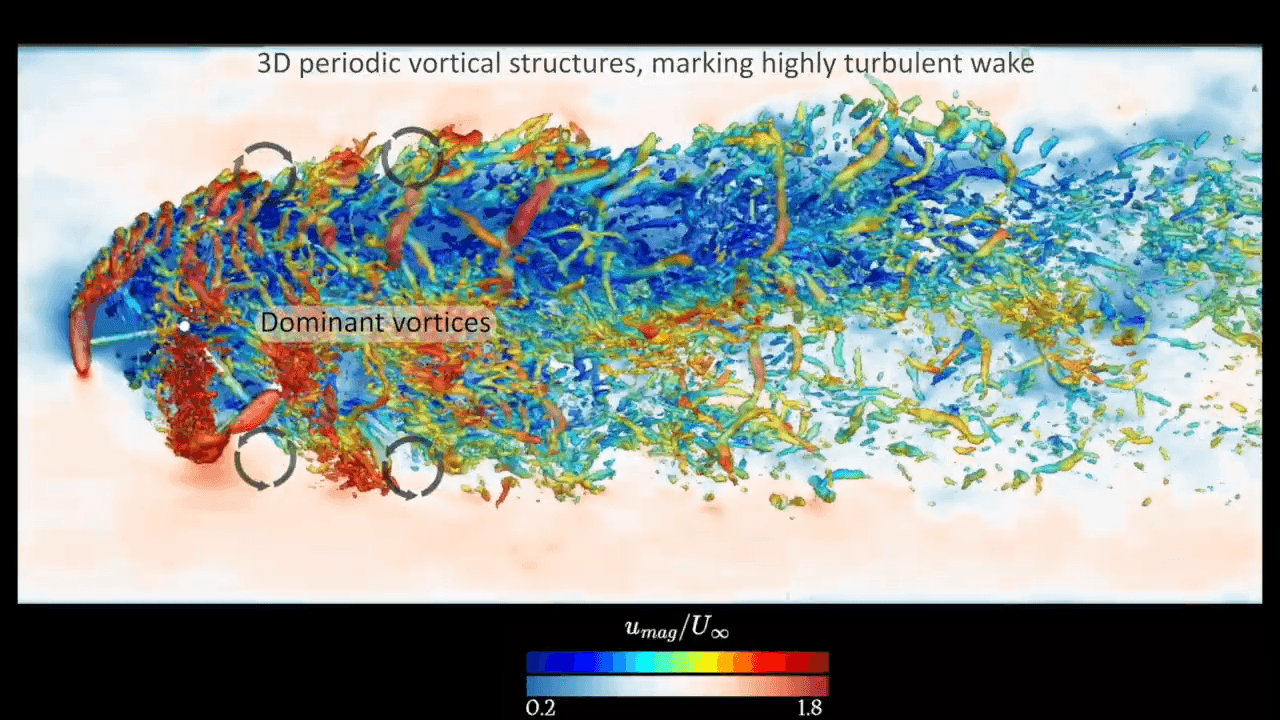
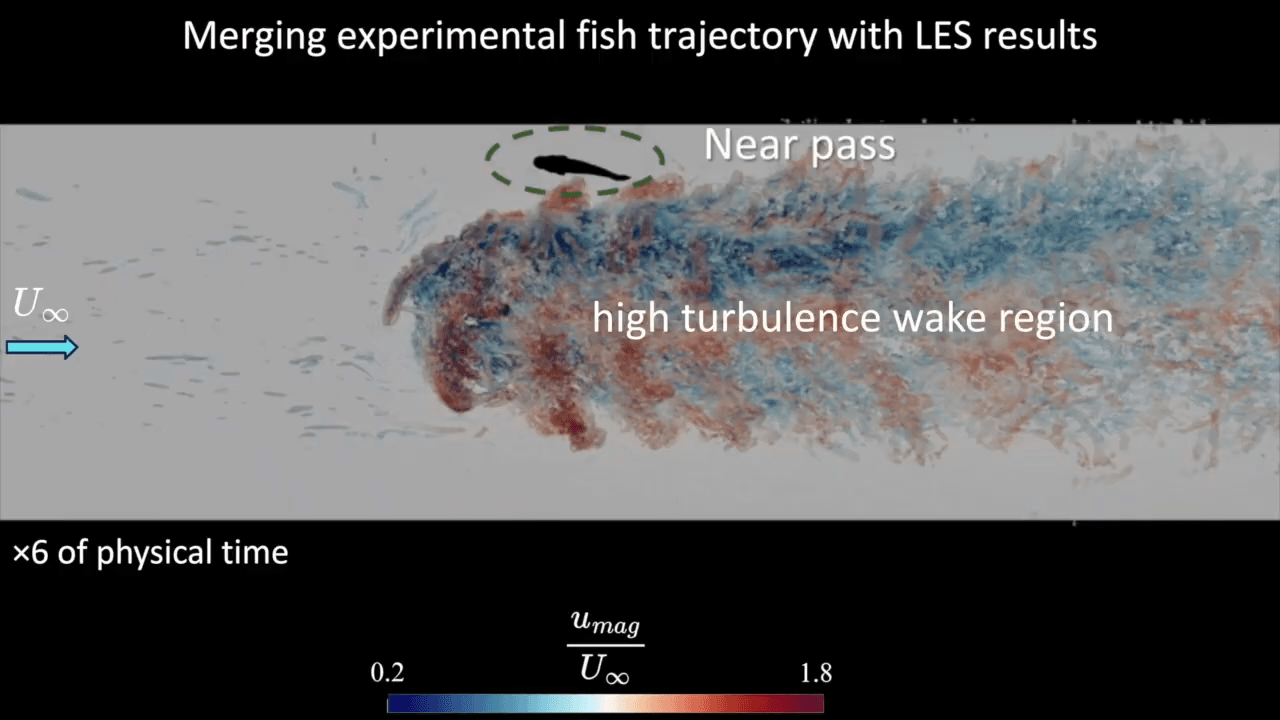
Fish detect turbulence in the water around them; among other things, this helps them avoid colliding with objects. Here, researchers are looking to understand how fish interact with underwater turbines. Experiments give them a set of trajectories that actual fish follow when dealing with the experimental turbine. But to understand what the fish is detecting, the researchers build a digital facsimile of the turbine and use Large Eddy Simulation (LES) to calculate the turbine’s wake.
By overlaying the fish trajectories onto the simulated flow structures, they can better understand what flows the fish is and is not comfortable with. That knowledge helps engineers design turbines with smaller ecological impact. (Video and image credit: H. Seyedzadeh et al.)
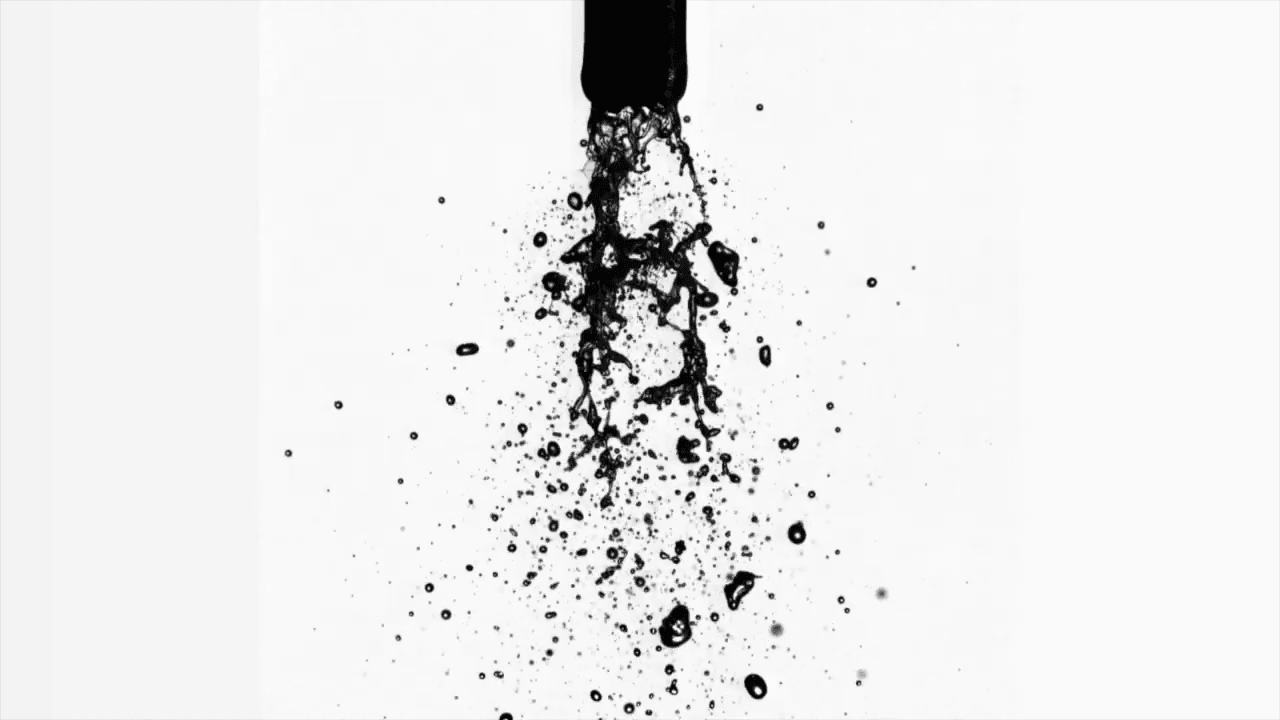
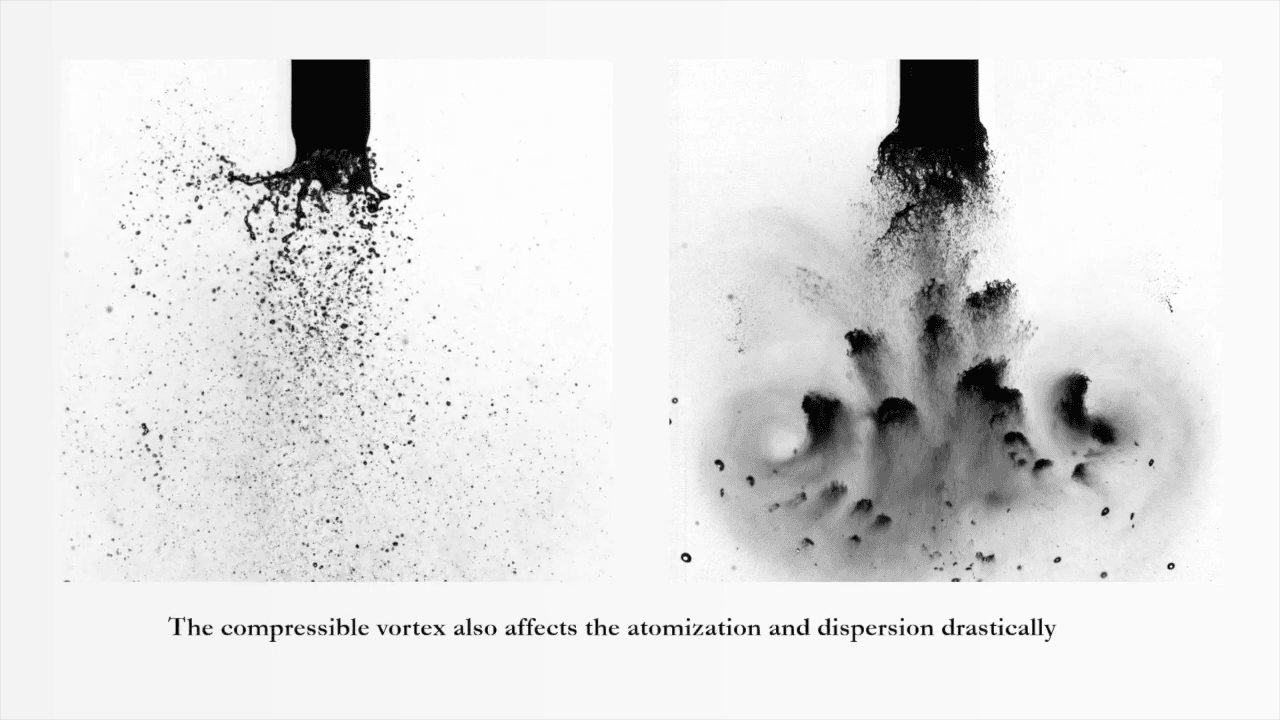
Many industrial processes break a fluid jet into droplets, like spray painting and ink-jet printing. Here, researchers examine an effervescent fluid jet made up of both liquid and gas. Like a fluid-only jet, this fizzy jet forms sheets, bags, ligaments, and droplets. As it breaks down, it creates a range of droplet sizes–both large and small. But when a shock wave passes, the jet and its droplets get atomized into even tinier droplets. (Video and image credit: S. Rao et al.)
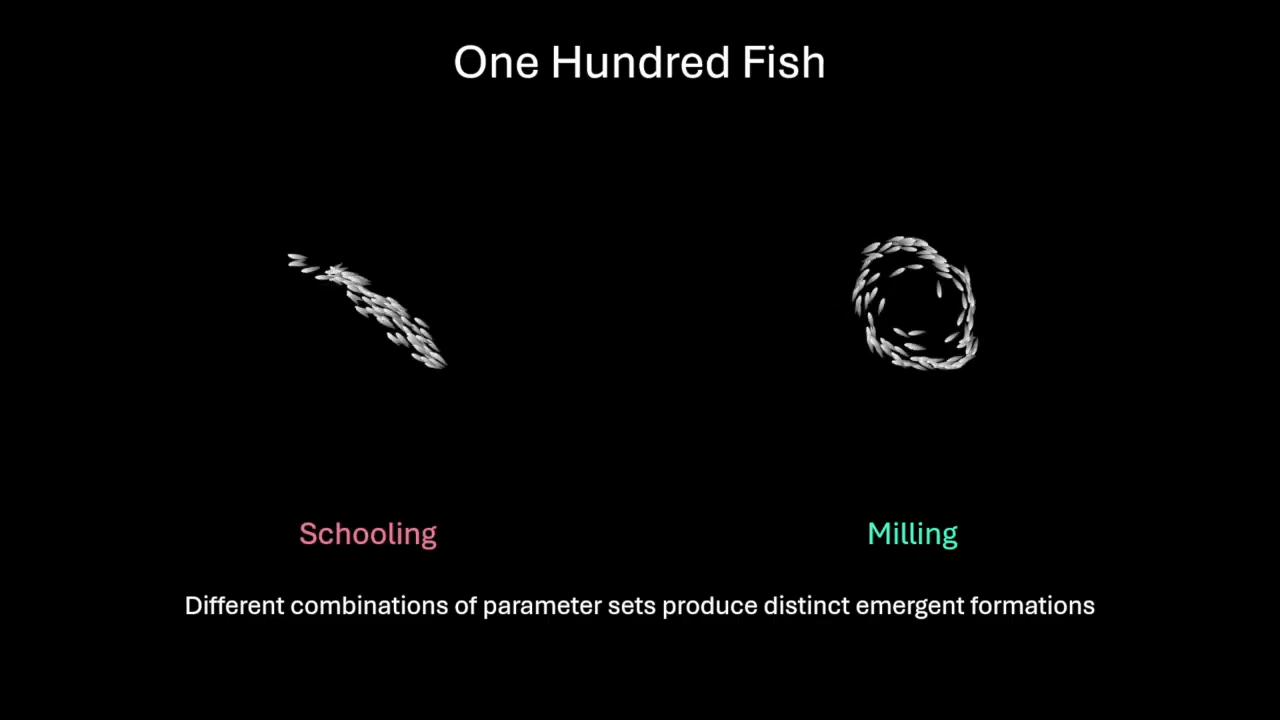
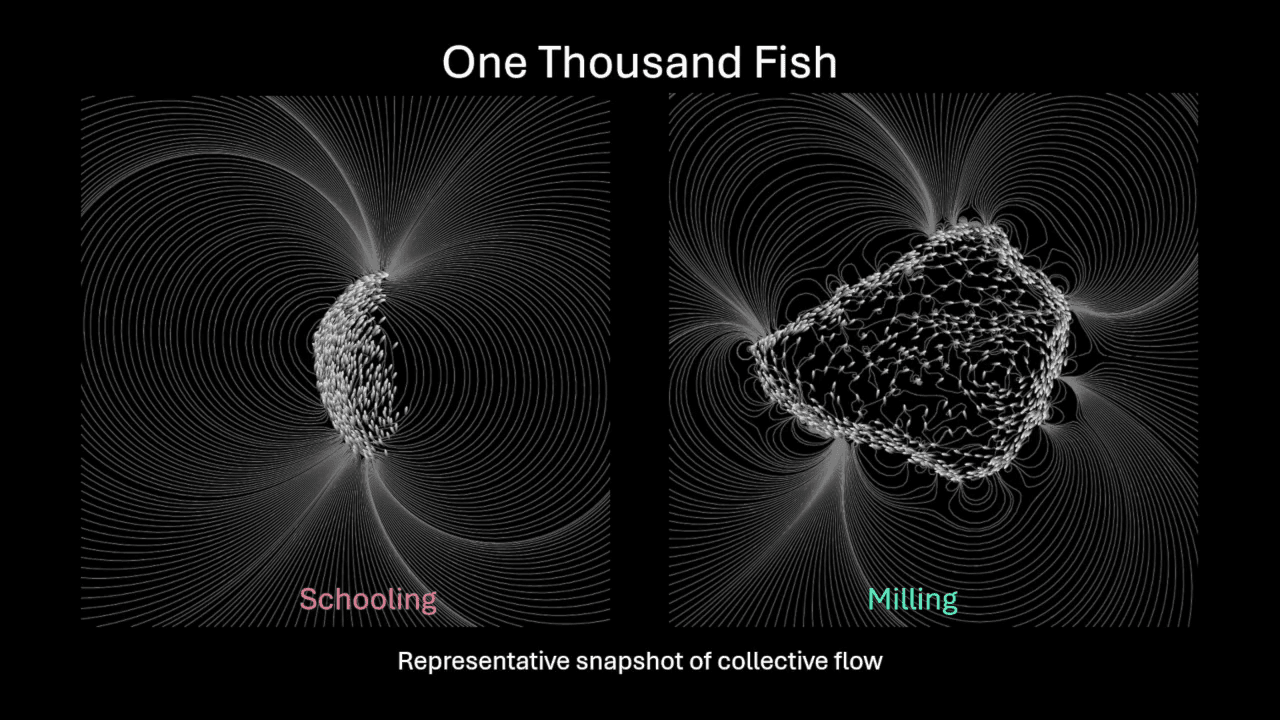
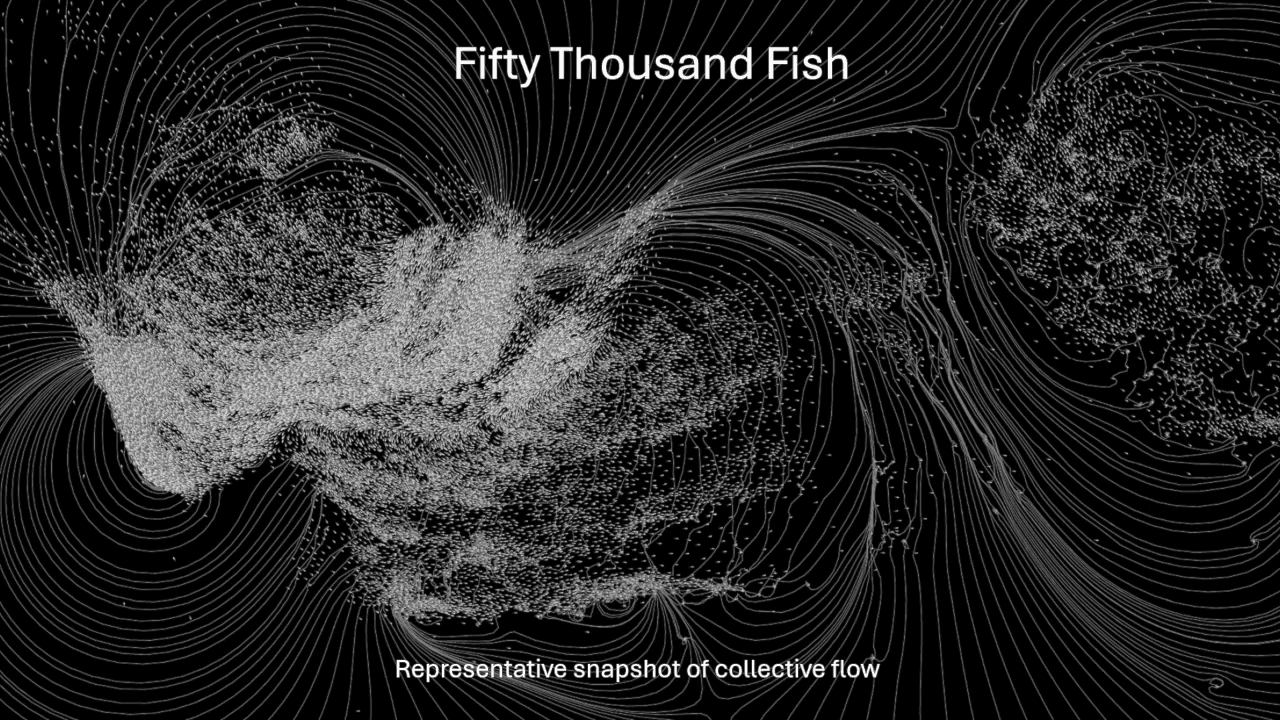
Relatively simple visual and hydrodynamic signals are enough to make digital fish school in ways that resemble living ones. Here, researchers look at what happens when well-behaved schools of fish get too big. The researchers first demonstrate that their schools behave reasonably at one hundred members, either in a schooling configuration or a group milling around a central region.
At one thousand fish, the schools are still reasonably coherent and sensible. But at fifty thousand fish, the picture is drastically different. Neither schooling nor milling groups are able to remain together. They fracture and scatter into smaller groupings. (Video and image credit: H. Hang et al.)
When soap bubbles burst, the hole grows as an expanding circle. But not every fluid bursts this same way. Here, researchers let air rise through oobleck–a fluid made from cornstarch suspended in water–to form a bubble. In time, as with all bubbles, the oobleck bubble bursts. But–in keeping with oobleck’s solid-like properties–the film tears open and fractures. As it sinks back into the liquid, it wrinkles before it slowly relaxes back into fluid form. (Video and image credit: X. Zhang et al.)