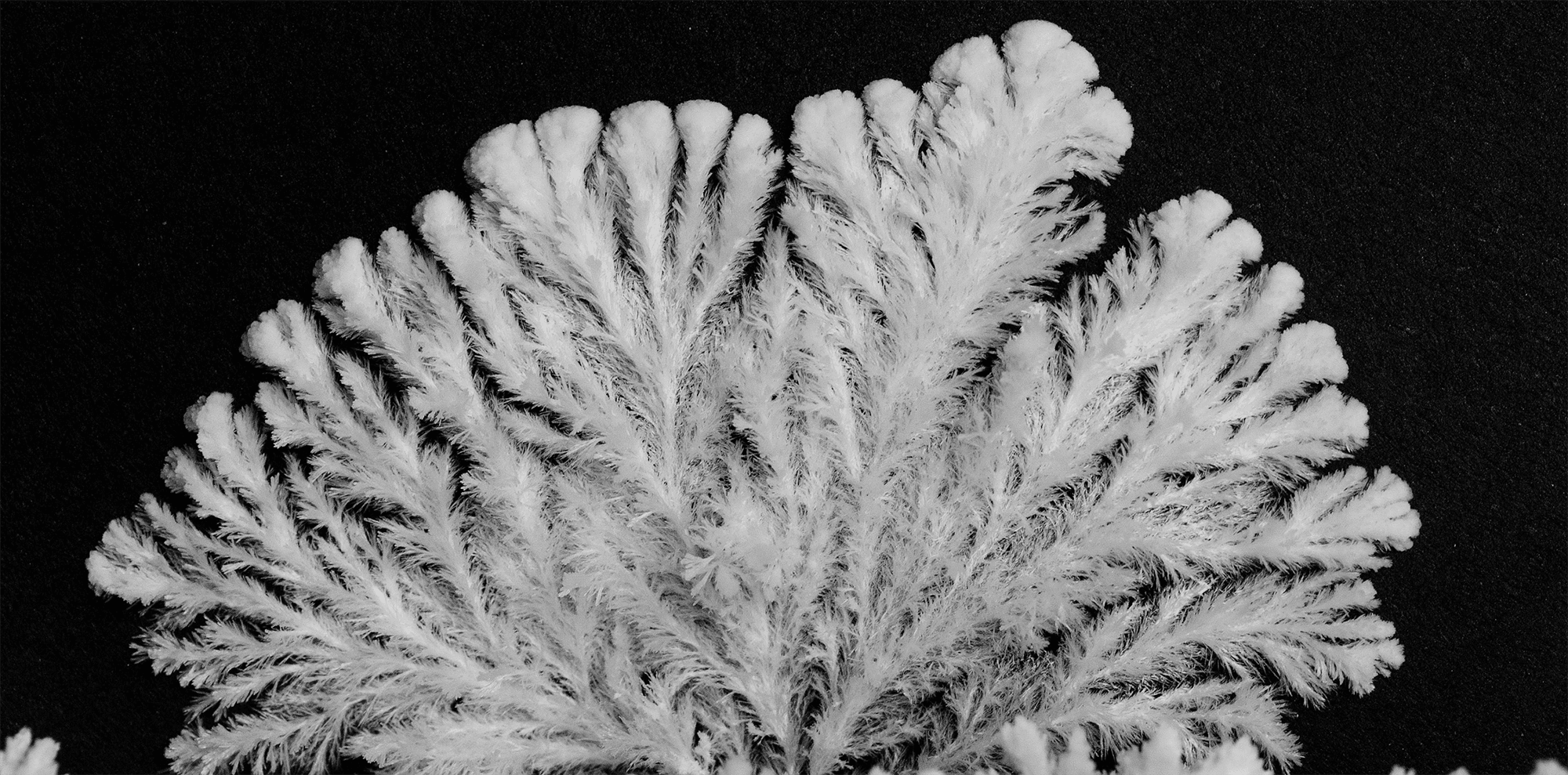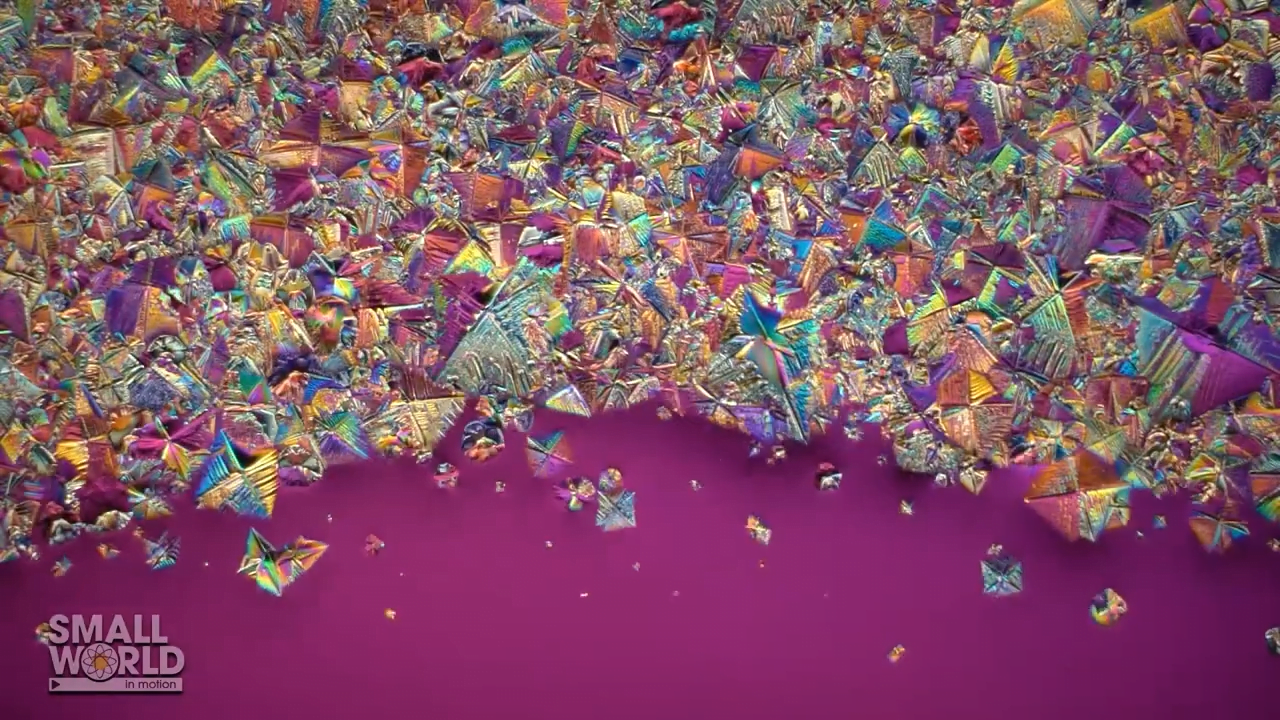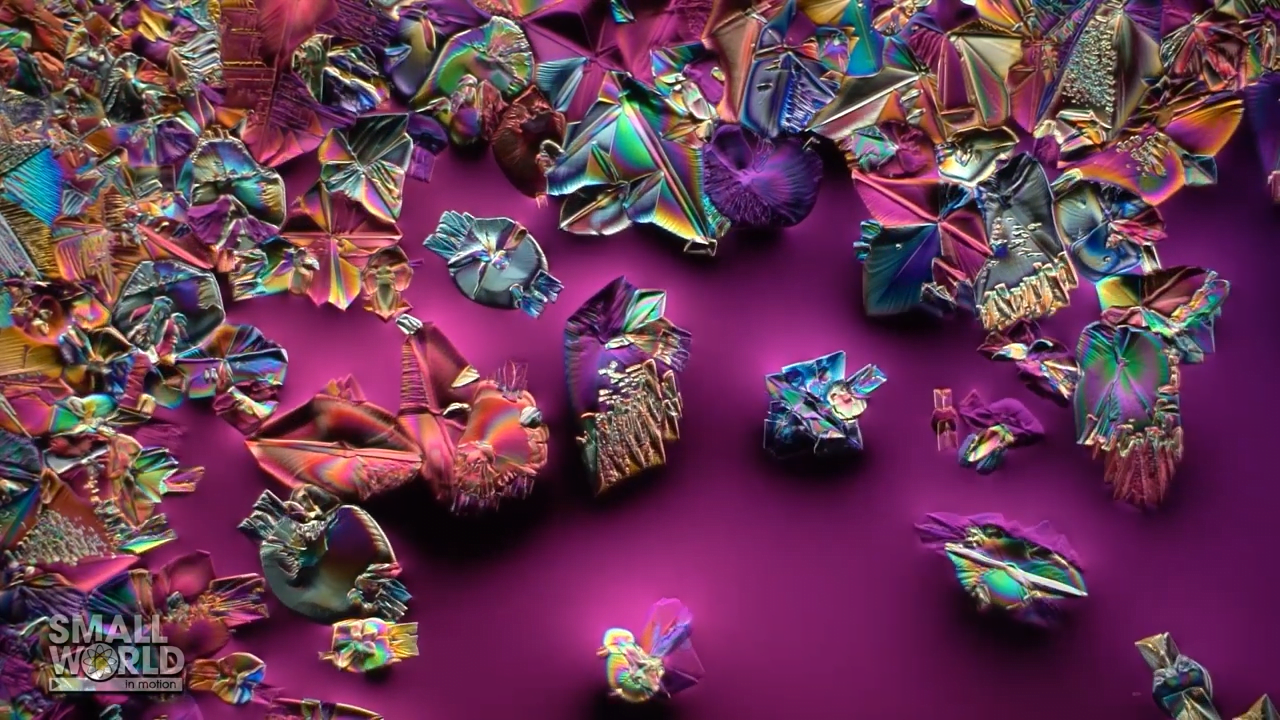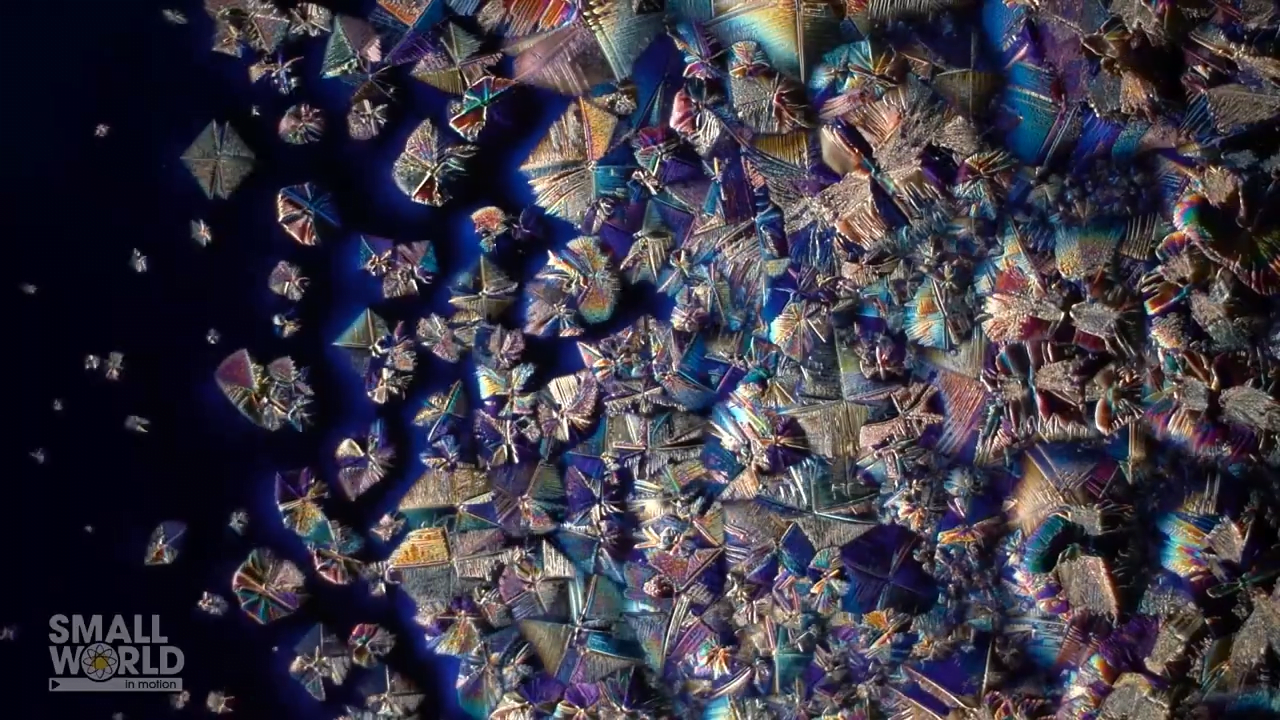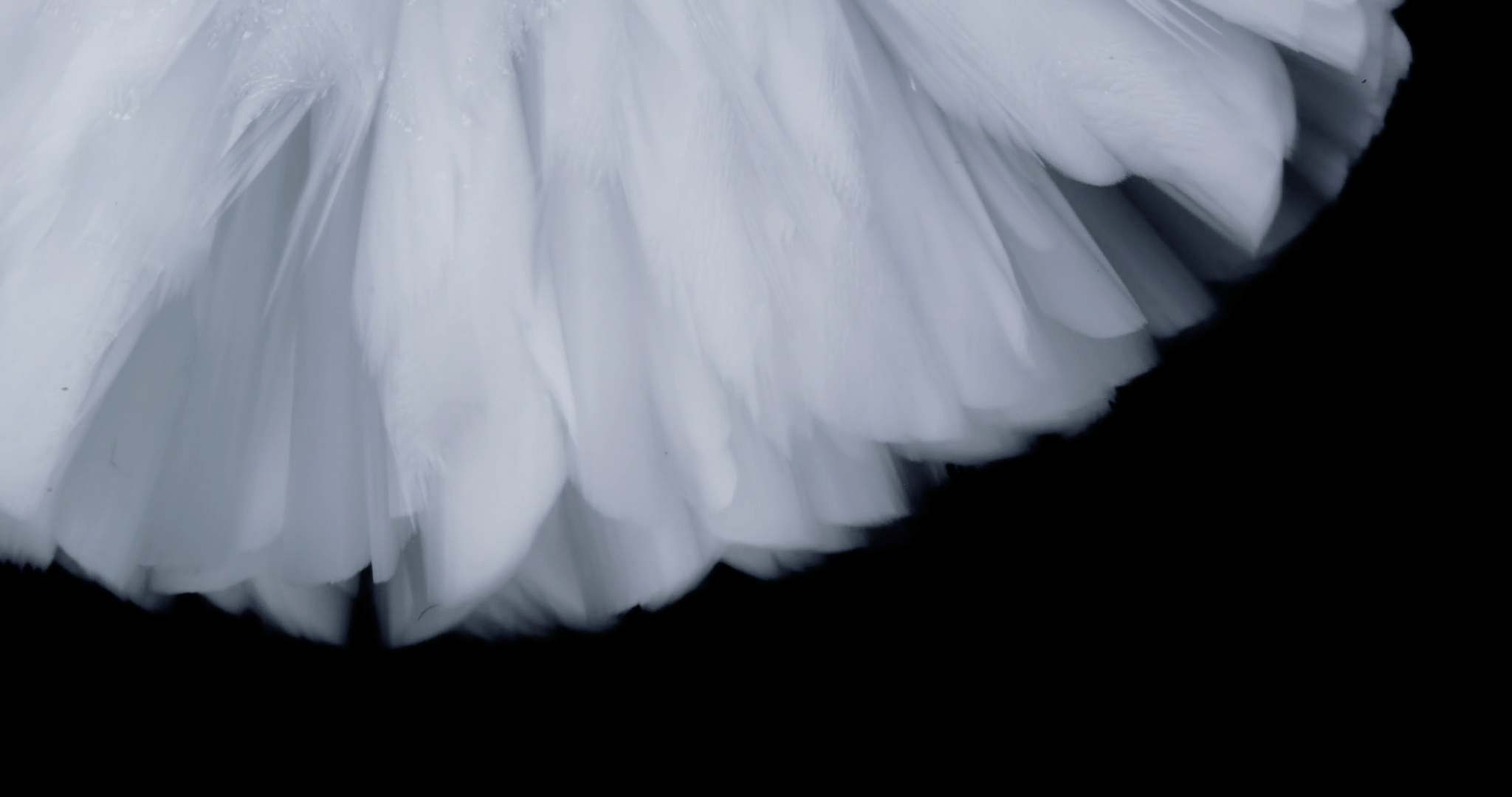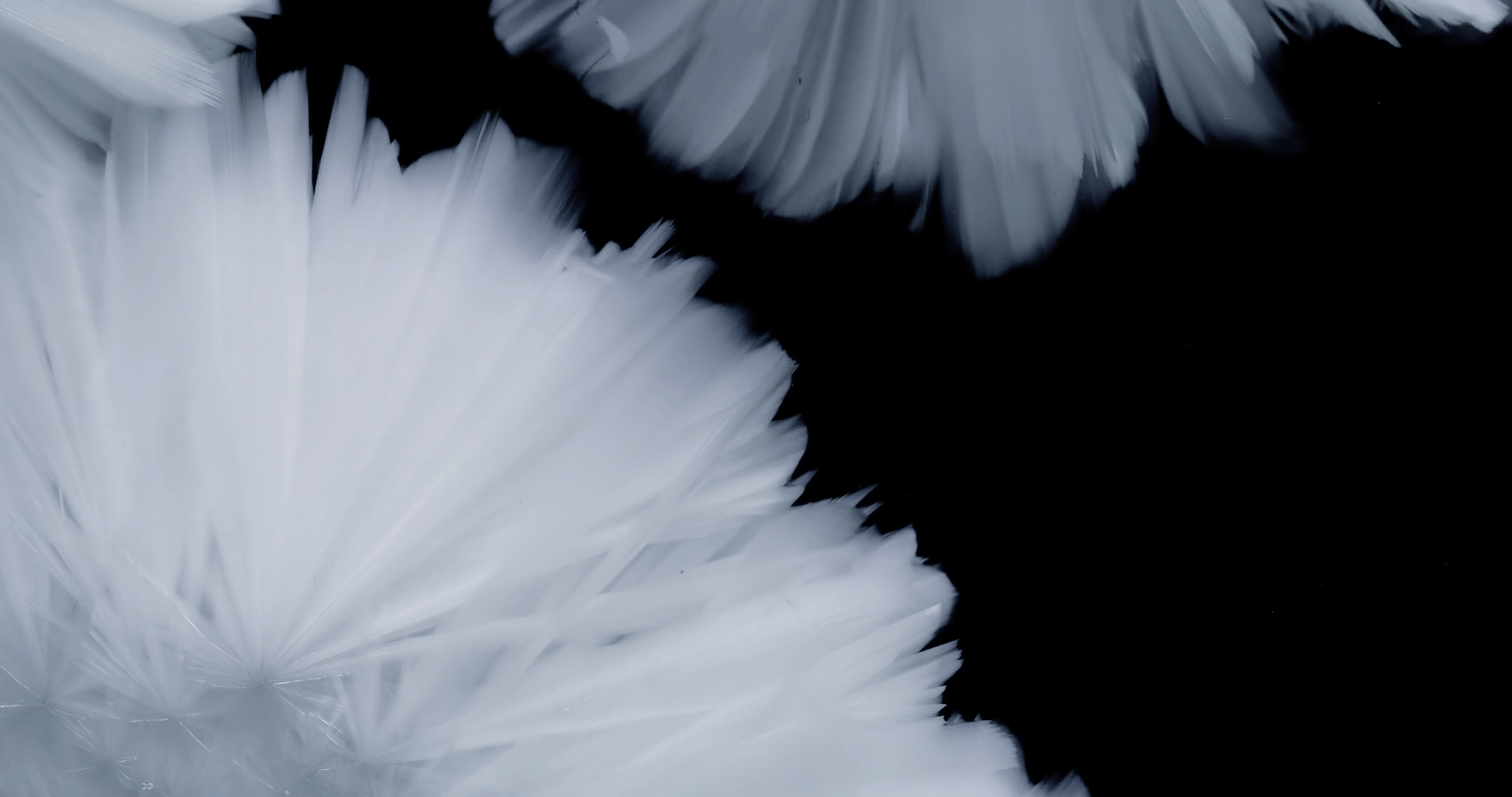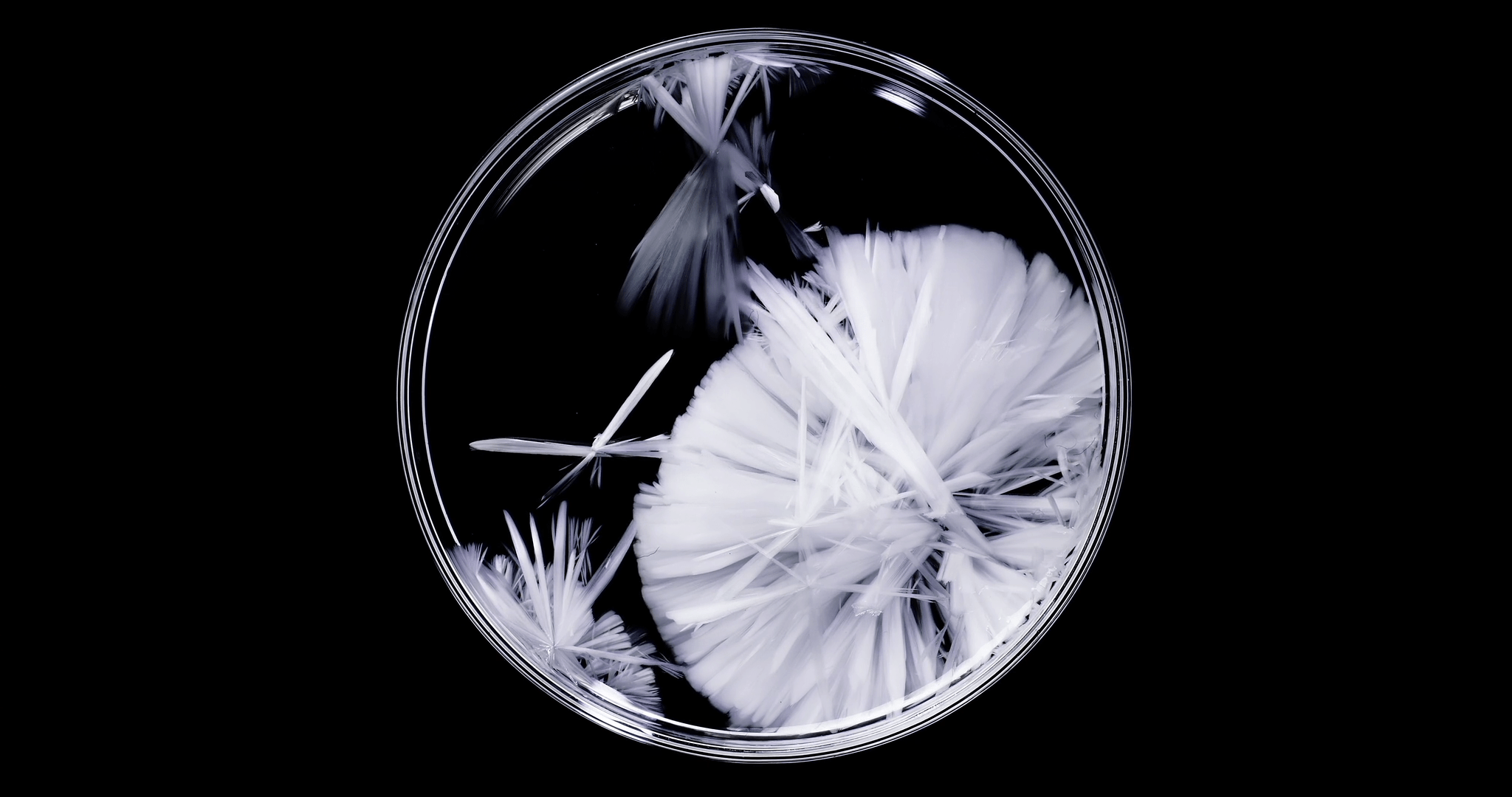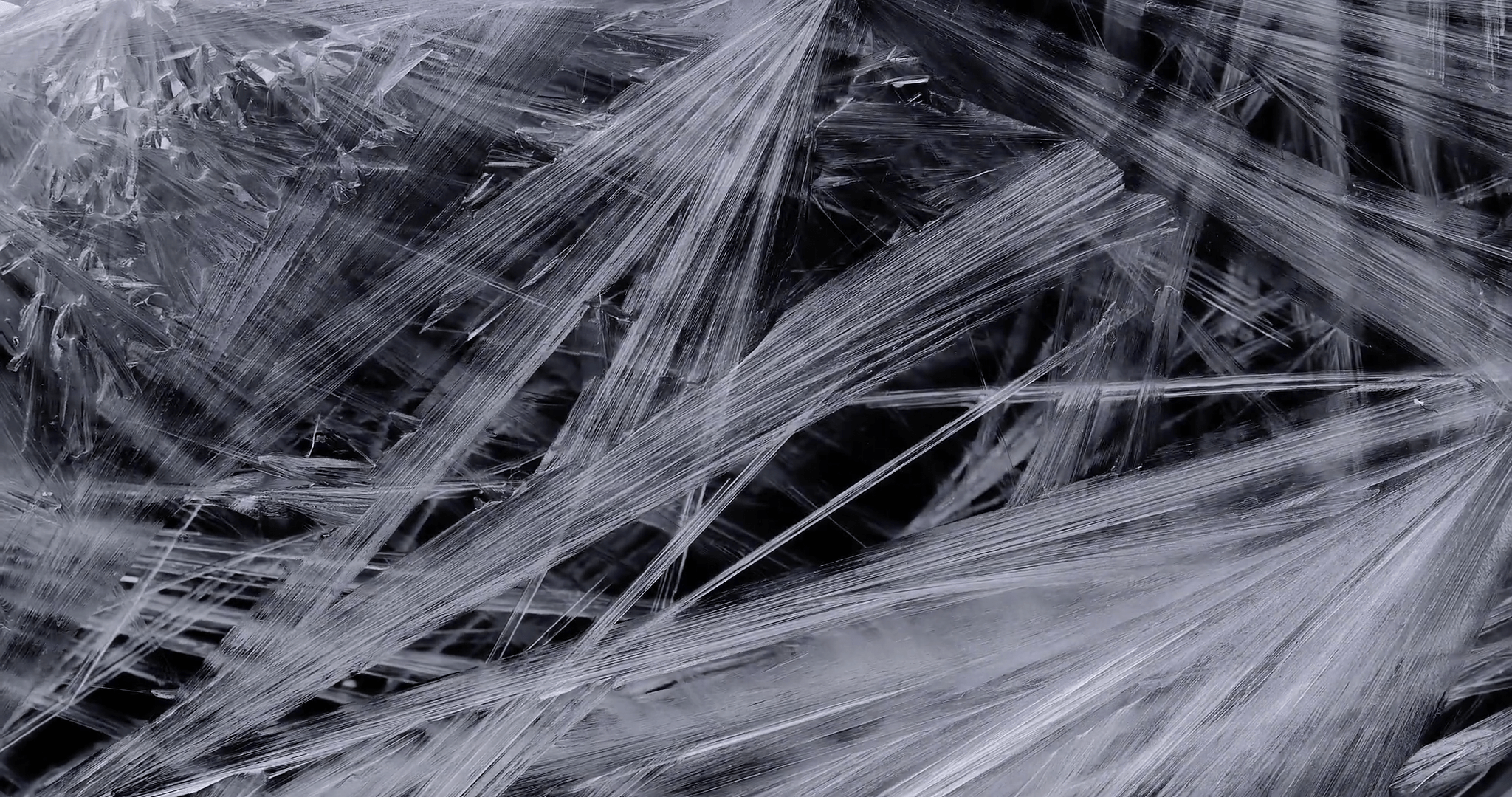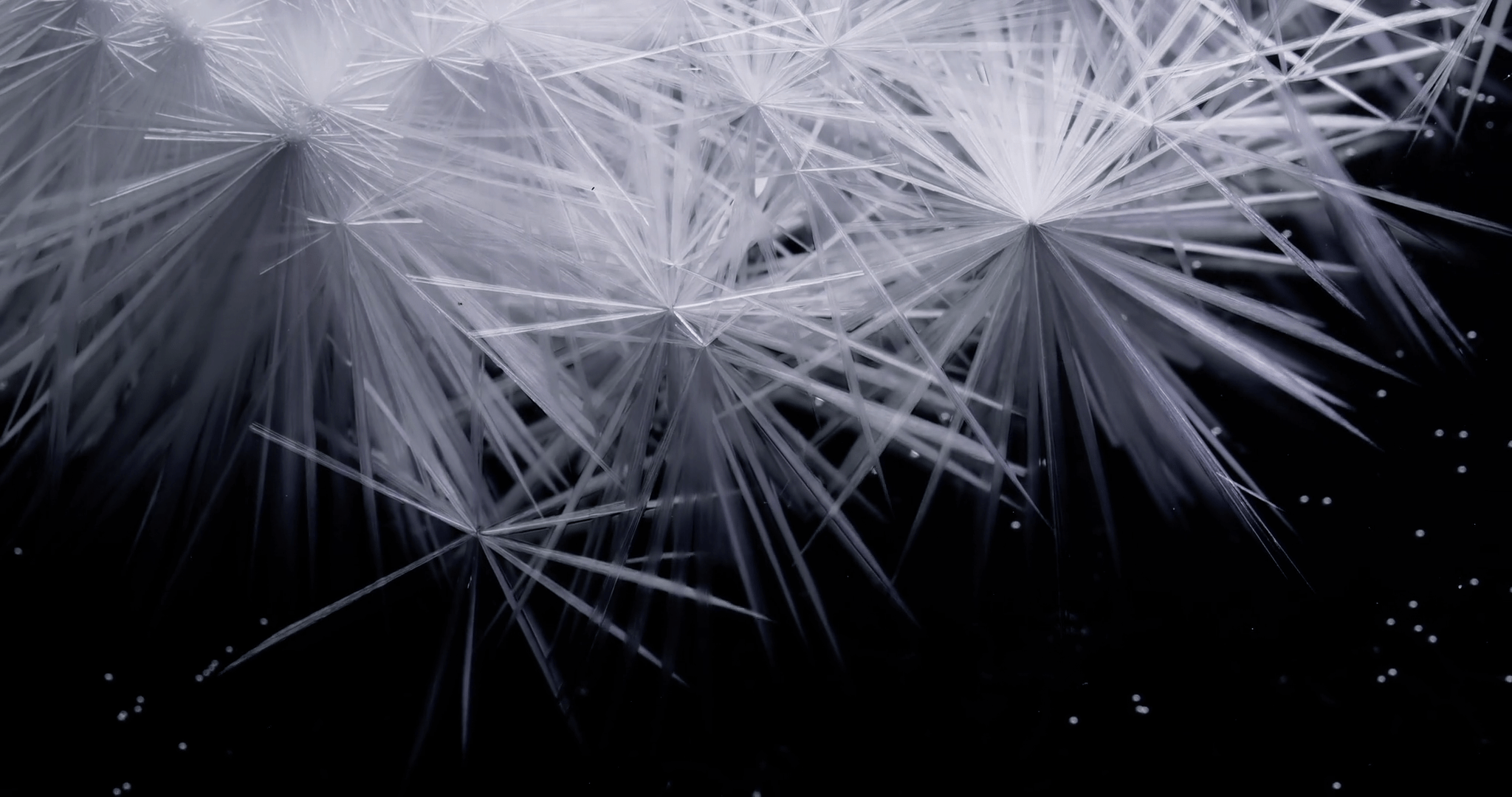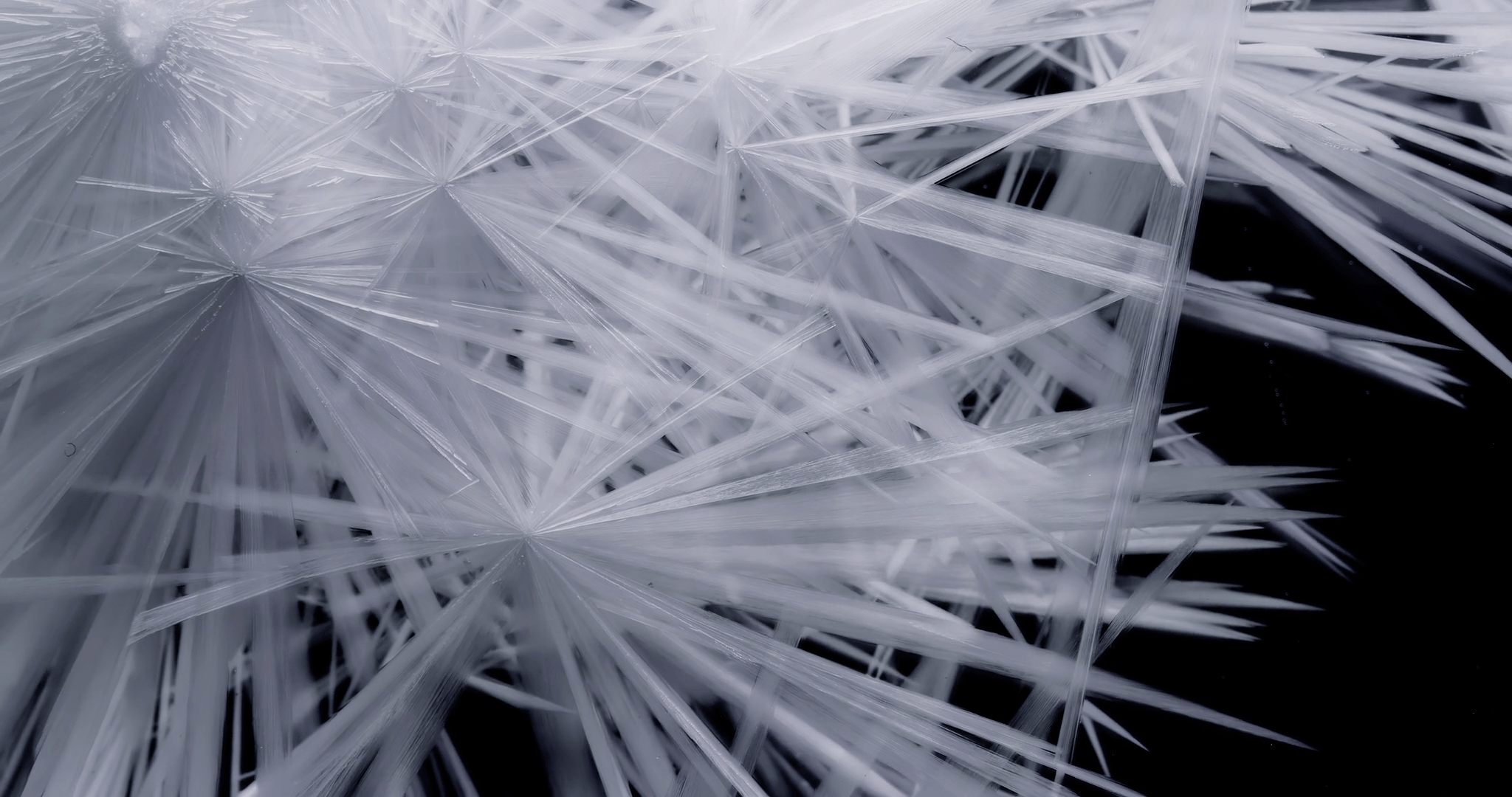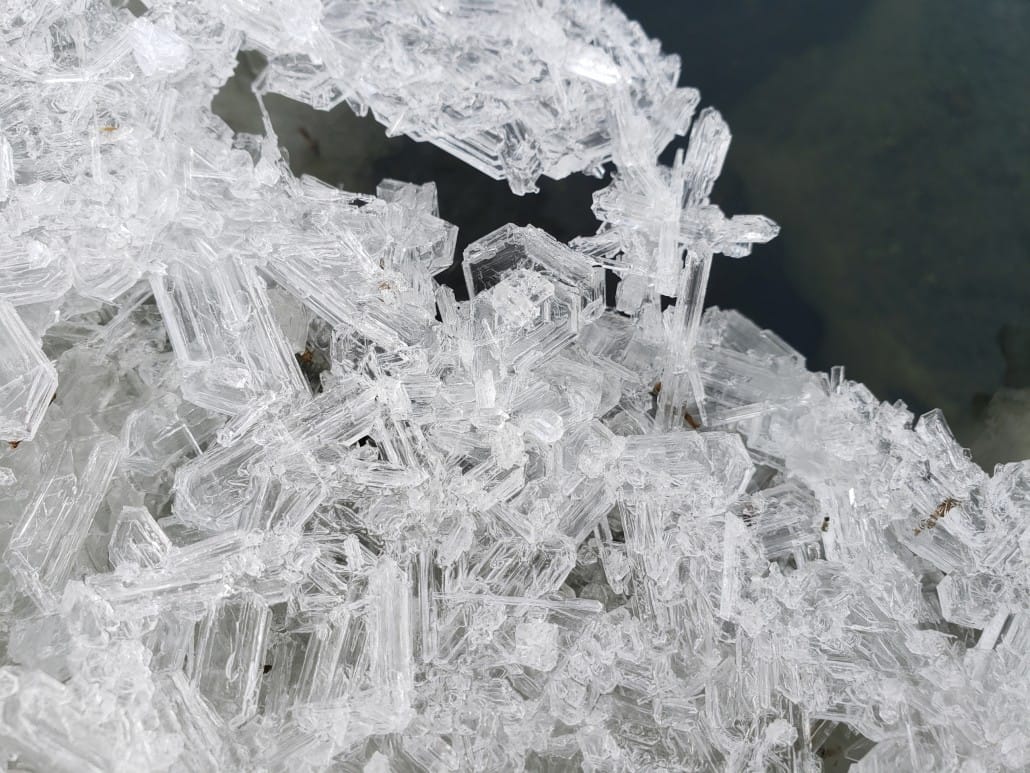
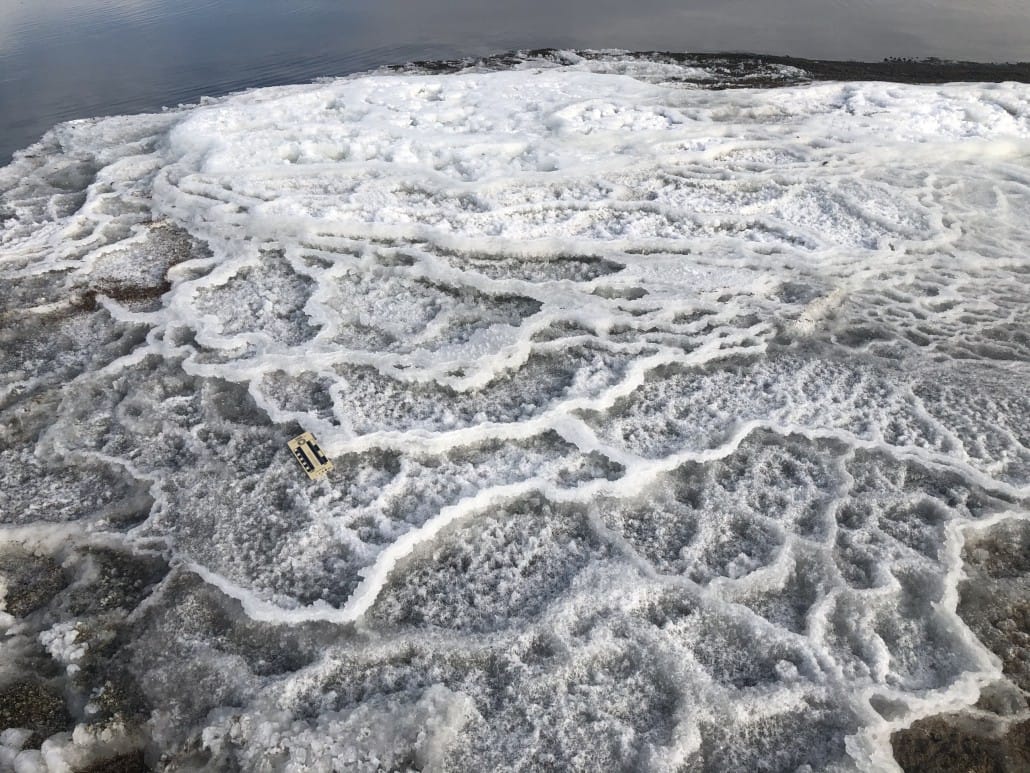
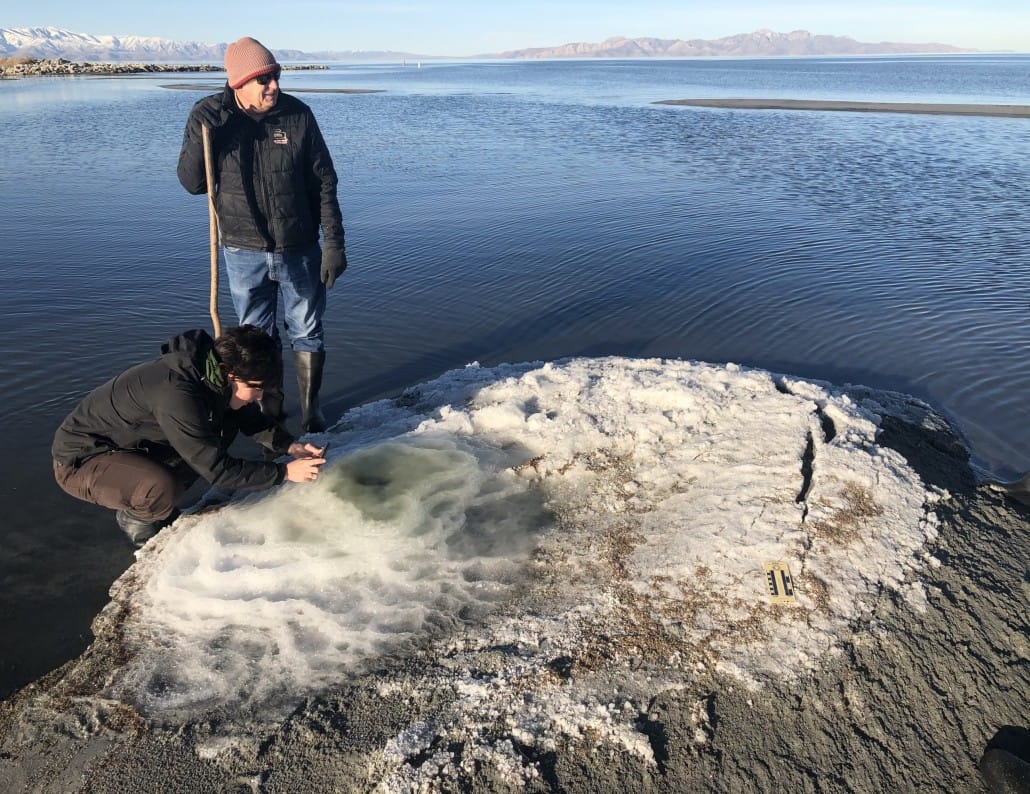
In this latest project, the Beauty of Science team explores colorful crystallization as chemicals precipitate out of evaporating solutions. The variety of shapes and colors is incredible. To see many more of these crystalline “gardens,” check out the video below and the project’s webpage. (Video and image credit: W. Zhu/Beauty of Science; via Colossal)
Tag: crystal growth

“C R Y S T A L S”
In “C R Y S T A L S,” filmmaker Thomas Blanchard captures the slow, inexorable growth of potassium phosphate crystals. He took over 150,000 images — one per minute — to document the way crystals formed as the originally transparent liquid evaporated. Some crystals branch into fractals. Others bulge outward like a condensing cloud or a sprouting mushroom. (Video and image credit: T. Blanchard)

Ice Without Gravity
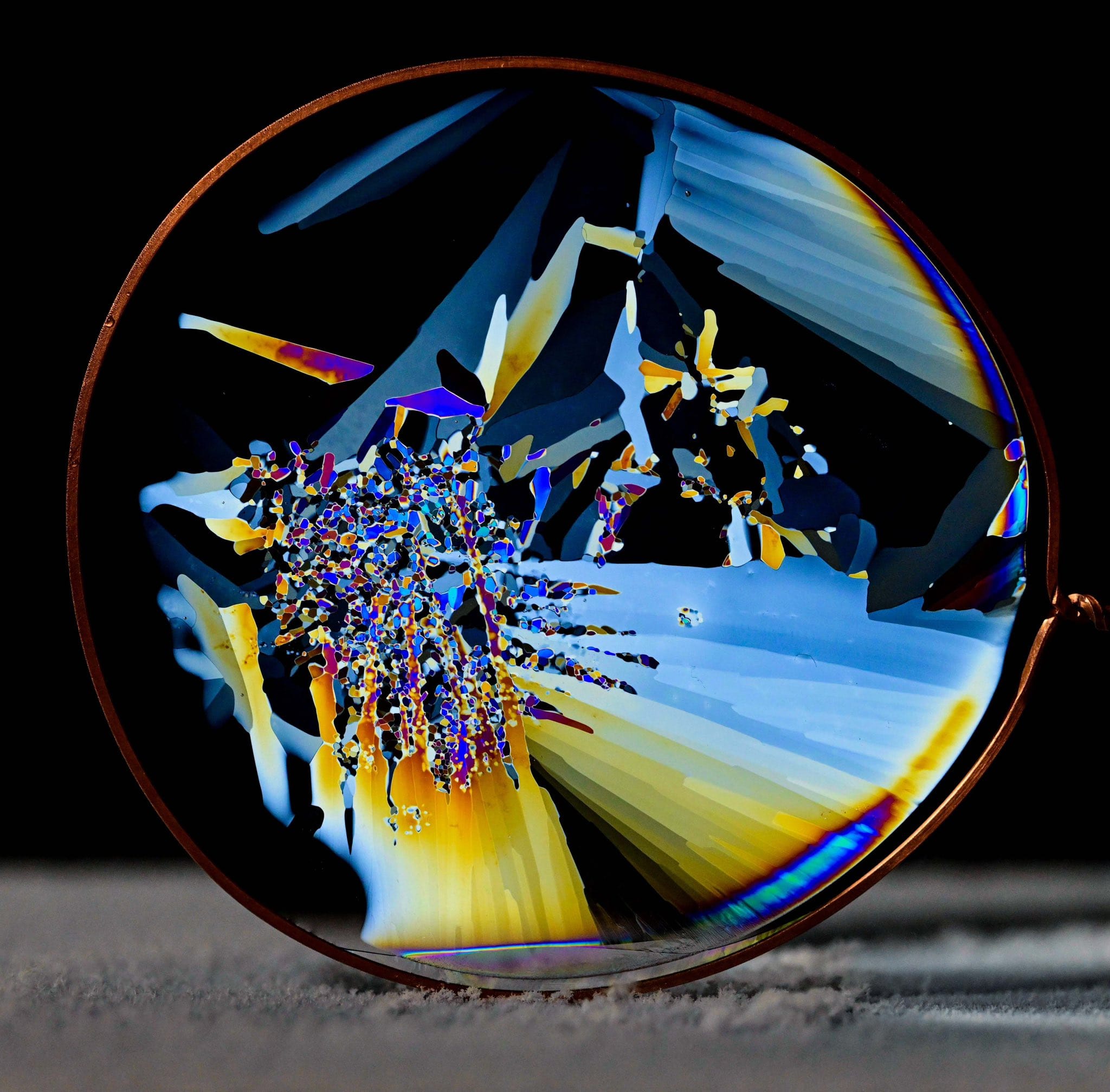
Astronaut Don Pettit is back in space, and that means lots of awesome microgravity experiments. Here, he grew thin wafers of ice in microgravity in a -95 degree Celsius freezer. Then he took the ice wafers and photographed them between crossed polarizers, creating this colorful image. The colors highlight different crystal orientations within the ice and give us a hint about how the freezing front formed and expanded. I can’t wait to see more examples! (Image credit: D. Pettit/NASA; via Ars Technica; submitted by J. Shoer)

“Chemical Somnia”
Under a macro lens, even a petri dish worth of fluids comes vividly to life. Here, artist Scott Portingale explores crystallization, Marangoni effects, and other phenomena alongside a haunting soundtrack from musician Gorkem Sen. Enjoy! (Image and video credit: S. Portingale et al.)

“Crystallizing Epsom Salts”
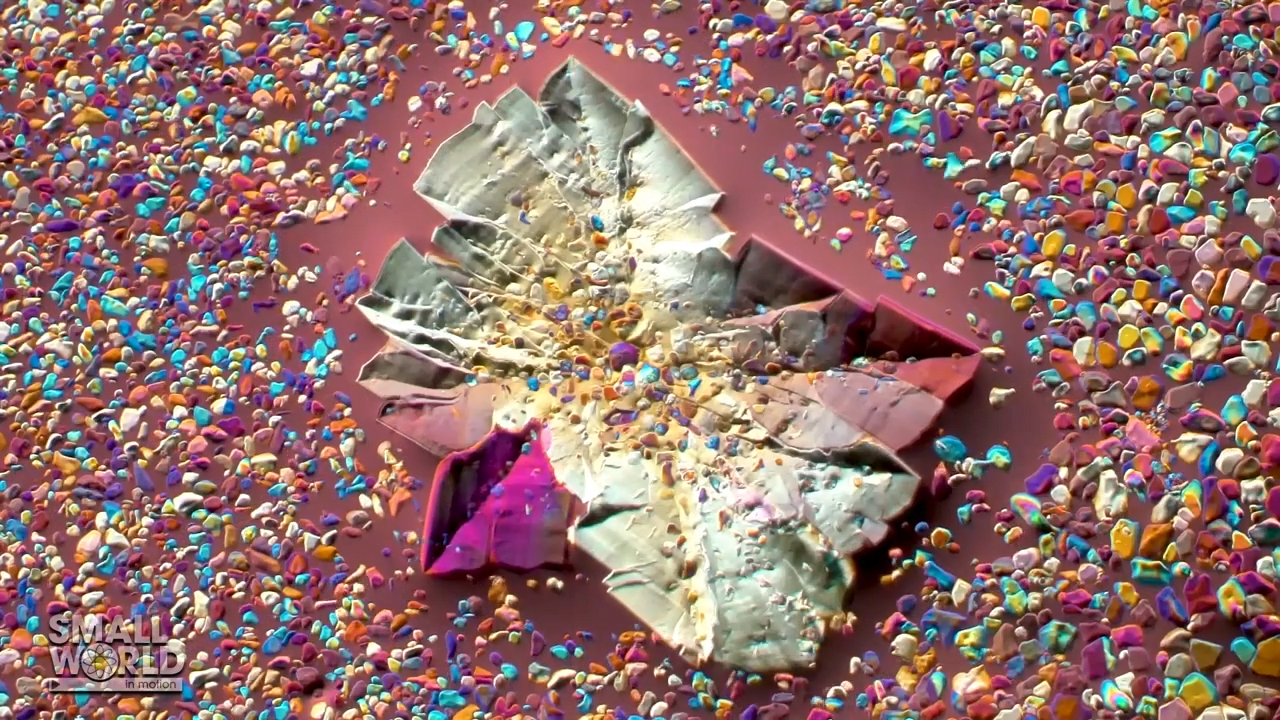
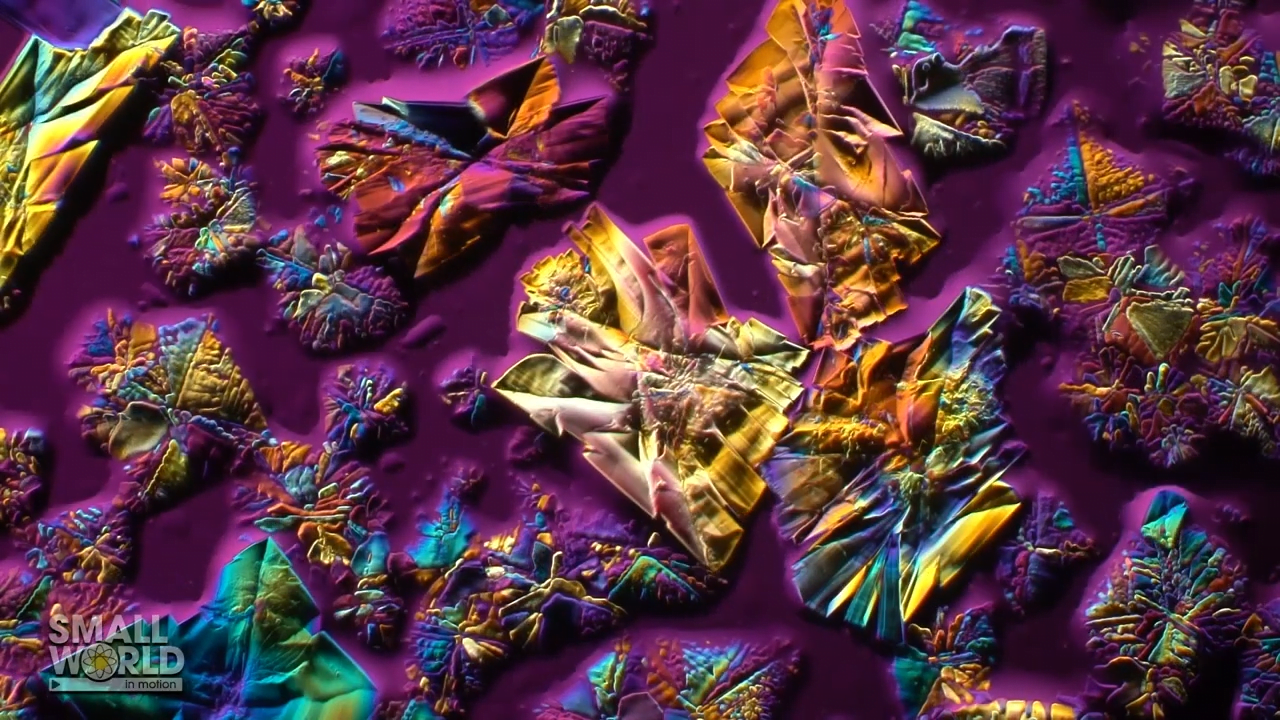
Candy-colored crystals emerge from a salty liquid in this macro video of Epsom salt crystallization by Karl Gaff. The video was an honorable mention in the 2022 edition of the Nikon Small World in Motion competition. The wild colors in the video come from illumination with polarized light, which makes the crystals appear different colors depending on the orientation of their atoms. (Image and video credit: K. Gaff; via 2022 Nikon Small World in Motion Competition)

“Belletrix”
Icy crystals burst forth against a dark background in Thomas Blanchard’s short film “Belletrix.” The process is one of chemical crystallization. Blanchard supersaturates a chemical in a dish of hot water, then cools the fluid, which then spontaneously crystallizes when disturbed. Depending on the solution’s temperature, the crystals vary from feather-like to radial stars, each reflecting, expanding, and overlapping to cover the full surface. (Image and video credit: T. Blanchard)

Holiday Fluids: Snowflakes
Just about everyone wishes for a White Christmas, but even when that happens, it’s rare to get a good look at the beauty of individual snowflakes. Alexey Kljatov’s macro photography of snowflakes is simply stunning and highlights the incredible variety of forms snowflakes take. A snowflake forms when a water droplet freezes onto dust or other particles and grows as more water vapor freezes onto the initial crystal. The symmetry of the snowflakes, as with any crystal, comes from the internal order of its water molecules. The shape and features that form vary due to the local temperature and humidity level while vapor is freezing onto the crystal. Check out this handy graph showing which shapes form for various situations. Since snowflakes can encounter wildly different conditions on their path to the ground, it’s rare or next-to-impossible to find any two alike. Join us all this week at FYFD as we look at holiday-themed fluid dynamics. (Photo credit: A. Kljatov)

“Cascades”
Ryan Teague’s “Cascades” music video features the enchanting process of ice growth. A chamber full of supercooled water vapor subject to a strong electric field is stimulated to grow crystals by providing a needle as the initial nucleation site. Because the vapor is supercooled, it will freeze upon contact with the nucleation site; the electric field keeps the water molecules aligned so that the crystal patterns formed are more even. The tree-like pattern seen here is called dendritic crystal growth; branches form at faults in the crystalline pattern. (Video credit: Ryan Teague, Village Green, Words are Pictures; via Gizmodo)