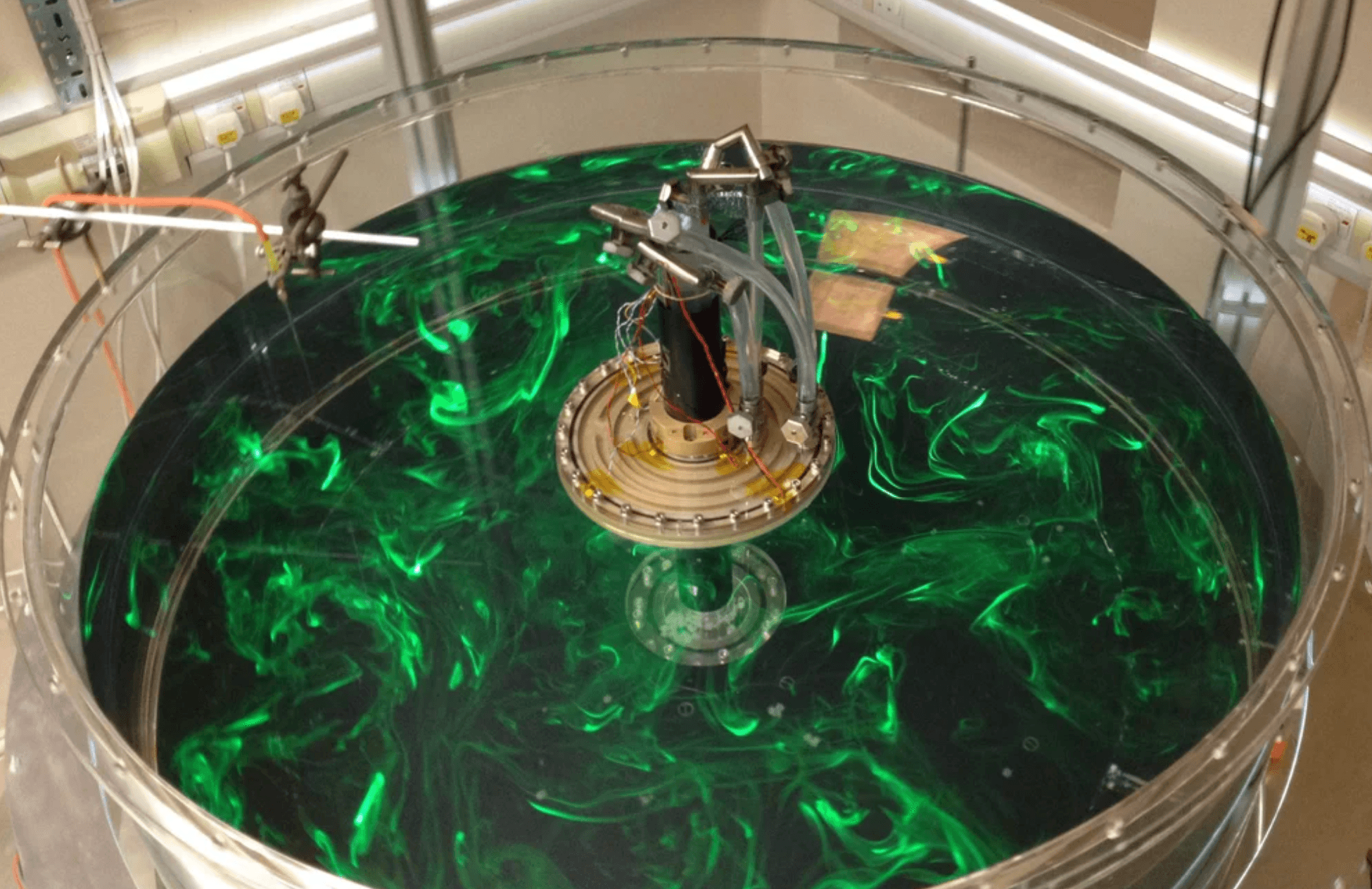
In planetary atmospheres, energy and vorticity can cascade from large scales to smaller ones, but the mechanics of this transfer remain somewhat elusive. In a recent experiment, researchers built a lab-scale representation of an atmosphere using a meter-scale rotating annular tank. The outer bottom edge of the tank gets heated–representing the sun’s warming at the equator–while a pipe in the center of the tank gets cooled near the tank surface, which mimics the chilling effect of the poles. Researchers filled the tank with a water-glycerol mixture and recorded how their artificial atmosphere responded at different rotation rates.
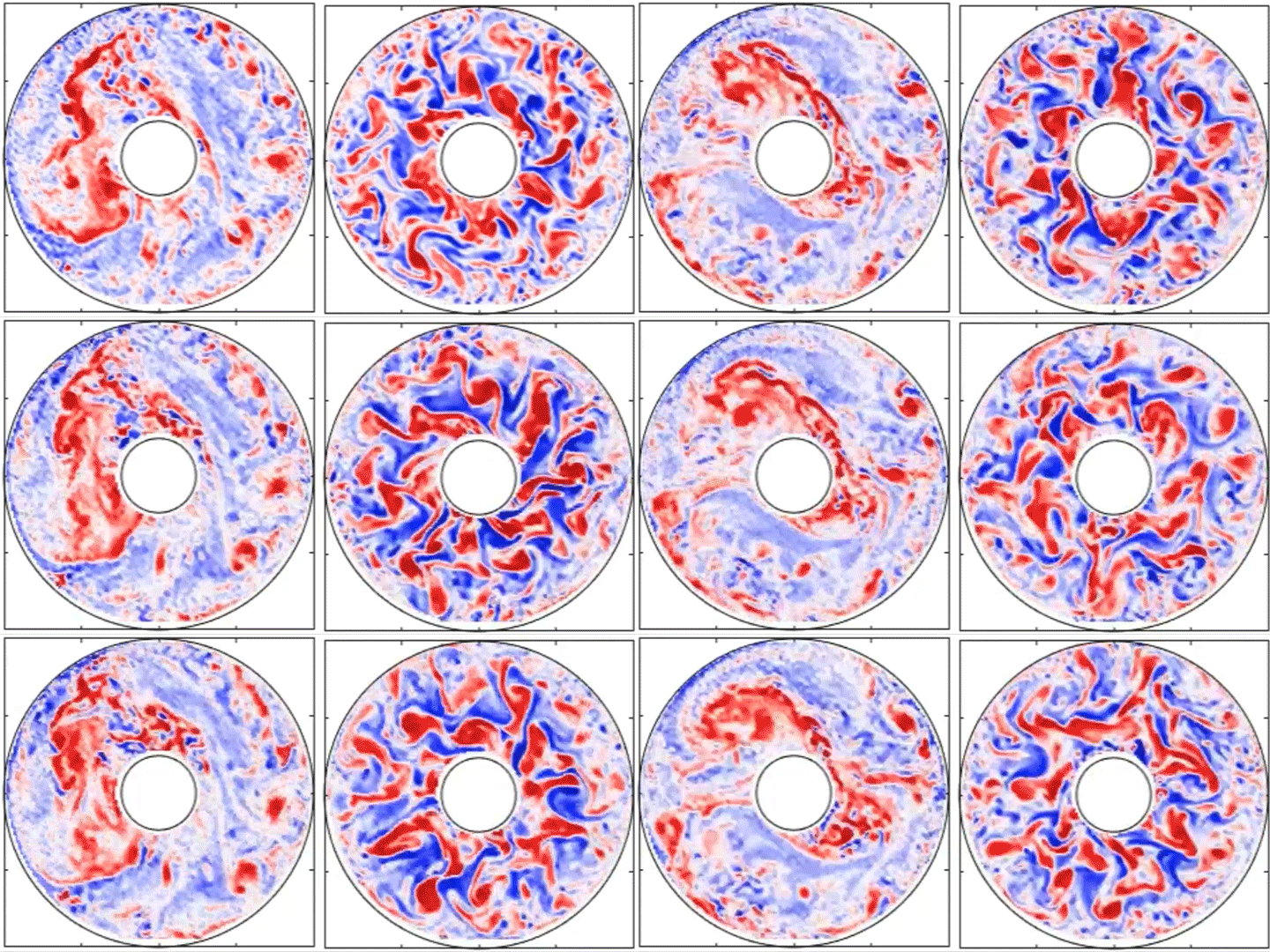
The results show an energy spectrum that’s consistent with atmospheric observations–with a steep drop at large length scales and a flatter one at smaller scales. But interestingly, they also found that the cascade was temperature-dependent in ways that current models don’t predict. Untangling that effect could help us understand not only our atmosphere but those of other planets. (Image credit: tank – H. Scolan, animation – S. Ding et al.; research credit: S. Ding et al.; via APS)




Leave a Reply