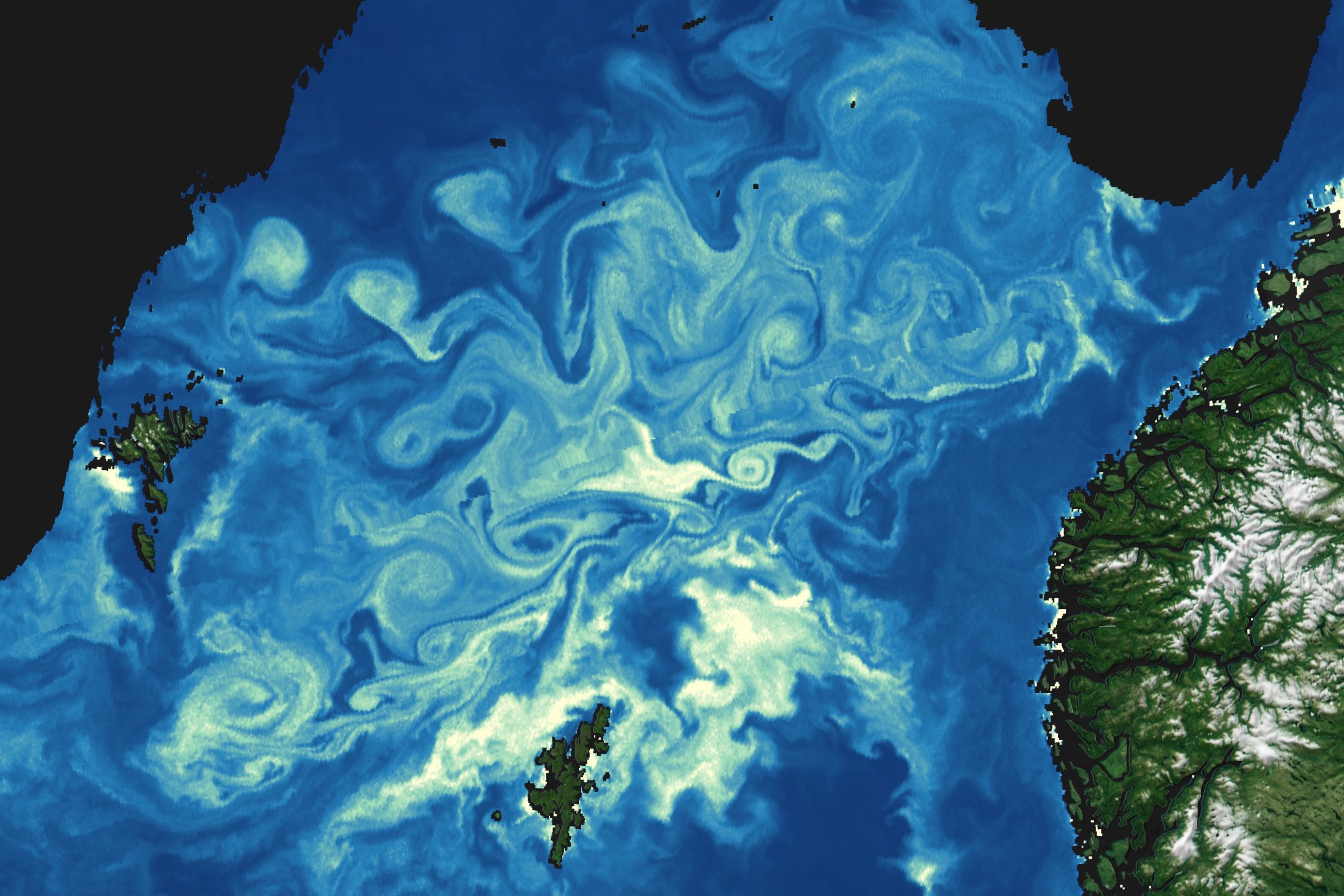
Instruments aboard NASA’s PACE mission are able to distinguish far more about phytoplankton blooms than previous satellites. This image shows chlorophyll concentrations in the Norwegian Sea in July 2025. Chlorophyll acts as a proxy for phytoplankton, which produce the chemical as they process sunlight into food and oxygen.
Despite their microscopic size, phytoplankton have enormous collective effects. Scientists estimate that phytoplankton produce as much as half of the Earth’s oxygen in addition to helping transport carbon dioxide from the atmosphere into the deep ocean. They are also the foundation of the marine food web, feeding nearly all life in the ocean. (Image credit: W. Liang; via NASA Earth Observatory)





Leave a Reply