Year: 2023

  • Spreading Spores

    Spreading Spores

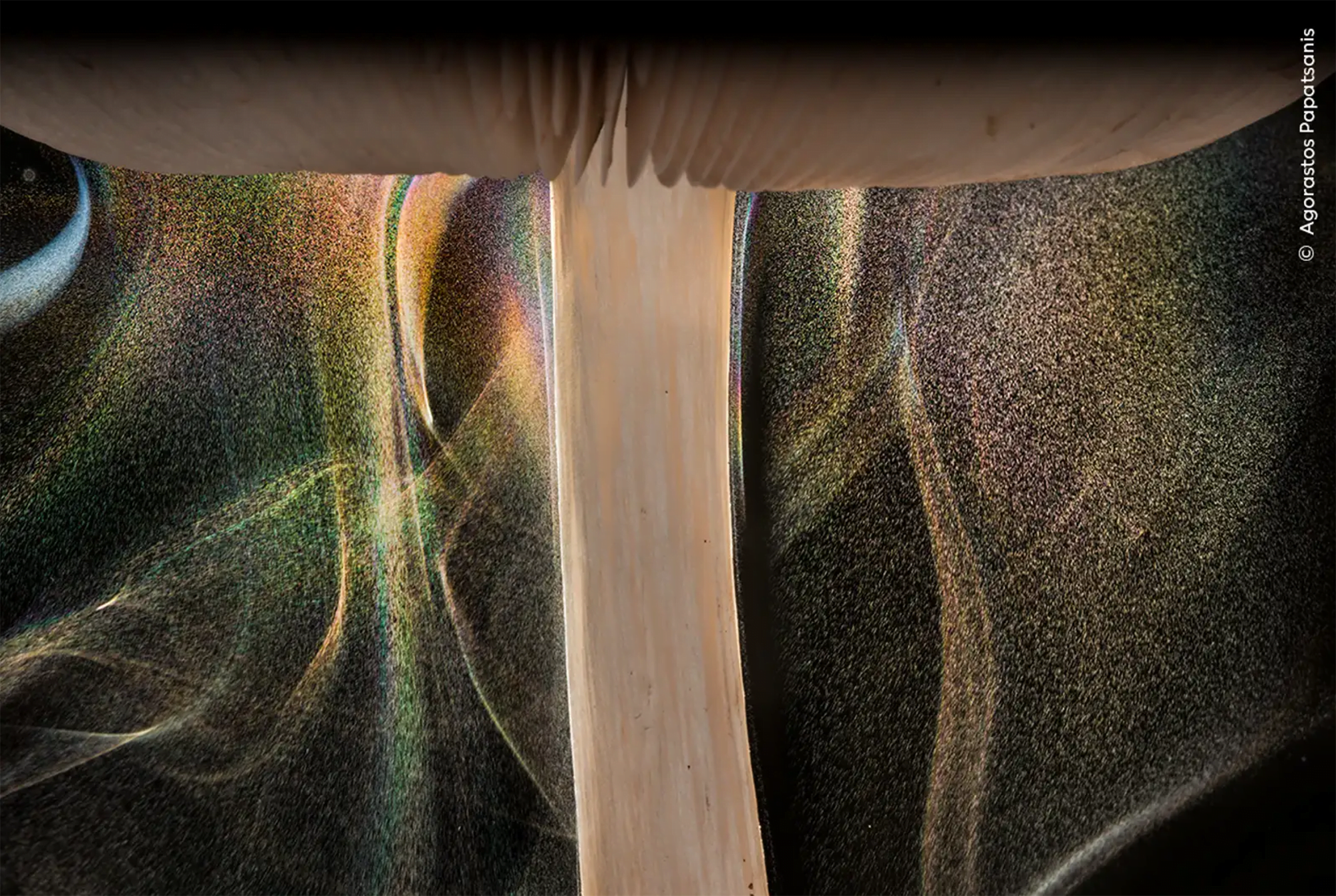
    Mushrooms are the fruiting bodies of much bigger, largely underground fungi. Being fruit, mushrooms have the job of spreading spores so that the fungus can reproduce. Some mushrooms rely on the wind; others create their own wind. Still others use vortex rings to carry their spores higher. Who knew such fascinating and beautiful physics lies along the forest floor? (Image credit: top – A. Papatsanis, bottom – I. Potyó; via Wildlife POTY)

    Photo by Imre Potyó.
  • Dancing Peanuts

    Dancing Peanuts

    Bartenders in Argentina sometimes entertain patrons by tossing a few peanuts into their beer. Initially, the peanuts sink, but after a few seconds they rise, wreathed in bubbles. Once on the surface, they roll, causing the bubbles to pop, and the peanut sinks once again. The cycle repeats, sometimes for as long as a couple hours.

    There are a couple physical processes governing this dance. The first is bubble nucleation. Most beers are carbonated; they contain dissolved carbon dioxide gas that remains in solution while the beer is under pressure. Once poured, that storage pressure is gone and bubbles start to form in the liquid. The shape of the peanut means that bubbles form more easily on it than on the glass walls or in the liquid. And once the peanut is covered in bubbles, buoyancy comes into play. The bubbles attached to the peanut reduce its density relative to the surrounding fluid, enabling the peanut to rise up and float.

    This same process is seen with other objects in carbonated fluids, too, such as blueberries in beer and lemon seeds in carbonated water. But it’s also reflected elsewhere in nature. For example, magnetite crystals are thought to float in magma due to a similar nucleation of dissolved gases on their surface. (Image and research credit: L. Pereira et al.; via APS Physics)
  • Frozen Ripples

    Frozen Ripples

    Normally, freezing is a slow enough process that transient phenomena like ripples get smoothed out. But with the right conditions, even ripples can get frozen in time. This picture shows a backyard bird bath after a frigid winter storm passed overnight. For much of that time, the wind was active enough to keep the bath’s water from freezing. But when freezing did start, it happened so rapidly that the wavelets generated by the wind got frozen in place, too. Here’s a similar-looking effect (also in Colorado, ironically) that’s thought to have formed entirely differently. (Image credit: K. Farrell; via EPOD; submitted by Kam-Yung Soh)

  • Why Sea Foams

    Why Sea Foams

    Seawater froths and foams in ways that freshwater rarely does. A new study pinpoints the ocean’s electrolytes as the reason bubbles resist merging there. By studying the final moments before bubbles coalesce in both pure and salt water, researchers found that dissolved salts slow down the drainage of the thin film of liquid between two bubbles. Once the film reaches a 30-50 nanometer thickness, its electrolyte concentration causes a difference in surface tension that slows the outward flow of liquid in the film. That keeps the film in place longer and makes bubbles form foams instead of merging or popping. (Image credit: P. Kuzovkova; research credit: B. Liu et al.; via APS Physics)

  • Dust Storms

    Dust Storms

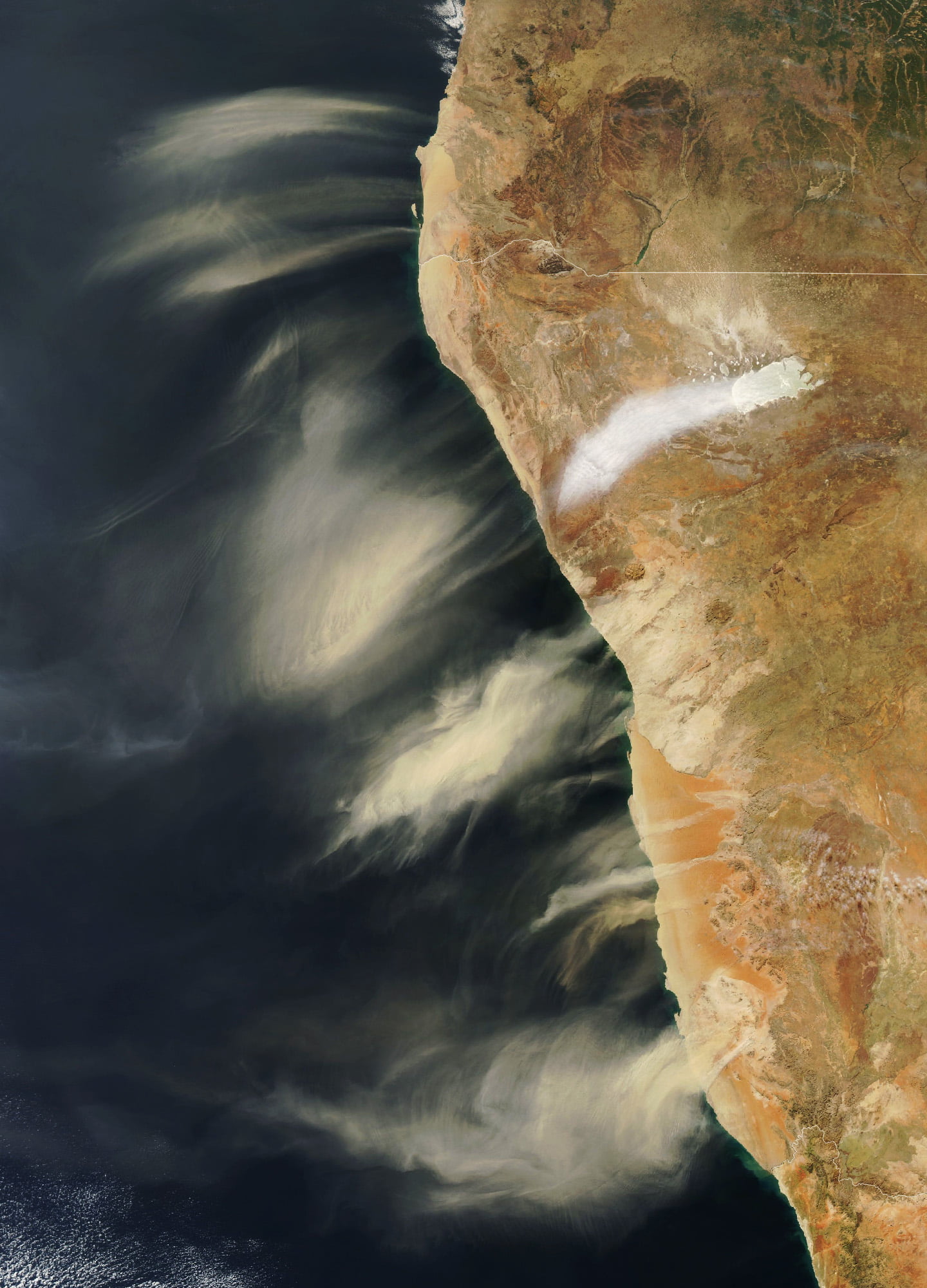
    Hot, dry berg winds swept down from the Namibian highlands and sent these plumes of dust flying out to the Atlantic coast. Another plume — white instead of brown — marks salt dust from the Etosha Pan salt flat. The dust and salt become aerosol particles in the atmosphere — seeds for raindrops to form. Coastal towns sometimes need construction equipment to deal with the drifting sand from these storms, but these storms are small compared to Saharan dust storms. Those storms are so large that their dust influences the weather on the other side of the Atlantic. (Image credit: W. Liang; via NASA Earth Observatory)

  • Black Hole Signature

    Black Hole Signature

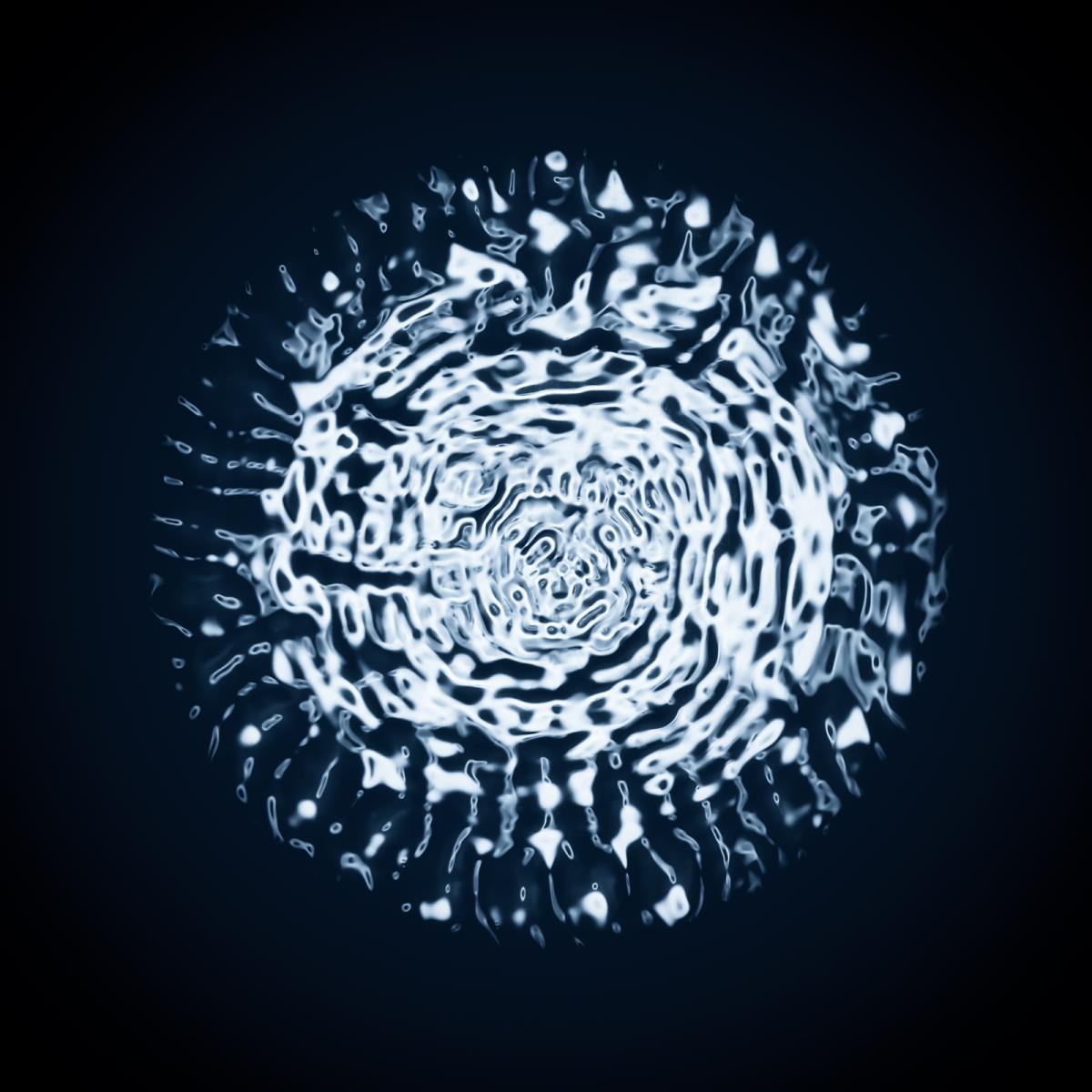
    240 million years ago, pressure waves emanated from a black hole inside the Perseus Galaxy Cluster. Much later, NASA’s Chandra X-Ray Observatory intercepted those waves. Scientists raised the frequency of the signal until it fell within the range of human hearing. And then photographer John White played that sound through a petri dish of water sitting on a speaker. The result is above: a watery glimpse of a long ago black hole’s signature. Within these Faraday waves is the echo of a stellar phenomenon that took place when the very first dinosaurs walked our planet. (Image credit: J. White; via the 2023 Astronomy POTY)

  • Underwater Volcanic Flows

    Underwater Volcanic Flows

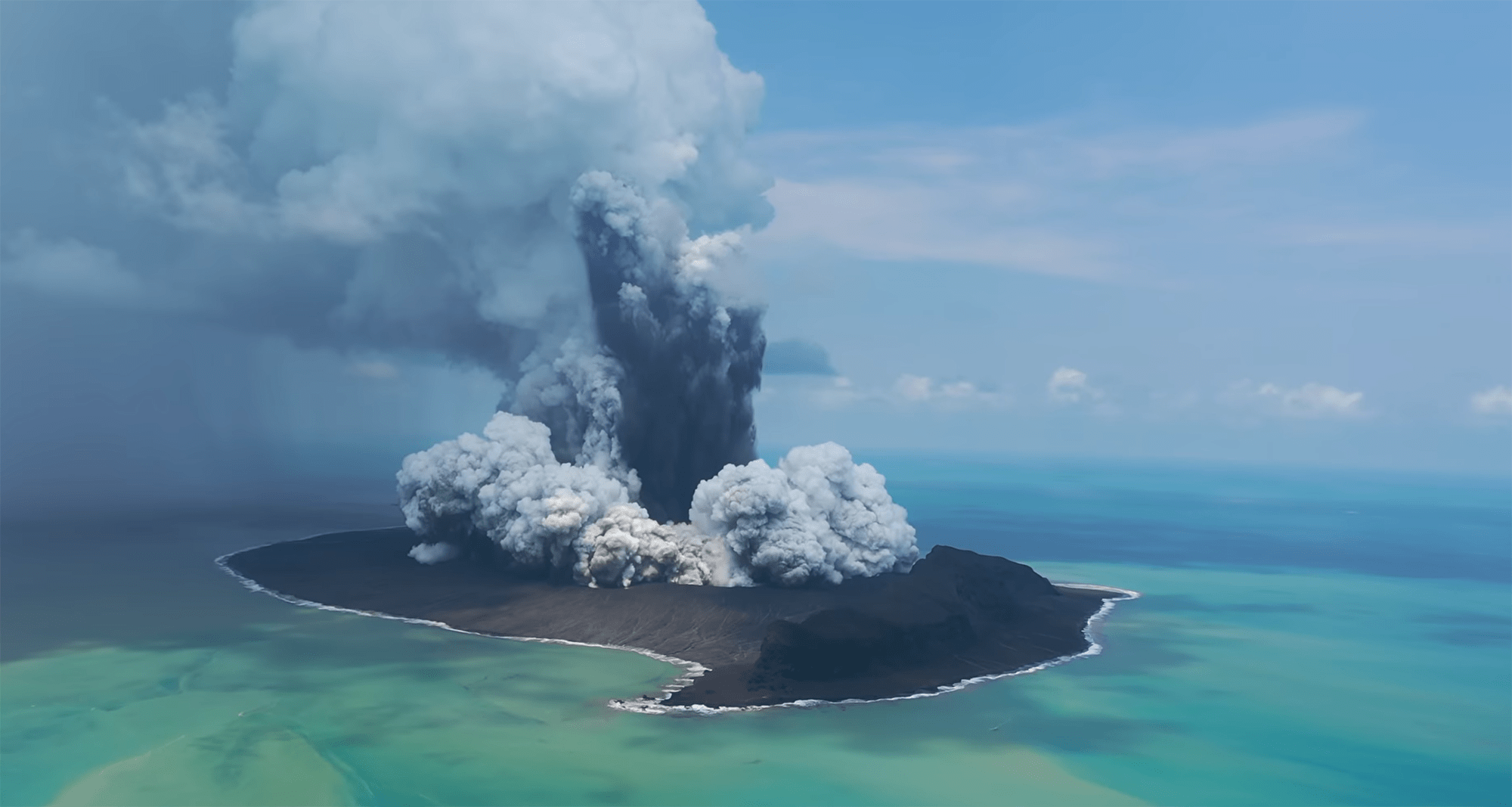
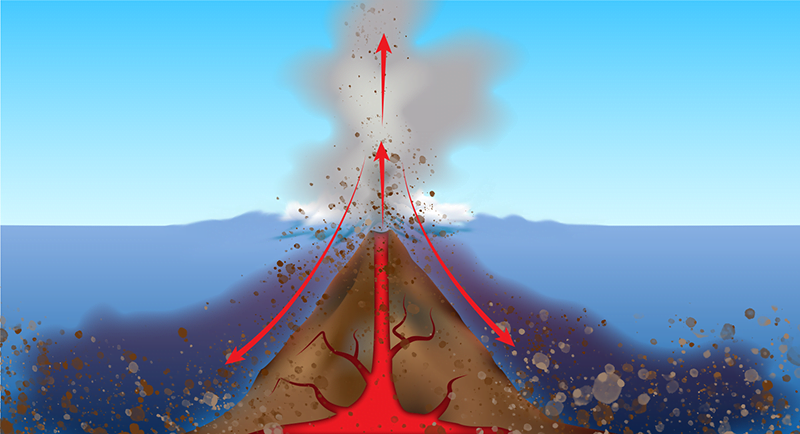
    The Hunga Tonga–Hunga Ha’apai volcanic eruption in December 2021 was the most violent in 140 years, and we are still learning from its aftermath. A recent study focuses on the eruption’s incredible underwater flows, which damaged nearly 200 kilometers of underwater cables. From the cables’ locations and the time of service loss, the team calculated that gravity currents hit the cables at speeds as high as 122 kilometers per hour and with run-outs that lasted over 100 kilometers. These fast flows were triggered by material from the volcanic plume falling into the ocean, causing dense flows that swept down the submerged slopes of the volcano and seafloor.

    Illustration of volcanic plume material falling into the ocean and triggering underwater flows.
    Illustration of volcanic plume material falling into the ocean and triggering underwater flows.

    Previously, a landslide broke underwater telegraph cables off Newfoundland and a coastal construction accident severed a cable in the Mediterranean. But neither of those incidents revealed the same level of speed, distance, and destructive capacity as the Tongan eruption. It seems that these underwater gravity currents pose an ongoing threat to submerged infrastructure. As more cables are laid in volcanically-active regions of the Pacific, we will need more extensive mapping and monitoring of the seafloor to protect against future disruptions. (Image credit: eruption – Tonga Geological Services, illustration – APS/C. Cain; research credit: M. Clare et al.; via APS Physics)

  • Featured Video Play Icon

    Scuba-Diving Fly

    Mono Lake, three times saltier than the ocean, is an extreme environment by any measure. But for the alkali fly, it’s home. This extremophile insect dives into the lake, protected by a bubble sheath, to eat and lay eggs. The fly’s wings and body are covered in tiny, waxed hairs that repel water. That traps a bubble of air around the insect, allowing it to breathe. Fresh oxygen can diffuse into the bubble from the water, replenishing the supply. (Image and video credit: Deep Look)

  • Packing Disks

    Packing Disks

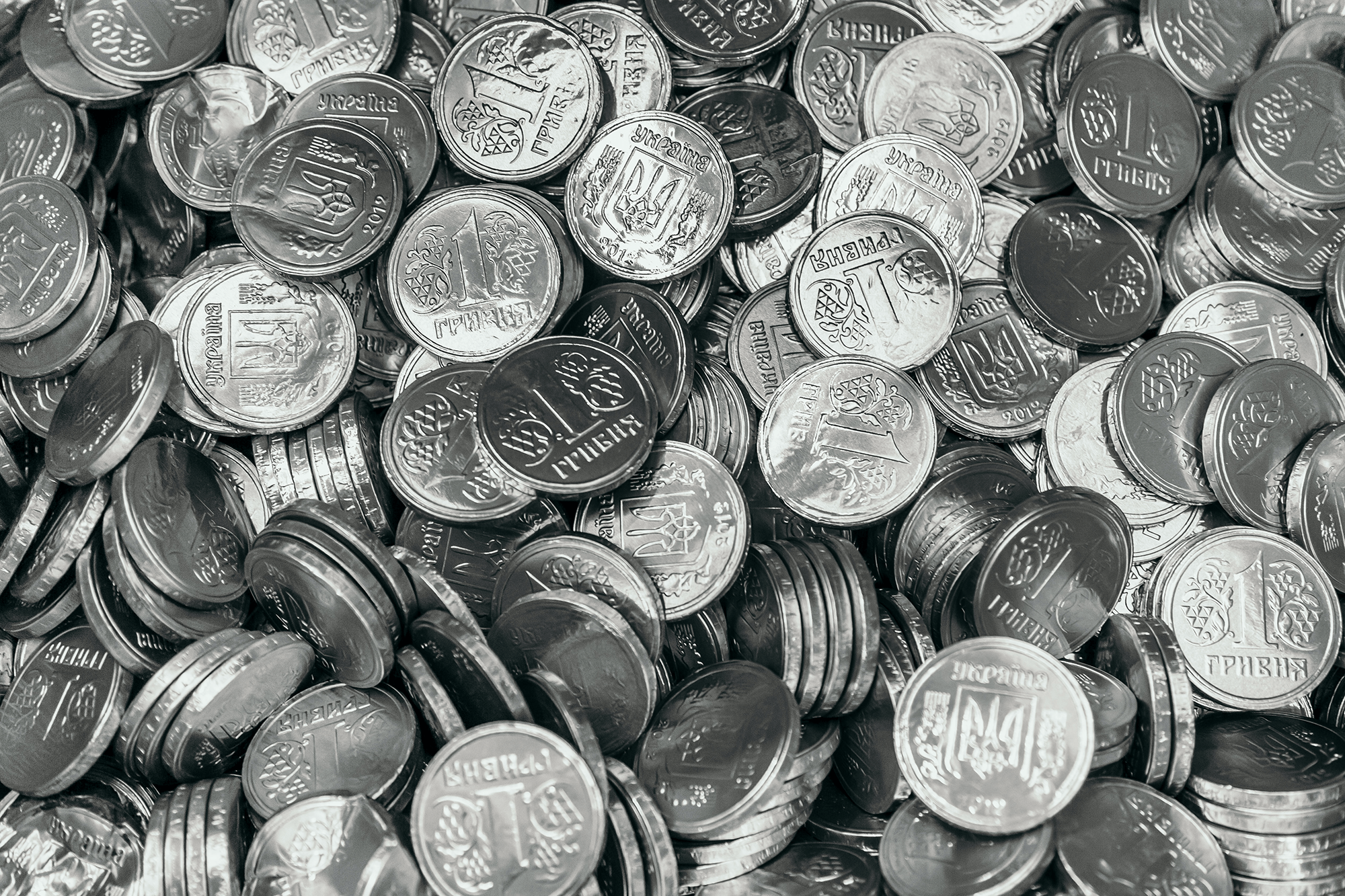
    Liquid crystals, bottles of pills, and hoppers of grains can all involve disk-shaped particles. To better understand how disks pack together, researchers studied how disks in a box orient themselves after shaking. They used MRI to observe the disks’ interior packing.

    These reconstructions show the packing found in the experiment. The disks are color-coded by orientation; more horizontal disks are redder and vertical ones are bluer. Initially, the packing has many horizontal disks (left), but after shaking, the disks get more compacted (right). The disks form short stacks that are randomly oriented. This increases the overall density but the random orientations reduce the total alignment.
    These reconstructions show the packing found in the experiment. The disks are color-coded by orientation; horizontal disks are redder and vertical ones are bluer. Initially, the packing has many horizontal disks (left), but after shaking, the disks get more compacted (right). The disks form short stacks that are randomly oriented. This increases the overall density but the random orientations reduce the total alignment of disks.

    The team found that shaking increases the disks’ density, but that increase does not come from disks orienting in the same direction. Instead, the disks form short stacks of similarly-oriented disks. The stacks themselves took on many different orientations, which reduced the system’s overall alignment in orientation. (Image credit: coins – M. Blan, packing – Y. Ding et al.; research credit: Y. Ding et al.; via APS Physics)

  • Star YY Hya

    Star YY Hya

    A team of professional and amateur astronomers discovered and then imaged this previously undiscovered galactic nebula. At the heart of the stellar remnant is a binary star pair. Shock waves of the gas and dust twist and spread in the surrounding space, the remains of an earlier star’s violent eruption. (Image credit: M. Drechsler et al.; via 2023 Astronomy POTY)