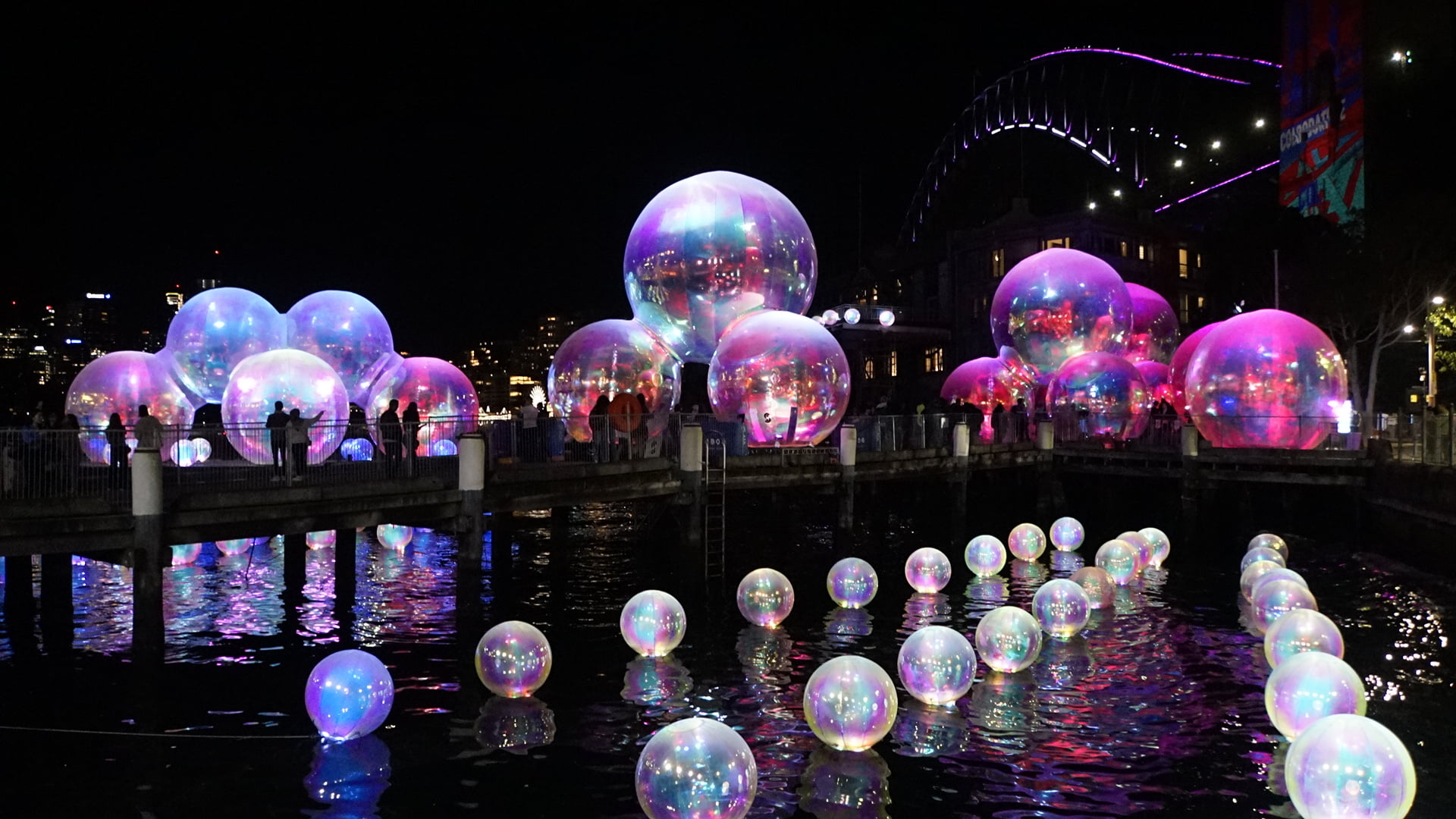
Giant iridescent inflatables dot public spaces in the “Evanescent” exhibit. The “bubble-tecture” is the work of Sydney-based artistic collaboration Atelier Sisu. Conceived during the pandemic, the duo “endeavoured to communicate this feeling of transient beauty and the need to live in the moment through the idea of the bubble.” The exhibit has appeared in more than 22 cities in 12 different countries. (Image credit: Atelier Sisu; via Colossal)
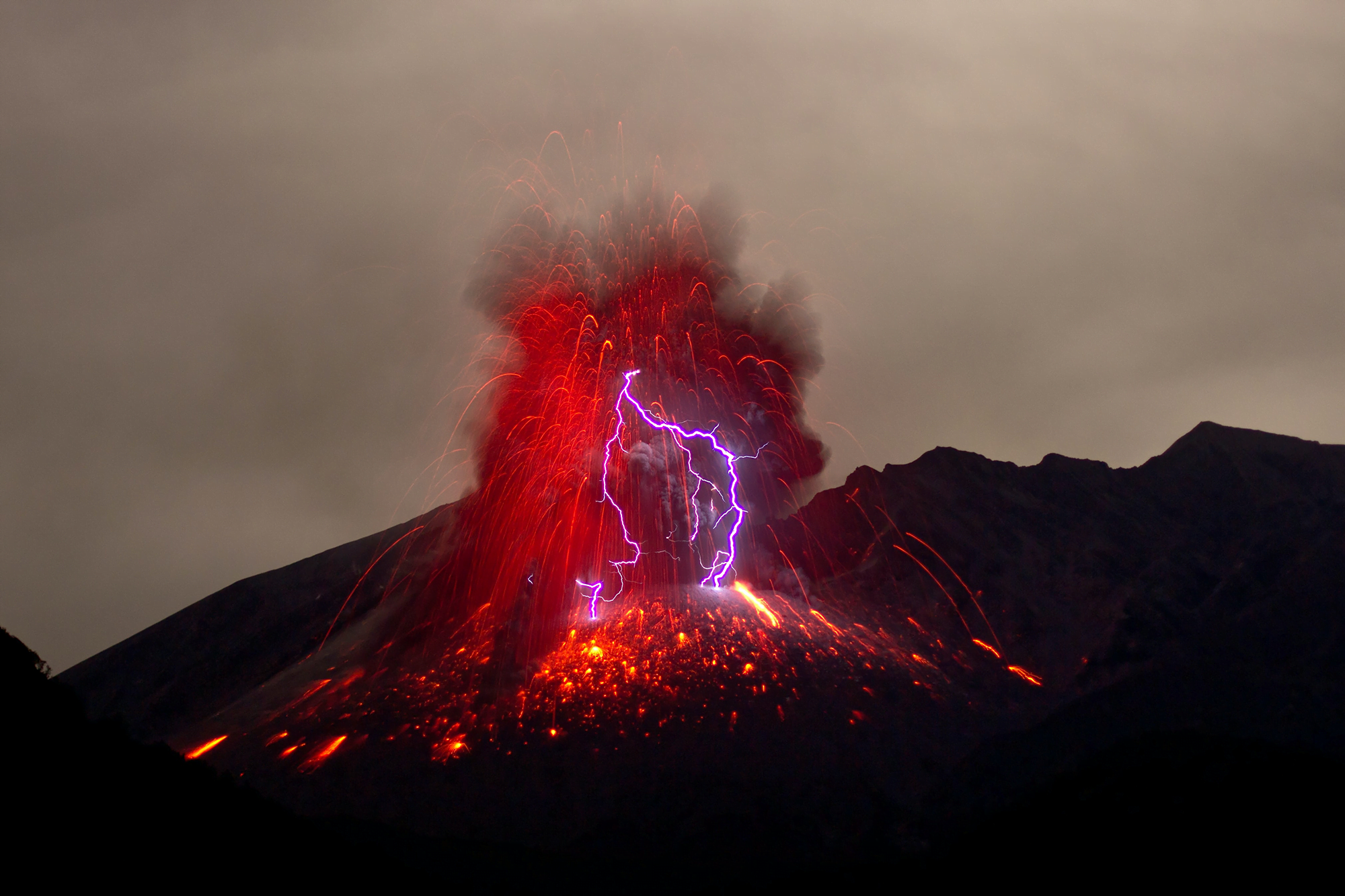
The ancient Greeks first recognized static electricity, but the mechanisms behind it remain somewhat mysterious. In particular, it’s unclear how two pieces of the same material can build a charge between them simply by touching. Yet we regularly see examples of this when volcanic ash creates enough charge to discharge lightning. A new study sheds light on the question by studying the impact of a single grain of silica on a silica disk.
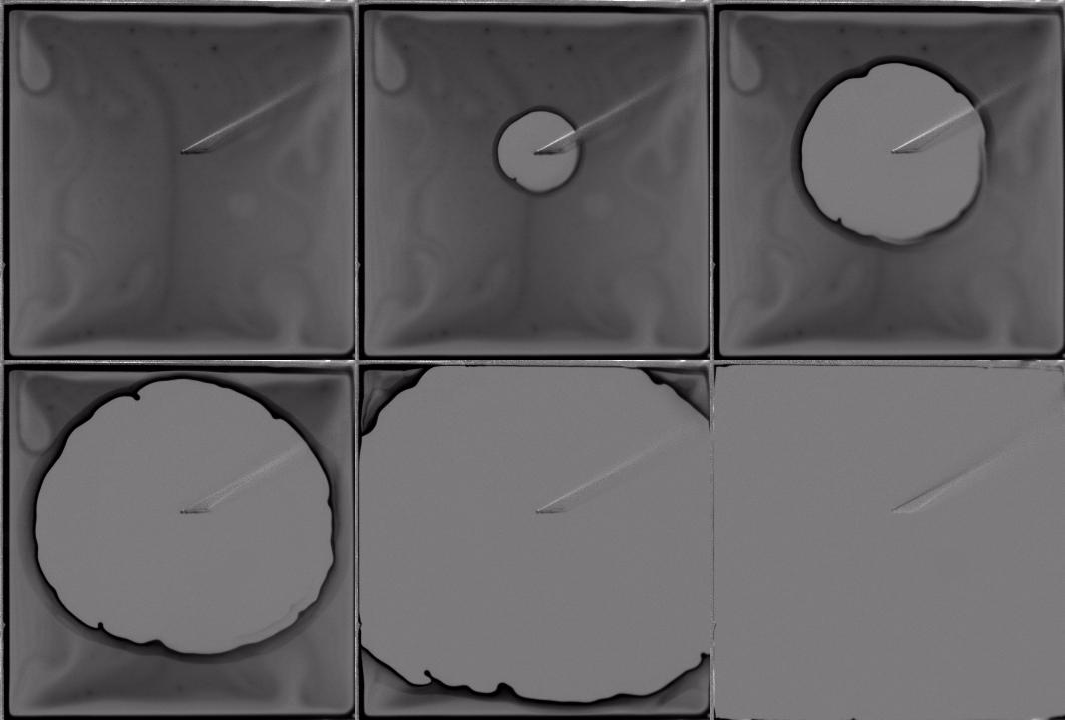
The researchers used acoustic levitation to hold their silica particle in place. By turning the acoustic waves off, they could bounce the grain off the disk, then catch the particle again with the acoustic field. After a bounce, they swept an electrical field across the particle and observed its oscillations to determine how much charge the particle held. When necessary, they could also discharge the particle.
This animation demonstrates the three phases of an experiment. In the first (left), the acoustic field is shut off, allowing the silica grain to fall and strike the disk. Then the field is turned back on to “catch” the particle. In the second phase (middle), the researchers use a sweeping electrical field to determine the charge built up on the grain. In the third phase (right), they periodically discharge the built-up charge on the particle.
What they found was that charge on the particle grew with the number of impacts. They also saw that they could reverse the polarity of the charge with careful cleaning and baking of their objects. Their conclusion is that adsorption of water from the surrounding air is what enables the build-up of static charge on identical materials. (Image credit: volcano – M. Szeglat, experiment – G. Grosjean and S. Waitukaitis; research credit: G. Grosjean and S. Waitukaitis; via APS Physics)
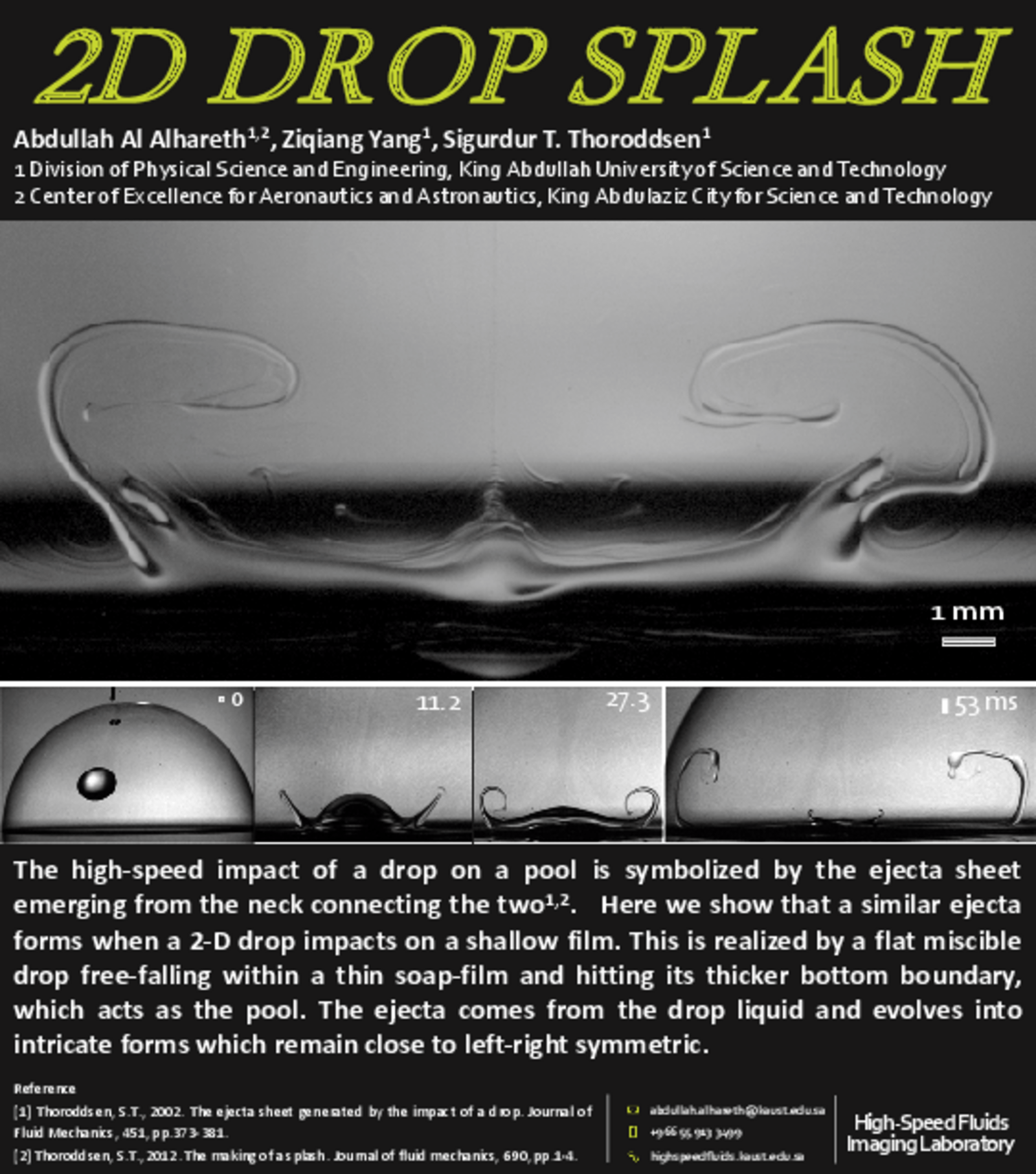
We see plenty of droplets splash when they fall into a pool, but what happens when the drop and pool are two-dimensional? Here researchers captured the familiar process of a splash in an unfamiliar way by looking at a falling drop contained within a soap film. As the drop reached the thicker lower boundary of the soap film (which acts like a pool), its impact sent up ejecta that stretch and curl, much like the three-dimensional splashes we’re accustomed to. (Image credit: A. Alhareth et al.)
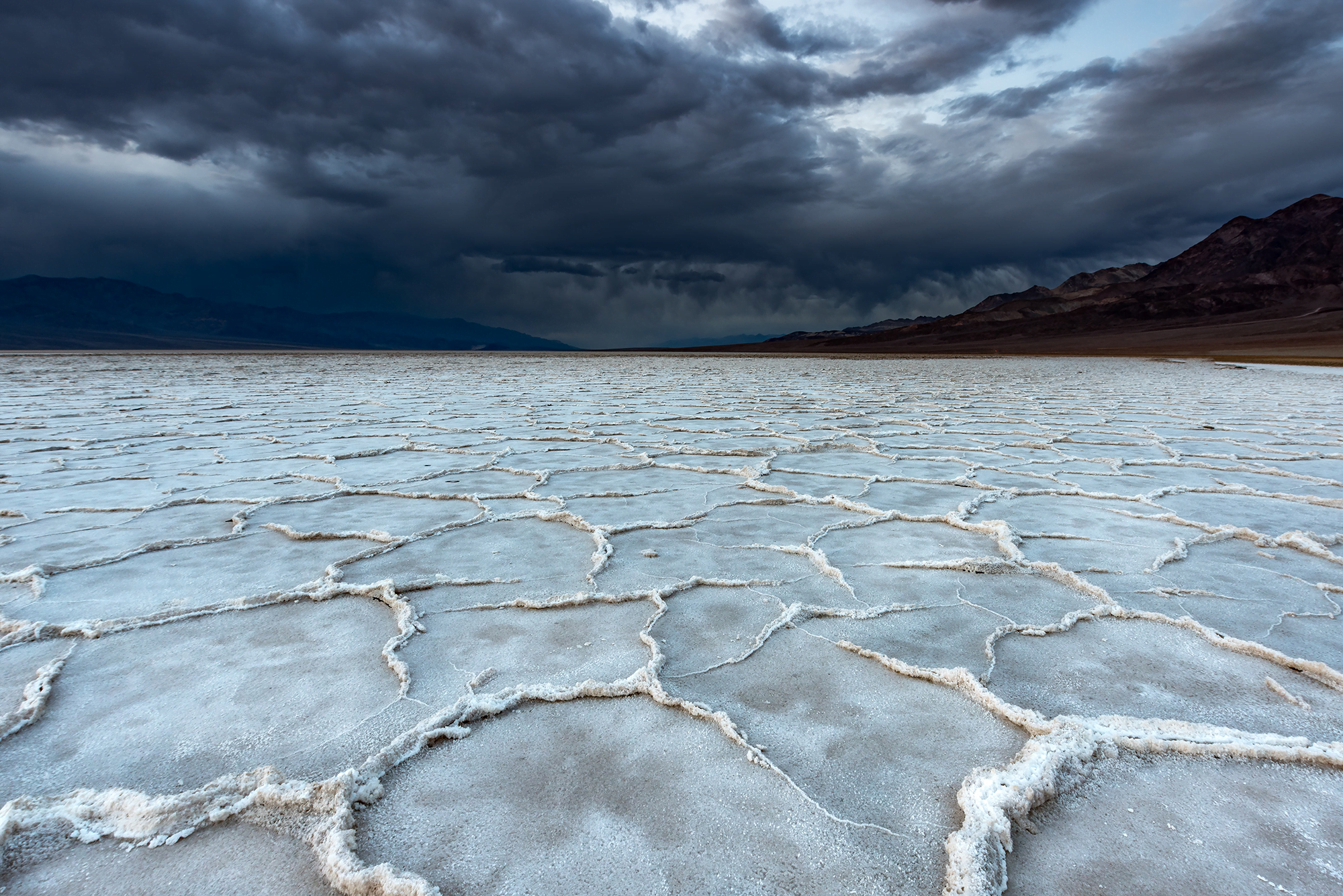
Around the world, salt playas are criss-crossed with meter-sized polygons formed by ridges of salt. The origins of these structures — and the reason for their consistency across different regions of the world — have been unclear, but a new study shows that salt polygons form due to convection happening in the soil underground.
Through a combination of numerical modeling, simulation, lab-scale experiment, and field work, the team revealed the mechanism underlying salt polygons. Areas that form polygons have much greater rates of evaporation than precipitation, and, as water evaporates, these areas draw groundwater from nearby. Salt gets carried with this groundwater.
With strong evaporation, the lake bed forms a highly-concentrated layer of salty water near the surface. Convection cells form, with some regions drawing less saline water upward, while denser, saltier water sinks in other areas. The subsurface convection lines up exactly with the surface structures. The interior regions of polygons are areas where less salty water rises, and salt instead concentrates along the edges of polygons, where saltier water sinks below the surface while evaporation draws solid salt to the surface.
This snapshot shows a numerical simulation of the subsurface convection and surface evaporation that lead to salt polygon formation. Low salinity areas are yellow, while high salinity ones are black. At the surface, blue regions have the maximum upward flow and red regions have the maximum downward flow. The dark, highly saline fingers under the surface align to the red areas on the surface, indicating areas where salty water is sinking.
It’s a beautiful result that matches the size, shape, and development time observed for salt polygons in the real world. The team even excavated below salt polygons in Death Valley to confirm that the salt content below ground matched their model’s patterns. Since salt playas are a major source for dust and aerosols that affect climate, their work will be an important factor in future climate modelling. (Image credit: feature – T. Nevidoma, simulation – J. Lasser et al.; research credit: J. Lasser et al.; via APS Physics; submitted by Kam-Yung Soh)
In the United States, we expect clean water from our taps, but the experiences of Jackson, Mississippi over the last several years are a reminder that we cannot take that water for granted. Since 2020, aging infrastructure, chronic underfunding, and extreme weather have placed the city in a state of emergency. Residents are often under boil water notices, if they have water pressure at all. In this video, Grady from Practical Engineering dissects the engineering side of this crisis and what’s needed to keep a city’s residents supplied with clean water. Check out the video’s links for more on the racism and politics that impact the crisis. (Video credit: Practical Engineering)
Stingrays swim over rippled sands in this award-winning image from photographer Gregory Sherman. Above this peaceful vista, waves break and a dramatic skyscape looms. It’s the regular back-and-forth of the waves that shapes the ripples of sand. The rays can also use the sand for cover; note the remnants of sand atop a few of these rays, and then see how they hide themselves. See more winners from the Underwater Photographer of the Year awards in this gallery. (Image credit: G. Sherman/UPY 2023; via Colossal)
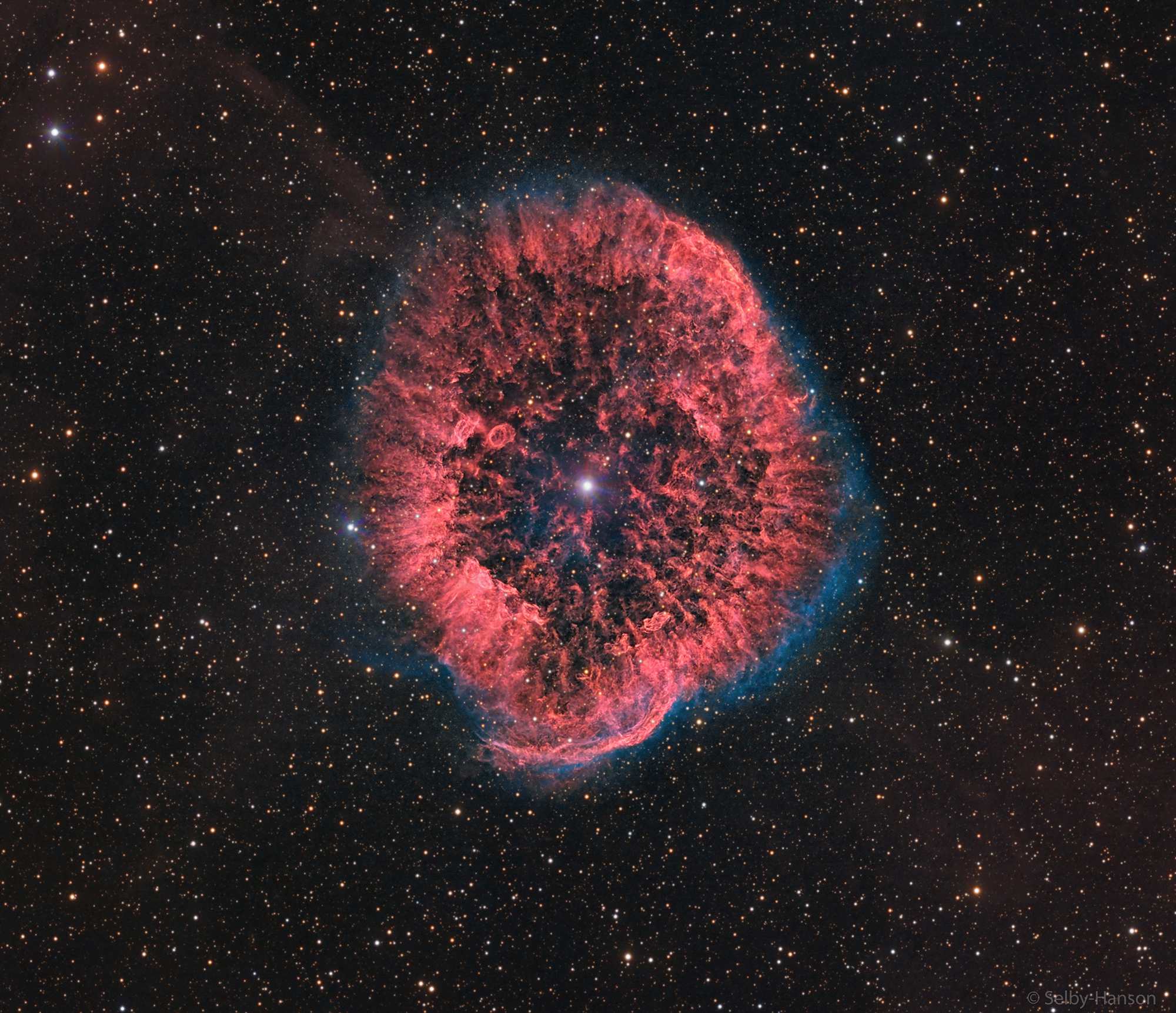
Stars about 100 times more massive than our sun live fast and die young. They burn through their hydrogen supply quickly, then start fusing heavier elements. As they do, their strong stellar winds start blowing off the exterior layers of the star. That’s the story behind WR 40, the star at the center of Nebula RCW 58. The nebula itself is made up of material blown off the star, carved into turbulent filaments by stellar winds. (Image credit: M. Selby and M. Hanson; via APOD)
With the right shot, it’s possible to skip a bullet off water, as shown in this video from the Slow Mo Guys. The angle of the bullet relative to the water needs to be quite shallow, as this sets the bullet up for the hydrodynamic lift needed to skip. Physically, the mechanism for skipping a bullet is similar to rock-skipping. The bullet’s impact creates a cavity that the bullet rides. With the right conditions, the cavity orients the bullet upward, creating the lift needed to skip. (Video and image credit: The Slow Mo Guys)
Soap film ruptures are well understood for your typical bubble solution, but what happens when tiny particles get added to the soap film? That’s the question in this recent study. Researchers added 660-nanometer particles, in varying amounts, to their soap films to see how it affected rupture. When they broke the films just after formation (top image), they found results that were quite similar to the usual, particle-free case. But when the films sat for awhile before breaking spontaneously (bottom image), the rupture caused wrinkling and folding similar to a piece of fabric. The researchers hypothesize that aging allowed the soap film to thin until the film and the particles were similar in size. Then, when the film ruptured, the particles affected how it broke up. (Image and research credit: P. Shah et al.)
After aging and thinning, a colloidal film ruptures spontaneously, forming fabric-like wrinkles.
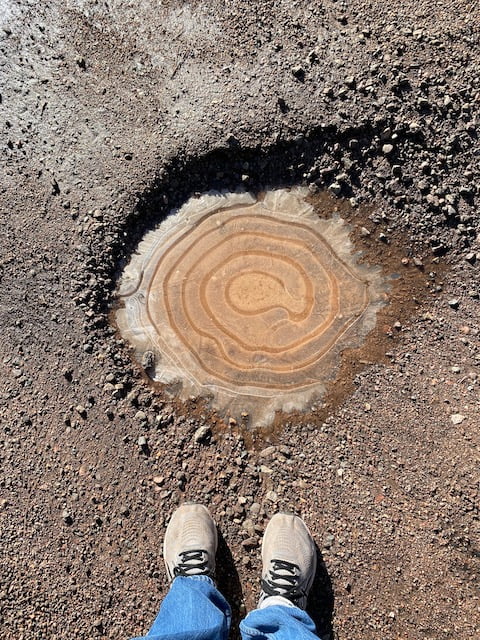
This odd puddle was found in Arizona after a night with low temperatures around -8 degrees Celsius (18 degrees Fahrenheit). Unlike the concentric rings sometimes seen on ice, this puddle formed one spiraling crack. It’s hard to know exactly what factors played into this formation since it was only found after the fact, but one possibility is that the puddle was initially frozen in a continuous sheet. Then, as the temperature cooled overnight, the ice contracted, forming a crack. As the ice kept cooling and contracting inward, the crack grew, spiraling toward the center of the puddle. (Image credit: M. Hendrickson; via EPOD; submitted by Kam-Yung Soh)