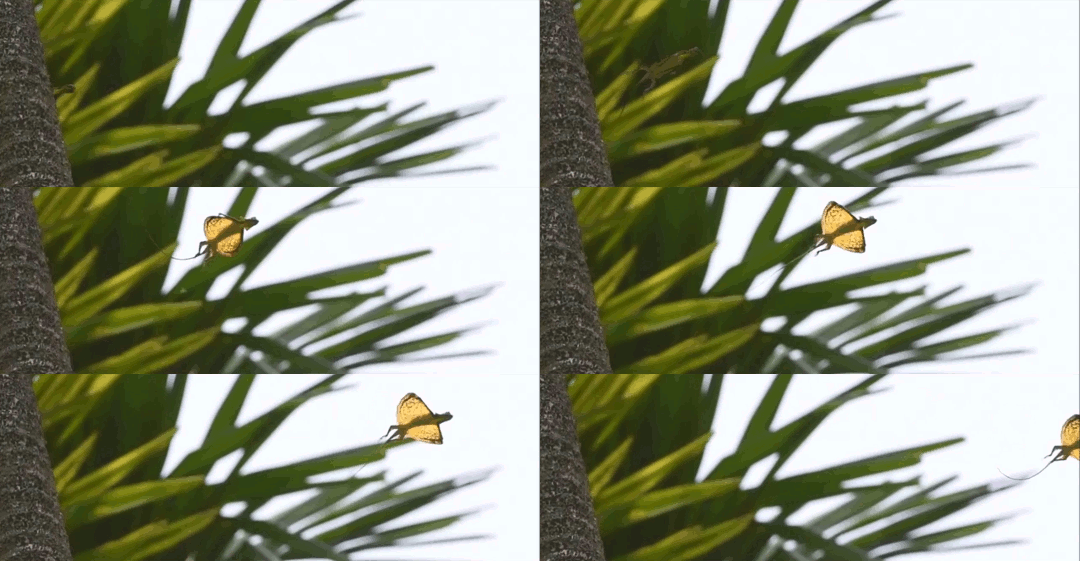
Flying lizards are truly gliders, but that doesn’t mean they’re unsophisticated. Newly reported observations of the species in the wild show that flying lizards don’t simply hold their forelimbs out a la Superman. Instead, they reach back with their forelimbs, pressing their arms into the underside of the thin patagium that serves as their flight surface while rotating their hands to grasp the upper side of the patagium. This forms a composite wing with a thicker leading edge and seems to be how the lizards control their glide. Close observation of their flight shows that, while holding their patagium, the lizards actively arch their backs to camber their composite wing. This can increase their maximum lift coefficient, allowing them to glide longer distances. (Image and research credit: J. Dehling, source)
Month: January 2018

DIY Acoustic Levitation
Acoustic levitation is a technique where multiple speakers are positioned to create standing waves that can levitate small objects using sound. It’s even possible to manipulate the levitating objects in three-dimensions with the right set-up, but until now, the technology has been confined to the laboratory. Now a group from the University of Bristol has created kits and instructions allowing the curious to build their own acoustic levitators at home. In the video, Dianna shares some of her own adventures in building and playing with these DIY levitators and travels to the U.K. to see more from the creators.
I know what I’m adding to my list of electronics projects to try out! (Video credit: Physics Girl)

The Best of FYFD 2017




2017 was a busy, busy year here at FYFD, but a lot of that happened behind the scenes with multiple collaborations that were months in the planning. You’ll start to see the results of those collaborations here in January, starting this Friday. I’m really excited for you all to see what I’ve been up to!
In the meantime, we’ll take our traditional look back at the top 10 FYFD posts of 2017, according to you:
1. Cinemagraph of a breaking wave
2. Visualizing radiation in a cloud chamber
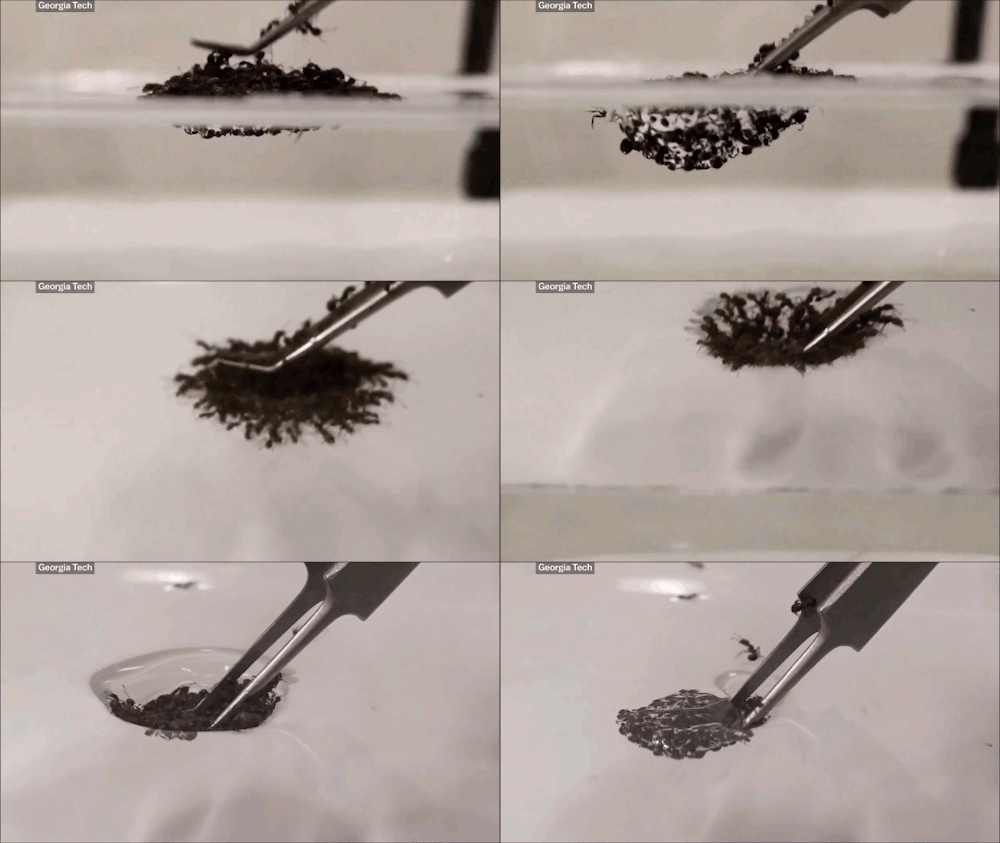
3. Fire ants as a fluid
4. The water music of Vanuatu
5. How hummingbirds drink nectar
6. When vortex rings collide
7. How water balloons can bounce off a bed of nails
8. Spinning ice disks form on freezing rivers
9. A hot-tub-sized fluidized bed
10. The physics of fluidized bedsLots of crazy, cool stuff in there! Special congrats to The Splash Lab for making the top 10 two years in a row. Stay tuned in 2018 for more exciting fluid dynamical developments, and if you’d like to help support FYFD, remember that you can always become a patron, make a one-time donation, or purchase some merch!
(Image credits: R. Collins / J. Maria; Cloudylabs; Vox/Georgia Tech; R. Hurd et al.; A. Varma; A. Lawrence; T. Hecksher et al.; K. Messer; M. Rober; R. Cheng)
