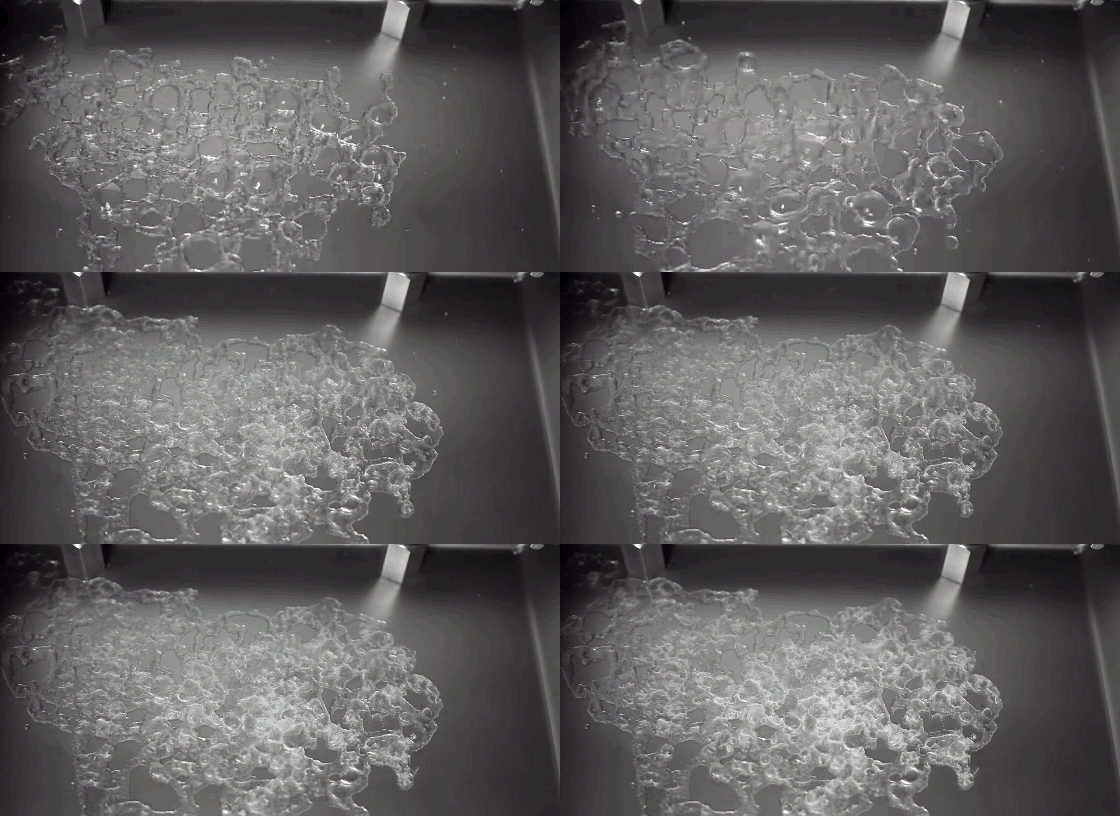
While vacuums can do pretty wild things to liquids, the title of this Slow Mo Guys video is a bit misleading. They’re not so much exploding gold in a vacuum as they are shredding it during repressurization. Regardless, the visuals are pretty awesome. They place thin foils in a vacuum chamber, pump it down, and then film what happens when they reopen the valve and pressurize the chamber. Flow-wise, that introduces a strong air jet that flows downward in the center of the chamber and causes a recirculating flow up the sides. For the foils, this sudden flow is devastating, shredding the material so thoroughly that it looks like a splash. (Video and image credit: The Slow Mo Guys)
Tag: vacuum

Unsinkable Hydrophobic Metal
Although we typically describe hydrophobic surfaces as “water-repelling,” we could just as easily focus on the fact that they’re “air-attracting.” This video from The Action Lab demonstrates that property nicely with a hydrophobic-coated “boat” that’s effectively unsinkable, thanks to its ability to trap air pockets.
Even punching holes through the boat doesn’t sink it because its surface is so chemically and physically attractive to air that the bubble won’t budge. In fact, as the video demonstrates, the only effective way to remove the hydrophobicity is to remove the air bubble by using a vacuum chamber. But even then, the effect only lasts until air is reintroduced to the boat. (Image and video credit: The Action Lab)
P.S. – No, this is not an April Fool’s joke, just actual science! – Nicole

Watery Suction Enables Spiderman-Like Climbing
Spiderman makes it look easy, but sticking to surfaces with enough force to climb them is a challenge at the human scale. These researchers tackled the problem with a new method of suction. Traditional suction devices are limited by their ability to seal at the edges. Any surface roughness that prevents a perfect seal creates a leak and fighting those leaks to maintain vacuum pressure requires larger and more powerful pumps.
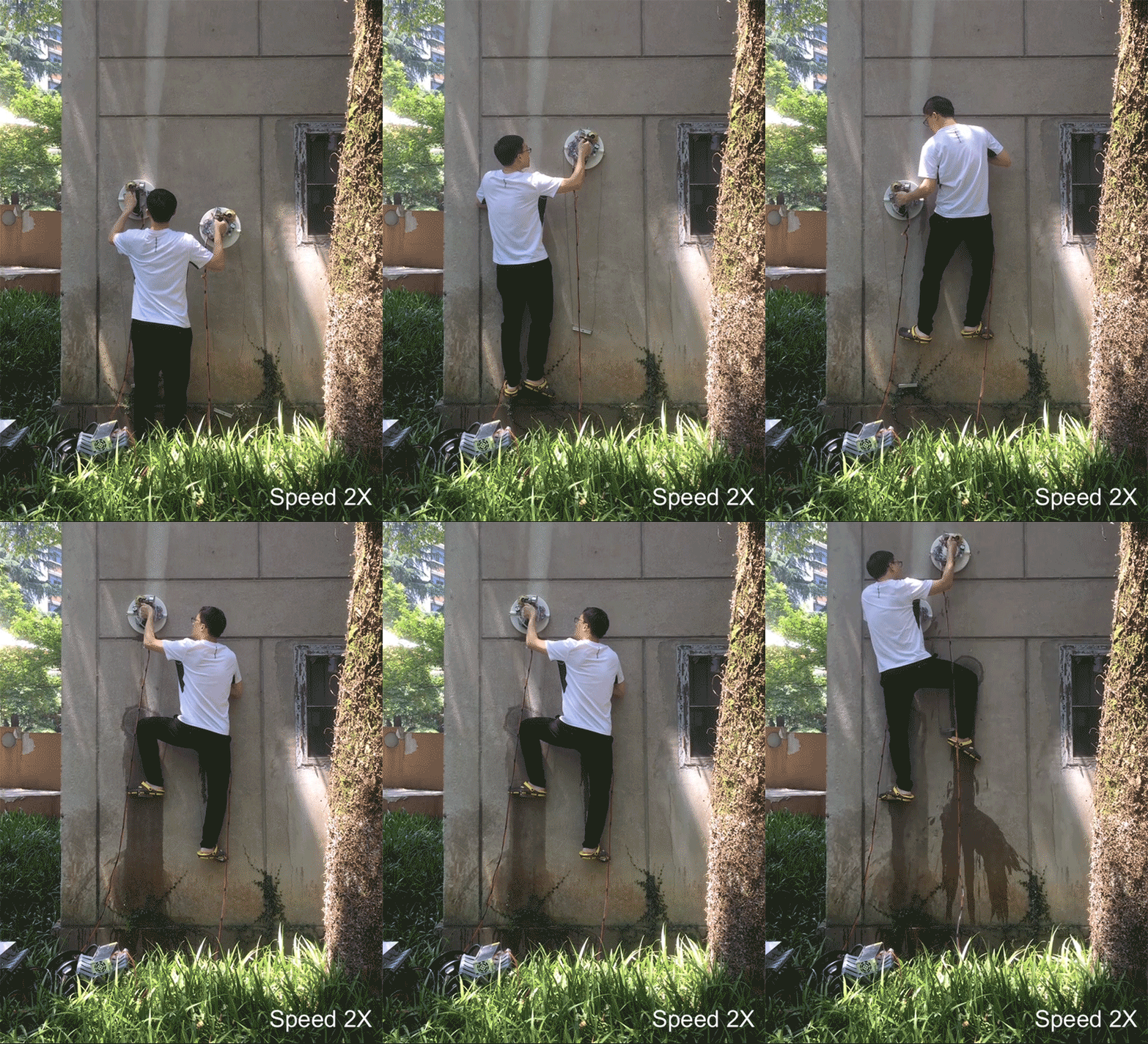
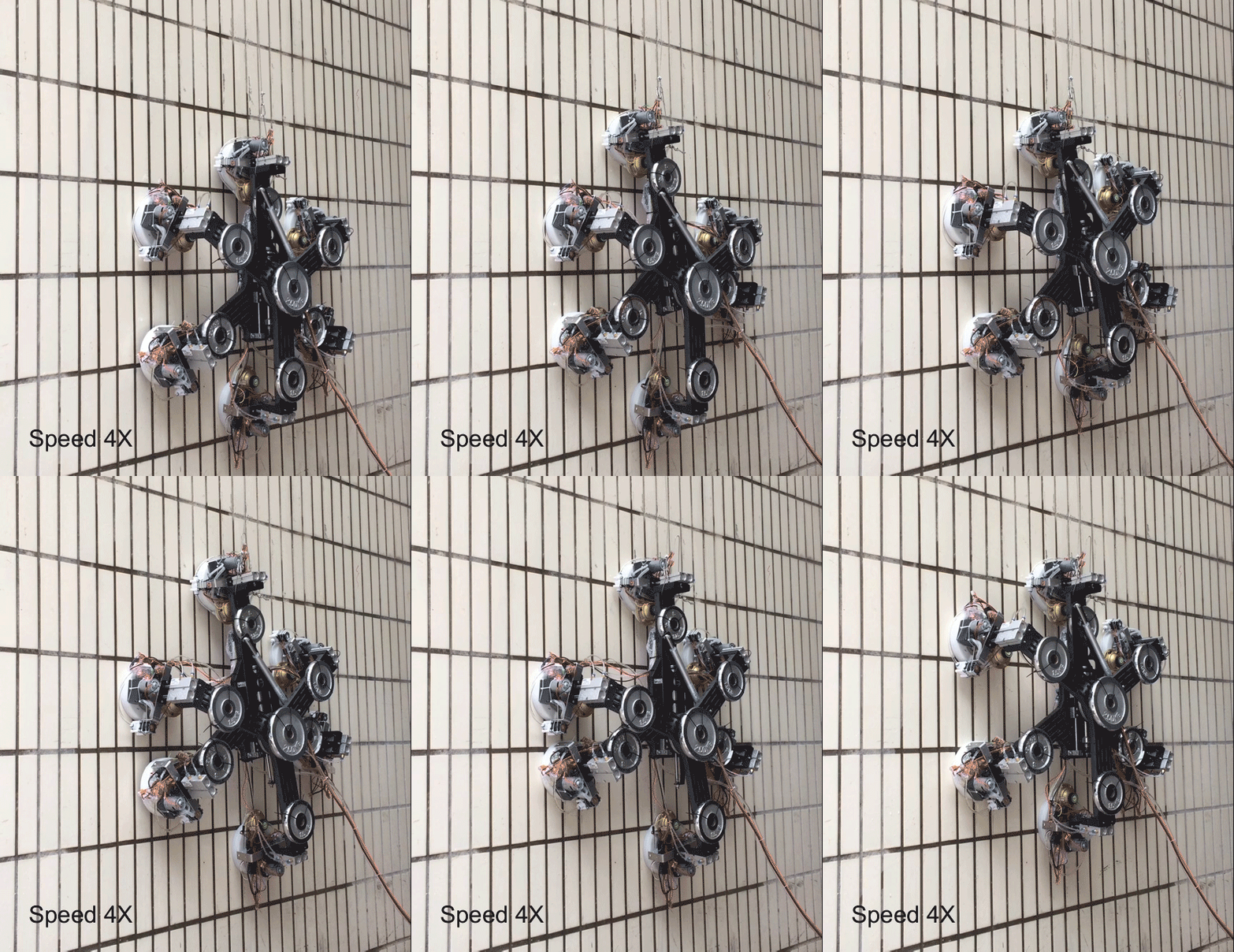
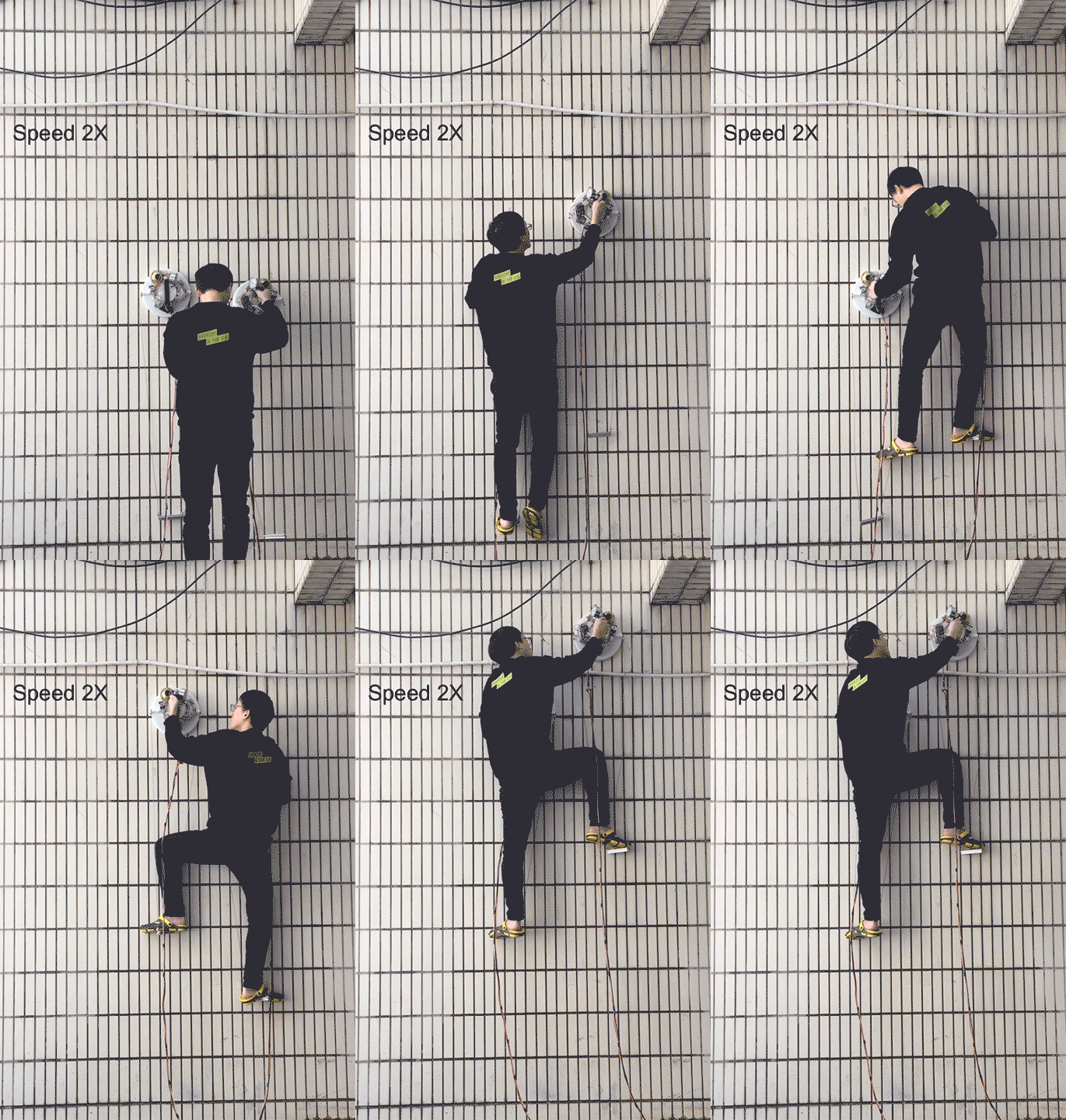
In this work, the researchers essentially eschew a solid sealing mechanism for a liquid one. A fan inside each suction cup creates a spinning ring of water along the seal’s boundary that allows it to conform even to very rough surfaces without losing vacuum pressure. The researchers demonstrate the principle in action with a hexapod wall-climbing robot as well as with human-scale climbing systems.
But don’t plan your web-slinging adventures just yet! As you can see on the concrete wall example, the system leaks a lot of water, especially when disengaging the suction. Right now, you can only climb as far as your water supply allows. (Image and research credit: K. Shi and X. Li; via Spectrum; submitted by Kam-Yung Soh)

Does Liquid in a Vacuum Boil or Freeze?
What happens to a liquid in a cold vacuum? Does it boil or freeze? These animations of liquid nitrogen (LN2) in a vacuum chamber demonstrate the answer: first one, then the other! The top image shows an overview of the process. At standard conditions, liquid nitrogen has a boiling point of 77 Kelvin, about 200 degrees C below room temperature; as a result, LN2 boils at room temperature. As pressure is lowered in the vacuum chamber, LN2’s boiling point also decreases. In response, the boiling becomes more vigorous, as seen in the second row of images. This increased boiling hastens the evaporation of the nitrogen, causing the temperature of the remaining LN2 to drop, the same way sweat evaporating cools our bodies. When the temperature drops low enough, the nitrogen freezes, as seen in the third row of images. This freezing happens so quickly that the nitrogen molecules do not form a crystalline lattice. Instead they are an amorphous solid, like glass. As the residual heat of the metal surface warms the solid nitrogen, the molecules realign into a crystalline lattice, causing the snow-like flakes and transition seen in the last image. Water can also form an amorphous ice if frozen quickly enough. In fact, scientists suspect this to be the most common form of water ice in the interstellar medium. (GIF credit: scientificvisuals; original source: Chef Steps, video; h/t to freshphotons)