Tag: synchronization

  • Synchronizing Cilia

    Synchronizing Cilia

    Just like human swimmers, microswimmers have to coordinate their motion to swim. But unlike humans, swimmers like the freshwater alga Chlamydomonas reinhardtii doesn’t have a brain to help it synchronize its cilia. To investigate how these microswimmers manage their stroke, researchers built a biorobot with mechanically linked segments that mimic the alga’s swimming once a motor sets the robot vibrating.

    When the robot's base is allowed to rotate, the cilia synchronize in the freestyle-like R-mode.
    When the robot’s base is allowed to rotate, the cilia synchronize in the freestyle-like R-mode.
    When allowed to move forward and back, the biorobot's cilia synchronize in the X-mode, which resembles the breaststroke.
    When allowed to move along an axis, the biorobot’s cilia synchronize in the X-mode, which resembles the breaststroke.

    The researchers found two strokes that mirrored the real-life alga. In one, allowing the robot’s base to rotate produced a freestyle-like stroke they called R-mode. The other came from allowing the robot’s base to move forward and backward, which created a breaststroke-like X-mode. In the wild, only the X-mode provides helpful motion, but, oddly enough, the researchers found this mode was the most energy intensive. (Image credit: top – J. Larson, others – Y. Xia et al.; research credit: Y. Xia et al.; via APS Physics)

  • Featured Video Play Icon

    Floating in Sync

    Objects on a vibrating liquid bath can interact with each other through the waves they make as they bounce. Here, researchers look at three-armed spinners interacting in pairs and in larger groups. A pair of spinners can synchronize so that they spin together or so that they spin in opposing phases. With more spinners, more complex patterns are possible. The spinners can even “freeze” one another by forming a pattern of standing waves that keep them locked in their orientation. (Video and image credit: J. Barotta et al.; via GoSM)

  • Synchronizing Microfluidic Drops

    Synchronizing Microfluidic Drops

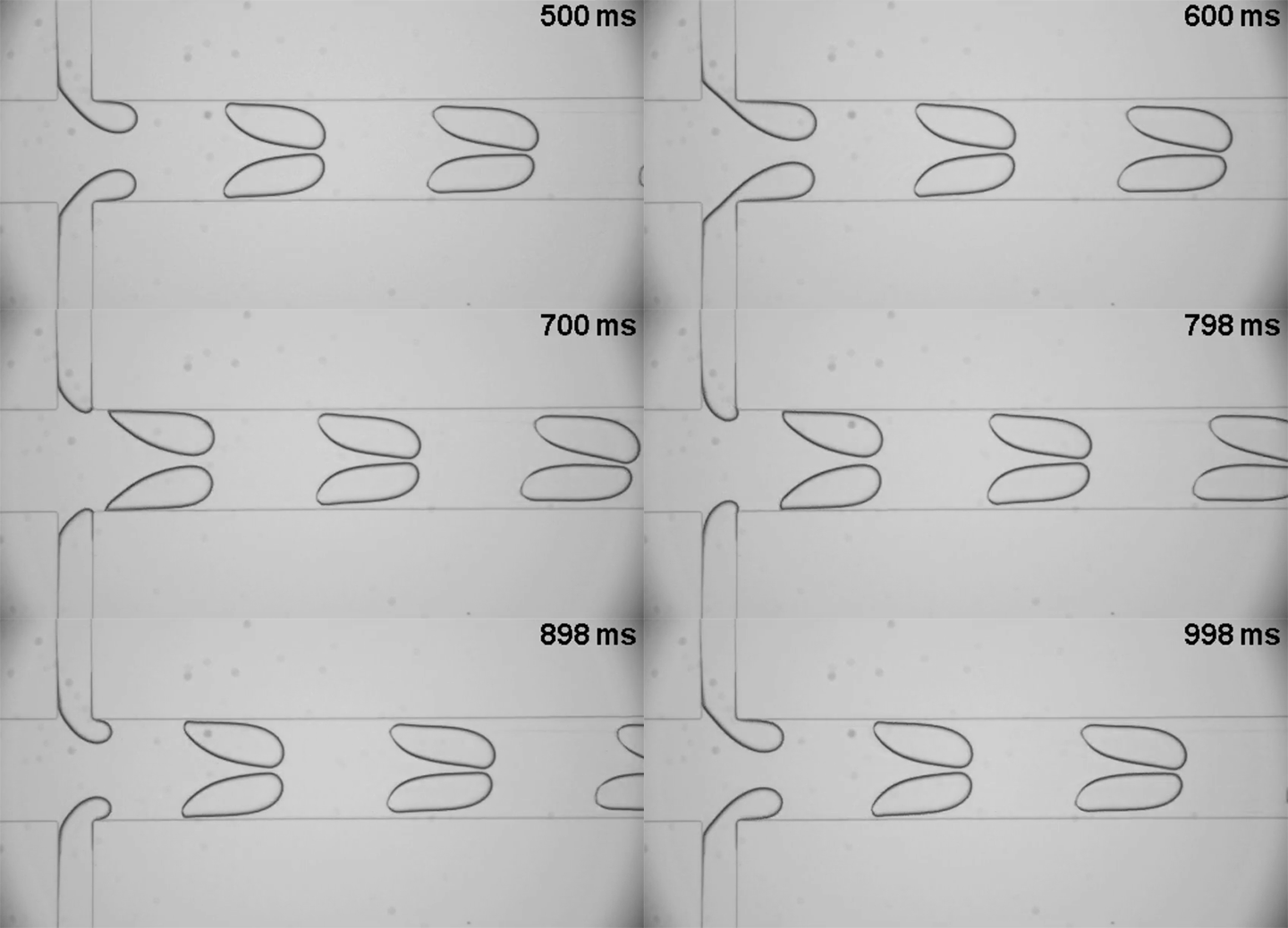
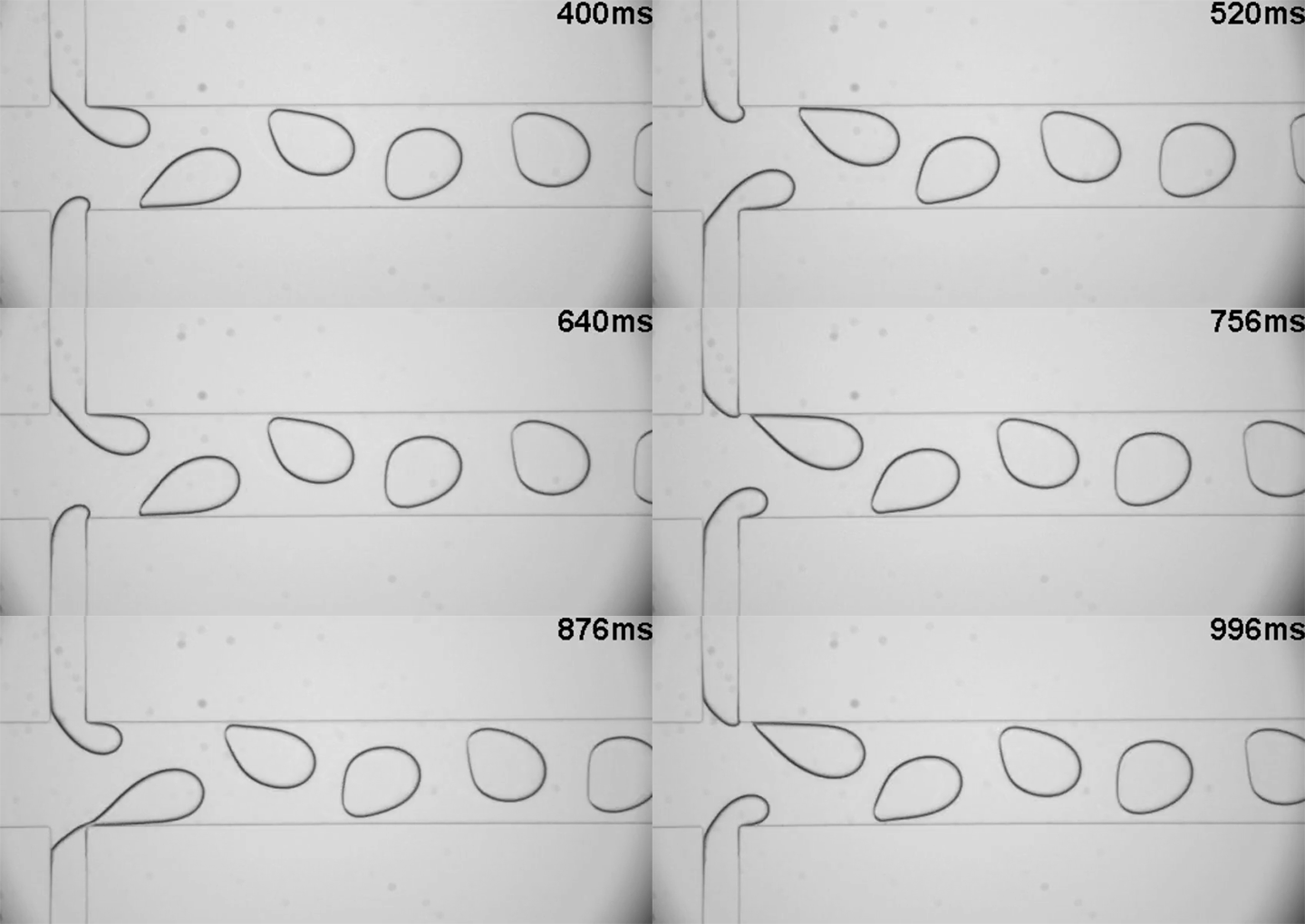
    In nature, synchronization occurs when oscillators interact. A group of metronomes shifting to tick in unison is a classic example. Here, the system is a microfluidic T-junction and the oscillators are the liquid interfaces along the narrower inlet channels. Systems like this one have long been used to create alternating droplets (Image 1), corresponding to out-of-phase synchronization. But a new paper shows that the same system can perform in-phase synchronization (Image 2), too, generating droplets at the same time.

    For any synchronization to occur, the main channel must be narrow enough for the two side channels to influence one another. Once that’s the case, the out-of-phase synchronization happens at a relatively high flow rate, and lowering the flow rate causes the system to transition to in-phase synchronization. (Image and research credit: E. Um et al.; submitted by Joonwoo J.)

  • Featured Video Play Icon

    The Vibrating Network

    We’ve seen the Faraday instability on vibrating fluids (and granular materials) before. Here researchers explore the effect on a a network of fluid-filled cells. Each square is filled with liquid and small holes near the bottom of each cell ensure the liquid levels are the same throughout the array. Then the entire container is vibrated. Above the threshold frequency, standing waves form but do not interact. When the wave amplitudes grow high enough for fluid to get exchanged from cell to cell, patterns begin to form.  The waves in adjacent cells synchronize, eventually resulting in a regular pattern across the entire grid. Order out of chaos.(Video credit: G. Delon et al.)