Tag: similitude

  • Rio 2016: Whitewater Sports

    Rio 2016: Whitewater Sports

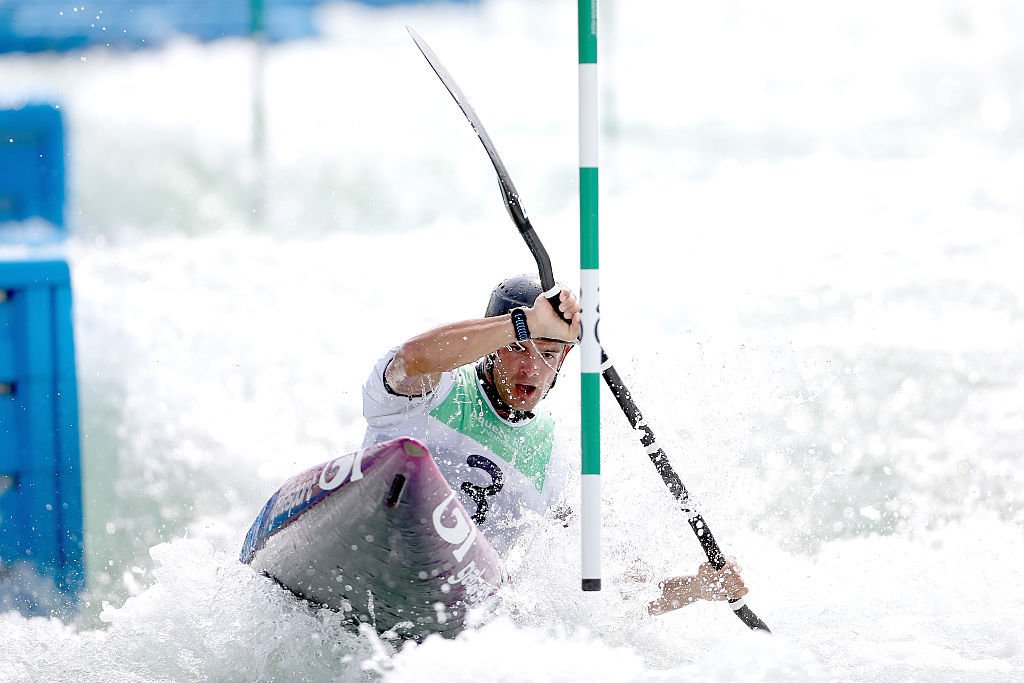
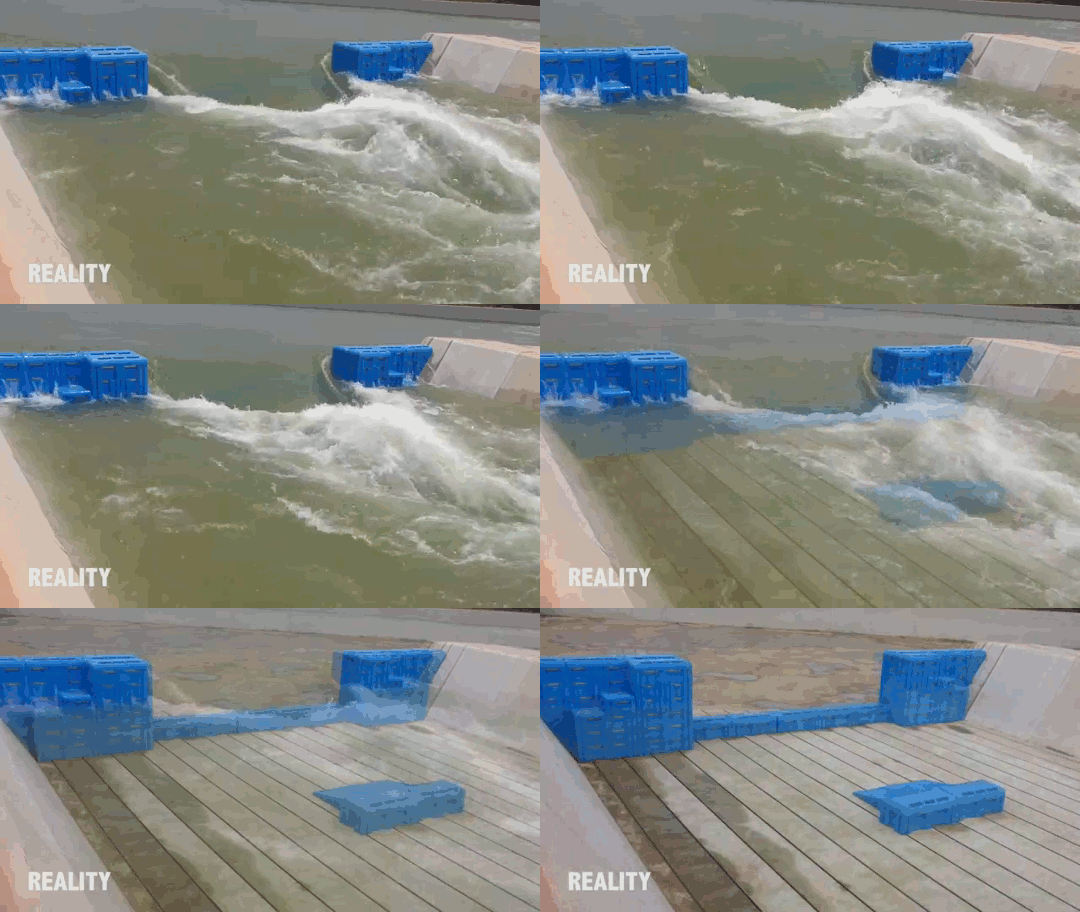
    The whitewater rapids of canoe slalom have their origins in mountain streams. Today the sport’s Olympic venues are artificial rivers, specially designed to provide world-class rapids whatever the geography of the host city. Rio’s course, like London’s, is reconfigurable; its features are controlled by the placement of Lego-like plastic blocks.

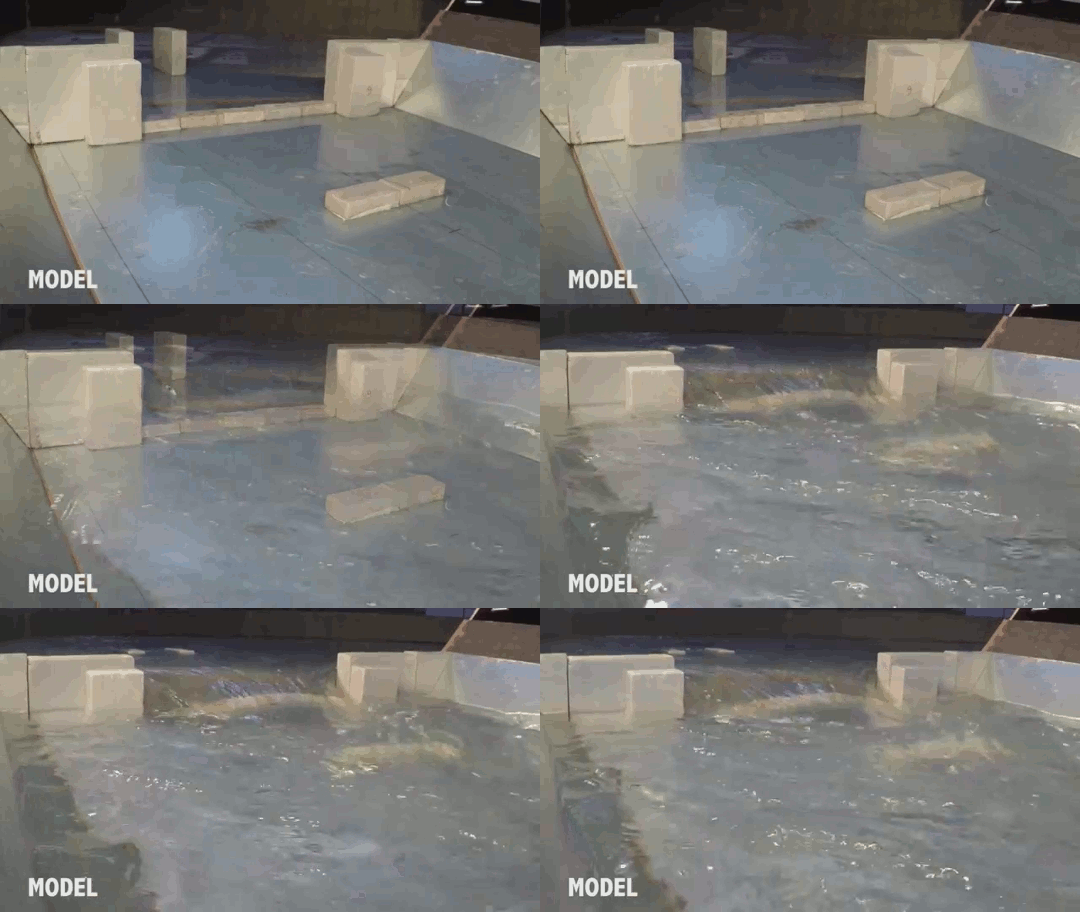
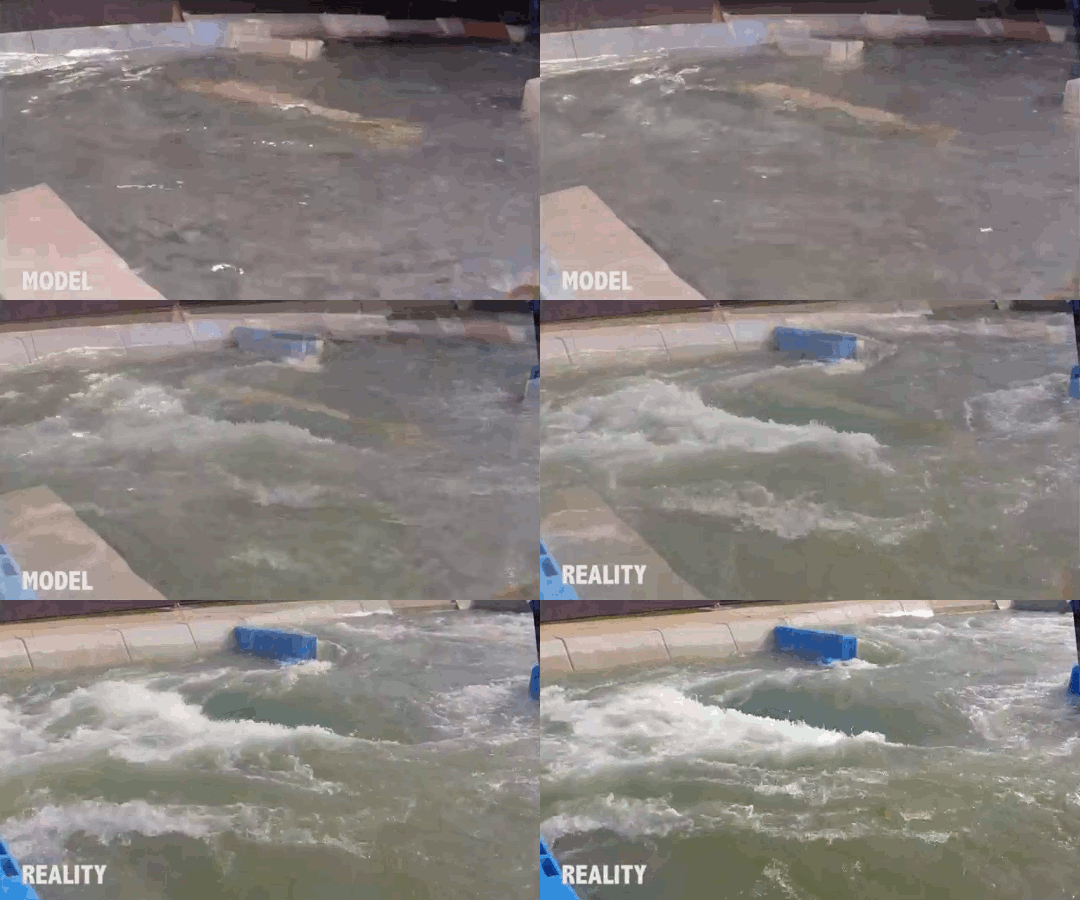
    A key part of the course’s design process was building a small-scale physical model of the course. To maintain the dynamics of the rapids at a smaller physical scale, engineers used a concept called similitude. Surface waves like rapids are a function of the flow’s inertia and the effects of gravity, a ratio that’s captured in the dimensionless Froude number. To match the small-scale model to the real flow, engineers scaled the features of the real course down such that the Froude number stayed the same between the model and the full-scale course. As seen in the animations above, this meant that the model had the same general flow features as the final course, letting engineers and designers test and fine-tune features before construction. Learn more about the model and its construction in these two videos. (Image credits: kayaker – Getty Images; model comparisons – J. Pollert, source)

    Previously: Physics of rowingwhy that octopus kite looks so real

    Join us throughout the Rio Olympics for more fluid dynamics in sports. If you love FYFD, please help support the site!

  • F-18 Flow Viz

    F-18 Flow Viz

    Water tunnels are useful tools for determining aerodynamic characteristics of aircraft, such as this F-18 model placed in the NASA Dryden Flow Visualization Facility. By matching the Reynolds number of the model in the water tunnel to that of the full-scale aircraft in air, engineers can observe flow around the aircraft inside the laboratory. This similarity of flows is a powerful design tool. Here dye introduced along the nose, wings, and fuselage traces streamlines around the F-18, revealing areas of turbulence at different flight conditions.

  • Featured Video Play Icon

    Swirling Fluids

    In this video, researchers investigate swirling fluids by studying the shapes of the free surface between air and the liquid. As parameters like the diameter of the glass, initial (unperturbed) height of the liquid, and angular velocity of the rotation change, the surface of the liquid displays different modal behaviors, seen in the photos on the lower left of the video. By non-dimensionalizing the physical parameters of the system (students: think Buckingham pi theorem), they are able to replicate the shape of the free surface by matching a Froude number and dimensionless depth and offset. Such similitude between fluids under different conditions is key to understanding the underlying physics. (Video credit: M. Reclari et al; submitted by co-author M. Farhat)