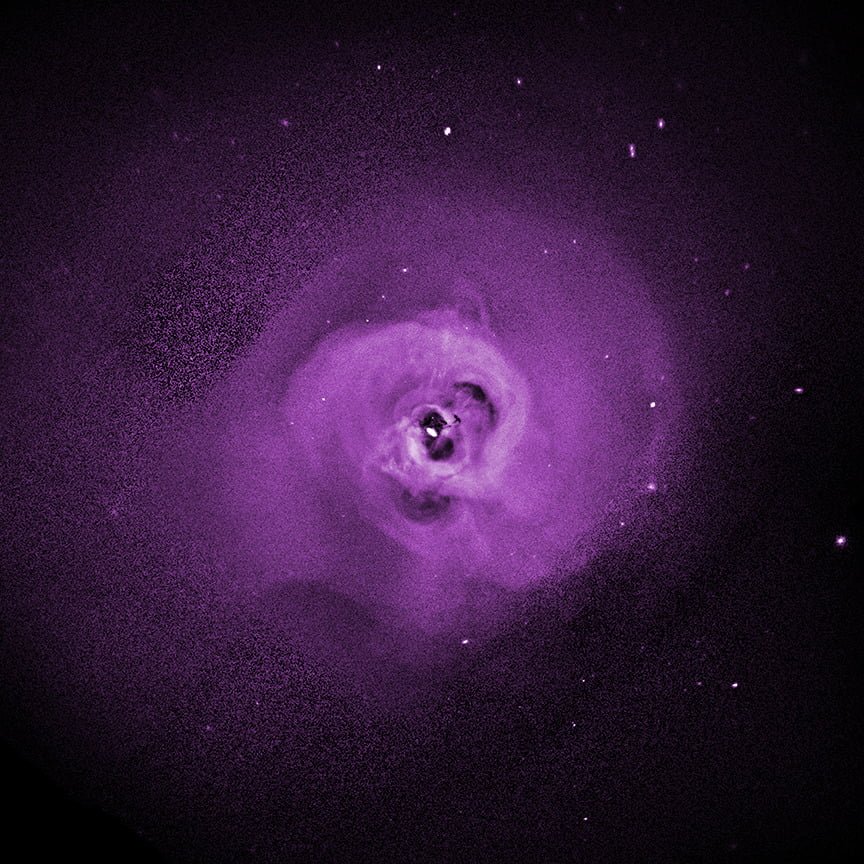
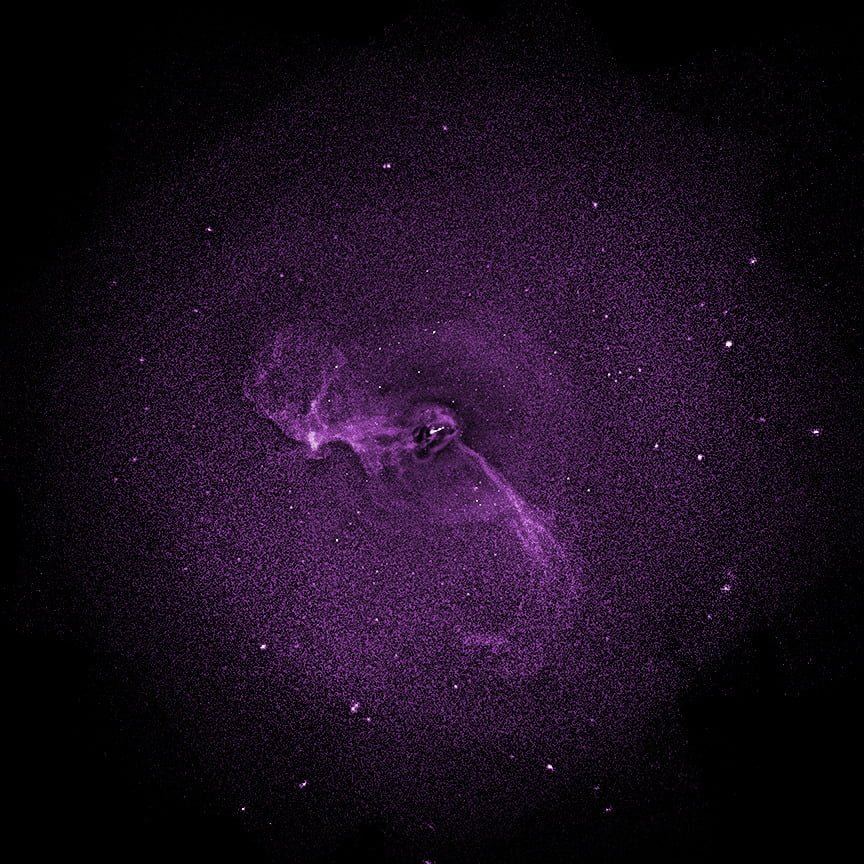
Galaxy clusters are objects containing hundreds or thousands of galaxies immersed in hot gas. This gas glows brightly in X-ray, as seen in the Perseus (top) and Virgo (bottom) clusters above. Over time, the gas near the center of the clusters should cool, generating many new stars, but this is not what astronomers observe. New research suggests turbulence may prevent this star formation. The supermassive black holes near the center of these galaxy clusters pump enormous amounts of energy into their surroundings through jets of particles. Those jets churn the gas of the cluster, generating turbulence, which ultimately dissipates as heat. It is this turbulent heating astronomers think counters the radiative cooling of the gas, thereby keeping the gas hot enough to prevent star formation. You can read more about the findings in the research paper. (Image credits: NASA/Chandra/I. Zhuravleva et al.; via io9)