Tag: biophysics

  • How Wombats Make Stackable Feces

    How Wombats Make Stackable Feces

    Wombats are unique among the animal kingdom for their ability to produce cubic feces approximately the size and shape of dice. Researchers found that wombats accomplish this geometric feat thanks to the structure of their intestines, which have bands of differing stiffness that run the full length of their guts. When the intestines contract, the stiffer bands contract first, gradually shaping and sculpting the corners of the feces.

    The results have implications both for manufacturing soft materials and for human health. One of the early effects of colon cancer is a stiffening of portions of the intestine; that means that doctors may be able to use changes in the shape of a patient’s feces as a warning sign for diagnosis. (Image and research credit: P. Yang et al.; video credit: Royal Society of Chemistry; via Gizmodo)
  • This Is Your Brain

    This Is Your Brain

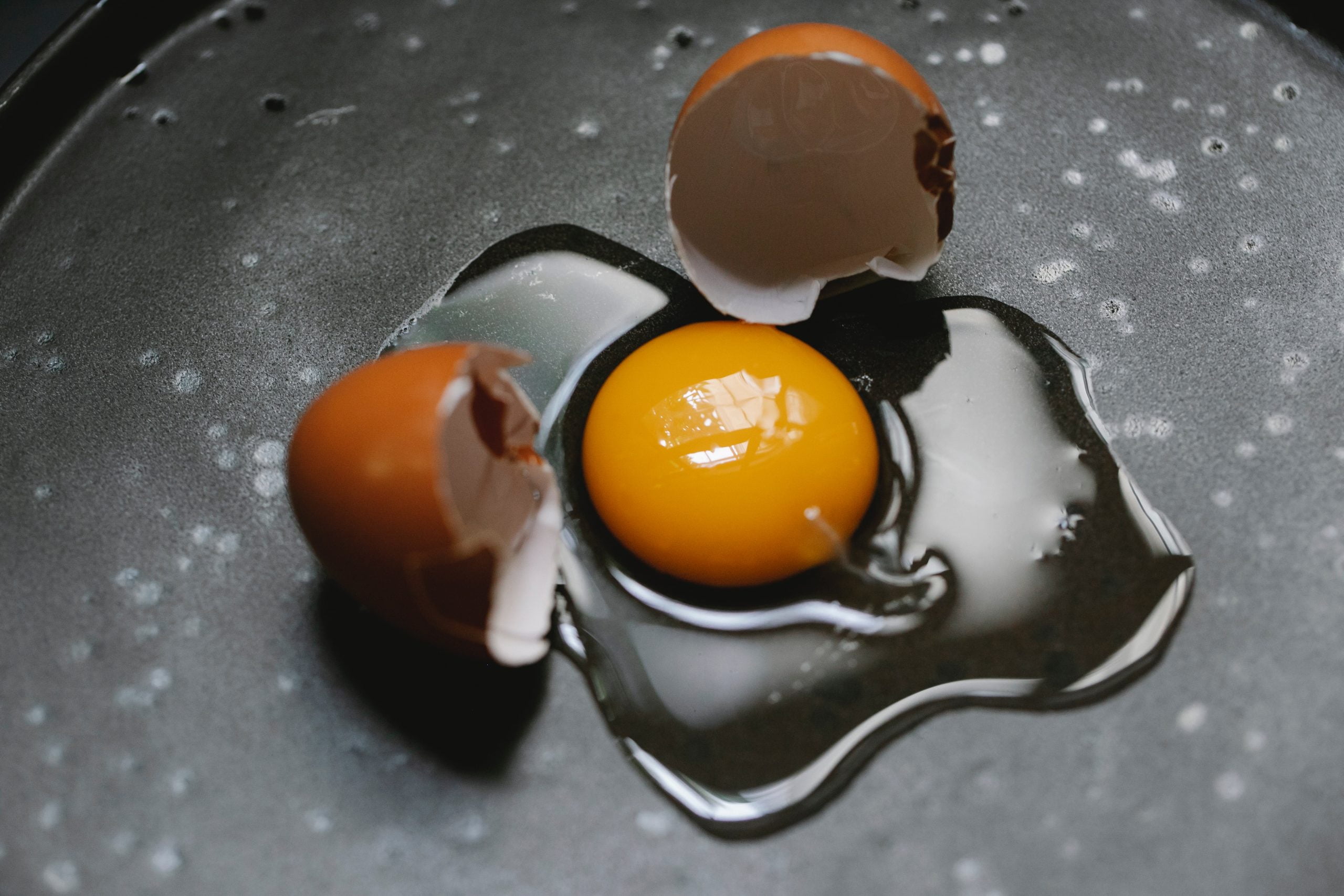
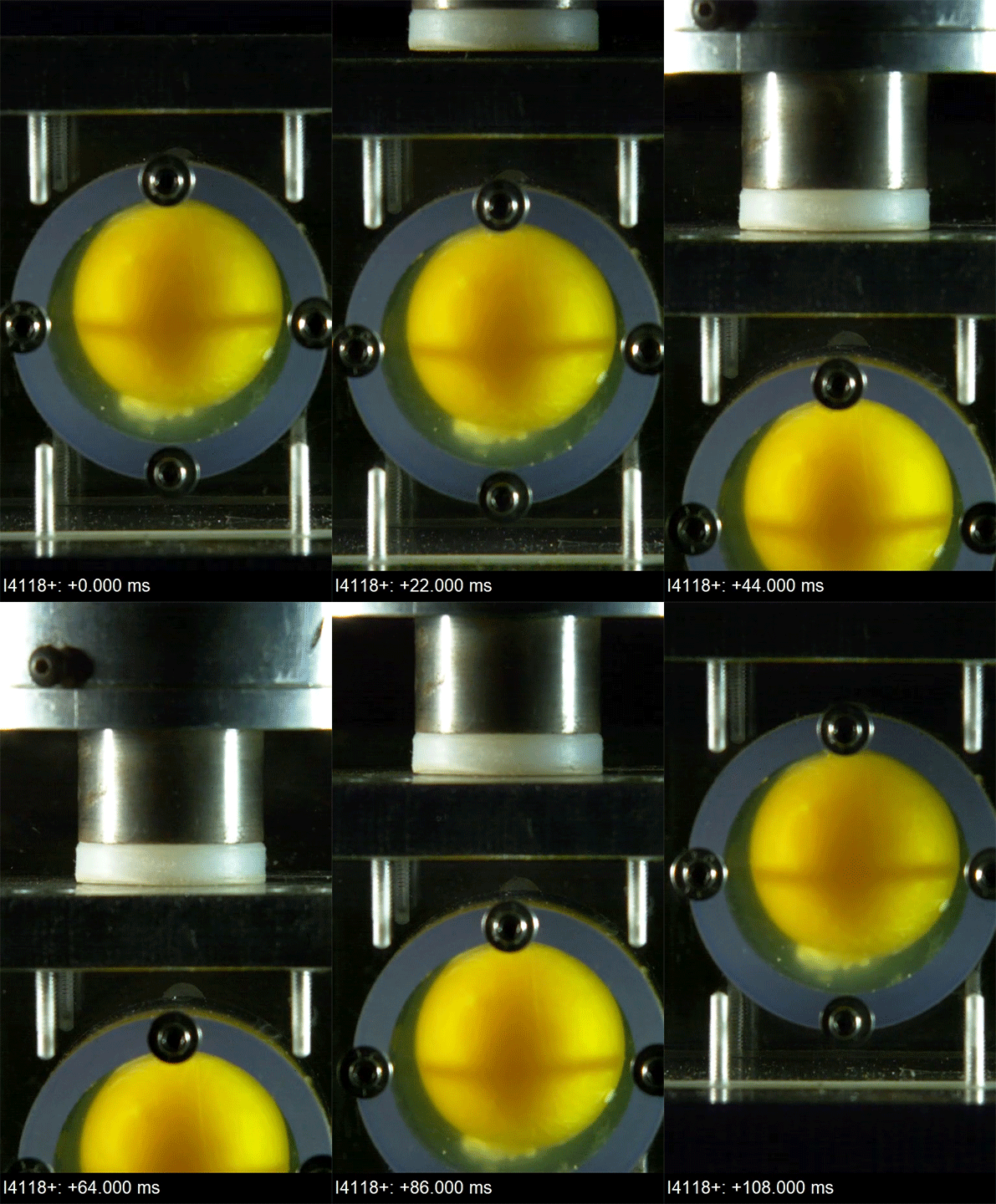
    The human brain, like an egg, consists of soft matter bathed in a fluid and encased in a hard shell. To better understand how our brains respond to sudden accelerations, researchers looked at how egg yolks behave. In a purely translational impact (Image 1), the egg yolk deforms very little. But rotational motions (Images 2 and 3) cause major effects because of the imbalance between pressure forces outside the yolk’s membrane and the centrifugal forces within it. Rotational deceleration was particularly potent (Image 3).

    The researchers’ findings are consistent with concussion research, which has shown that impacts with rotational acceleration/deceleration inside the skull are the most damaging. Based on the yolk’s deformation, such impacts likely stretch neurons and disturb their delicate network. (Image credit: cracked egg – K. Nielsen, others – J. Lang et al.; research credit: J. Lang et al.; via Physics World; submitted by Kam-Yung Soh)

  • Flexible Wings Aid Butterfly Flight

    Flexible Wings Aid Butterfly Flight

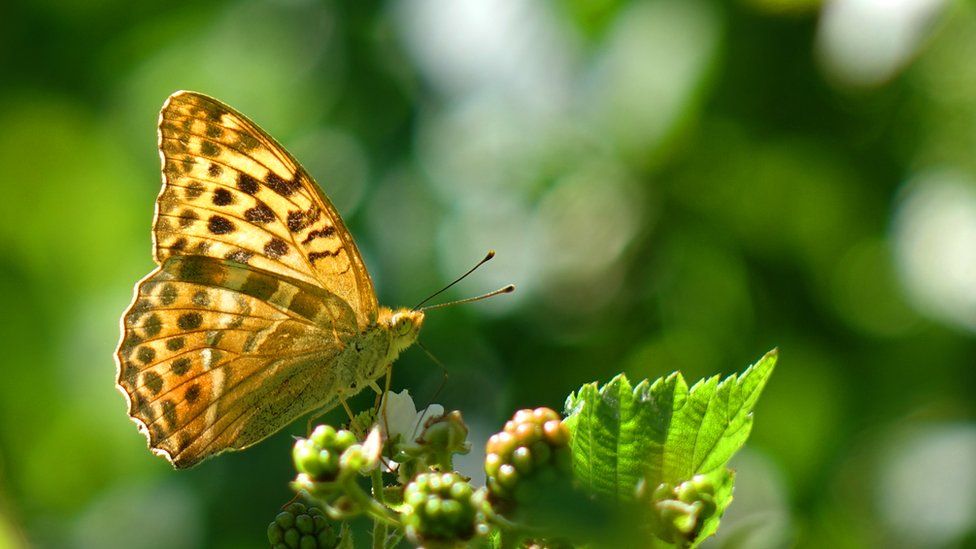
    Butterflies are some of the oddest flyers of the insect world, given the large size of their wings relative to their bodies. That could be a recipe for inefficient flight, but a new study shows that butterflies’ large flexible wings actually help them take off quickly.

    When lifting their wings, butterflies use an unusual clapping motion, with the leading edges of their wings coming together before the rest of the wings. This motion helps cup and direct air, creating most of the butterfly’s thrust, according to the researchers. The wings’ flexibility is key to this. Using artificial wings — both stiff and flexible — researchers found that the flexible wings generated 22% more useful impulse and were 28% more efficient. For a tiny flyer with frequent take-offs, that’s an enormous savings! (Image, video, and research credit: L. Johansson and P. Henningsson; via BBC; submitted by Kam-Yung Soh)

  • Featured Video Play Icon

    How Animals Stay Dry in the Rain

    Getting wet can be a problem for many animals. A wet insect could quickly become too heavy to fly, and a wet bird can struggle to stay warm. But these animals have a secret weapon: tiny, multi-scale roughness on their wings, scales, and feathers that helps them shed water. Watch the latest FYFD video to learn how! (Image and video credit: N. Sharp; research credit: S. Kim et al.)

  • To Beat Surface Tension, Tadpoles Make Bubbles

    To Beat Surface Tension, Tadpoles Make Bubbles

    For tiny creatures, surface tension is a formidable barrier. Newborn tadpoles are much too small and weak to breach the air-water surface in order to breathe. Researchers found that, instead, the 3 millimeter creatures place their mouths against the surface, expand their mouth to generate suction, and swallow a bubble consisting largely of fresh air.

    When they’re especially small, some of these species are essentially transparent (Image 1), allowing researchers to see the bubble directly. But even as the tadpoles aged (Images 2 and 3) and grew strong enough to breach the surface, they observed many instances in which the tadpoles continued this bubble-sucking method to breathe. (Image and research credit: K. Schwenk and J. Phillips; via Cosmos; submitted by Kam-Yung Soh)

  • Morphing Wings Using Real Feathers

    Morphing Wings Using Real Feathers

    Although humanity has long been inspired by bird flight, most of our flying machines are nothing like birds. Engineers have struggled to recreate the ease with which birds are able to morph their wings’ characteristics as they change from one shape to another. Now researchers have built a biohybrid robot, PigeonBot, that uses actual pigeon feathers as part of its morphing design.

    Many species of birds, including pigeons, have Velcro-like hooks in the microstructure of their feathers. These hooks help the flight feathers stick to one another and create a continuous wing surface that air cannot easily slip through, even as the wing drastically changes shape. By using actual feathers, PigeonBot shares this advantage.

    PigeonBot also has a somewhat minimalist design in its articulation, using only a wrist and finger joint in each wing to control shape. The feathers are connected through an elastic ligament, which — along with their microstructure — allows them to smoothly change shape under aerodynamic loads. The end result is a remarkably capable and agile biorobot researchers can use to better understand how birds control their flight. (Image and research credit: L. Matloff et al. and E. Chang et al.; via NPR and Gizmodo)

  • The Best of FYFD 2019

    The Best of FYFD 2019

    2019 was an even busier year than last year! I spent nearly two whole months traveling for business, gave 13 invited talks and workshops, and produced three FYFD videos. I also published more than 250 blog posts and migrated all 2400+ of them to a new site. And, according to you, here are the top 10 FYFD posts of the year:

    1. The perfect conditions make birdsong visible
    2. Pigeons are impressive fliers
    3. The water anole’s clever method of breathing underwater
    4. 100 years ago, Boston was flooded with molasses
    5. The BZ reaction is some of nature’s most beautiful chemistry
    6. The labyrinthine dance of ferrofluid
    7. 360-degree splashes
    8. The extraordinary flight of dandelion seeds
    9. Dye shows what happens beneath a wave
    10. Bees do the wave to frighten off predators

    Nature makes a strong showing in this year’s top posts with five biophysics topics. FYFD videos also had a good year: both my Boston Molasses Flood video and dandelion flight video made the top 10!

    If you’d like to see more great posts like these, please remember that FYFD is primarily supported by readers like you. You can help support the site by becoming a patronmaking a one-time donation, or buying some merch. Happy New Year!

    (Image credits: birdsong – K. Swoboda; pigeon take-off – BBC Earth; water anole – L. Swierk; Boston molasses flood – Boston Public Library; BZ reaction – Beauty of Science; ferrofluid – M. Zahn and C. Lorenz; splashes – Macro Room; dandelion – N. Sharp; dyed wave – S. Morris; bees – Beekeeping International)

  • Featured Video Play Icon

    Bioinspiration, Underwater Sniffing, and Mixing Toothpaste

    In this month’s FYFD/JFM video, we explore some intersections between the animal kingdom and our own lives. Learn about designing better buildings with inspiration from termites; see the fascinating superpower of the star-nosed mole; and learn what goes into products like the toothpaste you (hopefully) use daily. All this and more in the latest video! Missed one of our previous ones? Good news: we’ve got you covered. (Image and video credit: N. Sharp and T. Crawford)

  • Inside APS DFD 2015

    Inside APS DFD 2015

    What do shark scales, underwater robots, blood flow, and art have in common? They’re all a part of the latest FYFD video! Check out my behind-the-scenes look at the latest American Physical Society Division of Fluid Dynamics meeting. Meet the researchers and find out about the science everyone was talking about! (Image/video credit: N. Sharp)