Tag: acceleration

  • Getting Water Out of Your Ear

    Getting Water Out of Your Ear

    Swimming often results in water getting stuck in our ear canals. The narrow space, combined with the waxy surface, is excellent at trapping small amounts of water. If left in place, that excess fluid distorts hearing, can cause pain, and may eventually lead to an ear infection. So most people’s common response is to tilt their head sideways and shake it or jump to knock the water out. This recent study looks at just how much acceleration is needed to dislodge that water.

    An acceleration of 7.8g isn't enough to remove the water from this artificial ear canal.
    An acceleration of 7.8g isn’t enough to remove the water from this artificial ear canal.

    The team built an artificial ear based on the shape of a human’s ear canal and observed how much acceleration was needed to knock the water out. The answer? Quite a bit. As seen above, nearly 8g of acceleration was enough to distort the interface of the water in the ear canal, but it didn’t move the water out.

    At higher accelerations — above 20 times the acceleration due to gravity – the air-water interface distorts enough to get the water to flow. But accelerations that large are enough to potentially damage brain tissues.

    At over 24g, the acceleration is enough to dislodge the water from this artificial ear canal. But accelerations this high can cause brain damage.
    At over 24g, the acceleration is enough to dislodge the water from this artificial ear canal. But accelerations this high can cause brain damage.

    The problem is worse for children and babies, whose tiny ear canals necessitate even larger accelerations. For them, shaking hard enough to remove water could cause real damage. Instead, a couple drops of vinegar or alcohol in the ear will lower the surface tension and make the fluid easier to remove. (Image credit: top – J. Flavia, others – S. Kim et al.; research credit: S. Kim et al.; submitted by Sunny J.)
  • This Is Your Brain

    This Is Your Brain

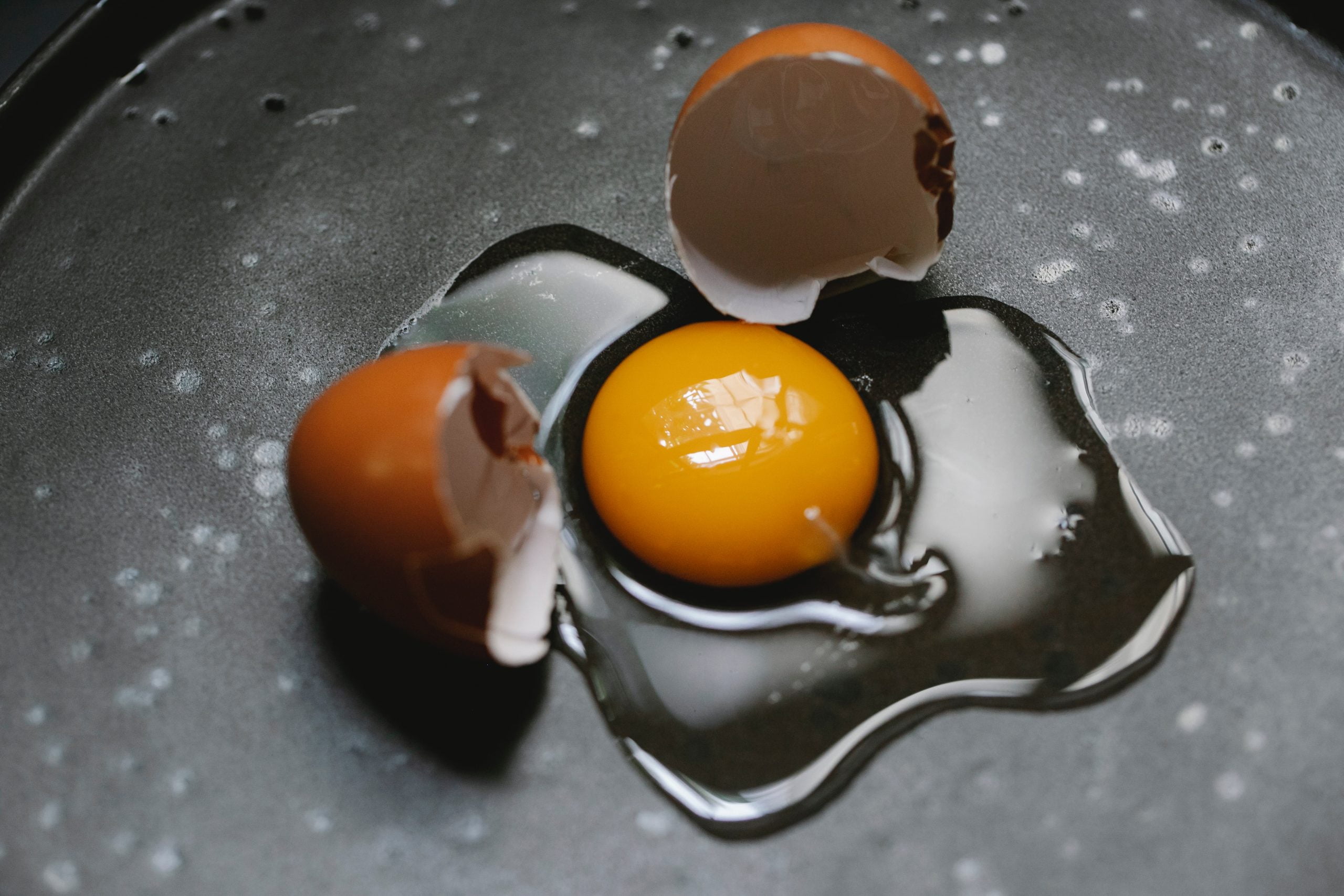
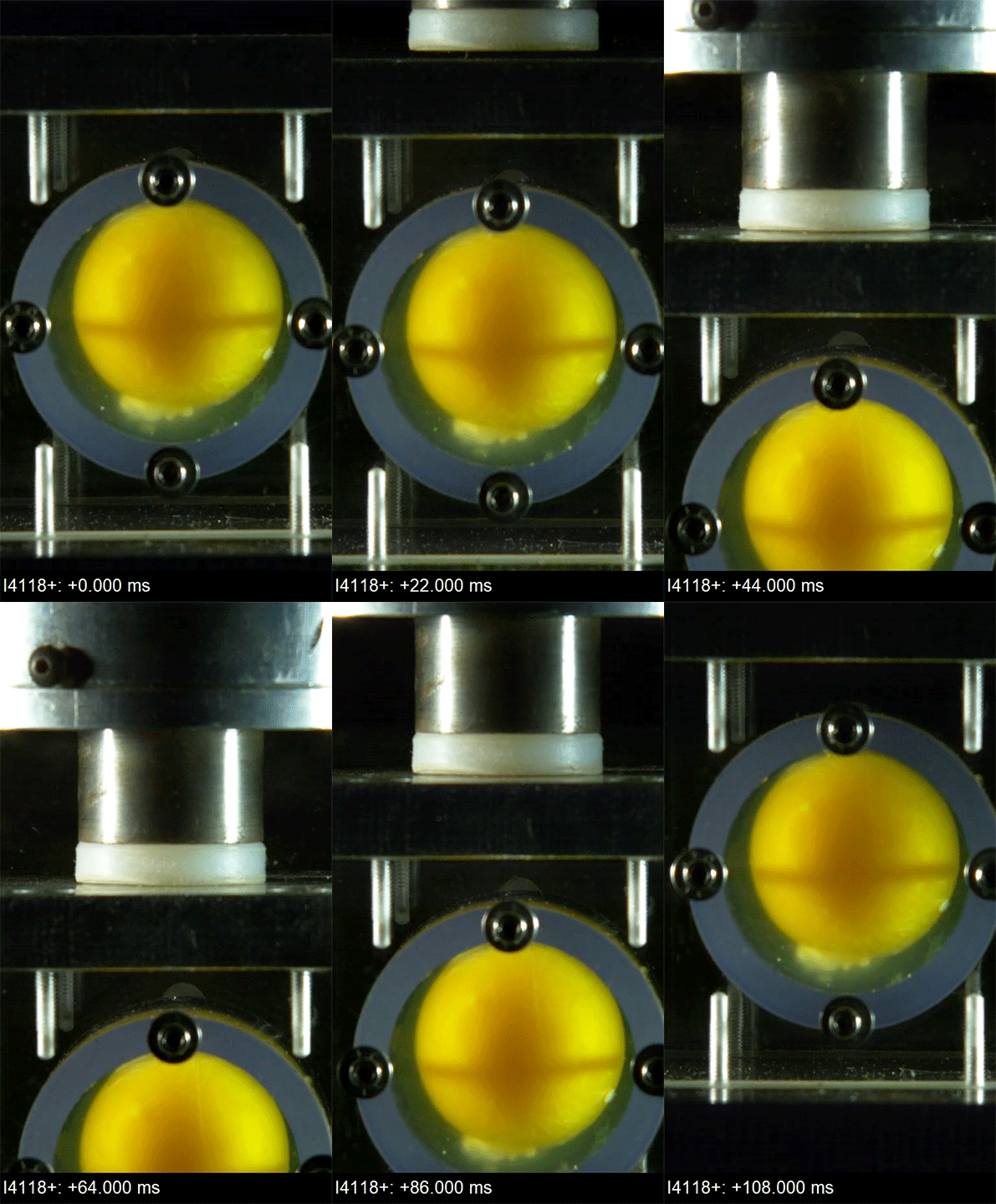
    The human brain, like an egg, consists of soft matter bathed in a fluid and encased in a hard shell. To better understand how our brains respond to sudden accelerations, researchers looked at how egg yolks behave. In a purely translational impact (Image 1), the egg yolk deforms very little. But rotational motions (Images 2 and 3) cause major effects because of the imbalance between pressure forces outside the yolk’s membrane and the centrifugal forces within it. Rotational deceleration was particularly potent (Image 3).

    The researchers’ findings are consistent with concussion research, which has shown that impacts with rotational acceleration/deceleration inside the skull are the most damaging. Based on the yolk’s deformation, such impacts likely stretch neurons and disturb their delicate network. (Image credit: cracked egg – K. Nielsen, others – J. Lang et al.; research credit: J. Lang et al.; via Physics World; submitted by Kam-Yung Soh)

  • Kicking Droplets

    Kicking Droplets

    Moving the surface a droplet sits on creates some interesting dynamics, especially if the surface is hydrophobic. That’s what we see here with these droplets launched off an impulsively-moved plate.

    On the left, the drop has some limited contact with the plate and it takes time for the droplet to completely detach. When accelerated, the droplet first flattens into a pancake, the rim of which quickly leaves the plate. The center of the droplet is slower to detach, stretching the drop into a vase-like shape. When the drop does finally lose contact, it creates a fast-moving jet that shoots upward at several meters per second!

    In contrast the image on the left shows a levitating Leidenfrost droplet. Since this drop has no physical contact with the plate, the kick makes it leave the surface all at once, launching a pancake-like drop that quickly forms unstable lobes. (Image and research credit: M. Coux et al.)

  • Giving Droplets a Kick

    Giving Droplets a Kick

    Giving droplets a kick by accelerating the surface they sit on creates elaborate shapes as the drops respond. As the surface accelerates upward, the droplet flattens into a pancake. When the plate slows down, the droplet continues rising, stretching into a cone as its rim flies upward and its lower surface adheres to the surface. The rim retracts with a constant acceleration while the drop detaches with a constant velocity. That velocity depends on how well it adheres to the surface. The interplay between those two variables determines how conical or cylindrical the drop appears. See more in the full video below. (Image and video credit: P. Chantelot et al.)