Tag: 2023gosmp

  • Featured Video Play Icon

    To Clog or Not to Clog?

    The clear plastic disks use to study clogging appear rather plain — at least until you look at them through polarizers. Then the disks light up with a web of lines that reveal the unseen forces between the particles. In this video, researchers use this trick to explore how spontaneous clogs occur. If particles jam together into an arch, that bridge can be strong enough to hold the weight of all the particles above it, bringing the flow to a halt. Some arches aren’t strong enough to hold for long; they can break in moments. Other more stable arches persist. By watching the flow through polarizers and carefully tracking the ebb and flow of the forces between particles, researchers can predict which clogs will have staying power. (Video credit: B. McMillan et al.)

  • Featured Video Play Icon

    Polymers and Fluid Sheets

    Even adding a small amount of polymers to a fluid can drastically change its behavior. Often polymer-doped fluids act more like soft solids, able to hold their shape like your toothpaste does when squeezed onto your toothpaste. Under a little stress, though, the fluids still flow; that’s why your toothpaste gets less viscous as you scrub.

    To study the changes polymers make, this research team collides two jets of fluid to create a liquid sheet. Depending on the flow rate and the added polymers, the break-up pattern of the sheet changes. By observing changes in the sheet thickness and the holes that form, they can draw conclusions about what the polymers are doing. (Video credit: C. Galvin et al.)

  • Featured Video Play Icon

    Long-Lived Bubbles

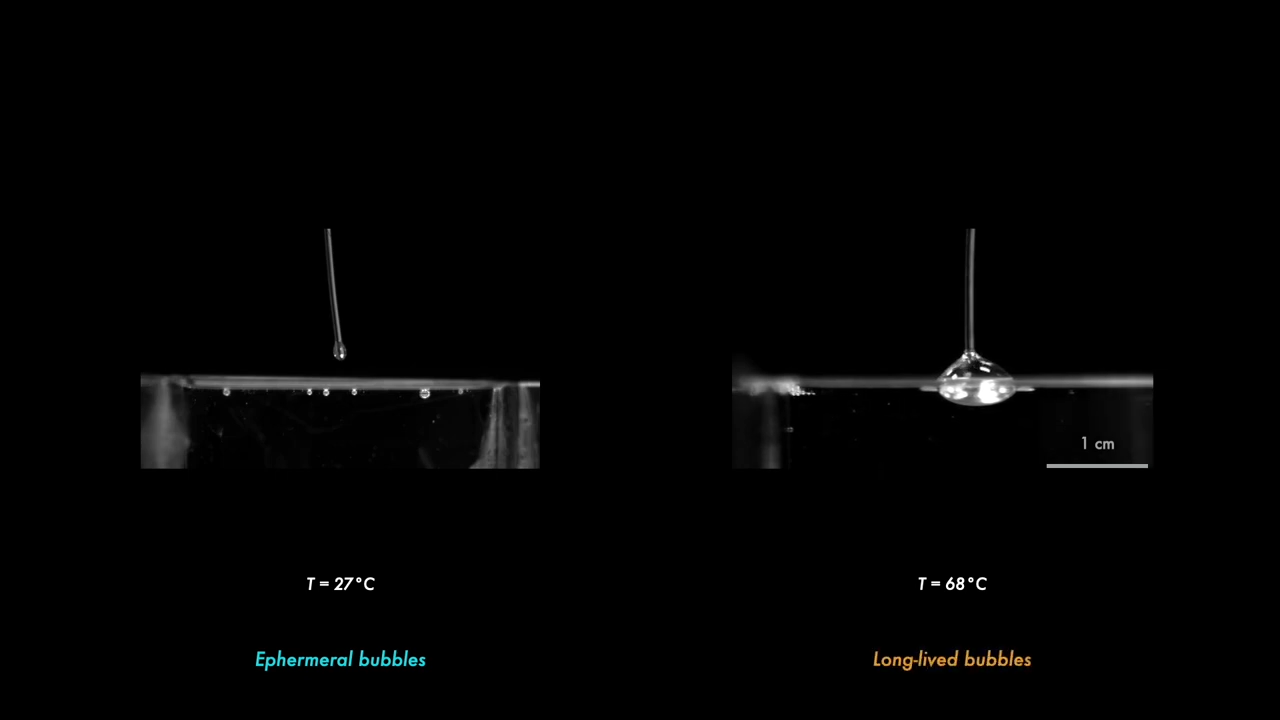
    Without surfactants to stabilize them, bubbles don’t last long at room temperature. But adding a little heat changes the picture. When heated, the bubbles get stabilized by a thermal gradient that lifts fluid toward the bubble’s peak, where it cools and gathers. Eventually, the cold fluid grows heavy enough to sink down the side of the bubble (in either a constant stream or occasional drips); with warm fluid getting pulled up to replace it (via the Marangoni effect), the process repeats and the bubble lives on. (Video credit: S. Nath et al.; see also)

  • Drying Cracks

    Drying Cracks

    Droplets with particles in them can leave complex stains when they dry — just look at coffee rings and whiskey marks! Here, researchers look at the patterns left on glass by small droplets that evaporated and left behind their nanoparticles. As evaporation takes place, the droplet’s shape changes, adding stress to the growing layer of nanoparticle residue. Cracking is one way to relieve that stress. Another method is delamination — peeling up from the surface. On the leftmost drop, the outer rim of nanoparticles delaminated — as seen from the circular fringes — which released stress without cracking. The rightmost drop, which had a smaller contact angle with the surface, couldn’t delaminate and instead cracked throughout. (Image credit: M. Ibrahim et al.)

  • Featured Video Play Icon

    Mermaid Cereal

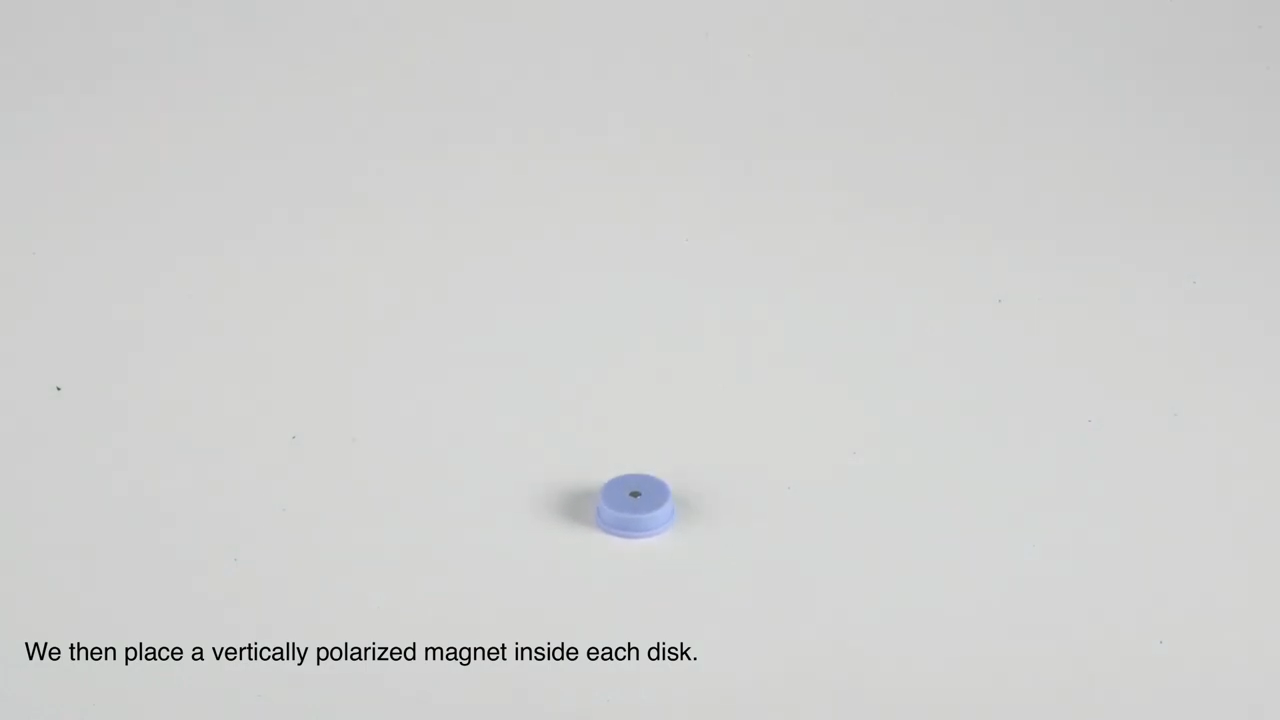
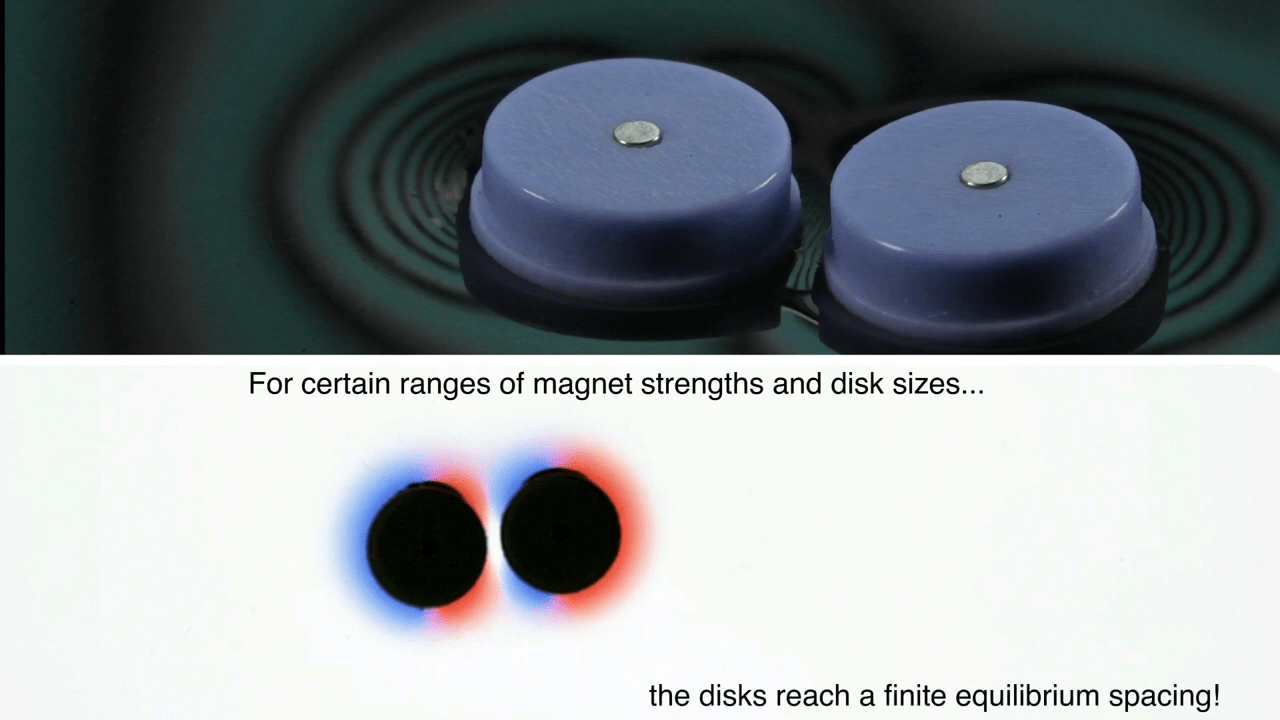
    In the Cheerios effect, floating objects can fall into one another due to capillary attraction — just like Cheerios link up in a cereal bowl. Here researchers play with that effect by adding repulsive magnets to their “cereal” pieces. They find that their so-called mermaid cereal falls into preferential spacing, with pieces pairing up but never touching. Adding lots of these pieces in a confined space creates interesting crystalline and striped patterns, as seen later in the video. (Video credit: A. Hooshanginejad et al.)