Tag: undulatory swimming

  • Fish Fins Work Together

    Fish Fins Work Together

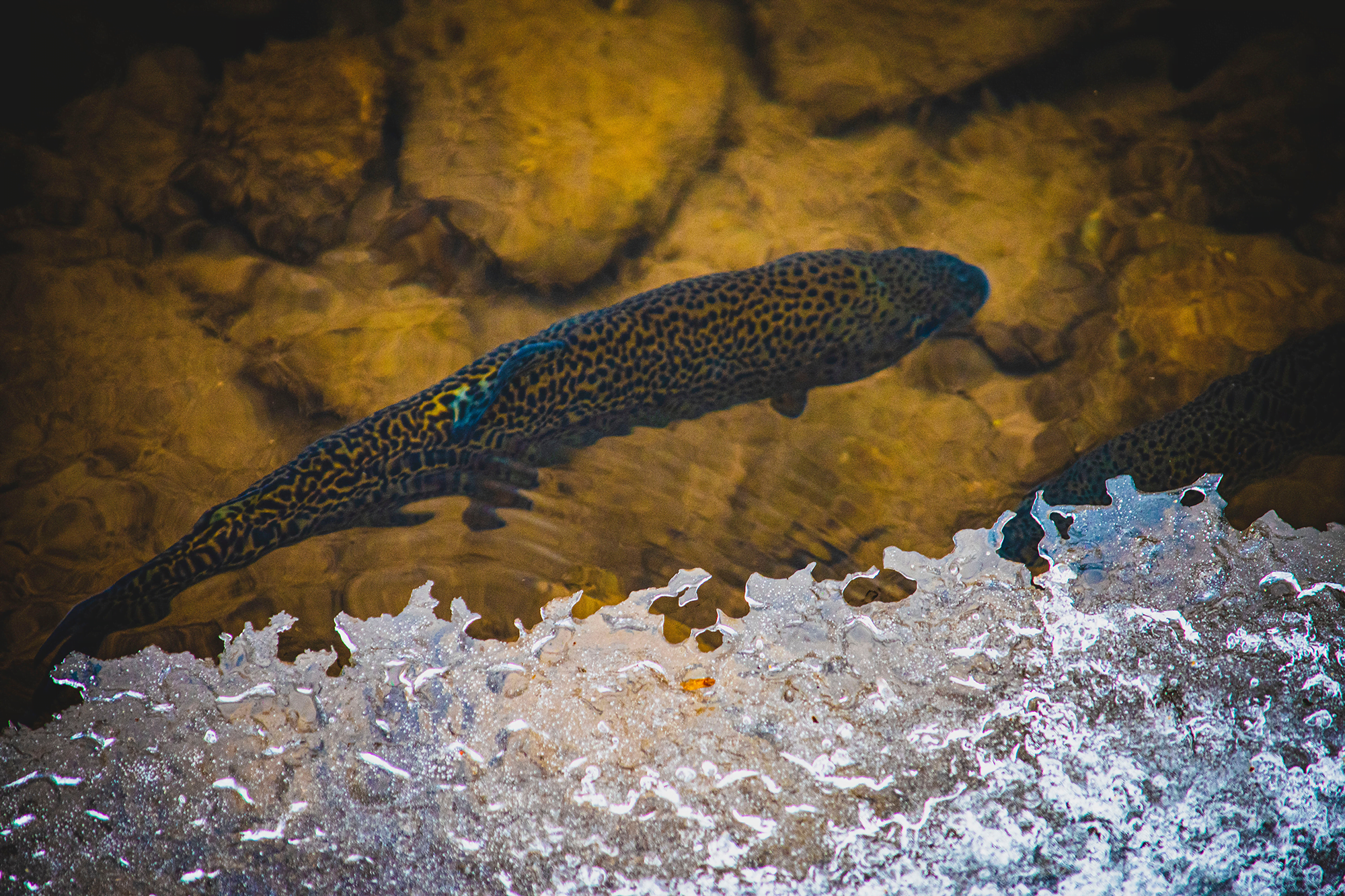
    Researchers studying how fish swim have long focused on their tail fins and the flows created there. But a fish’s other fins have important effects, too, as seen in this recent study. Researchers built a CFD simulation based on observations of a swimming rainbow trout, focusing on the flow from its back and tail fins. They found that the vortex created by the back fin stabilizes and strengthens the one generated by the tail. It also played a role in reducing drag on the fish by maintaining the pressure difference across the body. When they tried changing the size and geometry of the fins, the fish’s efficiency suffered, indicating that evolution has already optimized the trout’s fins for swimming efficiency. (Image credits: top – J. Sailer, simulation – J. Guo et al.; research credit: J. Guo et al.; via APS Physics)

    Visualization of flow around a digitized rainbow trout.
    Visualization of flow around a digitized rainbow trout.
  • Swimming Intermittently

    Swimming Intermittently

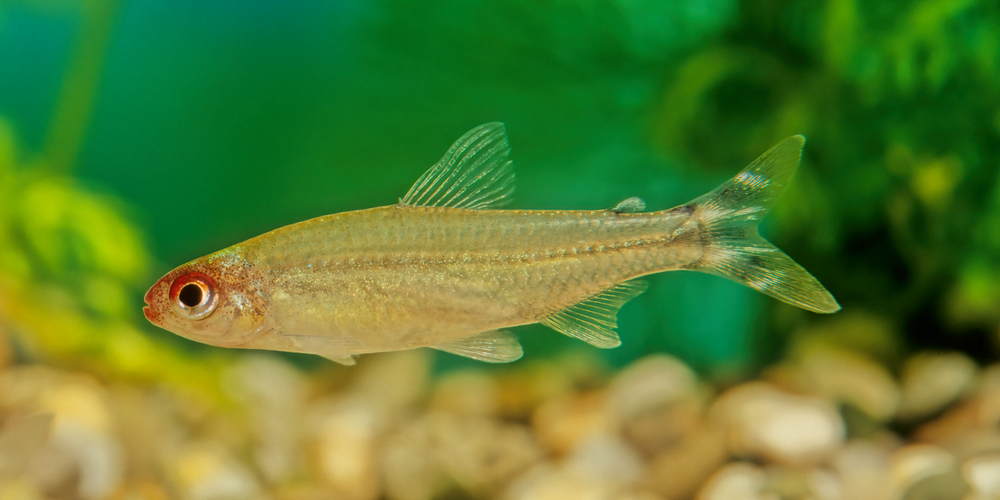
    Many fish do not swim continuously; instead, they use an intermittent motion, swimming in a sudden burst and then coasting. This intermittent swimming is tough to simulate, due to its unsteady nature, but a new study does so using some clever computational techniques.

    Animation showing a fish swimming in a burst-and-coast pattern.
    Animation showing a fish swimming in a burst-and-coast pattern.

    Researchers suspected that the energy intensity of a fish’s burst could be balanced by the low-drag, low-effort phase of coasting. And, indeed, that’s consistent with the team’s results. But they found that the swimming method does require careful optimization; with the wrong cadence, the burst-and-coast technique can be incredibly energy intensive. In nature, of course, fish have had millions of years to optimize their technique, but the results serve as a warning to those building fish-based robots. Those biorobots will need careful optimization to benefit from this swimming style. (Image credit: tetra – Adobe Stock Images, simulation – G. Li et al.; research credit: G. Li et al.; via APS Physics; submitted by Kam-Yung Soh)

  • Benefits of Schooling

    Benefits of Schooling

    Though fluid dynamicists have long theorized about the hydrodynamic benefits of fish swimming in schools, nailing down the actual physics has been quite difficult. Fish rarely swim exactly as an experimenter would like, and measuring quantities like swimming efficiency in a living fish is tough to do. In the numerical realm, it’s tough to simulate multiple fish swimming at realistic conditions. So some teams have turned to biomimetic robotic platforms to study schooling, as in this new research.

    Once you’ve built a robotic fish that swims in a realistic way, that fish will have no problem swimming the same experimental patterns over and over. In this work, the researchers compared their robots swimming solo and swimming with a partner. In the partnered studies, they looked at fish swimming in phase — with their undulations matching one another — and out of phase — where the fish move opposite one another. They found that having a nearby partner improved the speed and efficiency for both fish, regardless of phase. But they also found a peculiar exception.

    If one fish modifies their tailbeat frequency relative to their partner, they can slightly increase their power efficiency. But if they do so, it costs their partner more energy. That implies that fish could employ competitive dynamics, but, of course, it doesn’t tell us that they do! (Image and research credit: L. Li et al.; submitted by Kam-Yung Soh)

  • Galapagos Week: Marine Iguanas

    Galapagos Week: Marine Iguanas

    One of the most unique inhabitants of the Galapagos Islands is the marine iguana. These reptiles live in colonies of thousands and subsist entirely on marine algae. Smaller iguanas are intertidal feeders, grazing on green and red algae when it is exposed near low tide. But the largest iguanas feed near midday by swimming out and diving to feed on richer pastures. 

    The iguanas are surprisingly good swimmers, even though marine iguanas exhibit little extra specialization for it compared to other iguana species. They swim both at the surface and underwater with an undulatory motion driven by their tails. The iguana also streamlines its body somewhat by tucking its legs along its sides. Although the marine iguana is a much slower and less efficient swimmer than a bony fish of equal size, swimming is still a good choice for getting around. The marine iguana expends only 75% as much energy per distance swimming as it does walking. The big challenge is staying warm in the cold Galapagos waters. Small iguanas are both less efficient swimmers and lose body heat faster. This is why you’ll only see the biggest iguanas feeding underwater. (Image credits: N. Sharp; research credit: K. Trillmich and F. Trillmich; J. Videler and B. Nolet; G. Bartholomew)

    This is the first post of Galapagos Week here on FYFD. Check back every day for new Galapagos-themed posts!

  • Featured Video Play Icon

    Wavy Swimmers

    Animals often move in ways engineers find counter-intuitive. Take, for example, the glass knifefish, an undulatory swimmer that controls its motion through wavelike oscillations of its fin. One might expect the knifefish to move its fin so that a single continuous wave moves from one end to the other. Instead two opposing waves move down the knifefish’s fins, one travelling from head to tail and the other travelling from the tail forward. The intersection of these waves is the nodal point, and, by shifting the nodal point fore or aft, the knifefish can hover in place, move forward or swim backward. At first glance, this seems like a wasteful system since a significant portion of each wave cancels the other, but, through mathematical modeling and experiments with a biomimetic robot, the researchers found that the dual-wave locomotion increases both the stability and maneuverability of the fish. (Video credit: N. Cowan et al.; via phys.org)

  • Featured Video Play Icon

    Mackerel vs. Eel: Who Swam It Better?

    Which matters more, form or function? This simulation sets out to answer that question by comparing the swimming motion of eels and mackerels. Eels have longer, more rounded body shapes and swim in an undulatory fashion with their whole body, whereas mackerels have shorter bodies with a more elliptical cross-section and primarily move their tails when swimming. The simulation separates body type from swimming motion by creating virtual races between fishes of the same body type using the two forms of swimming. Eels swim at moderate Reynolds numbers where viscous and inertial effects are reasonably balanced.  Under those conditions, eel-like swimming was faster, even with a mackerel’s body type.  At the higher Reynolds numbers where mackerels usually swim, inertial forces domination and the racing fish moved faster if they swam like a mackerel, even with the body of an eel. The results suggest that the swimming motion matters more in each Reynolds number range than the shape of the swimmer. This is a neat way that simulation can answer questions we cannot test with an experiment! (Video credit: I. Borazjani and F. Sotiropoulos)