Tag: citrus

  • Luminous Fruits

    Luminous Fruits

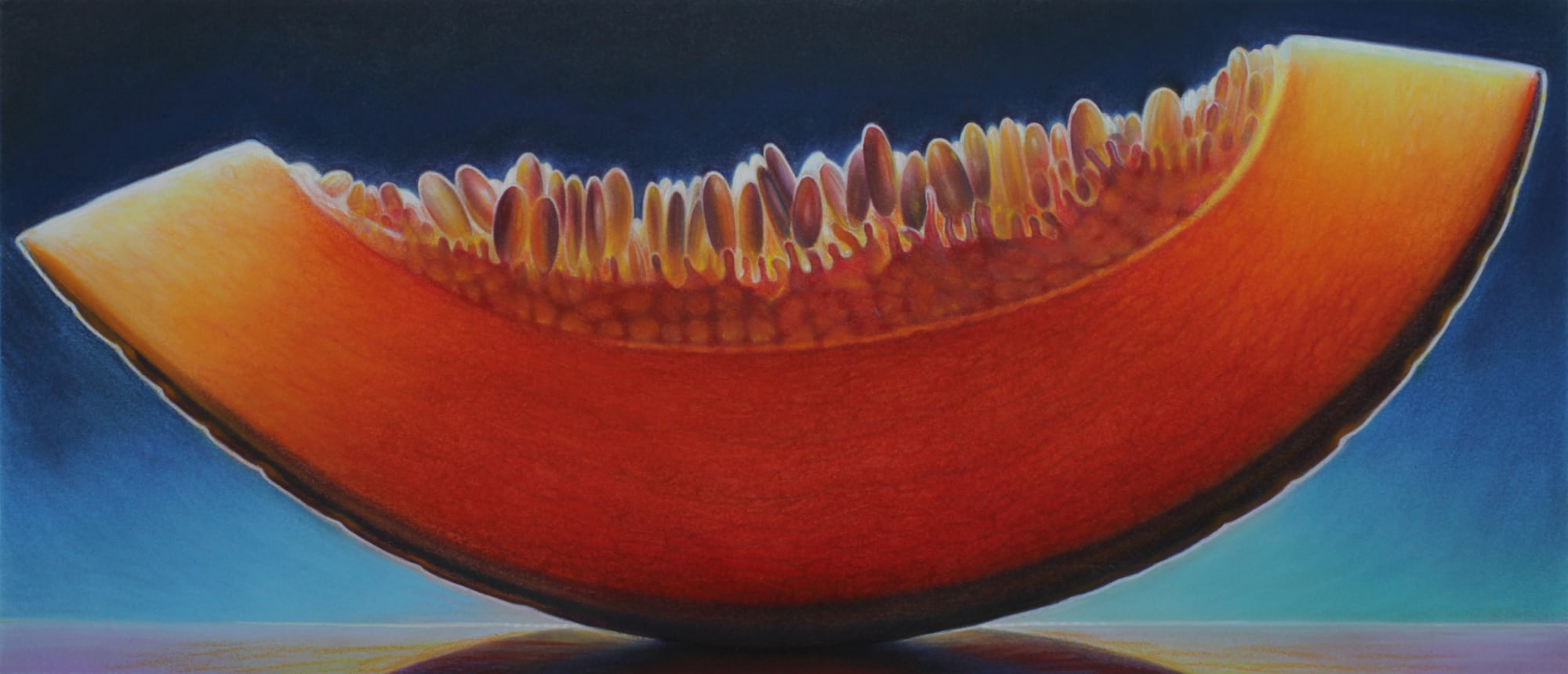
    Light shines through citrus and melon in this photographic photorealistic series of paintings from artist Dennis Wojtkiewicz. The strong illumination reveals the underlying structure of pith, pulp, and juice. The deformable pockets of fluid in the peel of citrus fruits are the source of some incredible microjets. When the peel bends, it compresses these tiny fluid-filled pockets, creating incredibly high pressures that eventually drive a burst of oil at g-forces comparable to those felt by a bullet fired from a gun. Learn more about citrus jets here and see more of Wojtkiewicz’s work and purchase prints here on his site. (Image credit: D. Wojtkiewicz; via Colossal)

    ETA: Thanks to A.J. for pointing out that Wojtkiewicz is, in fact, a painter (and not a photographer), making his work all the more astounding! We regret the error.

  • Catching Fire

    Catching Fire

    Citrus fruits like oranges house tiny pockets of oil in their peels. When squeezed, the oils jet out in tiny micro-jets that are about the width of a human hair. Despite their small size, the jets reach speeds of about 30 m/s and quickly break into a stream of droplets. When exposed to the flame of a lighter, like in the animation above, those microdroplets combust easily, creating a momentary fireball used to augment some cocktails. For more on how the citrus peel generates these jets, check out this previous post. (Image credit: Warped Perceptionsource; research credit: N. Smith et al.)

  • Plant Week: Citrus Jets

    Plant Week: Citrus Jets

    Bartenders and citrus lovers the world over are familiar with the mist of oil that bursts from a bent citrus peel. These microjets are about the width of a human hair, but they can spray at nearly 30 m/s in some citrus species. That’s an acceleration g-force of more 5,100, comparable to a bullet fired from a gun!

    The key to the jets is the structure of the fruit’s peel. Citrus fruits have a relatively thick, soft inner material, known as the albedo, which houses the oil reservoirs. The thin, stiff outer layer of the peel, called the flavedo or zest, covers that. When the peel is bent, the albedo compresses, increasing the pressure inside the oil reservoirs up to an additional atmosphere’s worth. Meanwhile, the flavedo is stretched. When that outer layer fails, it releases the oil pressure and a jet spurts out. For more on this work, including some awesome high-speed videos, check out my interview (starting at 2:59) with one of the authors in the video below. (Image and research credit: N. Smith et al.; video credit: N. Sharp and T. Crawford)

    FYFD is celebrating Plant Week all this week. Check out our previous posts on how moisture lets horsetail plant spores walk and jump, the incredible aerodynamics of dandelion seeds, and the ultra-fast suction bladderworts use to hunt.

  • Featured Video Play Icon

    Bouncing, Floating, and Jetting

    Get inside some of the latest fluid dynamics research with the newest FYFD/JFM video. Here researchers discuss oil jets from citrus fruits, balls that can bounce off water, and self-propelled levitating plates. This is our third entry in an ongoing series featuring interviews from researchers at the 2017 APS DFD conference. Missed one of the previous ones? Not to worry – we’ve got you covered. (Video and image credit: N. Sharp and T. Crawford)