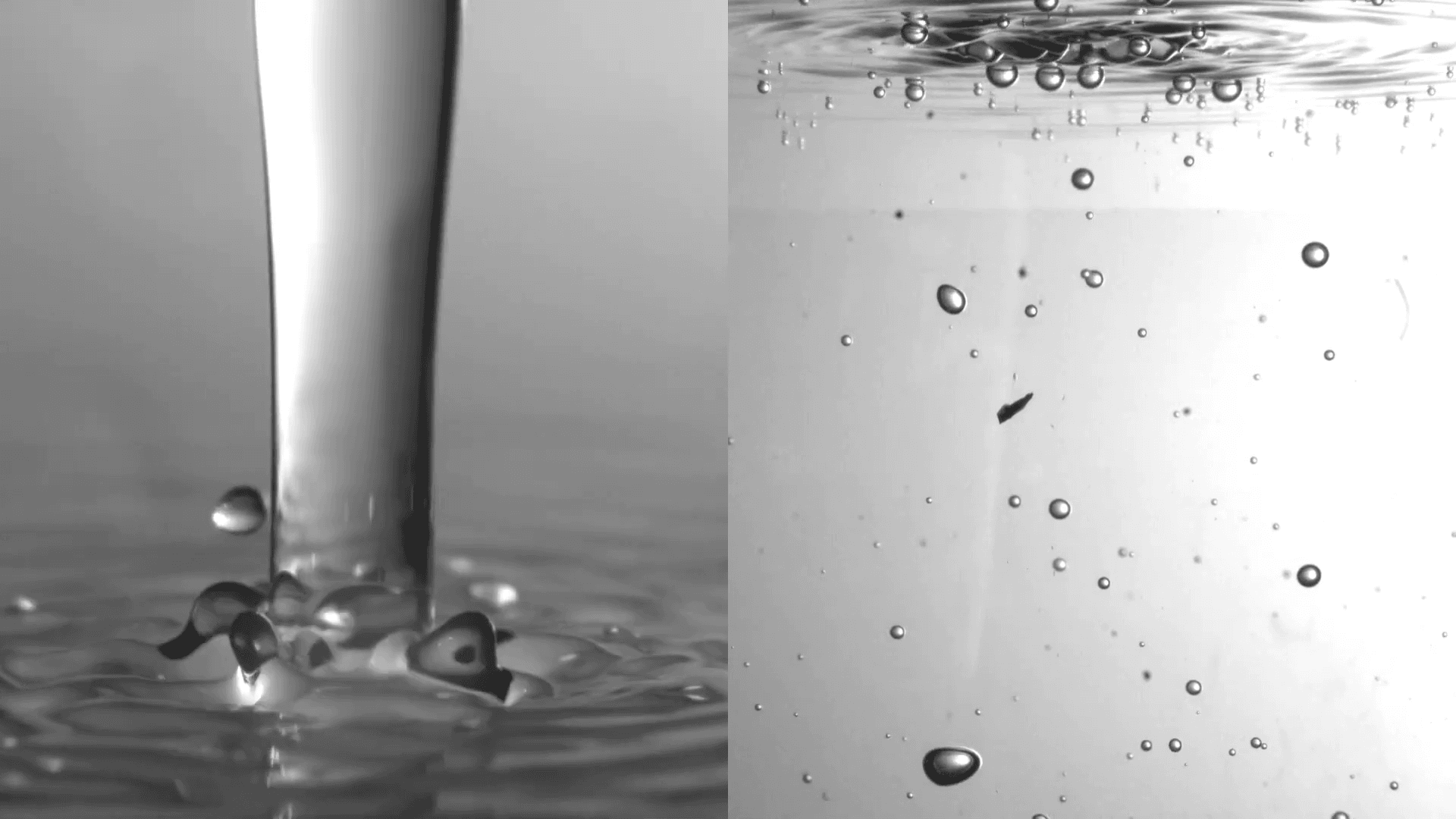
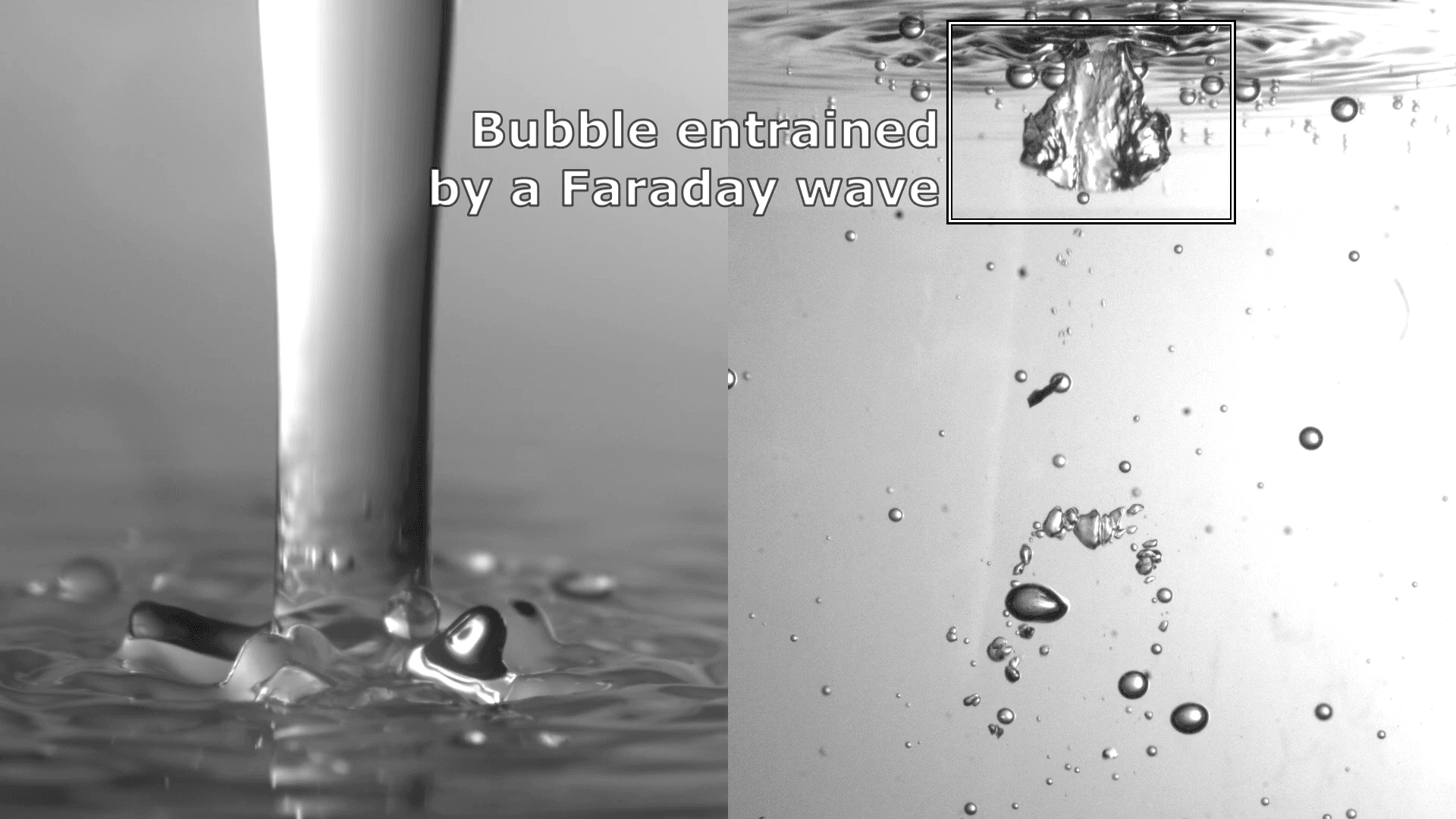
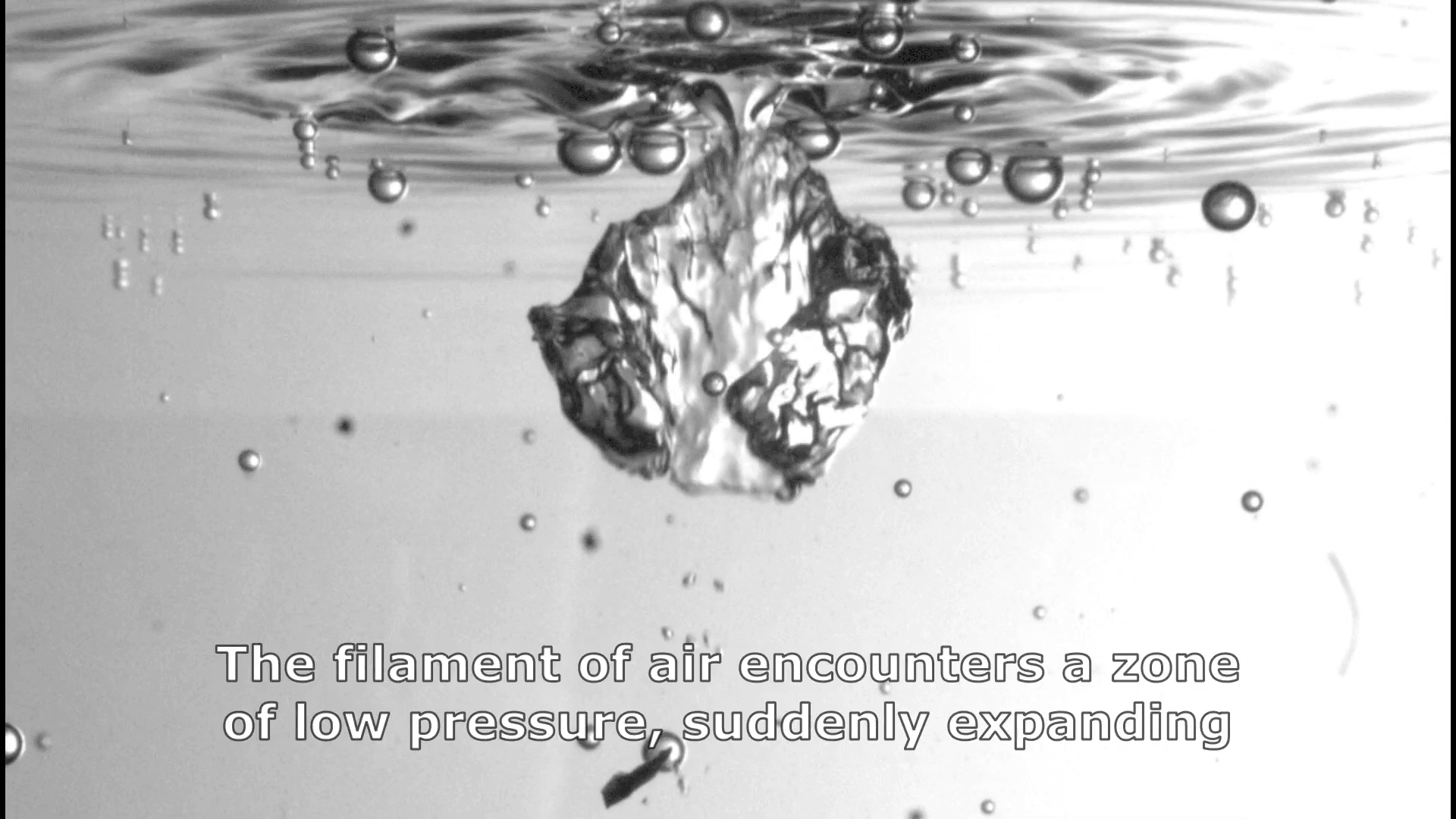
Every time I fill a glass at my refrigerator, I watch how the falling jet creates a cloud of bubbles. The bubbles form when the impacting water jet pulls air in with it, though, as this video shows, the exact origins can vary. Here, researchers take a closer, slowed-down look at the situation; they connect disturbances in the jet and waves at its base to the entrained bubbles that form. (Video and image credit: S. Relph and K. Kiger)
Month: December 2025

Quantum Rayleigh-Taylor Instability
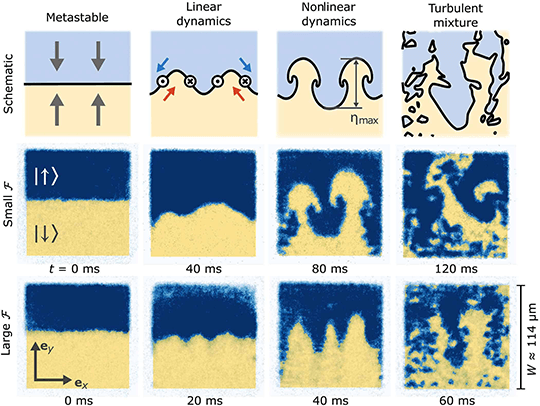
The Rayleigh-Taylor instability–typically marked by mushroom-shaped plumes–occurs when a dense fluid accelerates into a less dense one. But researchers have now demonstrated the effect at quantum scales, too.
For their experiment, the group used a Bose-Einstein condensate of sodium atoms and made the interface between them by exciting half of the atoms into a spin-up state and half into a spin-down one. With the interface is place, they reversed the magnetic field gradient, inducing a force on the atoms equivalent to the buoyant force seen in conventional Rayleigh-Taylor instabilities. As shown above, the interface first warped, then developed Rayleigh-Taylor mushrooms and eventually became turbulent. (Image and research credit: Y. Geng et al.; via Physics World)

Whorls of Sea Ice
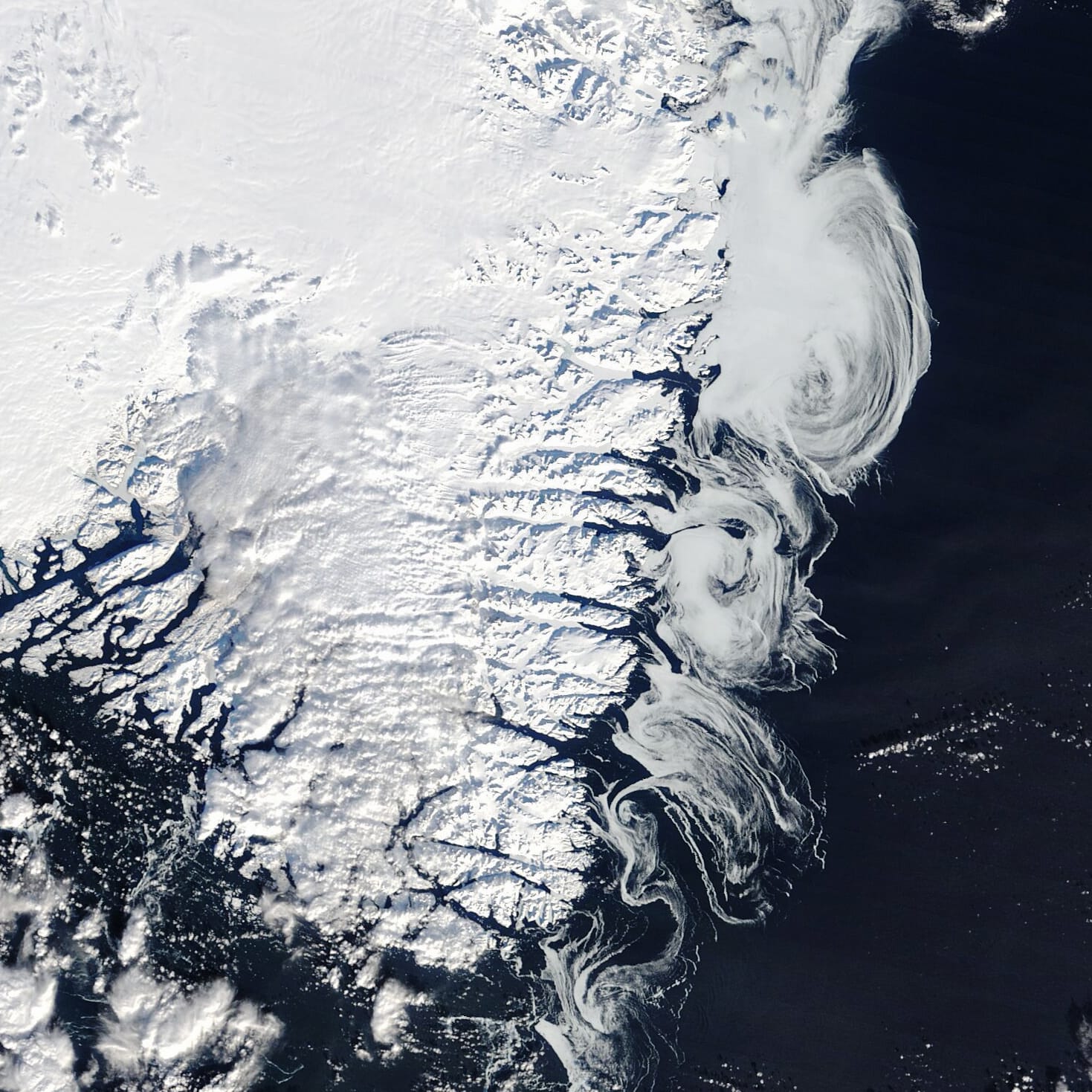
Fresh snow shines white on the southern end of Greenland in this satellite image, taken in late February 2025. Whorls of sea ice sit off the coast, where they trace out patterns that reflect the winds and ocean currents of the region. Arctic sea ice typically reaches its largest extent by early March before experiencing a long season of melting. Both the presence and absence of sea ice have a large effect on the Arctic regions. Sea ice helps dampen wave activity; without it, seas are higher and more dynamic, creating more aerosols that seed cloud cover in the Arctic and elsewhere. (Image credit: L. Dauphin; via NASA Earth Observatory)