Month: September 2022

  • Featured Video Play Icon

    “Haut”

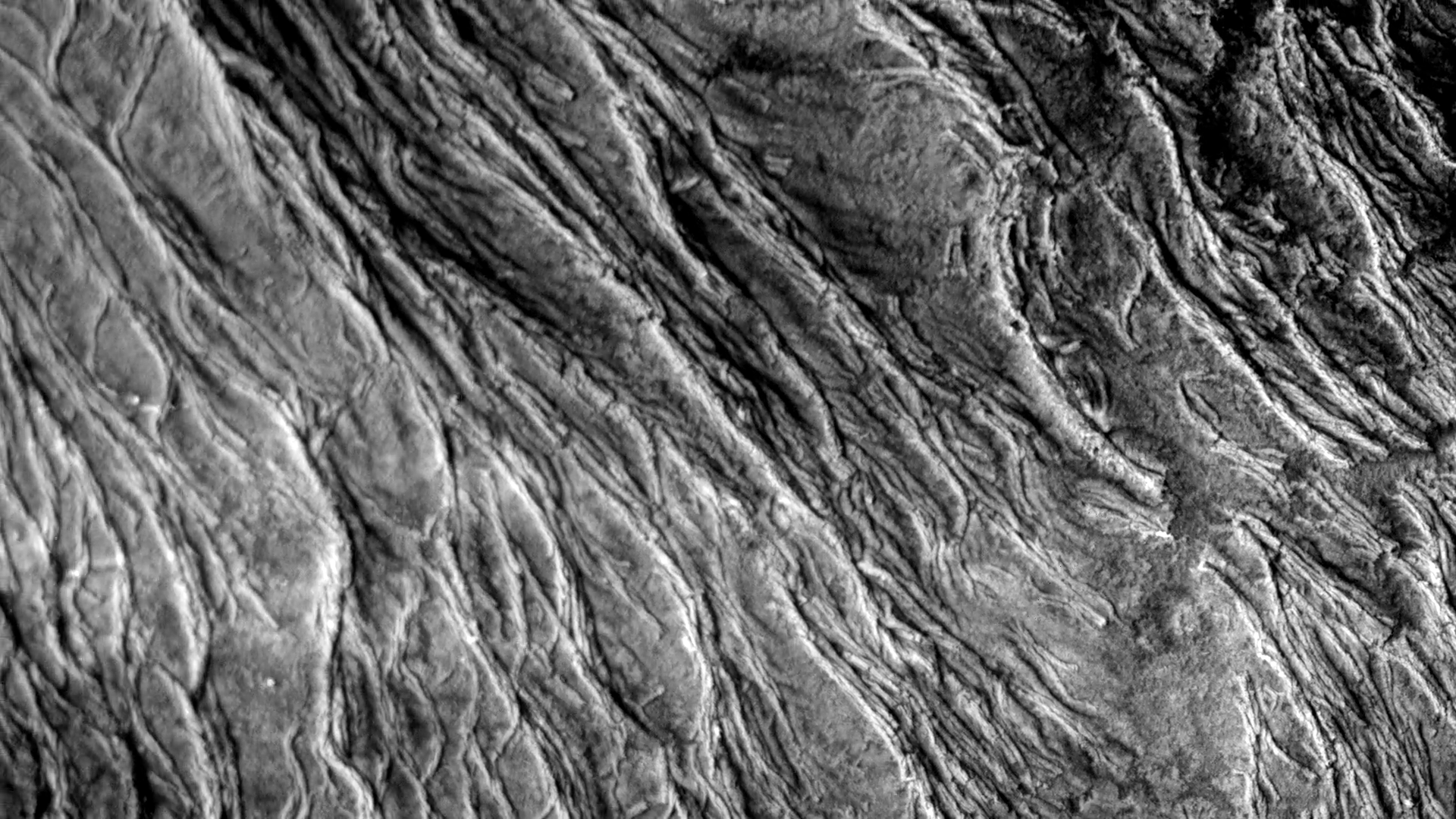
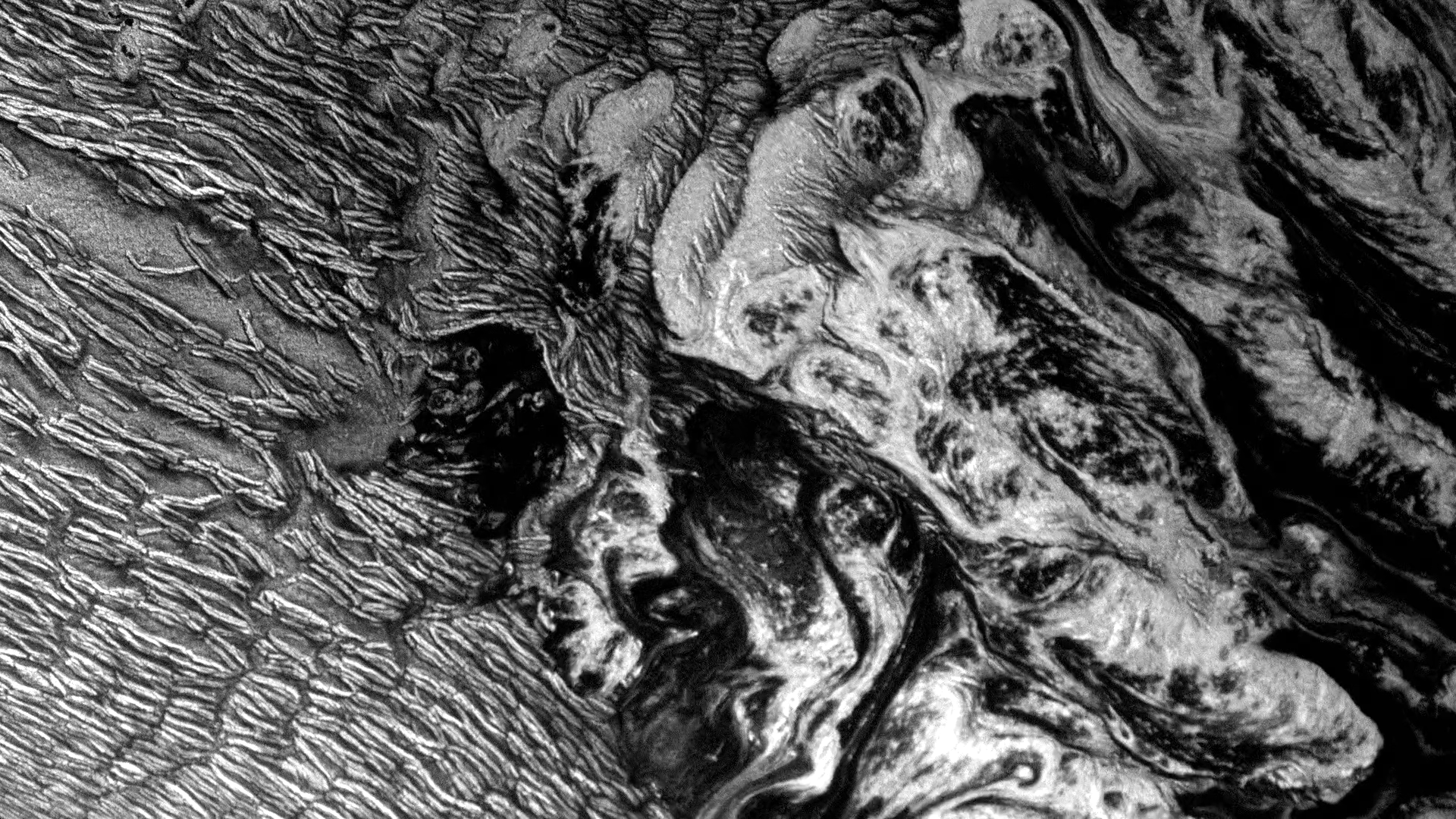
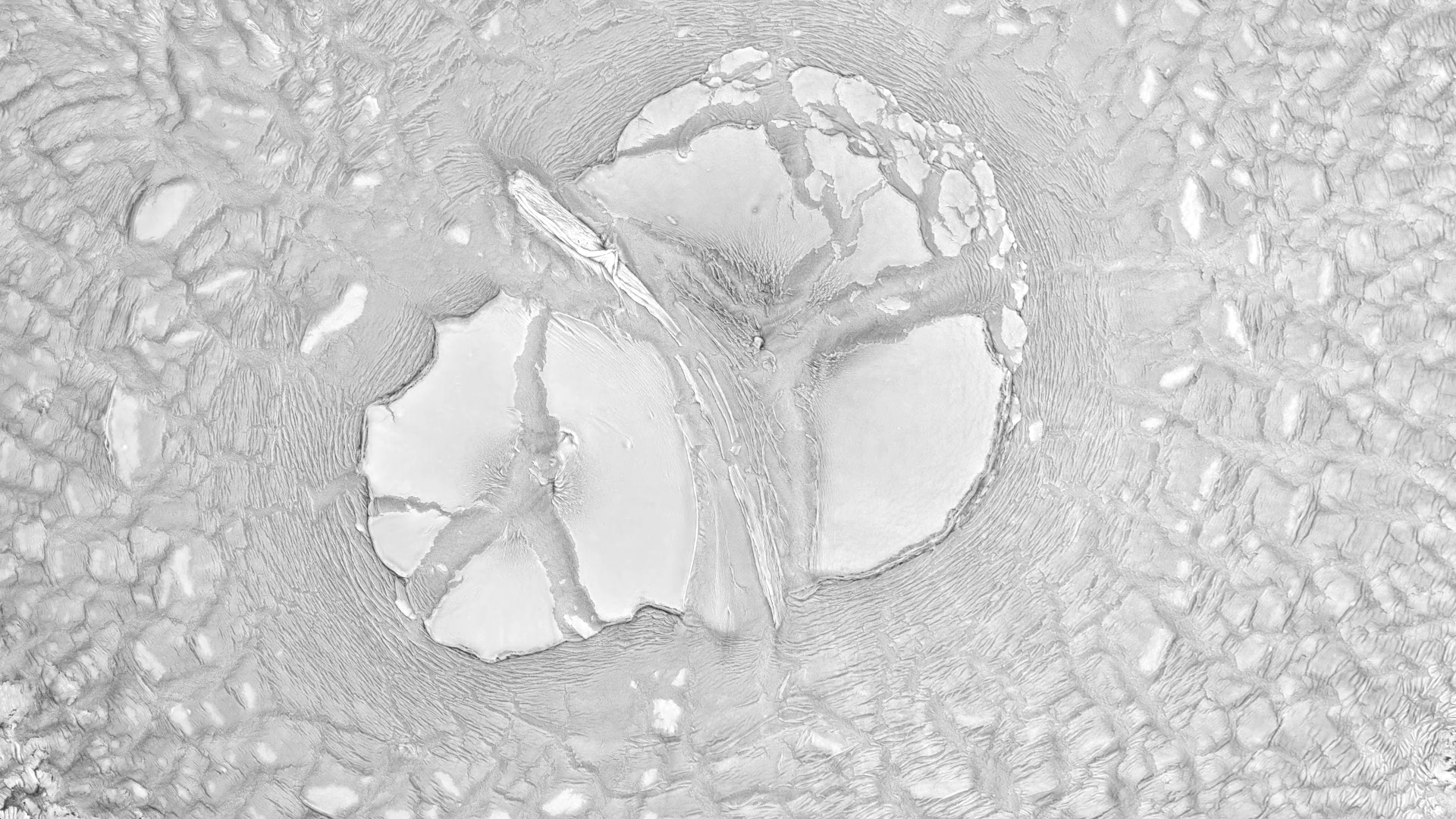
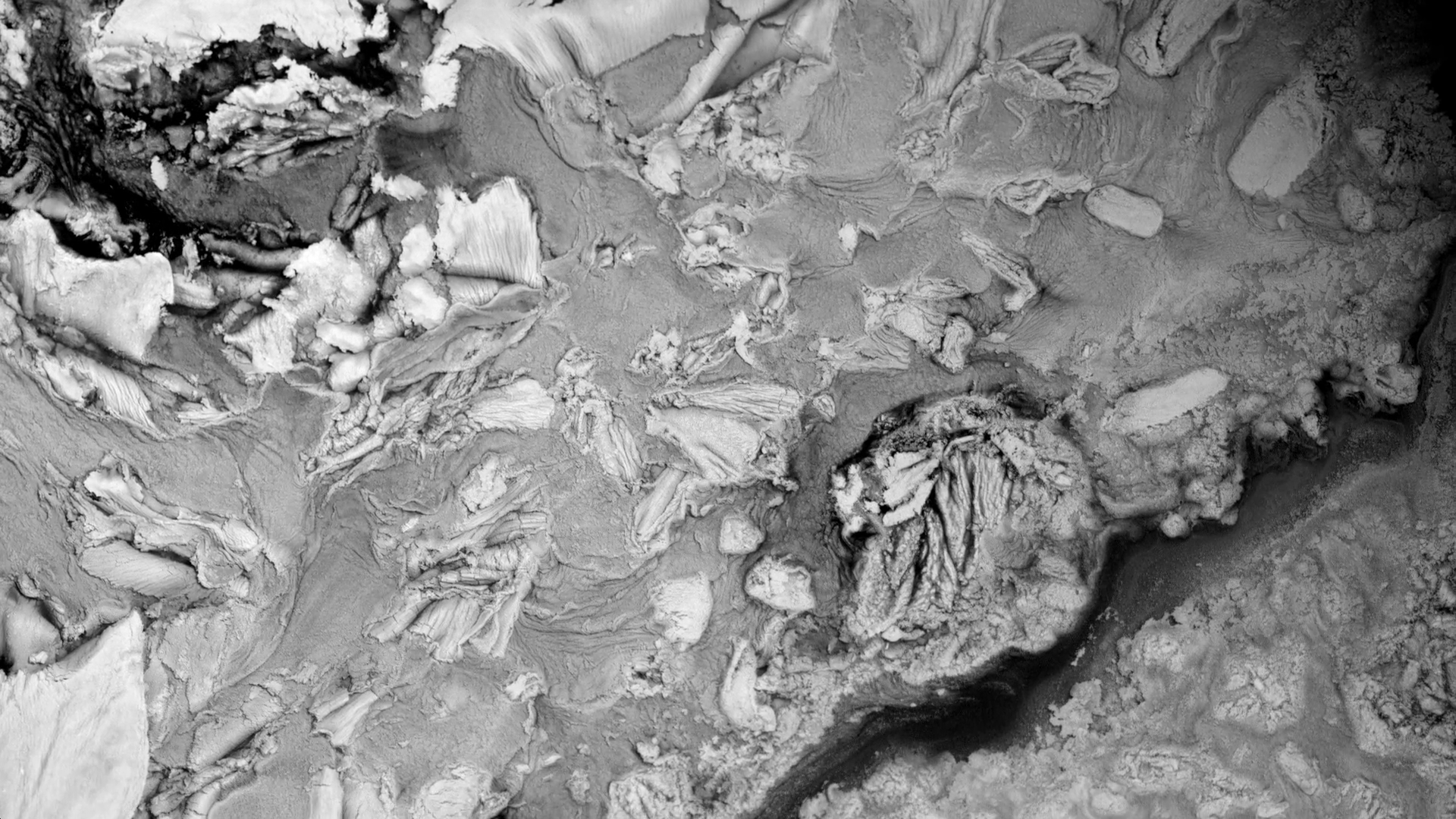
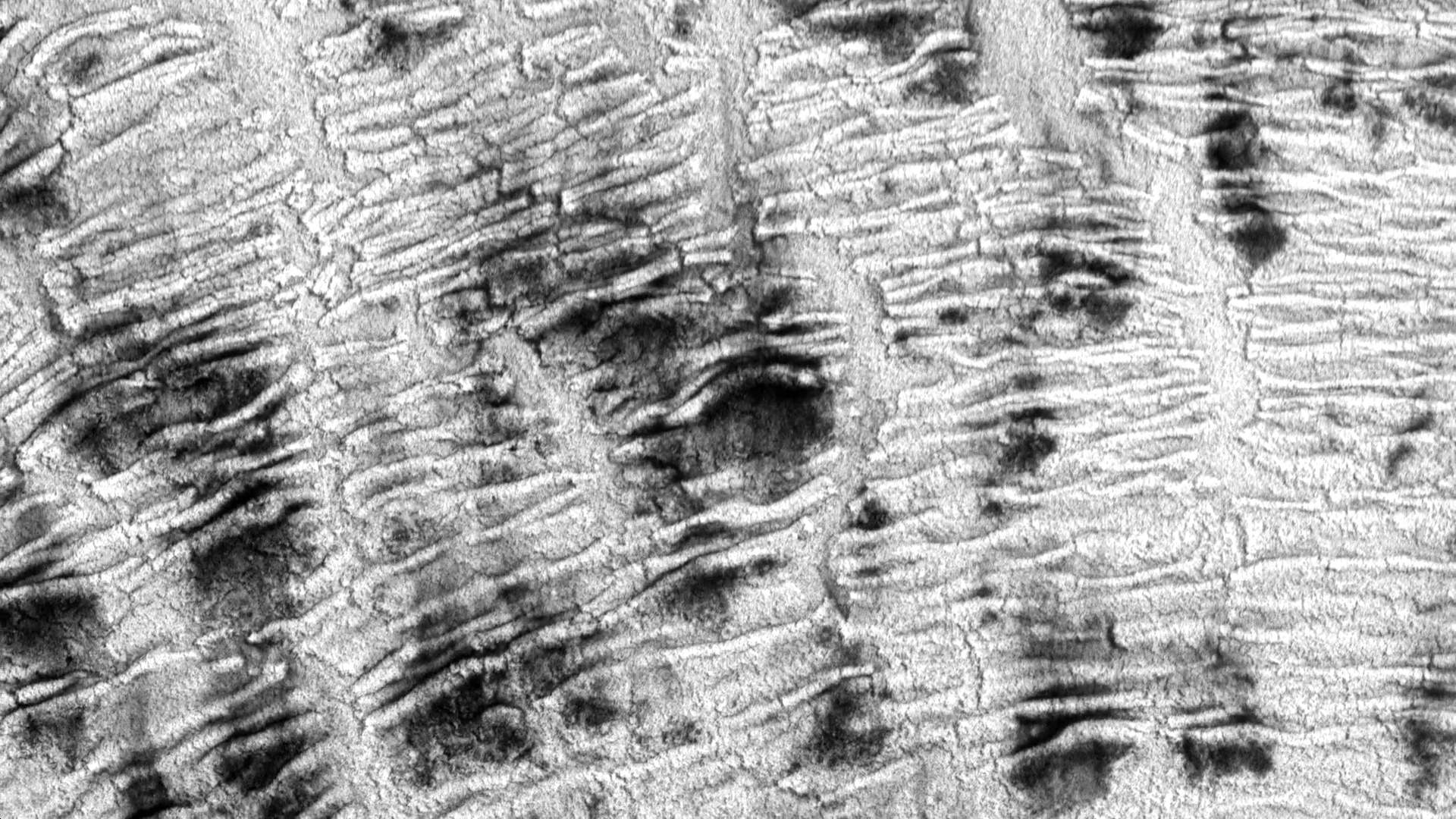
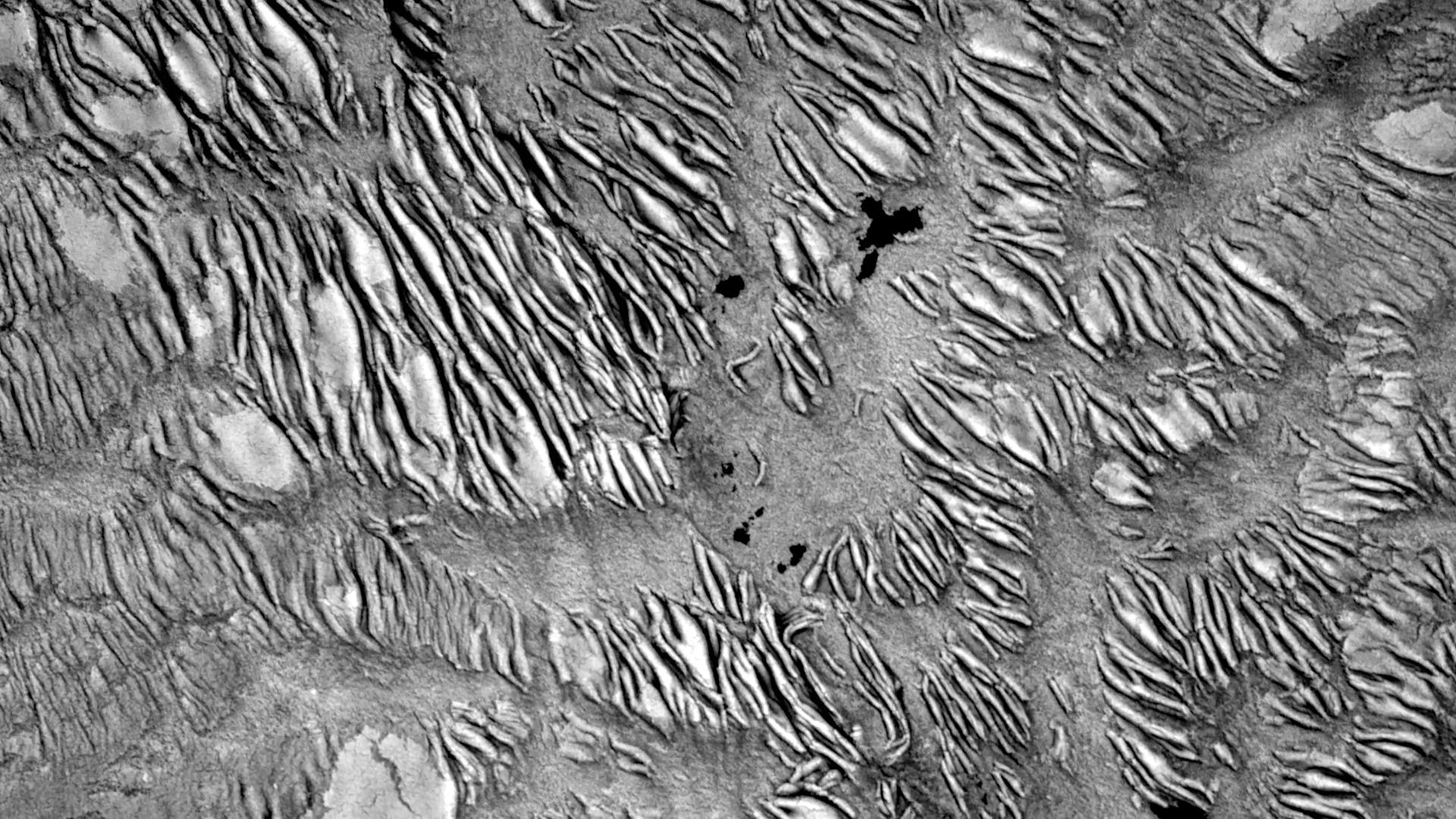
    In Susi Sie’s “Haut” the camera seems to fly over ever-shifting landscapes. In reality, these are macro images, created (I think) by dyes and patterns atop a water bath. But they look like vistas we could find on Earth or Mars — giant dune fields, calving glaciers, and river-divided canyons. For something similar in color, check out Roman De Giuli’s “Geodaehan.” (Video credit: S. Sie)

  • Optimizing Wind Farms Collectively

    Optimizing Wind Farms Collectively

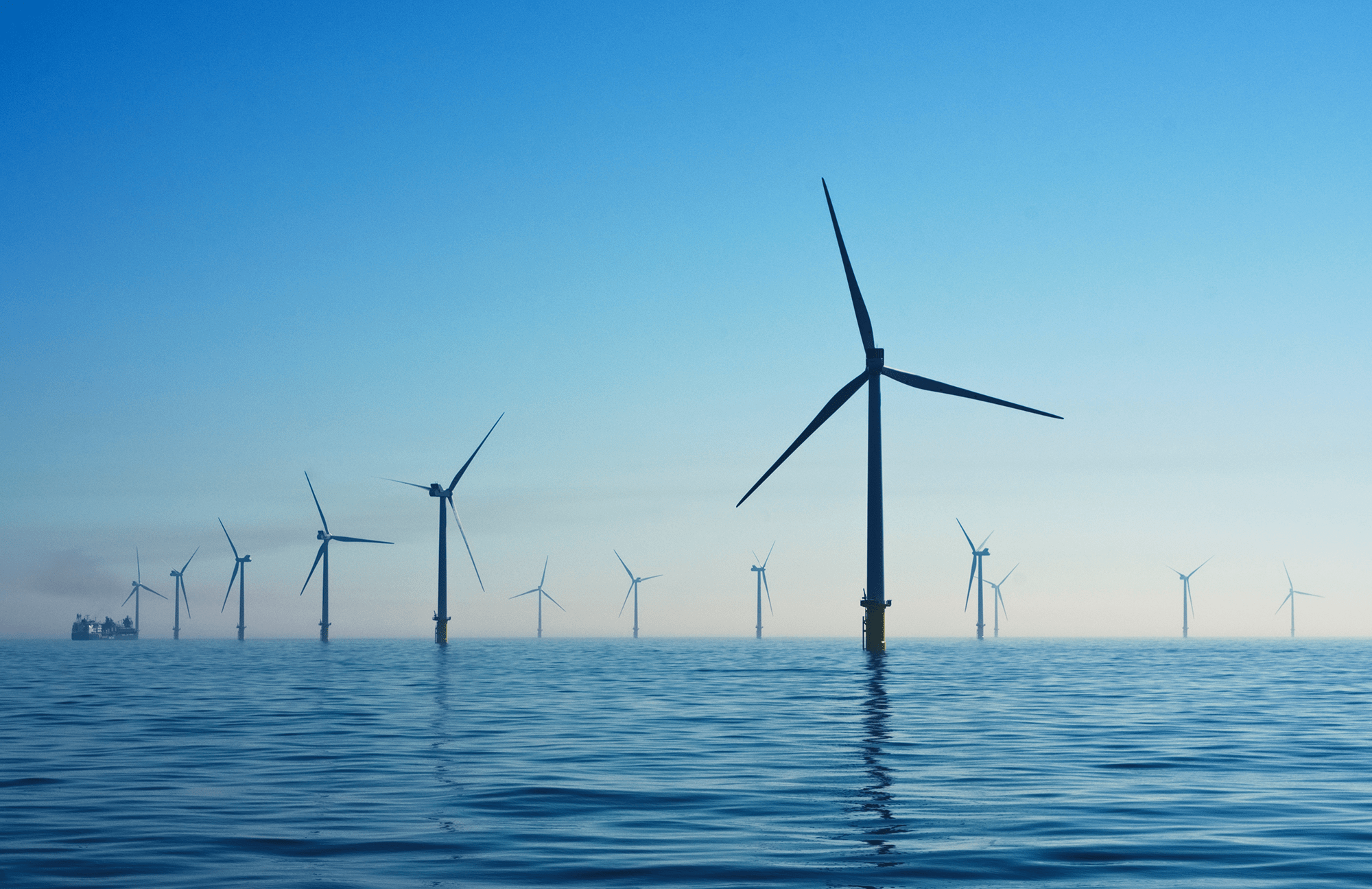
    In a typical wind farm, each wind turbine aligns itself to the local wind direction. In an ideal world where every turbine was completely independent, this would maximize the power produced. But with changing wind directions and many turbines, it’s inevitable that upstream wind turbines will interfere with the flow their downstream neighbors see.

    So, instead, a research team investigated how to optimize the collective output of a wind farm. Their strategy involved intentionally misaligning the upstream wind turbines to improve conditions for downstream turbines. They found that the loss in power generation by upstream turbines could be more than recovered by improved performance downstream.

    After testing their models over many months in an actual wind farm, they reported that their methodology could, on average, increase overall energy output by about 1.2 percent. That may sound small, but the team estimates that if existing wind farms used the method, it would generate additional power equivalent to the needs of 3 million U.S. households. (Image credit: N. Doherty; research credit: M. Howland et al.; via Boston Globe; submitted by Larry S.)

  • Cloud Streets

    Cloud Streets

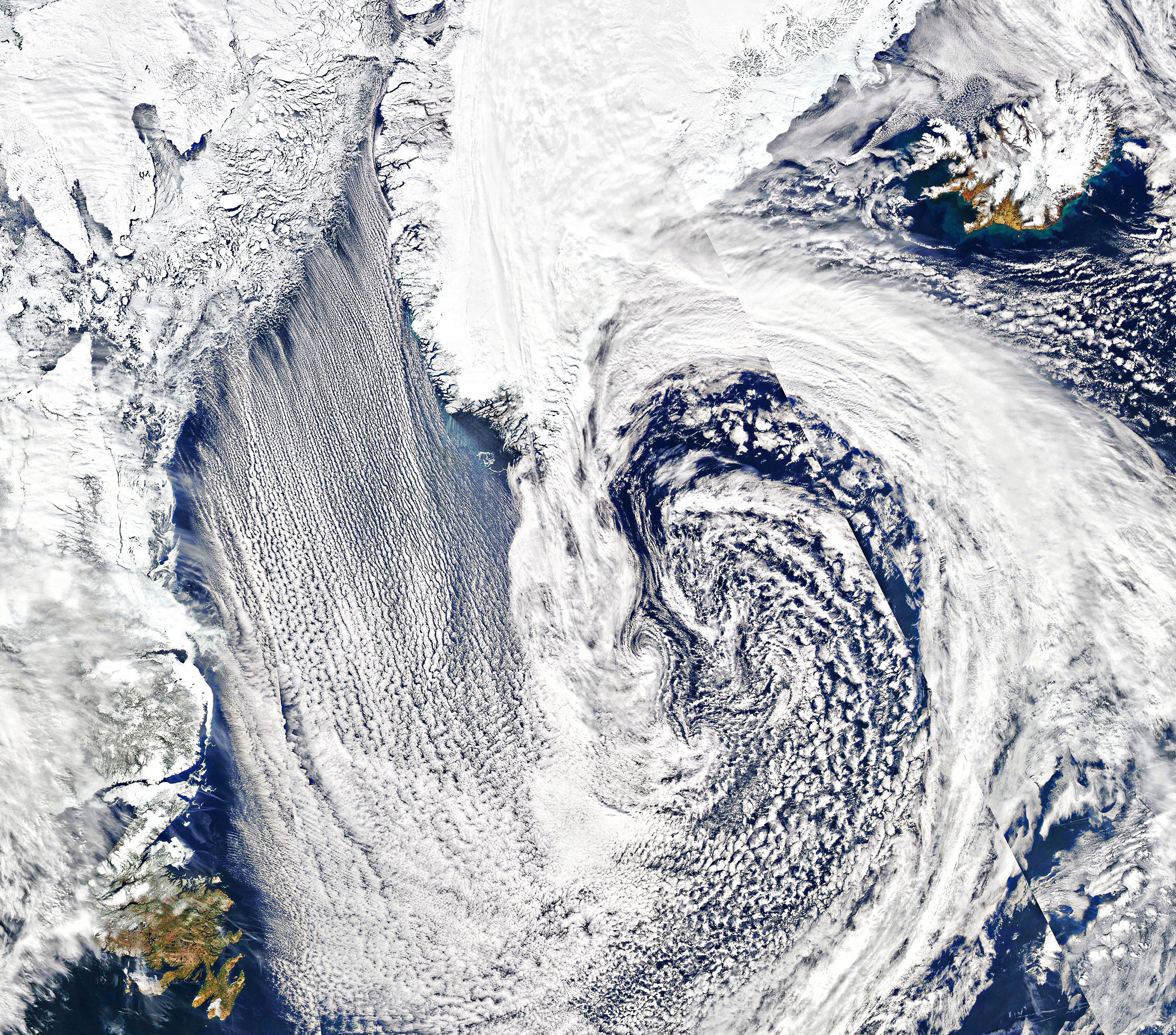
    Parallel lines of cumulus clouds stream over the Labrador Sea in this satellite image. These cloud streets are formed when cold, dry winds blow across comparatively warm waters. As the air warms and moistens over the open water, it rises until it hits a temperature inversion, which forces it to roll to the side, forming parallel cylinders of rotating air. On the rising side of the cylinder, clouds form while skies remain clear where the air is sinking. The result are these long, parallel cloud bands. (Image credit: J. Stevens; via NASA Earth Observatory)

  • Predicting Alien Ice

    Predicting Alien Ice

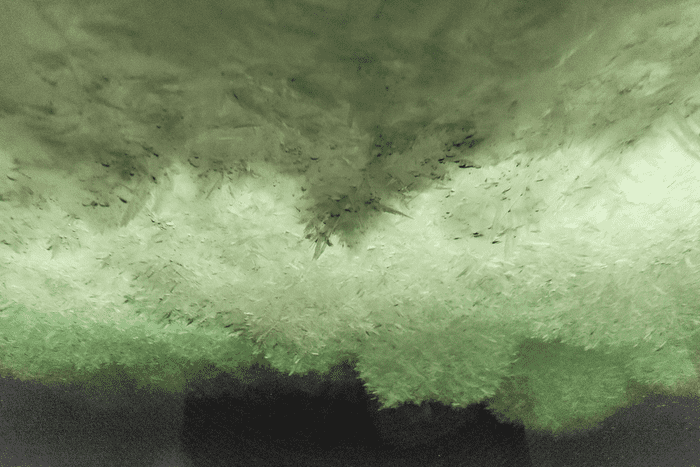
    Europa is an ocean world trapped beneath an ice shell tens of kilometers thick. To better understand what we might find in those oceans, researchers turn to analogs here on Earth, looking at Antarctica’s ice shelves. Beneath those shelves, ice forms via two mechanisms: the first, congelation ice, freezes directly onto the existing ice-water interface. The second, frazil ice, forms crystals in supercooled water columns, which drift upward in buoyant currents and settle on the ice shelf like upside-down snow (pictured above).

    Based on Europa’s conditions, the researchers conclude that congelation ice would gradually thicken the ice shell as the moon’s interior cools. But in areas where the shell is thinned by local rifts and Jovian tidal forces, frazil ice is likely to form. (Image credit: H. Glazer; research credit: N. Wolfenbarger et al.; via Physics World)

  • Diving Together

    Diving Together

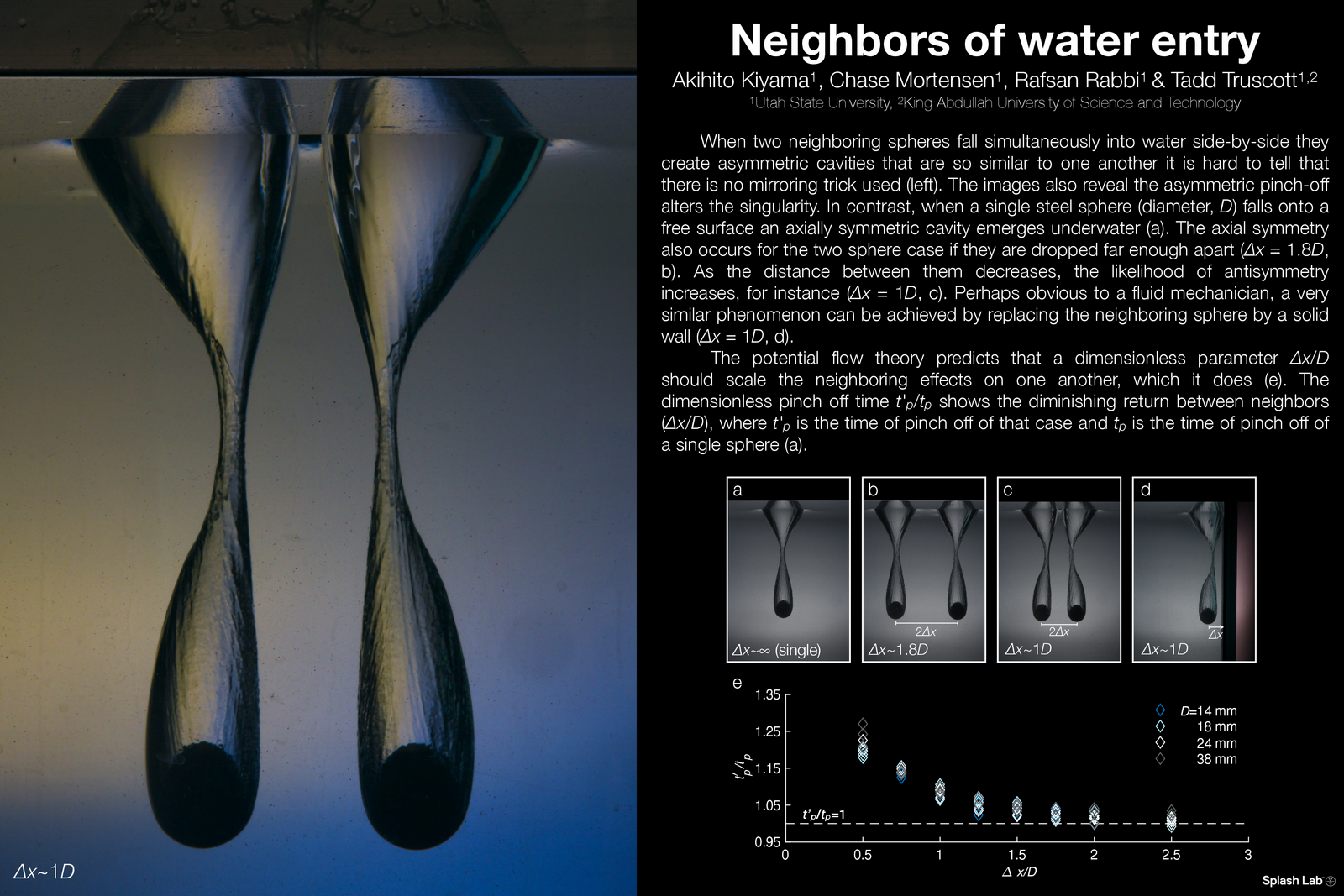
    Two spheres dropped into water next to one another form asymmetric cavities. A single ball’s cavity is perfectly symmetric, and so are two spheres’, provided they are far enough apart. But for close impacts, the spheres influence one another, creating a mirror image. The same asymmetric cavity also forms when a sphere is dropped near a wall. In fluid dynamics, this trick — using two mirrored objects in place of a wall — is used to make calculating certain flows easier! (Image credit: A. Kiyama et al.)

  • Jupiter in Infrared

    Jupiter in Infrared

    These recent composite images from the James Webb Space Telescope show Jupiter in stunning infrared detail. They’re the result of several images taken in different infrared bands, then combined and rendered in visible light. In general, the redder colors show longer wavelengths and the bluer ones show shorter wavelengths.

    Jupiter’s cloud bands appear in beautiful detail. The Great Red Spot looks white in infrared. And the planet’s polar auroras shine bright in both images. The wide-angle shot additionally shows two of Jupiter’s moons and the planet’s rings, which are a million times fainter than the planet itself. If you look carefully, you may also see faint points of light in the lower half of the image. These are likely distant galaxies “photobombing” Jupiter’s close-up. (Image credit: NASA/ESA/Jupiter ERS Team 1, 2; via Colossal)

    This composite image of Jupiter was taken in infrared bands and rendered into visible light. In general, the redder colors represent longer wavelengths and bluer ones shorter wavelengths.
    This composite image of Jupiter was taken in infrared bands and rendered into visible light. In general, the redder colors represent longer wavelengths and bluer ones shorter wavelengths.
  • Finger Painting Physics

    Finger Painting Physics

    Spreading paint with a brush or with fingers is familiar activity for most people. It’s also similar to processes used in industry for spreading thin layers of paint and other complex fluids. In a recent study, researchers took a look at how a soft, elastic blade (similar to a paintbrush or one’s fingers) spreads shear-thinning fluids (like paint) and Newtonian fluids (like water). Surprisingly, they found that it actually takes 30% more mechanical work to spread a shear-thinning fluid than the same volume of an equivalent Newtonian one. That’s pretty much the opposite of what we’d expect since the action of spreading (and shearing) the complex fluid should reduce its viscosity. However, they did find that the shear-thinning fluid spreads to a thin layer more consistently than the Newtonian fluid does. (Image credit: A. Kolosyuk; research credit: M. Krapez et al.)

  • Blooms in the Black Sea

    Blooms in the Black Sea

    The Black Sea gains its name from its dark waters, but those waters don’t stay dark year-round. In this natural color satellite image, streaks of milky blue bloom through the summer waters, thanks to the presence of a species of phytoplankton armored with white calcium carbonate. Despite their microscopic size, the phytoplankton’s presence is visible from space. During other parts of the year, like the spring, another species of phytoplankton dominates the Black Sea, turning its waters darker. (Image credit: J. Stevens; via NASA Earth Observatory)

  • Recycling Urban Heat

    Recycling Urban Heat

    In urban areas, buildings and concrete surfaces create a heat effect that can make temperatures in the city substantially higher than in nearby rural areas. That heat isn’t just above ground, either. It seeps into the subsurface, measurably increasing groundwater temperatures. In a recent study, authors suggest this excess subsurface heat could be reclaimed and recycled (via heat pumps and other heat exchangers) in urban areas to offset peoples’ needs and to help groundwater return to its normal temperature. They found that even focusing on heat stored in the top meter of the subsurface could provide green heating for much of the world’s urban populations. (Image credit: J. Dylag; research credit: S. Benz et al.)

  • Featured Video Play Icon

    Yellowstone Flooding

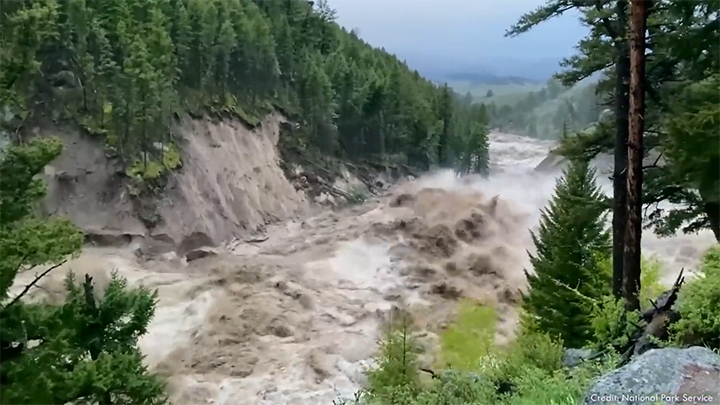
    In June of 2022, the area around Yellowstone National Park saw catastrophic flooding. The combined effects of rainfall and snowmelt overwhelmed waterways and washed out many roads and other structures in and around the park. In this video, Grady from Practical Engineering breaks down the floods and their aftermath, including how the area can be rebuilt. His depiction of the flood, from an engineering standpoint, is especially helpful, as he illustrates conditions across the park using flow sensor data. It helps explain the damage and gives viewers a sense for how engineers monitor and analyze these events. (Image and video credit: Practical Engineering)