Month: March 2021

  • Jellyfish Make Their Own Walls

    Jellyfish Make Their Own Walls

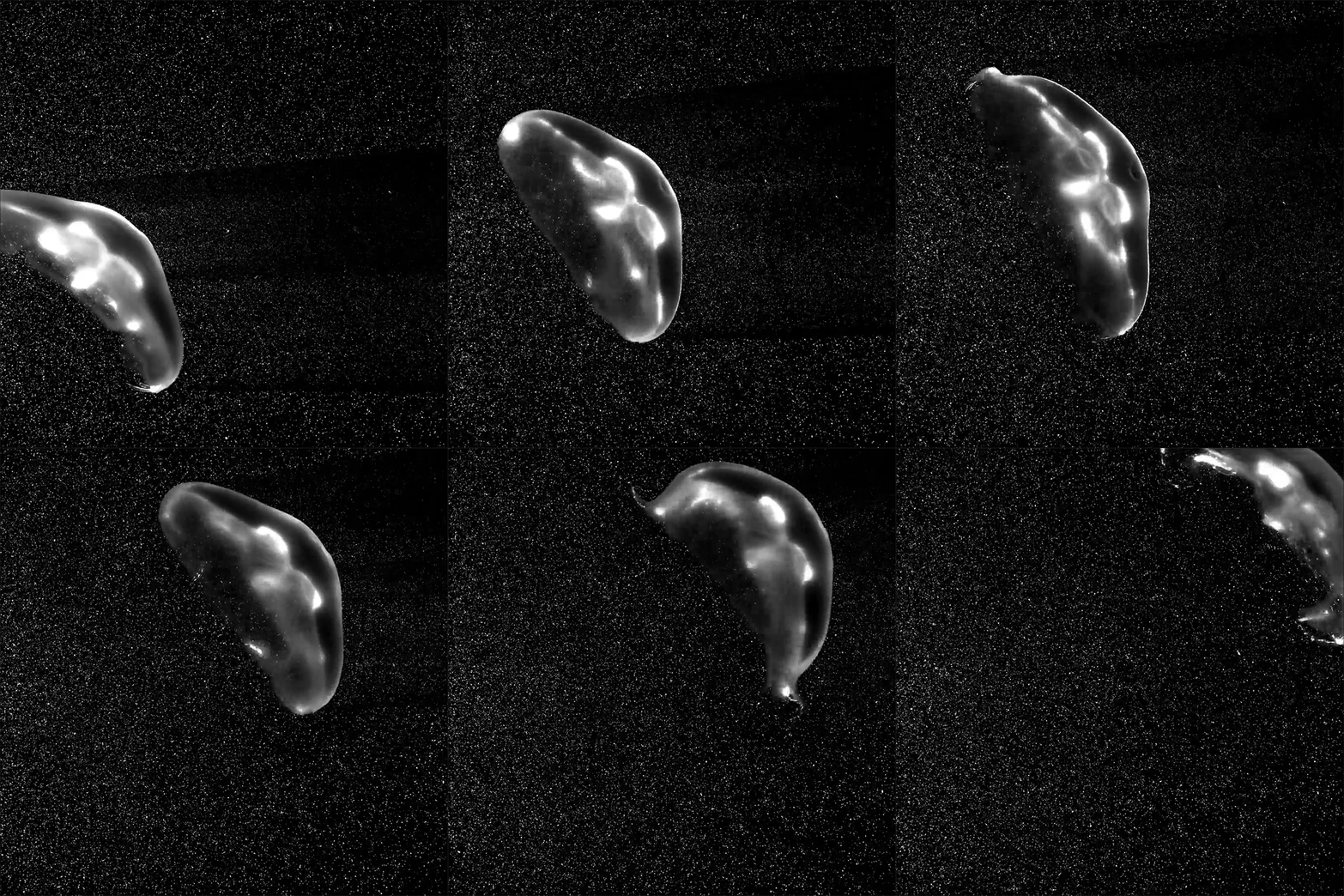
    When we walk, the ground’s resistance helps propel us. Similarly, flying or swimming near a surface is easier due to ground effect. Most of the time swimmers don’t get that extra help, but a new study shows that jellyfish create their own walls to get that boost.

    Of course, these walls aren’t literal, but fluid dynamically speaking, they are equivalent. Over the course of its stroke, the jellyfish creates two vortices, each with opposite rotation. One of these, the stopping vortex, lingers beneath the jellyfish until the next stroke’s starting vortex collides with it. When two vortices of equal strength and opposite rotation meet, the flow between them stagnates — it comes to halt — just as if a wall were there.

    In fact, mathematically, this is how scientists represent a wall: as the stagnation line between a real vortex and a virtual one of equal strength and opposite rotation. It just turns out that jellyfish use the same trick to make virtual walls they can push off! (Image and research credit: B. Gemmell et al.; via NYTimes; submitted by Kam-Yung Soh)

  • Featured Video Play Icon

    Coastal Erosion

    The same dynamic forces that make coastlines fascinating create perennial headaches for engineers trying to maintain coastlines against erosion. This Practical Engineering video discusses some of the challenges of coastal erosion and how engineers counter them.

    In a completely undeveloped coastline, waves and storms erode the shoreline while rivers and currents replenish sand through sedimentation. Manmade structures tend to strengthen erosion processes while disrupting the sedimentation that would normally counter it. Beach nourishment — where sand gets dredged up and deposited on a beach — is an engineered attempt to replace natural sedimentation.

    Dunes, mangrove forests, and wetlands are all nature’s way of protecting and maintaining coastlines. We engineers are still learning how to both utilize and protect shorelines. (Image and video credit: Practical Engineering)

  • Why Food Sticks to Nonstick Pans

    Why Food Sticks to Nonstick Pans

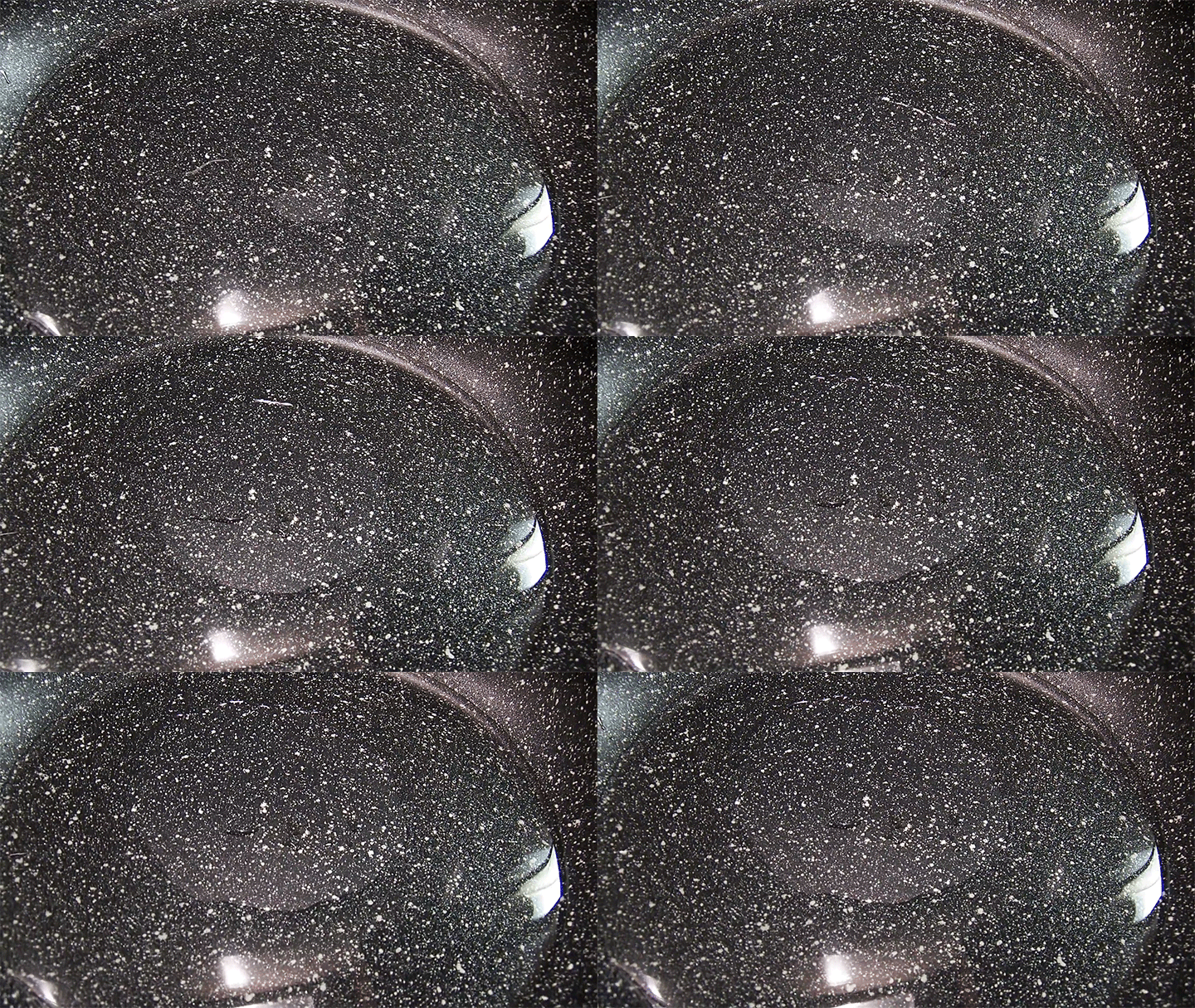
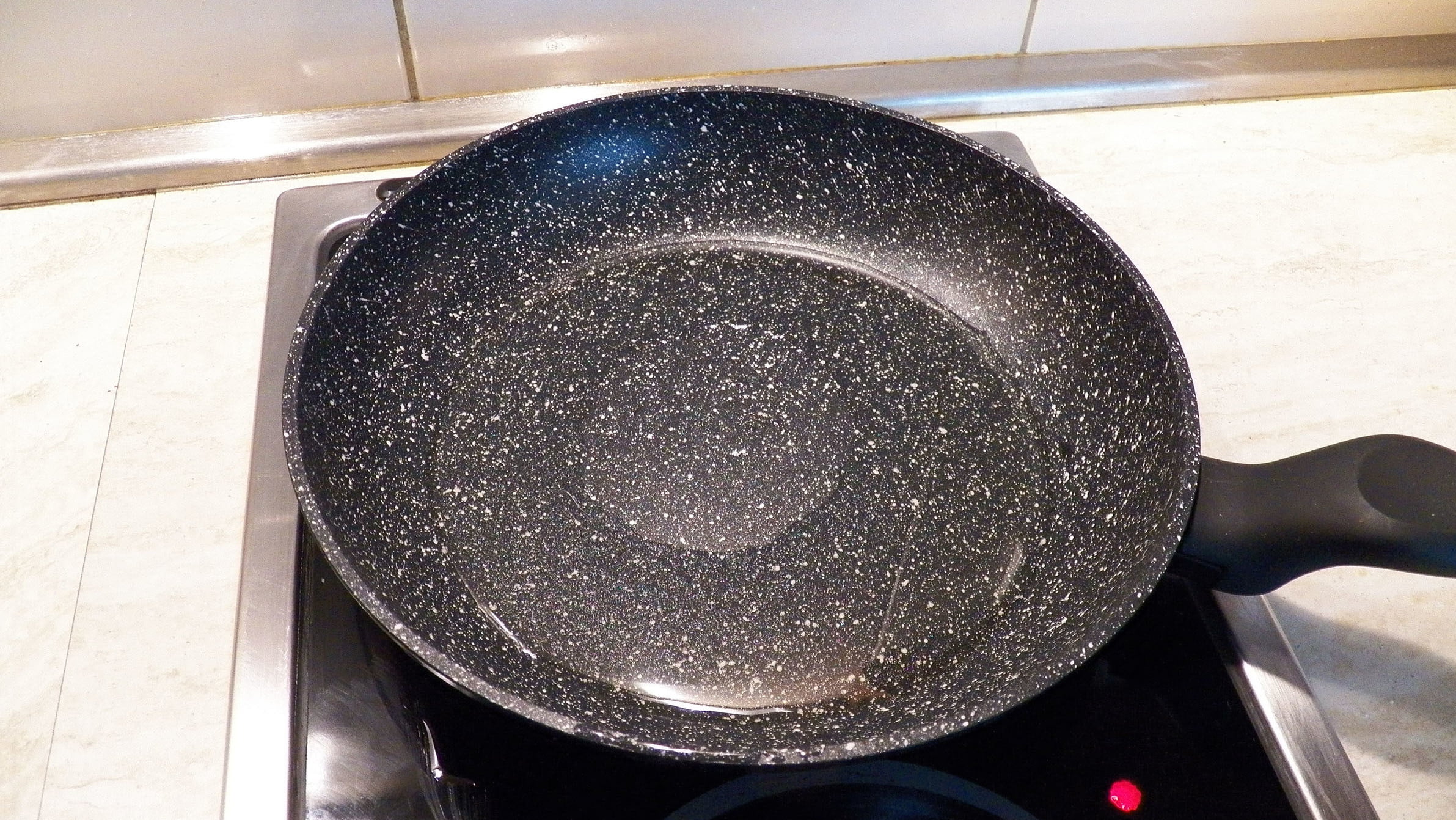
    Whether you’re cooking with ceramic, Teflon, or a well-seasoned cast iron pan, it seems like food always wants to stick. It’s not your imagination: it’s fluid dynamics.

    As the thin layer of oil in your pan heats up, it doesn’t heat evenly. The oil will be hotter near the center of the burner, which lowers the surface tension of the oil there. The relatively higher surface tension toward the outside of the pan then pulls the oil away from the hotter center, creating a hot dry spot where food can stick.

    To avoid this fate, the authors recommend a thicker layer of oil, keeping the burner heat moderate, using a thicker bottomed pan (to better distribute heat), and stirring regularly. (Image and research credit: A. Fedorchenko and J. Hruby)