Month: July 2020

  • Branching Sparks from Senko-hanabi

    Branching Sparks from Senko-hanabi

    Senko-hanabi are a Japanese firework, somewhat similar to a sparkler. But instead of being driven by burning powder, the senko-hanabi’s sparks come from bursting liquid droplets undergoing an exothermic reaction with air.

    Chemistry aside, the effect is similar to what goes on in soda water. As bubbles within the liquid nucleate and move to the surface, they burst, generating smaller droplets. As the researchers explain, the same cascade carries on in the smaller drops, creating the branching sparks the firework is known for.

    For more slow motion views of the fireworks and sparks, check out the video below or those produced by the researchers. (Image and research credit: C. Inoue et al. and C. Inoue et al.; video credit: NightHawkInLight; submitted by Jason C.)
  • Internal Waves in the Andaman Sea

    Internal Waves in the Andaman Sea

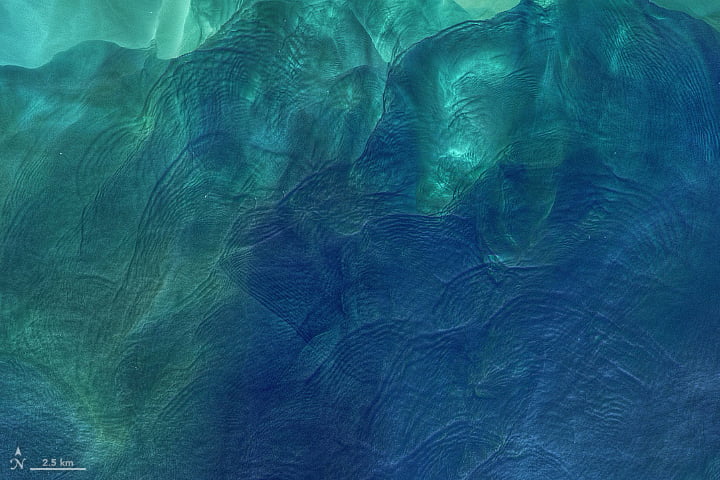
    Differences in temperature and salinity create distinct layers within the ocean. When combined with flow over submerged topography — underwater canyons, mountains, and reefs — it makes waves. But those waves aren’t always apparent when sitting at the surface. Instead, they travel along those ocean layers as internal waves that can be as tall as hundreds of meters in height.

    When the sun glints just right off the ocean, these massive internal waves can be caught by satellite imagery, as shown in the above image of the Andaman Sea near Thailand and Myanmar. Even seemingly calm waters can roil in the deep. (Image credit: USGS; via NASA Earth Observatory)

  • The Vortex Beneath a Drop

    The Vortex Beneath a Drop

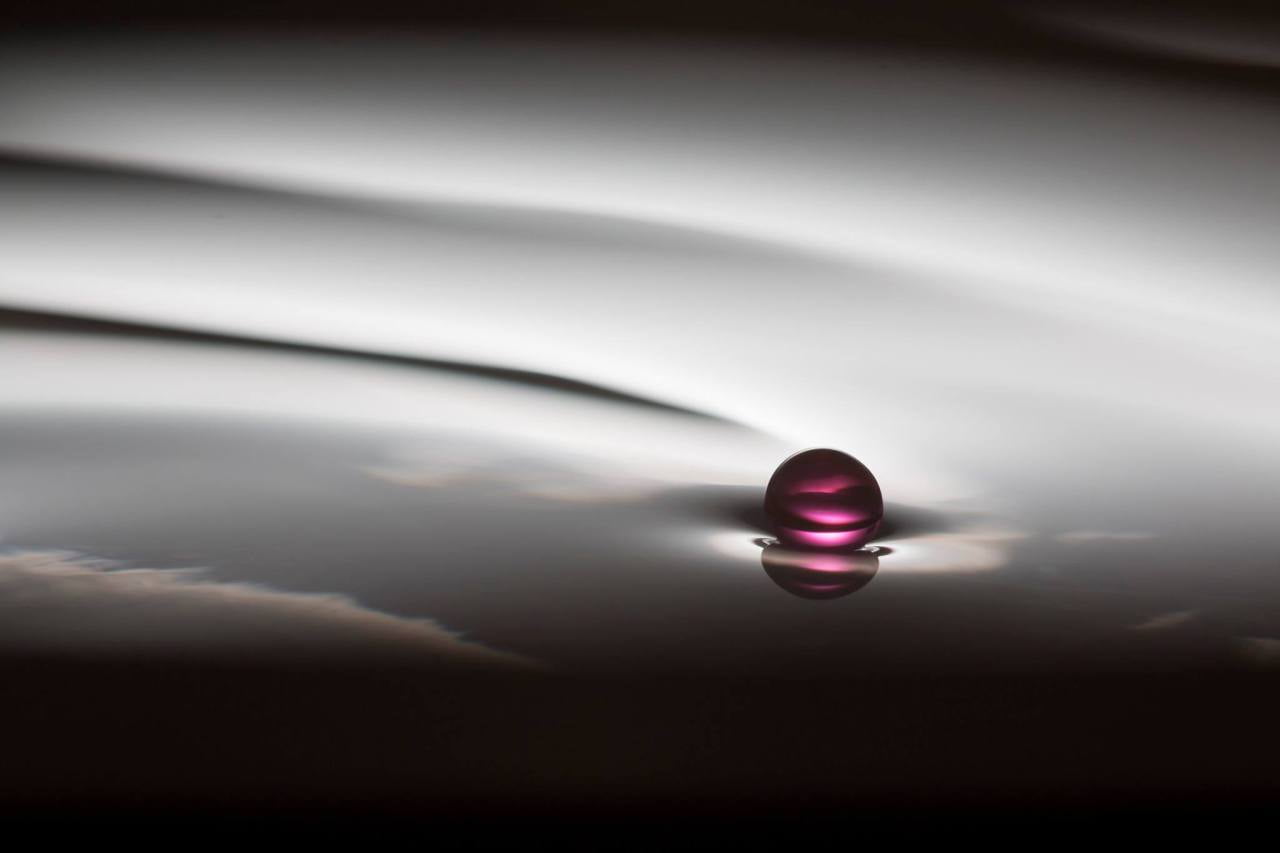
    While we’re most used to seeing levitating Leidenfrost droplets on a solid surface, such drops can also form above a liquid bath. In fact, the smoothness of the bath’s surface, combined with mechanisms discussed in a new study, means that drops will levitate at a cooler temperature over a liquid than they will over a solid surface.

    Researchers found that a donut-shaped vortex forms in the bath beneath a levitating droplet, but the direction of the vortex’s circulation is not always the same. For some liquids, the flow moves radially outward from beneath the drop. In this case, researchers found that the dominant force was shear stress caused by the vapor escaping from under the droplet.

    With other droplet liquids, the flow direction instead moved inward, forming a sinking plume beneath the center of the drop. In this situation, researchers found that evaporative cooling dominated. As the liquid beneath the droplet cooled, it became denser and sank. At the same time, the lower temperature changed the bath’s local surface tension, creating the inward surface flow through the Marangoni effect. (Image credit: F. Cavagnon; research credit: B. Sobac et al.)