
Here researchers simulate rain-like droplet impacts with large drops of water falling into a tank from several meters. The momentum of such an impact is significantly higher than many other droplet impact examples we’ve featured. In this case, the coronet, or crown-like splash, caused by the collision collapses quickly, closing the fluid canopy around a trapped bubble of air. The remains of the coronet fall inward, preventing the development of the usual Worthington jet associated with droplet impacts. Instead, the air bubble takes on an unstable donut-like shape. (Video credit: M. Buckley et al.)
Month: November 2012

Green Fingers
Differences in surface tension between two layers of fluid can cause fascinating finger-like instabilities. Here glycerol is spread in a thin film on a silicon wafer. Then a wire coated in oleic acid, which has a lower surface tension than glycerol, was touched to the wafer. As the oleic acid spreads across the film surface, Marangoni and capillary stresses cause variations in the film thickness, which results in the dendritic patterns seen here. (Photo credit: B. Fischer et al.)

“Millefiori”

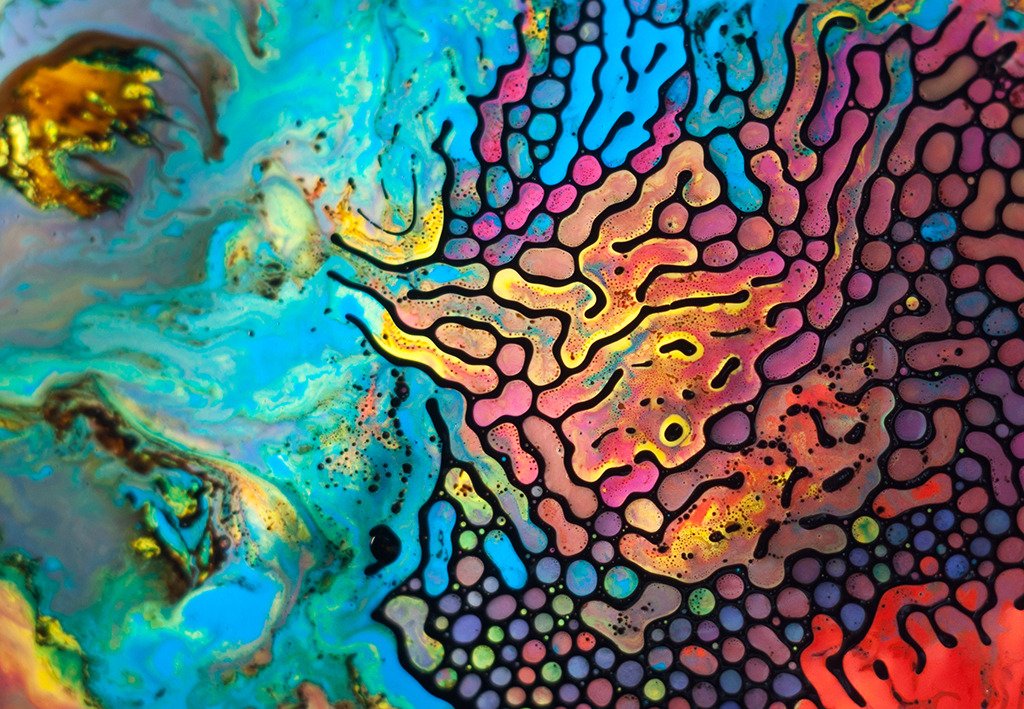
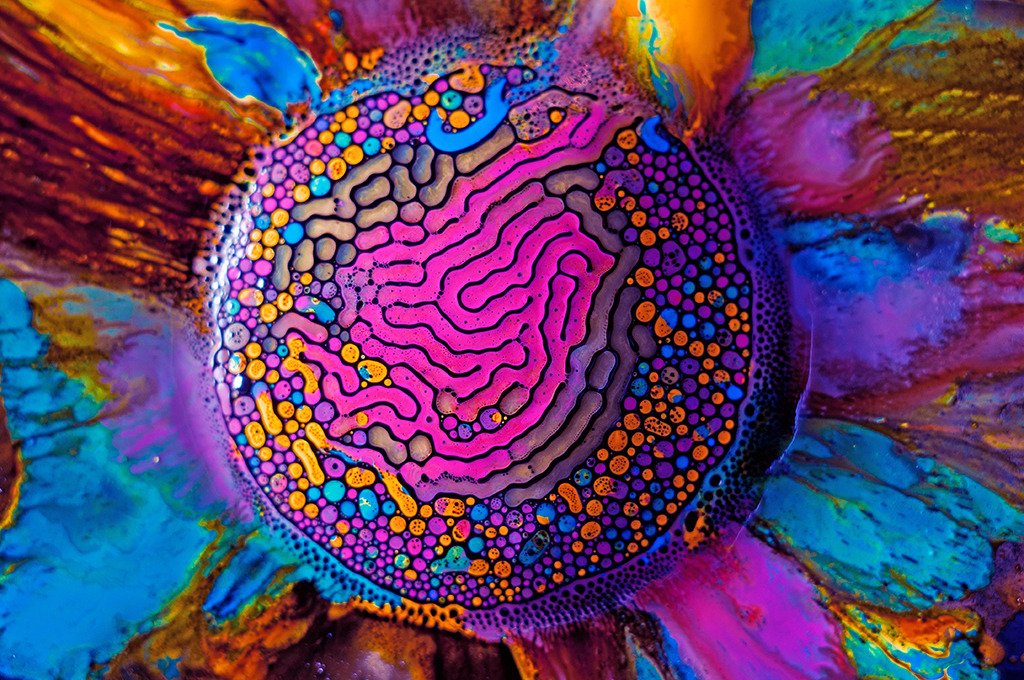
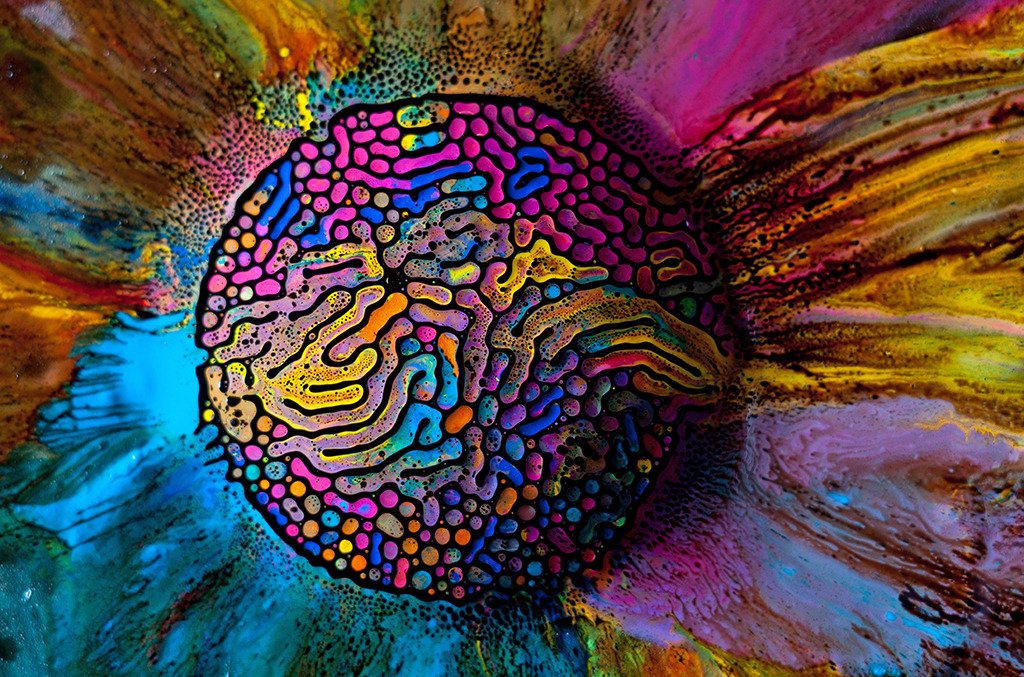
In “Millefiori” artist Fabian Oefner mixes watercolors with ferrofluids to create bright fluid microcosms. Each photograph represents an area about the size of a thumbnail. Ferrofluids contain iron-based nanoparticles suspended in a carrier fluid and thus respond to magnetic fields. They can form sharp points, labyrinthine mazes, or even brain-like patterns depending on the magnetic field and the substances surrounding them. For more on this art project, see this interview with the artist. (Photo credit: Fabian Oefner)
