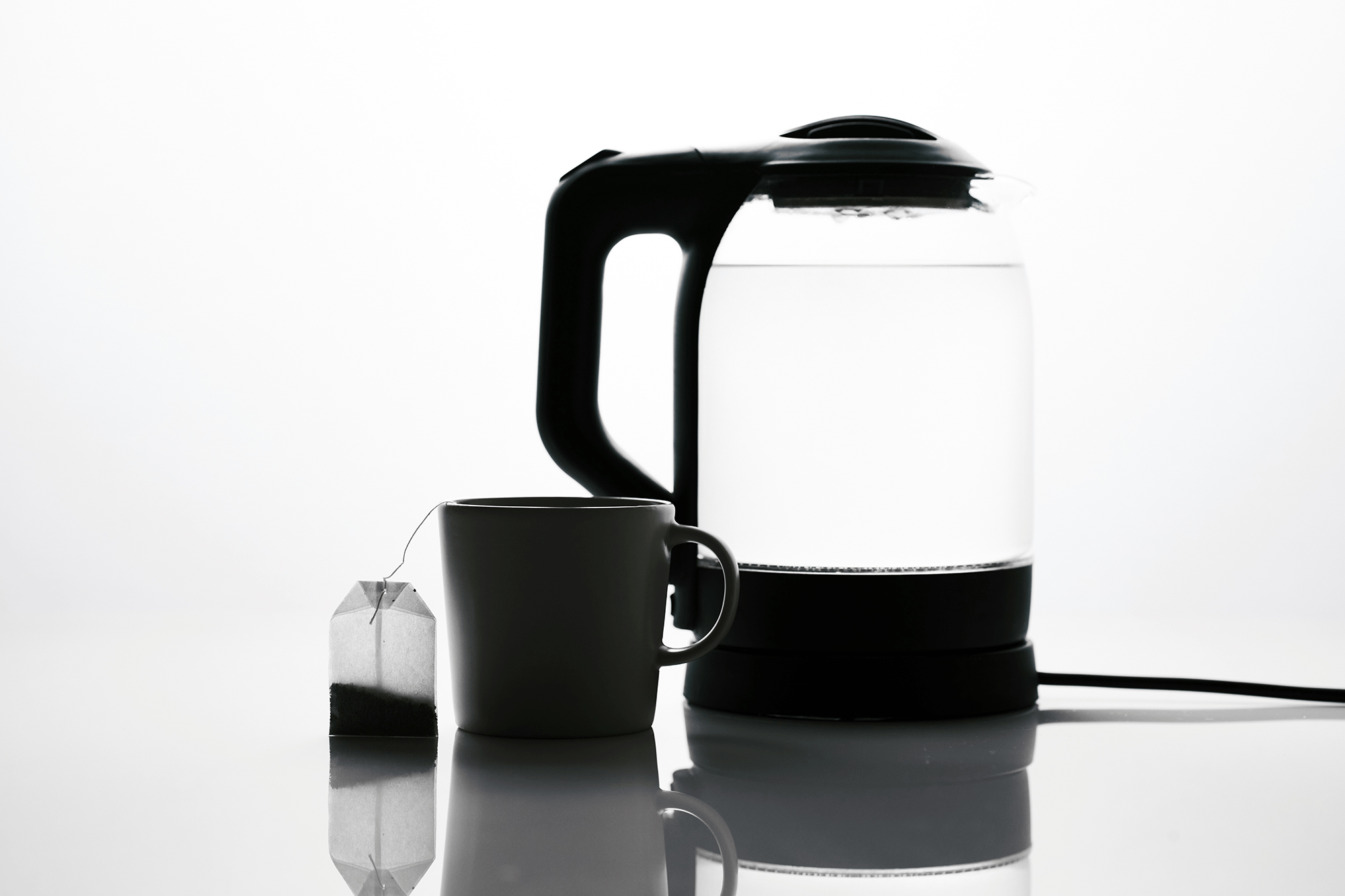
Last November, a windstorm, known as Storm Ciarán in the U.K., blew through Europe with wind speeds as high as 130 kilometers per hour. All that wind came with a significant drop in atmospheric pressure. Researchers found that the pressure drop was large enough to lower the boiling point of water more than full 2 degrees Celsius. That difference probably wouldn’t register for anyone waiting for their kettle to boil, but it could decidedly affect the final cup of tea. Tea flavor is quite sensitive to the temperature of the boiling water used to brew it, as it affects how well the tannins get extracted. According to the researchers, Ciarán’s conditions potentially ruined millions of cups of breakfast tea in the greater London area. (Image credit: E. Akyurt; research credit: G. Harrison et al.; via Gizmodo)
Tag: tea infusion

Tea Physics
Tea is a popular beverage around the world, and nearly everyone has their own method for making the perfect cup. Perhaps unsurprisingly, scientists have studied tea physics as well. One such study used both experiments and numerical simulations to study tea infusion from teabags. The authors looked at round, two-dimensional teabags in two configurations – one in which the bag was left still during infusion and one in which the bag was dunked up and down in the water.
In the static case, as the hot water leeches solutes out of the tea leaves, it forms a buoyant convection current. In this case, the convection is driven by solute concentration, not temperature. The convection creates a re-circulation in the cup that helps slowly distribute the tea solutes.
The dunking method, unsurprisingly, distributes tea solutes much faster. In addition to stirring the cup’s contents, dunking helps drive flow through the tea leaves, releasing solutes faster. Although the authors study the two methods in detail, they decline to pass judgement on what method is “the best”. (Photo credit: T. Foster, source; research credit: G. Lian and C. Astill; submitted by Marc A.)
