Tag: self-cleaning

  • Self-Cleaning With Salt Critters

    Self-Cleaning With Salt Critters

    Even freshwater contains trace salts and minerals that cause scaly buildups as they evaporate. Getting rid of the scale usually requires toxic chemicals and/or lots of scrubbing, neither of which are desirable at the industrial level. At the same time, we’re extremely limited in the amount of freshwater that we have available; only about 1% of Earth’s water is liquid and fresh. If we could use salt water in more industrial processes, that would preserve freshwater for drinking and agriculture. But how do we tackle the scaly buildup?

    (A) On microtextured surfaces, salt from evaporating drops can work its way into the gaps, destroying the superhydrophobicity of the surface. (B) In contrast, nanotextured surfaces give the salt nowhere to adhere, resulting in "salt critters" that grow upward and detach.
    (A) On microtextured surfaces, salt from evaporating drops can work its way into the gaps, destroying the superhydrophobicity of the surface. (B) In contrast, nanotextured surfaces give the salt nowhere to adhere, resulting in “salt critters” that grow upward and detach.

    Enter “salt critters.” Researchers found that when salt water evaporated from microtextured surfaces designed to shed water, salt would eventually build up in the gaps, breaking the hydrophobic effect and allowing scale to build up. In contrast, a nanotextured surface left nowhere for the salt to adhere. On these surfaces, evaporating salt water built jellyfish-like salt critters that rose from the surface and, eventually, broke off and rolled away, leaving the surface pristine. (Image credit: S. McBride; research credit: S. McBride et al.; via Physics Today)
  • Flexy Fur Foils Fouling

    Flexy Fur Foils Fouling

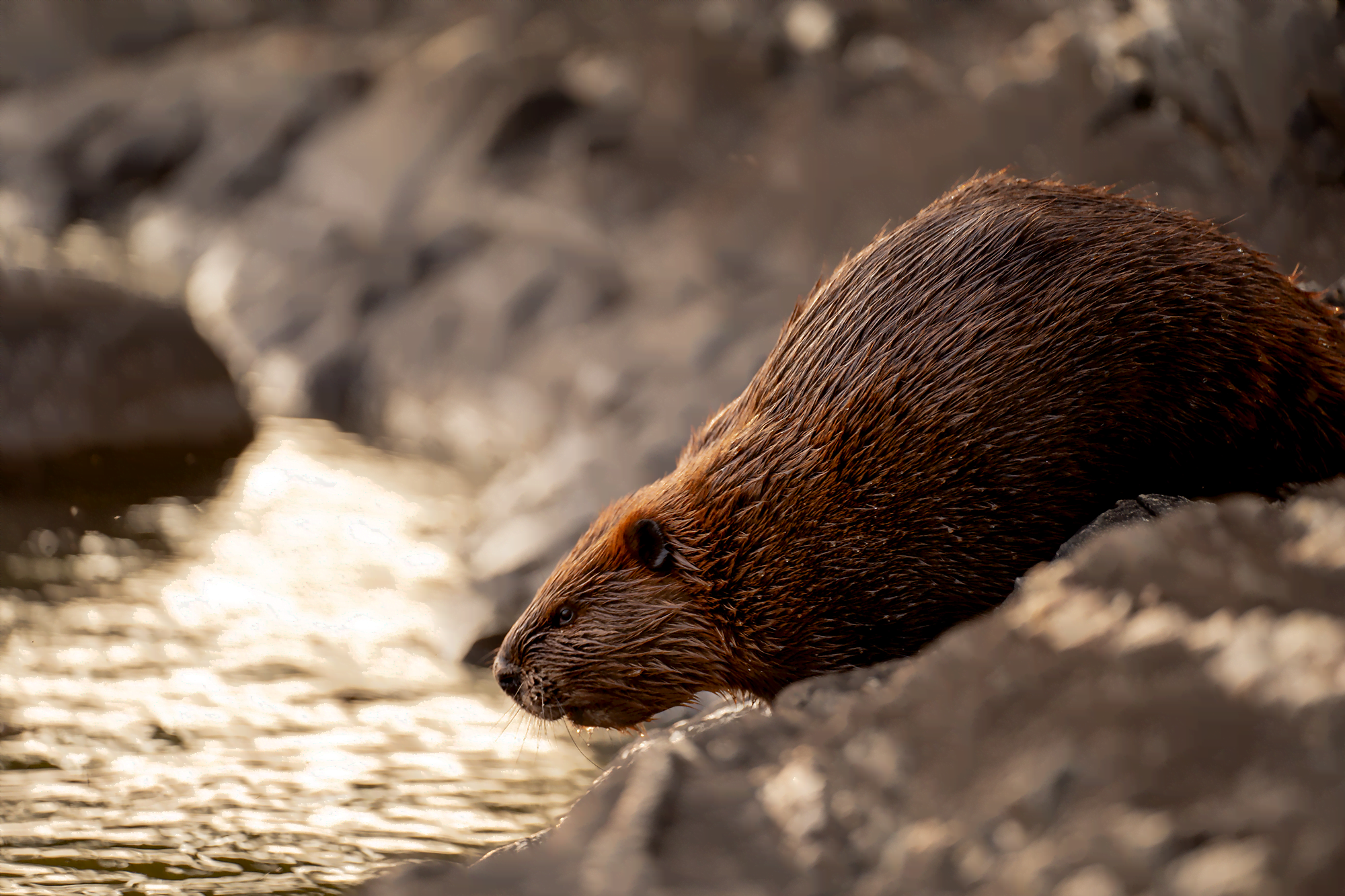
    Inspired by a muddy hike with a dog, today’s study looks at how fur in a flow can shed dirt and debris. Researchers placed beaver, coyote, and synthetic hairs in a flow chamber with a slurry of titanium dioxide particles in water. After 24 hours, they counted the particles stuck on each hair. The more flexible a hair, the cleaner it stayed. Long hairs collected fewer particles per unit surface area than short ones, thanks to their larger deflection in the flow. The effect, they discovered, is a bit like when paint or glue dries on your hand. The more you move and flex your skin, the harder it is for crusty material to stick. This self-cleaning with flex and flow occurs in nature, too: the only furry mammal with consistently dirty fur is the notoriously inactive sloth. (Image credit: T. Umphreys; research credit: M. Krsmanovic et al.; via APS Physics)