Tag: seeds

  • Inside the Squirting Cucumber

    Inside the Squirting Cucumber

    Though only 5 cm long, the squirting cucumber can spray its seeds up to 10 meters away. The little fruit does so through a clever combination of preparation and ballistic maneuvers. Ahead of launch, the plant actually moves water from the fruit into the stem; this reorients the cucumber so that its long axis sits close to 45 degrees. It also makes the stem thicker and stiffer.
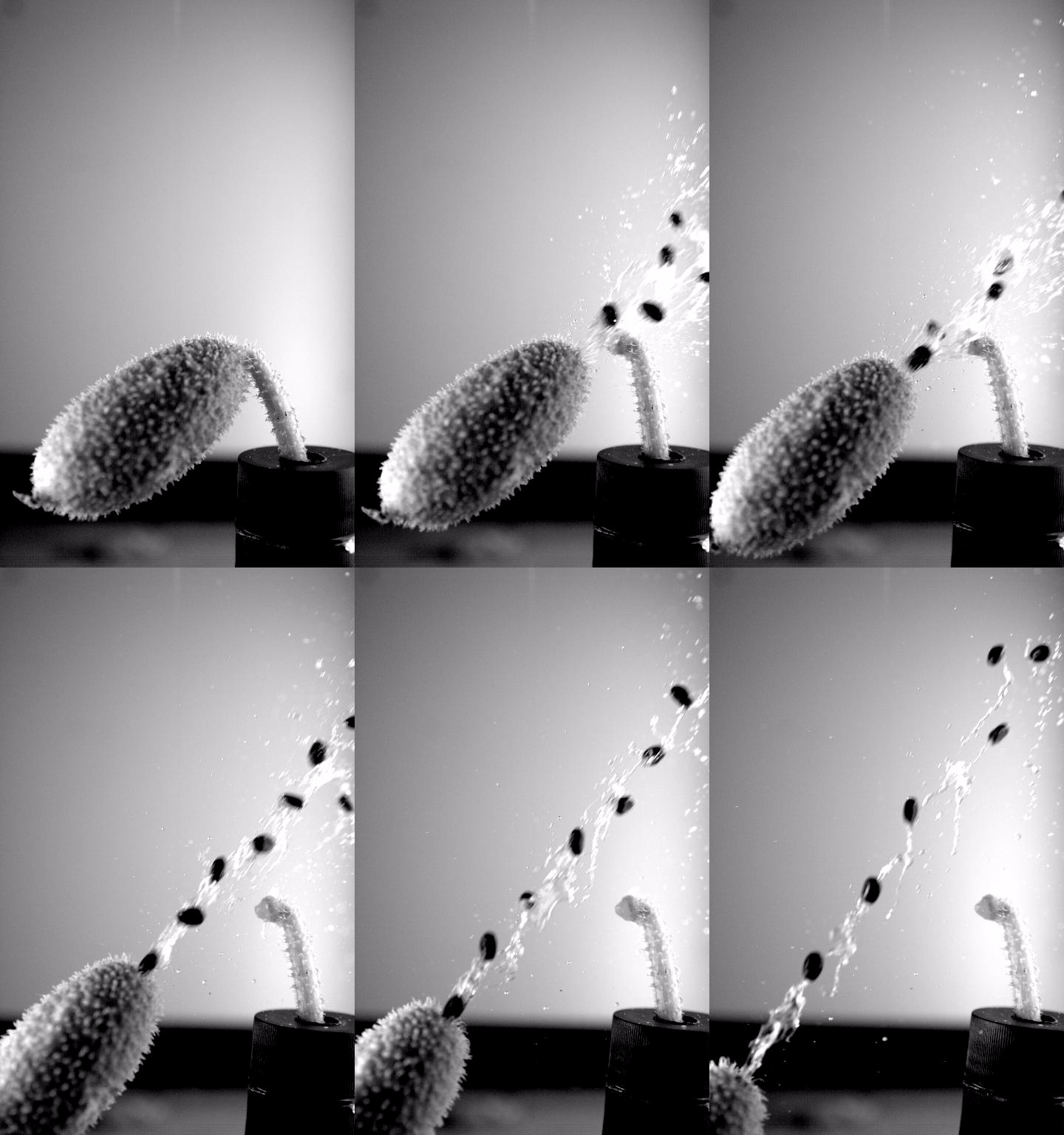
    This high-speed video shows the explosive release of the squirting cucumber's seeds.
    This high-speed video shows the explosive release of the squirting cucumber’s seeds.

    When the burst happens, fruit spews out a jet of mucus that propels the seeds at up to 20 m/s. The initial seeds move the fastest — thanks to the fruit’s high-pressure reservoir — and fly the furthest. As the pressure drops, the jet slows and the fruit’s rotation sends the seeds higher, causing them to land closer to the original plant. With multiple fruits in different orientations, a single plant can spread its seeds in a fairly even ring around itself. (Research and image credit: F. Box et al.; via Gizmodo)

    Fediverse Reactions
  • The Hairyflower Wild Petunia

    The Hairyflower Wild Petunia

    Dispersing seeds is a challenge when you’re stuck in one spot, but plants have evolved all sorts of mechanisms for it. Some rely on animals to carry their offspring away, others create their own vortex rings. The hairyflower wild petunia turns its fruit into a catapult. As the fruit dries out, layers inside it shrink, building up strain that bends the fruit outward. Once a raindrop strikes it, the pod bursts open, flinging out around twenty tiny, spinning, disk-shaped seeds. That spin is important for flight. The best-launched seeds may spin as quickly as 1600 times in a second, which helps stabilize them in a vertical orientation that minimizes their frontal area and reduces their drag. Researchers found that these vertically spinning seeds have almost half the drag force of a spherical seed of equal volume and density. That means the hairyflower wild petunia is able to spread its seeds much further without a larger investment in seed growth. (Image and research credit: E. Cooper et al., source; via NYTimes; submitted by Kam-Yung Soh)

  • Self-Digging Seeds

    Self-Digging Seeds

    Some plants in the Pelargonium family produce seeds with long helical tails. These appendages, formally known as awns, are humidity-sensitive. On humid nights or after rainfall, the awn begins to straighten. With its end anchored on the ground, this unfurling spins the seed and helps it burrow into the soil. A study looking at the physics of this system found that rotating reduces the drag a burrowing seed experiences in a granular material. Normally much of the force that opposes motion into a granular material is the result of intergranular contacts creating what are known as force chains. (Many science museums have great displays that visualize force chains.) The rotating seed drags grains near its surface along with it, helping to break up the force chains and reduce resistance. (Image and research credit: W. Jung et al., source)

  • Featured Video Play Icon

    How Maple Seeds Fly

    Maple tree seeds flutter and spin as they descend. The above video, which shows flow visualization of a freely falling seed, demonstrates that the so-called helicopter seed’s autorotation creates a vortex along the leading edge.  Watch as the seed’s “wing” sweeps through and you will notice the vortex along the upper surface. This leading edge vortex generates high lift on the maple seed, allowing it to stay in the air more effectively than other seeds, thereby increasing the maple’s reproductive range. (Video credit: D. Lentink et al.; see also Supplemental Materials)