Tag: relativity

  • Searching for Stability

    Searching for Stability

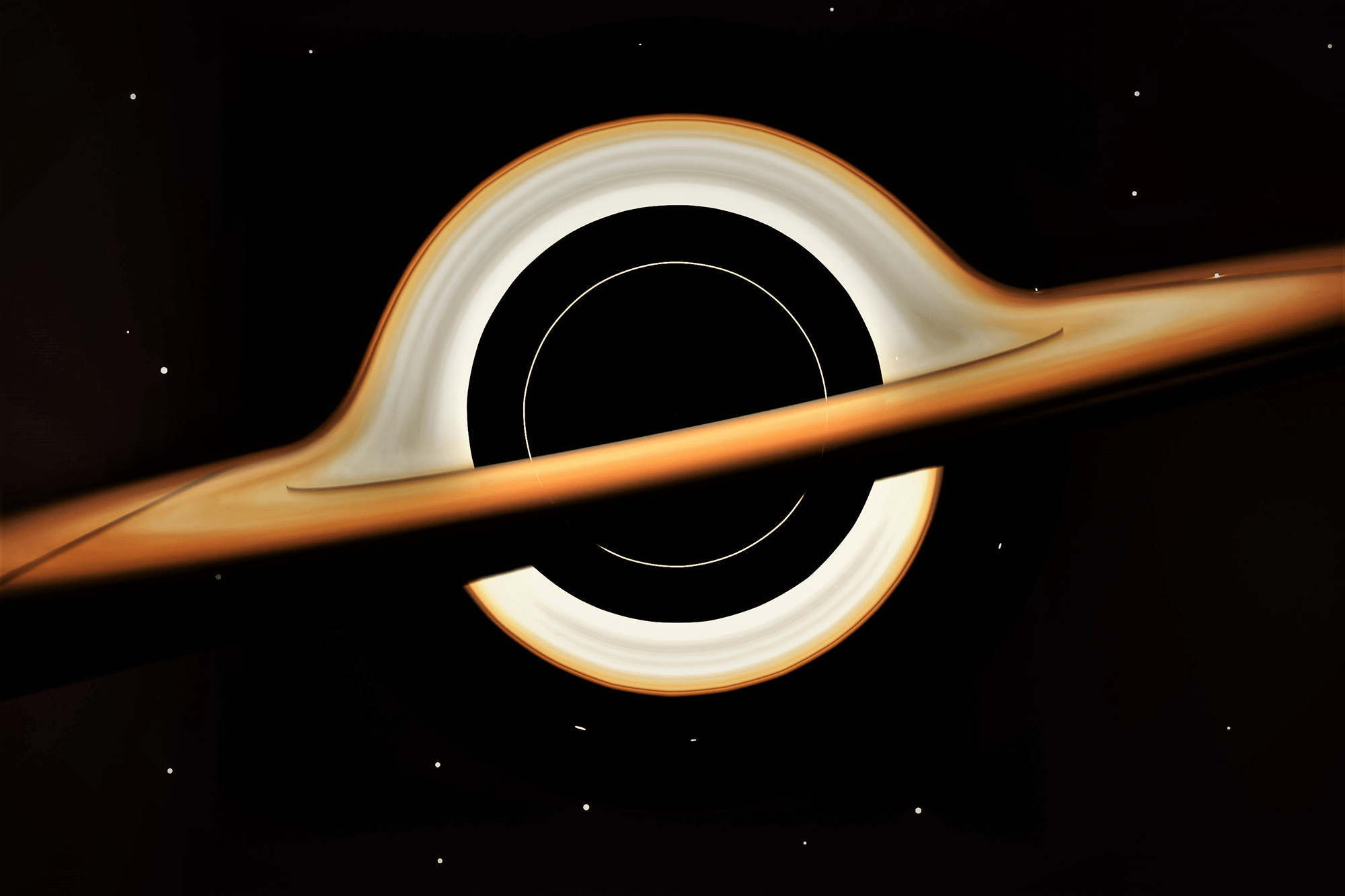
    At present, there is no theory of relativistic fluid dynamics, which is problematic for those studying black holes, neutron star mergers, and heavy-ion collisions, where fluids may wind up moving at near-light speeds. Many current models for these systems allow energy to dissipate using equations that permit faster-than-light speeds. A new study shows that these assumptions lead to problematic results.

    The paper shows that, if the mathematical equations allow for faster-than-light speeds — thereby breaking causality — then the fluid system will behave stably to one observer and unstably to an observer in a different reference frame. In other words, there will always be a frame of reference where disturbances grow exponentially and destroy the system. That’s clearly not ideal.

    Fortunately, the paper also offers an important solution: if causality holds, the stability (or instability) of a system is the same regardless of reference frame. That’s incredibly powerful for researchers because it means that they only have to show the stability of the system in one reference frame to know that the result applies to all reference frames, so long as they’re not breaking causality. (Image credit: A. Pal; research credit: L. Gavassino; via APS Physics; submitted by Kam-Yung Soh)

  • Featured Video Play Icon

    Singularities

    Black holes, like the collapse of a cavity in a fluid, are a singularity – a point where the mathematical rules we use to describe physical systems break down. No one knows what exists in a black hole, but the short film “Intra” explores one theory – that the exit to a black hole is a white hole, a singularity from which time and space themselves are born. The journey from one to the other is illustrated in the film with CGI visualizations of a black hole (a la Interstellar) and with fluid dynamical sequences depicting diffusion and chemical reactions driving flows. Although no true white holes have ever been observed, there are fluid dynamical analogs for them, namely circular hydraulic jumps, like the one you can make in your kitchen sink!  (Video credit: T. Vanz et al.)

  • Fluids Round-up – 21 September 2013

    Fluids Round-up – 21 September 2013

    First off, I’d like to give a special shout-out to FYFD’s friends at Pointwise, who were kind enough to invite me for a visit this week. For any readers looking for CFD grid-generation software, check them out; they are a fantastic bunch and very good at what they do.

    My thanks again to everyone who donated this week to help get me to the APS conference. The campaign is still open if anyone wants to get in on the FYFD wallpapers and stickers on offer to donors. As a reminder, any funds beyond conference costs will go toward improving FYFD, including getting equipment to make FYFD videos. On to the fluids round-up!

    (Photo credit: L. Gilman)