Tag: plastic pollution

  • Where Waves Carry Plastics

    Where Waves Carry Plastics

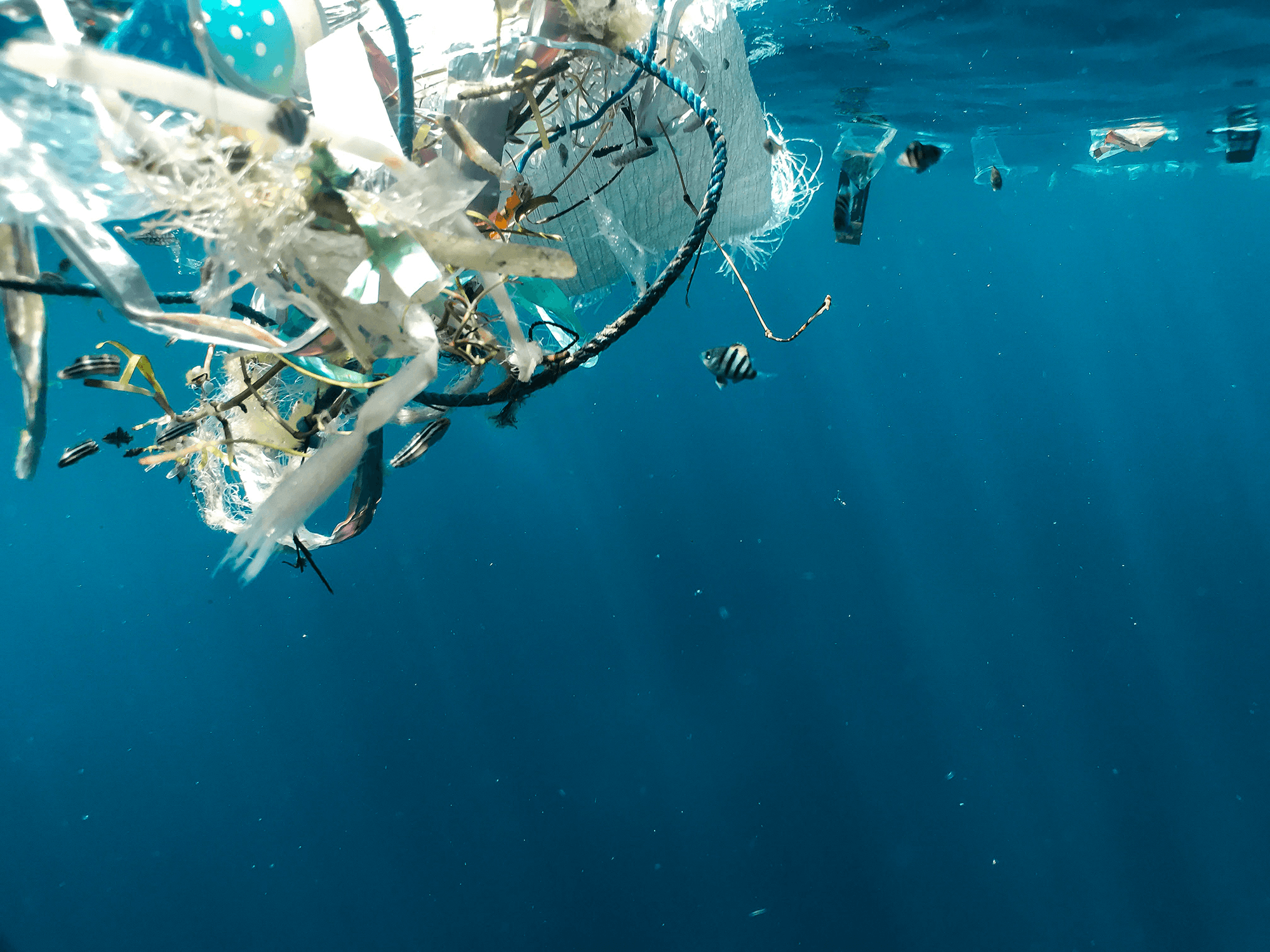
    The classic theory of steady wave motion predicts a phenomenon called Stokes drift, in which particles spread horizontally in the direction of wave travel. That means that something like microplastics will drift in the direction that waves are traveling. But in the real world, ocean waves aren’t quite so neat and unchanging. A new study looks at what happens when waves are decaying in strength–in other words, what happens in our world when the wind dies down.

    In those circumstances, the researchers found that particles did not just drift horizontally–they drifted vertically, too. Further, how much a particle drifts vertically depends on its initial depth. Since plastics vary in their buoyancy–and can be found in varying numbers and sizes throughout the upper layer of the ocean–this mechanism could significantly affect how waves mix and transport pollution. (Image credit: N. Jensen; research credit: T. Izawa et al.; via Physics World)


    Fediverse Reactions
  • Featured Video Play Icon

    Salt Affects Particle Spreading

    Microplastics are proliferating in our oceans (and everywhere else). This video takes a look at how salt and salinity gradients could affect the way plastics move. The researchers begin with a liquid bath sandwiched between a bed of magnets and electrodes. Using Lorentz forcing, they create an essentially 2D flow field that is ordered or chaotic, depending on the magnets’ configuration. Although it’s driven very differently, the flow field resembles the way the upper layer of the ocean moves and mixes.

    The researchers then introduce colloids (particles that act as an analog for microplastics) and a bit of salt. Depending on the salinity gradient in the bath, the colloids can be attracted to one another or repelled. As the team shows, the resulting spread of colloids depends strongly on these salinity conditions, suggesting that microplastics, too, could see stronger dispersion or trapping depending on salinity changes. (Video and image credit: M. Alipour et al.)

    Fediverse Reactions