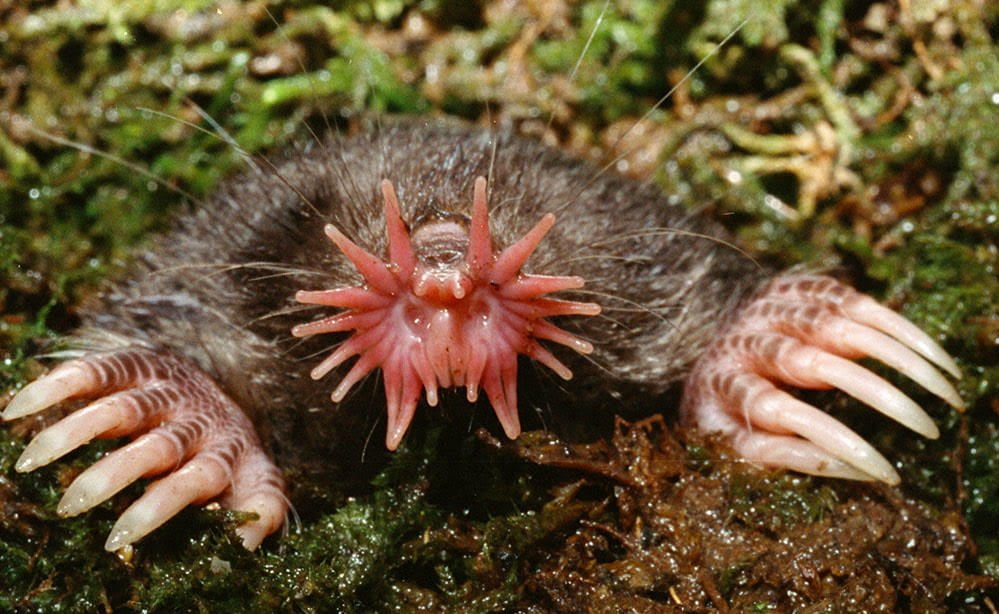
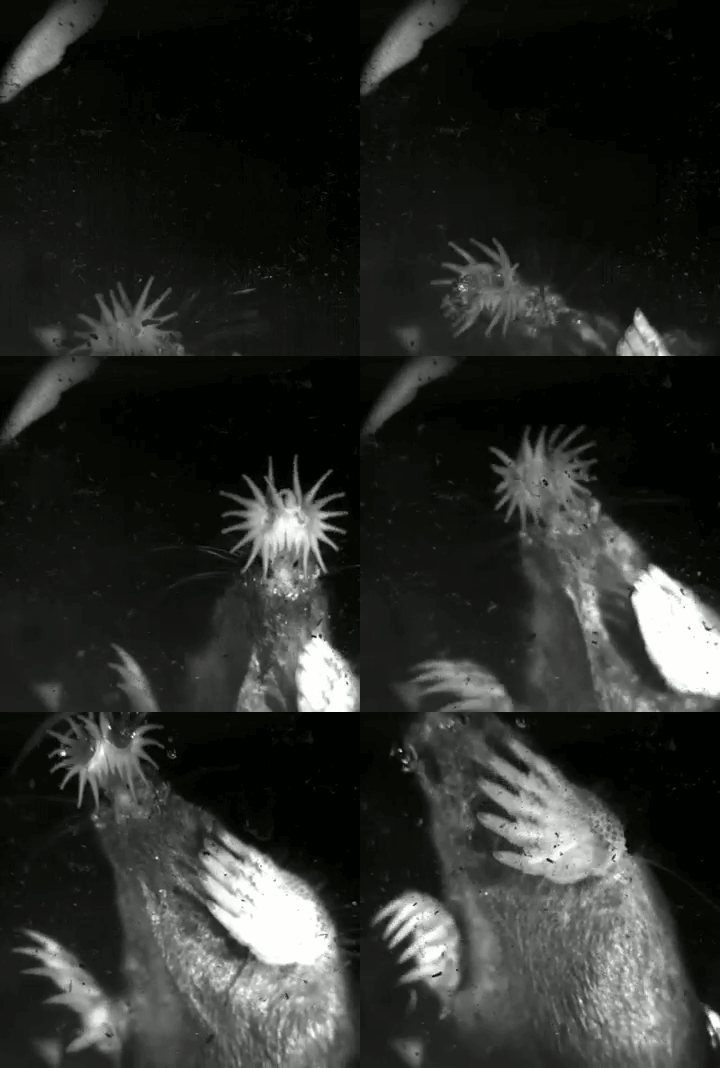
Star-nosed moles – tiny mammals native to the northeastern United States – have an underwater superpower: sniffing. To seek prey underwater, the moles blow bubbles and suck them back into their nostrils in about a tenth of a second. Their eponymous noses seem to be key to this, as seen in newly published research. Researchers built model star noses from plastic (lower right) to explore how well different shapes could hold the bubble in place, a necessary ingredient for the mole to sniff them back up.
With a perfectly flat plate, any small tilt makes the bubble slide toward the edge and float away. Star-shaped ones, on the other hand, can hold a bubble even up to a 7-degree tilt angle, a 40% improvement. The spacing of the gaps is also important. If they’re too wide, buoyancy can pull the bubble up through them. But if they’re too narrow for the bubble to deform upward through them, they make poor anchors.
Understanding the mechanics of underwater sniffing is good for more than just appreciating this funny-looking mammal, though. The researchers hope their findings will help develop underwater chemical sensors that use bubble sniffing instead of exposing their components directly to sea water, which would significantly extend their usable life. For more, check out the paper and my interview with the lead author in the video below. (Image credits: top and lower left – K. Catania; lower right – A. Lee; research credit: A. Lee and D. Hu; video credit: N. Sharp and T. Crawford)